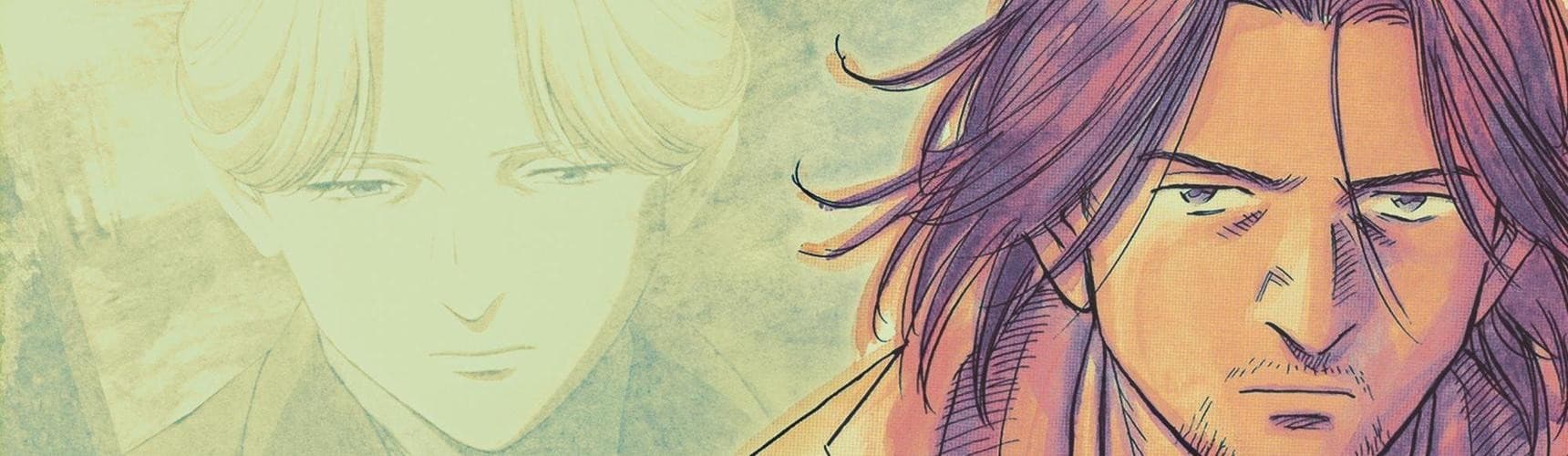
THIS REVIEW CONTAINS MAJOR SPOILERS AND I SUGGEST YOU READ IT AFTER COMPLETING MONSTER. The tl;dr section at the end of my review is spoiler-free.
Naoki Urasawa's Monster is undoubtedly one of the greatest and most famous Japanese works of fiction ever created. Its captivating premise, along with the amazing directing done by Madhouse, make it one of the most interesting and addictive series to watch; loved and respected by most anime and non-anime enthusiasts. 74 episodes are usually hard to finish without getting bored at times, but when it comes to Monster, it is the kind of story that will make you sit on your desk for hours, hypnotized, always excited to figure out what follows up. Today I decided to write this review to analyze both the pros and cons of the show, and trust me, there's a lot to be mentioned about what's exceptional, passable, or badly written.
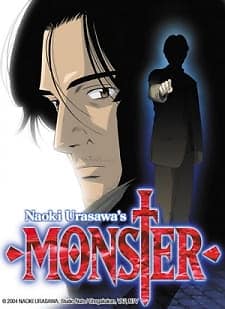
The story begins at a hospital in Düsseldorf, with our protagonist Dr. Kenzo Tenma as Head of Neurosurgery. It all starts with a dilemma, which plays an important role throughout the series; the hospital director asks him to operate on a famous opera singer instead of a Turkish man who came earlier. He saves the singer, but the Turkish man dies. Then Tenma asks himself; are all lives equal? Should there be priority in choosing who is saved first – who lives and who dies? Monster introduces a world of corruption, egoism, and racial discrimination. Tenma decides to refrain from this mindset and chooses to save a child’s life instead of the mayor’s, who came later at the hospital. At that time, he was judged unfairly and his life changed dramatically. Nine years later, he sees the kid from that day, shooting his patient, Adolf Junkers, in front of his eyes. After this thrilling start, knowing that the kid is now a serial killer and responsible for many murder cases, Tenma decides to leave on a journey to save people’s lives. Not by surgery, but by killing him; Johan, the “monster”.
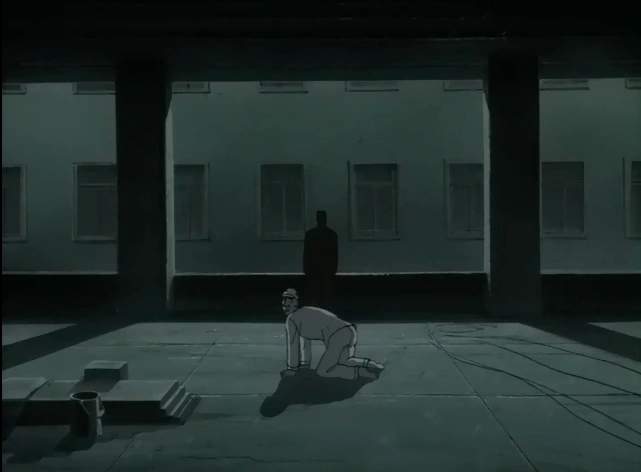
The journey lasts long, and it is like a new life to Dr. Tenma. Moving from town to town, he meets various people under different circumstances, interacting and developing short relationships with them, and that’s one of the most beautiful things this show has to offer. Tenma meets an army veteran, a thief, kids, detectives, lawyers, doctors... Everyone has their story and, in my opinion, Urasawa’s strongest skill is making the audience feel for them, like them and understand how their personalities were built. At the same time, Tenma makes friends, builds his own personality and moves on with his life. Some of his friends follow him on his journey and he has good company and people who support him - but the first thing he always thinks about, is his plan to assassinate Johan.
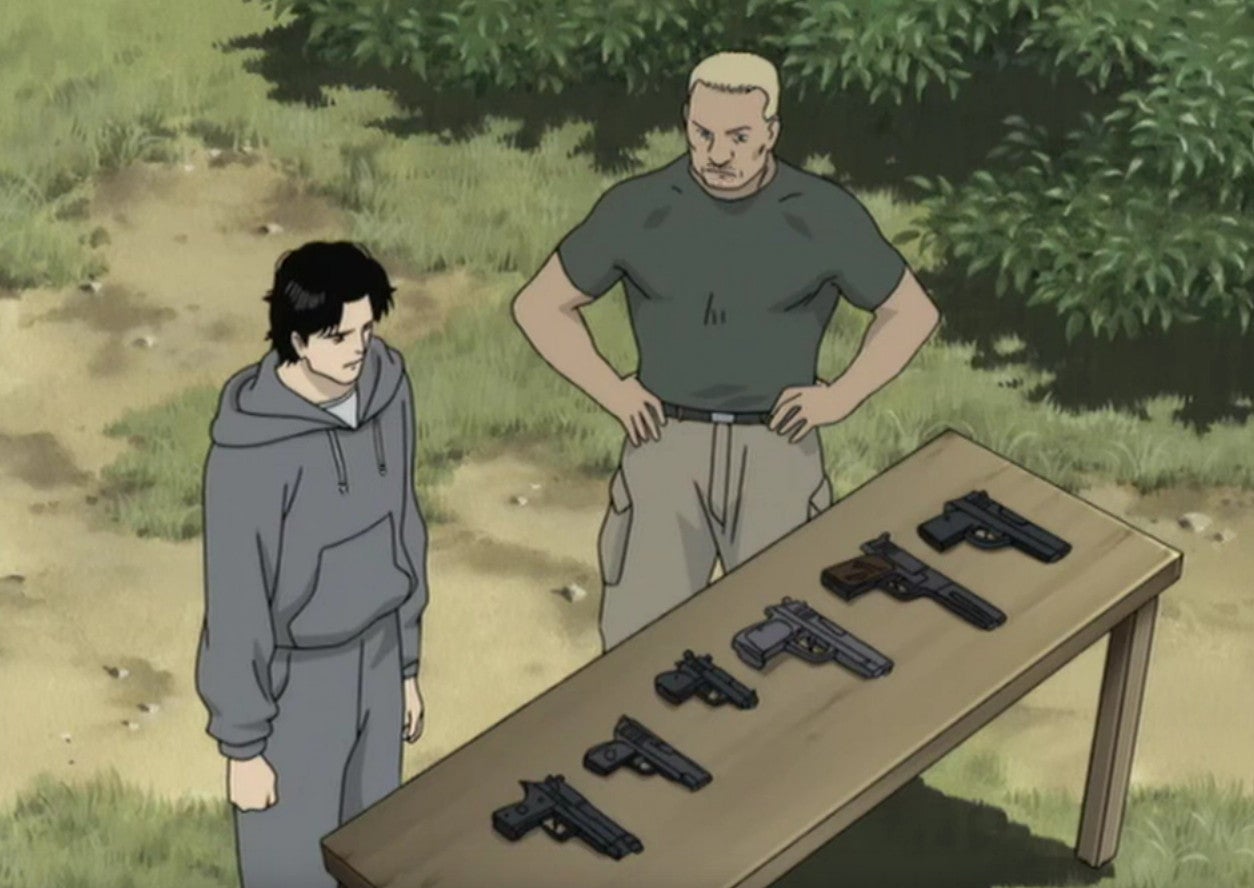
Besides Tenma, there is also Anna/Nina, Johan’s twin sister who – long story short – has been brainwashed and had lost her childhood memories after “that” certain incident. Anna also pursues Johan, and she is the third main character. Tenma and Anna not only meet people in their journeys, but they also face criminals of the underworld, political leaders, mafias, and corrupt people in general. That’s another big positive characteristic Monster has; it is full of terrifying yet realistic stories about the 20th century, like the German Neo-Nazis, the Czechoslovakian secret police, illegal experiments done in certain facilities, and people who’d do anything to gain fame and power.
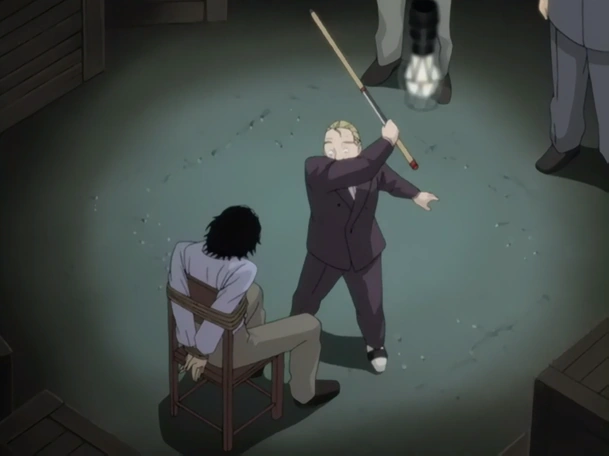
Before proceeding into some things that bothered me, I want to give credits to some of the supporting cast which, like I said before, I found amazing. To me, Eva Heinemann is one of the best-written female characters I’ve seen in an anime series. Regretting her actions and unable to face the harsh reality – Kenzo’s rejection – she loses hope and becomes an alcoholic, almost psychotic woman. She tries to find a husband like Kenzo but fails, leading her to get divorced thrice and never trust a man again. Even if she says she wants him to suffer because he ruined her life, deep inside she wishes him the best and she desperately wants to get close to him again. Her actions might make her hateable, but her character is not to be hated.

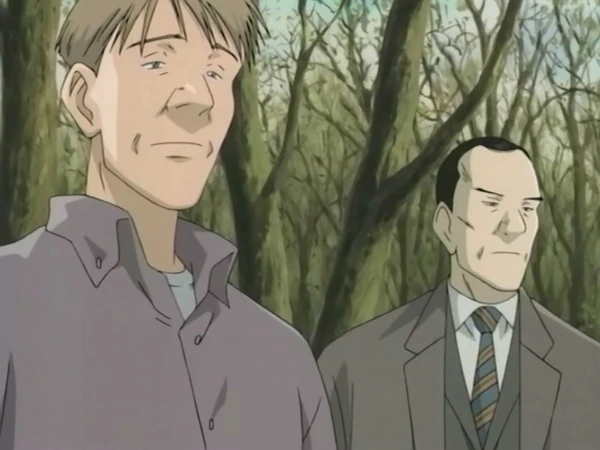
Wolfgang Grimmer is an adorable character as well; that’s a quite popular opinion so I will not say much about him. The supporting character that personally moved me more than it was expected was Dr. Schumann, who, even if his arc lasted for a few episodes, had a touching story and great character development. Of course, other characters like Reichwein, Lunge, Rosso, Dieter, Martin Reest and Maurer were written with care and I enjoyed watching them in action.
As far as all these things I’ve mentioned above are concerned, Monster can already be considered a successful anime, since most of its short stories/arcs are more than good, the supporting cast is rich and it depicts reality from many different aspects. However, Monster’s format is not episodic and it is clear – at least to me – that the center of attention is Tenma’s and the twins’ story and character development. Which means that a main story exists, and it is more important than the side ones. Unfortunately, there are some people like me who can’t be fully satisfied by works of fiction that leave question marks or use plot conveniences for the story to proceed. This is the main reason Monster cannot become one of my favourite anime no matter how much I enjoyed watching it.

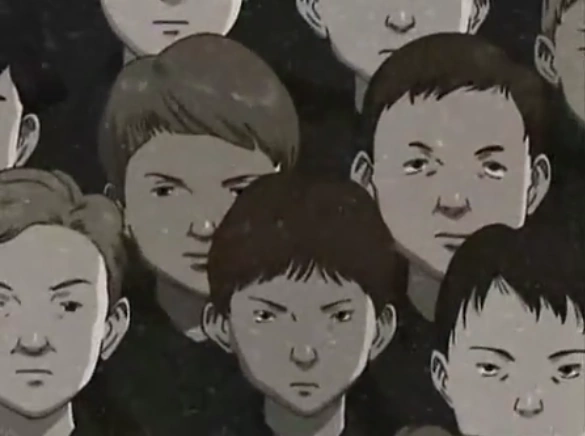
If you haven’t yet understood what I am talking about, you’re going to find out in the next paragraphs. Firstly, let’s start from Johan’s character/personality and the events that led to its creation. Johan was a twin whose sister was forced to endure a dreadful human experiment, the “Eugenics Experiment”, set up by members of the Czechoslovakian secret police. When his sister returned home after the experiment was complete, she was in a shock and told Johan multiple times what she went through. Feeling guilt and compassion towards his sister, kid Johan felt as if he was the one who went through all this, and he had a false memory that he was the victim until he grew up. After they become orphans, Johan is separated from his sister and is placed in 511 Kinderheim, an experimental orphanage in East Germany whose purpose was to create soldiers without emotions. By that time, Johan had already started creating his nihilistic personality and was supposedly “too good” for the experiments. Eventually, he got bored and using their power of hatred he decided to make all the members of the orphanage kill each other, children and instructors included. He was just sitting on a chair, watching them all kill each other, and it was never explained how he managed to do something like this. Am I the only one that needs further explanations? There are much more unexplained things to be mentioned.
When Johan killed the people from the hospital, it is implied that he poisoned the candies with deadly chemicals. Okay, let’s say 10-year-old ingenious Johan did this and that it was just a hyperbole. But what about what comes after that? He lured Junkers, the lockpicker, to an abandoned building along with Tenma, the first time he was seen as an adult. He killed many people throughout the series with candies / whisky bonbons and planned everything perfectly. How he did it remains unknown. At the age of 15, he became well-known in the German underworld and by the age of 19 he was able to use almost any criminal under his command. German Neo-Nazis even wanted him to become the second Hitler. Still, we never saw how he acted in front of high-ranked people of the underworld, or how he made all these people see he is so ridiculously charismatic. It’s a super rare and special occasion, yet we know nothing about how he achieved such high status and power. It is shown in an episode how Johan inspired criminals to kill certain people just by writing their names in a park, and it almost seemed funny. On the other hand, we have random events occurring like him wanting to get his sister when she turned 20. Many events like this one are happening just because the kids have grown up, their minds are more mature and skillful and it is “time” for some action. That’s not so important, though.
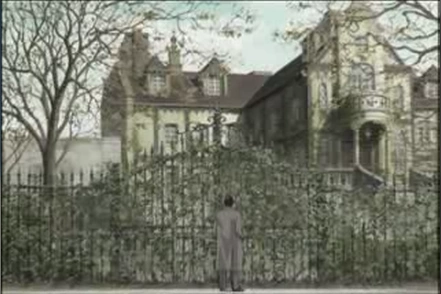
What really is important is Anna’s character writing and how she is used as a plot device. The fact that after “that” incident, she got amnesia as a defensive mechanism is logical and possible to happen after such a large shock. On the other hand, Urasawa decided to keep using her character to move the plot forward, just by making her remember things. Normally, there wouldn’t be a problem with this, if only the things she remembered were… let’s say, less convenient. I love the concept of writing a story and letting the story itself tell you where it “wants” to go, like Urasawa has said before, but in this case he is not doing it well. Since the early arcs and since Urasawa hadn’t mentioned the Red Rose Mansion, Franz Bonaparta or some incidents revealed later in the story, Anna would be able only to remember things that help that current arc’s story proceed and she remembered nothing about other incidents. The reason is simple, and it’s because he was not sure what would happen next. Later, in the Czech arc for example, she remembers everything we need to learn about her past and the Czech arc, and so on.
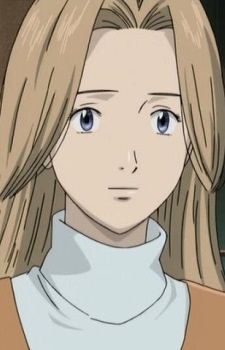
Talking about plot devices, the fact that everyone gathers in the same place so often is worth mentioning. There are so many towns and cities in the world, yet just for the story to go on, it is not rare in Monster for characters to meet each other randomly at a certain place. Tenma, Johan and Anna happened to be in Prague at the same time, with Lunge being there for “vacations” too. Or in Ruhenheim, everyone decided to go there via different clues, at the same day… Unbelievable, isn’t it? It’s something that won’t turn off most watchers, including me, but it is not the best thing in terms of writing. Well, at least we get to see many different cities and cultural references, which is respectable, but maybe there could be another way to move from city to city.

Another point to be made is that there are multiple times in the series when massacre happens as if it’s nothing. The incidents in 511 Kinderheim, the Red Rose Mansion, Ruhenheim. The Red Rose incident made more sense, since people were poisoned at the same time, but the others were too unrealistic to be true. Thinking about Ruhenheim arc, I found it very underwhelming for a finale. There were a lot of things to be explained and we were finally about to discover more about Johan’s personality and past, but the only thing that happened in the end was a massacre and Johan plotting his death. There were many metaphors, Tenma’s arc ended perfectly, Grimmer’s end was beautiful too. But what about Roberto and Lunge’s fight and how Roberto killed Bonaparta afterwards in a zombie form? Some parts in this arc are questionable.
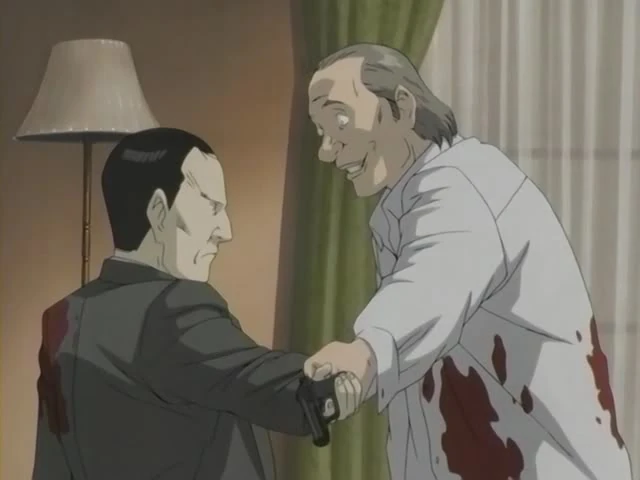
When it comes to Roberto, a huge plot convenience was his survival after getting shot twice by Tenma. But there’s a good reason this happened and it was really important for Tenma’s amazing character development. He believed he had killed Roberto, so he accepted he was now a criminal and lost faith in himself as a doctor and as an ethical person. In prison, when he saw him as his lawyer he was terrified, but at the same time relieved that he had not killed anyone. That’s when Tenma was filled with hope again and that was a good way to show that his soul is and will always be kind, innocent and good-willed. Of course, this was totally confirmed when he decided to operate on Johan for a second time, after all this time he was pursuing him, after all these sacrifices he had made just to kill him. A person’s soul will most likely remain the same no matter what.

Lastly, I want to write about Johan. In the end, Johan’s character was apparently fully nihilistic, he lacked emotion to a great extent and did not find meaning in life. He liked playing with luck and let it decide whether he would live or die, he toyed with people’s lives and he felt nothing when others died. To me, Johan’s mental disorder, his way of living and the lack of explanation concerning how he managed to achieve so many in his life, make him far from a great villain, but an interesting character nonetheless.

Before closing the review, I must praise Madhouse for the artistic approach of Monster, once again; directing, art, animation, soundtrack, voice acting – all of them were good. I disagree with most people who complain about the pacing because I found it great. I loved the aesthetics, the inserted soundtrack, the opening and ending songs. They all created a breathtaking atmosphere. Hidenobu Kiuchi, Isobe Tsutomu and Koyama Mami and more performed amazingly too, as voice actors.

To sum up, Monster deserves to be highly rated like it is, though it is far from a perfect work of fiction in my point of view. The themes it tackles, the atmosphere it creates, the realistic approaches, the character development, the side characters, the mini arcs, the mystery; all of them make Monster a must-watch for every anime fan. It is an enjoyable experience, it makes you think and even teaches you things, but the flaws are there as well and unfortunately, they affect the main story.
To the heroes who made it here, thank you for reading. I appreciate it!
TL;DR
Story – 22/40: Even if it was intriguing for the most part and there was suspense and realism, the main story had plot devices, exaggerations and minor plot holes. This is the reason Monster’s plot and the series overall is not 80/100 to me, as it could have been.
Art – 9/10 : As simplistic as it might have been, it was beautiful and fit the themes perfectly.
Sound – 7.5/10: Most soundtracks were a great fit to the atmosphere.
Character – Main characters: 11/20 (Tenma 6/7, Johan 4/7, Anna 1/6) | Side characters: 9/10
Enjoyment – 7.5/10: Although it was 9/10 for the most part, the last episodes had a negative effect.
Overall – 66/100: The plot always plays the most important role to me, and if some things were different and given more detail towards the end, like I said, I could give Monster a 80/100
58 out of 94 users liked this review
