The Wind Rises
a review by Chizuo
a review by Chizuo
This is not a critique in any sense. The current exposition is merely the general thoughts that crossed my mind when watching the film, don’t expect a thorough, technical analysis of the subject.
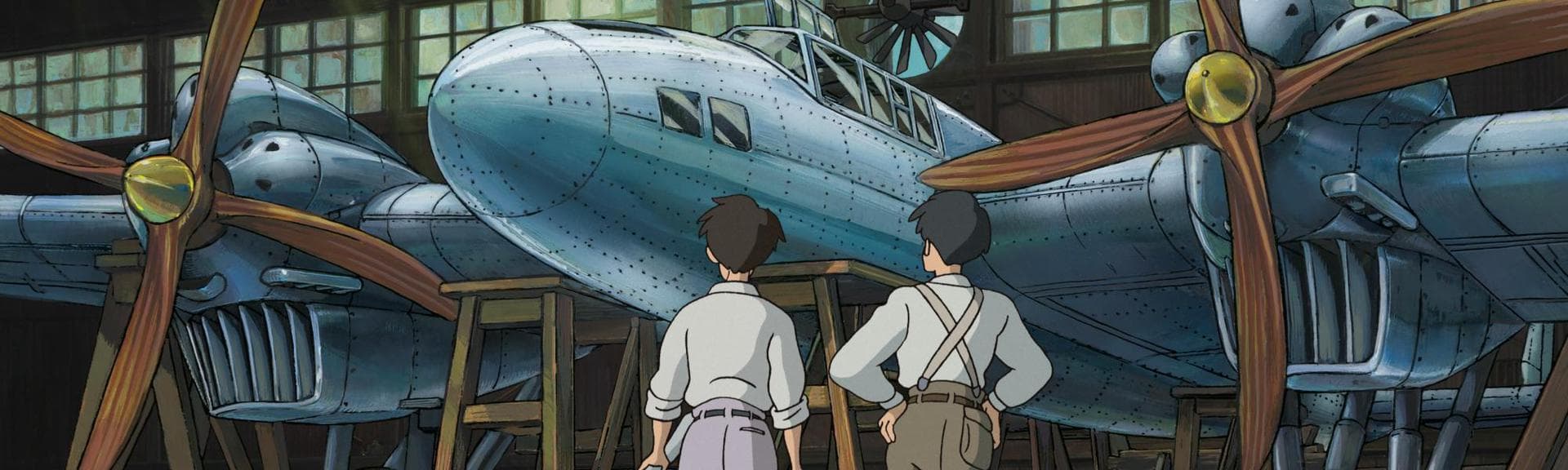
The Wind Rises is a work that shines in its masterful use of the juxtaposition of its themes, both sufficiently explored and filled with a dreamlike splendor, full of a romantic and innocent idealism that faces the insensitivity of concrete reality. This is not depicted in a combative or rebellious way, but elegantly and maturely. The passion for aviation nurtured by the protagonist, Jiro Horikoshi, and his unquestionable love for his late wife, Naoko Satomi, unfolds in a contemplative form, discussing the corruption generated by the human condition as it subjects itself to the real world and its. permanently indifferent relationship with the universe of human ideals.
The film, showing its biographical colors, unites the story of airplane designer Jiro Horikoshi with a narrative that demonstrates its coming-of-age characteristics in each section. There is, however, no air of youthful frustration hovering over the work's conflicts, as a less prepared spectator might think. As previously mentioned, the narrative is presented in a mature and respectful way towards those who watch. Furthermore, in a self-insertion endeavor by the film's director himself, Hayao Miyazaki, the film is enriched by meanings shared by the two visionaries involved in The Wind Rises: Miyazaki himself and also Horikoshi. Miyazaki's passion for aviation is nothing new to anyone, but the platonic, idealistic beauty added to the profanity suffered by the latter when he comes into contact with outside actors is something that readily applies to the director's job, as well as that of so many others. Watching The Wind Rises is an unspeakable opportunity to understand part of the mind behind so many classics of Japanese animation, a small glider in the immensity of the dilemmas faced by a remarkably perfectionist artist in his relationship with his profession and, on an essential level, with his vocation.
It would be unfair not to praise Joe Hisaishi's soundtrack for the film, once again standing out with its sublime delicacy. Feelings of melancholy that soon meet with an innocent and spontaneous wonder mark the direction of the score, permeating the various instrumentally different reproductions that the main theme receives in the film.
This is a movie that will be special for those who still allow themselves to dream. For those who still seek essentiality in the midst of a sterile and gray world. For those who let themselves sail on the whims of the wind.
37 out of 38 users liked this review
