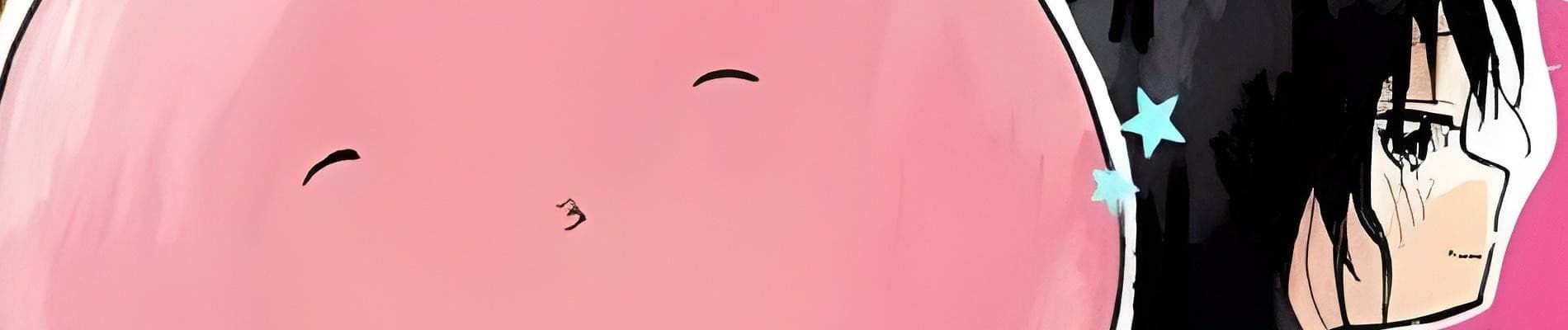
Takopi's original sin or Takopii no Genzai is a manga described as too dark and too cute for a shonen manga. It's a manga with bullying as its main theme, bullying which is tolerated in Japan to the point of being encouraged.
A manga called to be too similar to Doraemon and Oyasumi Punpun, which are totally different from each other, and yet their ideas seem to blend too well together in the manga. The mix of reality and fiction is done in a really impactful way; the line between realism and fiction is dangerously thin in a way not really seen in any manga. It's a piece that might not be enjoyed by a lot but would honestly be loved by those who stay with it. The first chapter of this had me unsettled for quite a bit but also very intrigued for the future of the manga and the story.
In the first chapter, we meet the happiest alien from the "Happy Planet" in the entire universe, whose life's purpose is to spread happiness. After he reaches Earth and meets a depressed girl named Shizuka, who has no one other than her dog as a source of happiness, he attempts his all to cheer her up. But it ain't easy to cheer up the tormented girl Shizuka, who is badly mistreated by bullies at school. Even though he tries his best, he can't really do anything for her, and his act of even giving her a tool to seemingly help her results in a tragedy. The tragedy was partially overshadowed, but its happening was still not very expected. The brilliance of this work is how fear and tragedy gets hidden in it. You can't really say if that was sad or tragic, like a tear that just forms but never really falls.
The end of chapter 1 really reminded me of chapter 139 of Oyasumi Punpun, a chapter which really breaks a person. But unlike Oyasumi Punpun, the existence of Takopi, the cute alien who doesn't have a speck of negativity and is full of optimism, still makes you hold on and not really get depressed by the way the story goes on. Takopi's lack of understanding of human emotions and experiences really makes it a unique way to see the situation, as the story is also meant to be seen from his point of view how he sees the situation, how he interprets it, and how he develops feelings in these situations is something we get to see.
The art is great. It can be called messy, but the way it blends with the background is dangerously great, and the overall pacing of the story is great too. It is still too early to give an overall score, but it's 8.0+ for now for me. If you loved Oyasumi Punpun, you will highly likely love this too. If you liked Doraemon then......... you might like it too?
There is a saying "BROKEN CAN'T BE FIXED," and I do hope this statement becomes false as the story progresses and eventually ends.
.
.
.
Edit: Now that the story has ended, I can say that my hope was answered, but in the most gut wrenching way possible. The manga doesn't just continue the tragedy; it multiplies it. We get to know more about the other children in this ecosystem of pain: the bully, Marina, and the quiet classmate, Azuma. Taizan 5 masterfully peels back the layers on these characters, revealing that they are not simple archetypes but victims themselves, trapped in cycles of parental abuse and neglect. Marina's cruelty is a direct reflection of her own mother's abuse, and Azuma's desperation for validation stems from a mother who offers only conditional love.
This is where the manga's true, horrifying genius lies. Takopi, in his innocent quest to "fix" things with his Happy Gadgets, only makes everything worse. His attempts to apply simple, happy solutions to complex, systemic trauma lead to manipulation, murder, and a timeline so twisted it feels utterly hopeless. The title itself is the final twist. Takopi's "original sin" wasn't a single act of violence he commits in the story, but his initial, forgotten mission: to travel back in time and kill Shizuka at the request of a future, broken Marina.
So, can the broken be fixed? The manga's answer is a quiet, bittersweet "yes." Takopi, realizing his presence is the problem, sacrifices himself to reset the timeline one last time, erasing his own existence. He doesn't magically solve their problems the abuse and neglect remain. But he leaves behind a "memory ripple," a faint echo of their shared trauma that allows Shizuka and Marina to finally connect. They aren't fixed by magic. They are given a chance to start healing themselves, together, through the one thing that was missing all along: communication. The statement "BROKEN CAN'T BE FIXED" is proven false, not by erasing the cracks, but by showing that they don't have to be faced alone.
30.5 out of 32 users liked this review