Disclaimer: This movie is rather dark and contains disturbing imagery. I do not recommend it to the faint of heart or children under ten years old.
#In a Shellnut
Japan is on it's last legs. The war is creeping further and further up north and American bombers are dropping firebombs onto civilian targets.
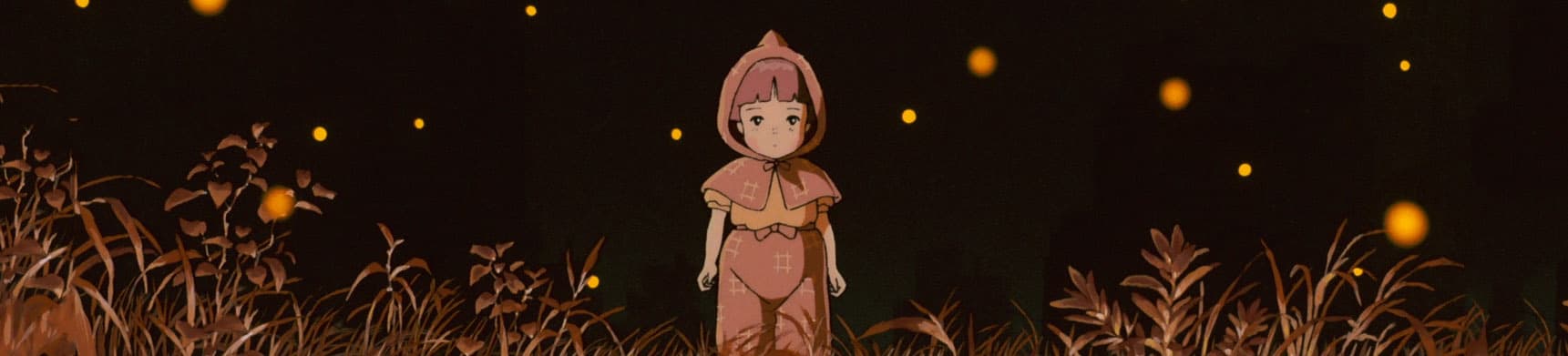
Seita and Setsuko are both victims, having lost not only their homes, but their entire settlement. The movie follows the two as they fend for themselves, unable to find accommodating family, consistent food, and adequate healthcare.
#Strong Points
The focus is very different from most other movies, even within the war genre.
#Weak Points
Voice acting in the dub is terrible.
I found it difficult to sympathise with the characters.
#Elaboration
This movie was... underwhelming. I'd heard a lot about how it was really one of the saddest movies of all time and how much people cried while watching, but it just didn't hit me.
Truth is, this movie wasn't meant for me. I watched it with my friend, and he didn't find it particularly heart-wrenching either. Sure, it is conceptually sad, but in practice it really just doesn't deliver. Personally, I think that it's the following demographics that might have a better experience than I did:-Parents-Young children around 10-People who have had similar experiences
On top of that, I feel like the movie relied far too much on the audience putting in the effort to try and connect with the characters. Neither Seita nor Setsuko have any defining personality traits besides 'wants to take care of his sister' and 'likes candy' respectively, so it was practically impossible for me to empathise in the slightest. The only way I see for someone to relate is if they have someone who they see the same way, but as a young man with no children in my family, I am left in the dust.
In the end, this movie was depressing. Very little happens and most of the runtime is just the two kids doing stuff together. There's no overarching story line or goal, there's no major character development, and no-one changes anything. In that way, I think it perfectly reflects what it's like to be a civilian in wartime, and that's where this movie really shines.
My favourite part so far from the last two Ghibli movies was the post-war influence that popped through, and this one was practically dedicated to it. I didn't cry, I didn't change my outlook on life, but I did get to see a little bit of how Japan felt three decades ago, and what their media talked about. It's not meant to be an action packed adventure or an exciting thriller; It was about people living during the war, and there was nothing exciting about that, and the movie succeeds fully in communicating that.
26 out of 38 users liked this review