BELLE
a review by RamiTheAnimeMan
a review by RamiTheAnimeMan
The protagonist, Suzu Naito is a high school student living in a rural village. As a child, Suzu loved music and would sing with her mother nearly every day. In her early adolescent years, Suzu’s mother tragically lost her life. Despite her love for singing, the memories associated with music brought Suzu immense sadness and pain. It became nearly impossible for Naito to sing, without experiencing mental and physical anguish, to the point of vomiting. This emotional block, which disallowed Suzu from singing continued until high school. The introduction to the virtual world, “U”, by her friend Hiro, gave rise to the avatar Belle, an altar-persona that allowed Suzu to pursue her passion for music and singing. Belle quickly rose to stardom, becoming an international and viral sensation. During an online concert, a mysterious creature, known as the Beast interrupted Suzu’s performance. His strength was undoubtedly great, as he repels the virtual officers who attempt to apprehend him. Suzu’s curiosity brings her closer to the Beast as she tries to understand the reason behind his immense power and anger.
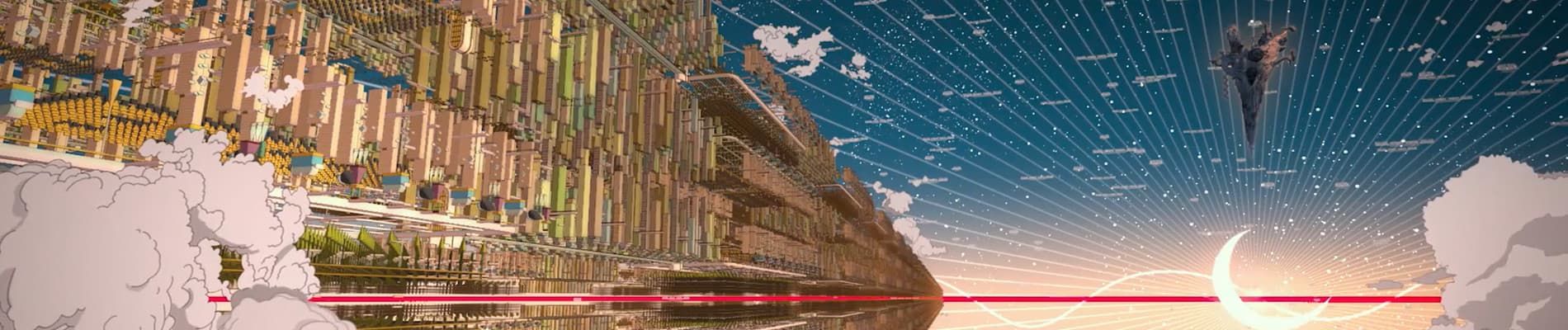
From the get-go, this movie instantly captured my attention, from the stunning visuals, to the creative world building, and the outstanding voice actors, this movie did not disappoint. If you are someone with a musical or art background, you will highly appreciate this film. The music evokes a multitude of emotions, and is reflective of the heroine's disposition and frame of mind. When faced with conflict, uncertainty, and doubt, Suzu’s song is sad, yet refreshing and rejuvenating at the same time. Both the English voice actor of Belle, Kylie McNeil, and the Japanese voice actor, Kaho Nakamaru did a tremendous job.
You can listen to “Belle” on Spotify – at the time of writing, it currently has 762.4k monthly listeners.
The conflict and eventual resolution of Naito’s singing inhibition spurs the movie onwards. Naito’s alter-identity, Belle acknowledges her pain and grief, and evokes these emotions through song. After a period of self-realization and support from those around her, Naito decides that she must reveal her “true” identity. This “unmasking”, from virtual to real highlights Naito’s psychological growth as well as hints at a positive and long-term recovery.
The introduction of the Beast, and his erratic behaviour and actions gave the main plot an added dilemma. One that placed Naito in a position that ultimately helped encourage her to expose her real self to the world. In spite of this success, the Beast did not help progress the main plot, nor did he aid in the development of the side characters who already lacked insufficient screentime. Rather than focus on a new character, one whose backstory is complicated and unrelated to the main story, the relationships and interactions between Suzu and the side characters should have been more delved out and intertwined within the main plot. The side characters, particularly Watanabe and her crush, canoe boy (Chikami) gave great comedic relief and was refreshing to say the least. Unfortunately, neither Watanabe or her crush were at all relevant to the main storyline. Suzu’s childhood crush, Shinobu is the typical strong and quiet type who somehow knows everything, but runs around the entire film doing absolutely nothing. Shinobu is quite possibly the most useless character in the entire film.
Unfortunately, the identity of the Beast and his backstory is confusing and makes little sense. The Beast was a young boy, no older then 14 years of age. Throughout the film, there were various instances wherein Belle and the Beast shared intimate and romantic moments with one another. Finding out that the Beast was a 14-year-old boy, whilst Belle is 18 left me feeling slightly disturbed, if not a little uncomfortable. To make matters worse, it was inferred multiple times in the film that Naito and Shinobu had feelings for one another. At the time of this reveal, the film was nearly finished, and yet, it felt as if a new film had just taken its place.
The dilemma of the childhood abuse and its tragic consequences on the Beast/boy and his younger sibling were delt with by the teenage Naito. Naito, no more than 18 years of age travelled alone to the location of the boy, fully knowing that his father could physically harm or assault her. And yet, Naito’s friends and father allowed and even encouraged her actions. At the cost of a few hard hits from the father, Naito protects the two young boys. In the end, the father runs away in fear of Suzu and the boy Beast confesses his love to his heroine. Honestly, I do not have the slightest idea as to what the father became so scared of. Perhaps, Naito unconsciously triggered her conquerors haki (One Piece reference).
There are many more points that I could bring up that also did not make any sense at all. Such as the issue of the Beast boy and his brother. What exactly happened after that conflict with Suzu and the abusive father? Also, how does the virtual headset used by “U” players really work? At one point, it was assumed that the individual had to be in an unconscious sleeping state, similar to that of SAO. However, that preconception was quickly abolished during one of Suzu’s online concerts where she is fully awake and standing, yet somehow is still completely immersed within the game.
This movie obviously has faults, as does any movie, however, despite its flaws, the music alone is enough to justify its high ratings. A good movie, or animation that can be viewed by all ages and equally appreciated is rare to say the least.
15.5 out of 25 users liked this review
