Ranking of Kings
a review by 0bv1ouS
a review by 0bv1ouS
Out of the box. A simple term, yet vastly difficult thing to implement. Not to mention the fact that it is basically Gambling to an extent. Breaking free of the established structure is a terribly scary thought. And yet, some people are ambitious enough, or rather have enough courage, to break that well established cycle of the society. This courage is the main point of Ousama Ranking, trying to tell us a story of a kid who can’t speak, can’t hear, bears the extreme load of expectation, and yet has the courage to live life to the fullest. A show with a near-perfect plot, phenomenal and diverse characters, appropriate visuals and fantastic soundtrack. A show which isn’t as sparkly as the mainstream rulers of Anime universe such as Jujutsu Kaisen, AoT, Demon Slayer and many more – but still manages to be this great. And today, despite my lack of Anime Watching experience, I attempt to use my Music reviewing skills to give you an apt critique of this brilliant show.
At its core, the show follows the primary protagonist, Prince Bojji. The first prince of Kingdom of Bosse, he was born deaf-mute with minimal physical strength. Just by that little information, one can predict how his life must be. And via the first two episodes, the kid’s tragic life is perfectly depicted. Naturally in an era where physical strength is considered to be the one and only technique of war, the kid is bullied, tormented, insulted, undermined and ignored. And as he grew up, people who were once close to him, also started to emotionally detach themselves from the poor boy. And this is where we get a first glance of Bojji’s greatness. Despite any friends, and despite anyone rarely showing any affection after the birth of the second prince Daida, he turned out to be a humble, loving boy, with an unbelievable amount of courage.
And at the same time, we also have the secondary protagonist, Kage. The last surviving member of the Shadow Clan, and also comes from a dark, harsh background of torment, tragedy and betrayal – a kid who grew without experiencing any affection after his mother’s death. But unlike Bojji, he had turned into more of a self-centered character. And fate decided for them to meet, and that is how both of them obtained their first friends. And this is where the character design shines. Psychologically both of them have a lot of common traits, but they also possess some complementary traits. Bojji teaches Kage to be more courageous and brings out the warmth of his soul, and on the other hand Kage’s presence causes Bojji to use his full potential.
But that isn’t where the depth of character ends for this show, and this is its brilliance. Nearly all of the characters have a very deep backstory; the brief flashbacks of the past for each character also provides us with more insight and depth, and helps us understand their actions and decisions. We have the caring, trustworthy Big four of Bosse’s Kingdom – Apeas, Bebin, Domas and Dorshe, and there’s Queen Hilling, each with a different personality and history. We also have the Underworld brothers – Desha, Despa and Ouken, each of whom have a dark yet solid backstory. And of course, there’s the extremely tragic backstory of Miranjo, which perfectly explains her dark actions. Heck, spinoffs on a lot of characters, including some minor characters such as Kingbo is also very possible, and would be very interesting.
Before finishing this section, I would like to point out some incredible character developments, and not just amongst the main characters! We see Apeas being a soft-hearted, comparatively weak person transforming into “Spear of the King”, we see Hilling being portrayed as a typical evil stepmother at first, but then via flashbacks we also notice Hilling’s mother like affections towards Bojji, which also extends to everyone else around her.
So, judging by the characters – there’s no doubt this show has achieved perfection. Every character is built perfectly (except a few minor characters), and I can see no way where they could’ve improved in this area.
And as expected, thanks to the incredibly diverse list of characters, the show rarely has any moment where it feels boring. As suggested by the title, we’re in a medieval world, where Kings rule their respective Kingdoms, and there exists a ranking of the Kings, based on their respective powers and the prosperity of the Kingdom. But we soon divert from that idea, and the main subject becomes the resurgence of Bojji, from the deepest of human depths to the brightest possible positions. Either the episode follows a slightly humorous style in simple daily actions while not feeling over the top, or it goes into a full-on action mode, filled with several moments of psychological tension. The show generally follows several plotlines at the same time, which keeps it all the more interesting and engaging. But of course, the crown jewel of the plot is the evolution of Bojji. A heavy amount of emphasis is also placed upon the past recollection moments, creating more plotlines and solidifying the characters, which makes the story much more complete. The most impressive thing about the show’s plotline, is how engaging it is. Using the above said flashbacks, the current date plot complications, and the impressive character developments, there’s rarely any stale moment in the first 15 episodes, and judging by them alone is enough to call it perfect.
However, as the score suggests, the plot is definitely not perfect, and to explain that I will be diving into spoilers for a moment. Let’s divide this into three categories. Major spoilers ahead!
• Major Faultline: Resurrected Bosse’s decision making, and his gameplan. On one hand, he was giving Dorshe and Domas instructions, which damaged Miranjo’s evil plans to a huge extent. But on the other hand, at the end Despa did reveal his doubts about Bosse’s plans, conjecturing he might have been the mastermind behind the entire disaster. There are moments where he is completely against the entire kingdom (although at those points, Bosse was under the threat that his soul might have to depart Daida’s physical body, ending his resurrected reign). But at the same time, we see Bosse healing the entire “good” crew, at the cost of his own energy. This does raise a huge amount of confusion, as we question Bosse’s character and his true intentions.
• Plot Blunder: Daida’s proposal to Miranjo. Why? It would’ve been good enough, if Daida welcomed back Miranjo into the Kingdom. But propose to her? That seems extremely pointless, unnecessary and many other adjectives. Also, not to mention the fact, Miranjo pretty much played the role of a parent in Daida’s early life, making this event all the more uncomfortable!
And like many other shows, this also falls victim to the First vs Second half comparison.
So of course, the above said does knock off several points from the plot score. But regardless, it’s an extremely good and engaging plot. A story full of tragedy and betrayal, and is certainly one of the most inspiring plots I’ve experienced so far.
I should also mention a certain thing here; in the 22nd episode - we see Bojji's intention to save Miranjo from the demon. I'm certain, that Bojji is aware of demon's powers of granting wishes. And yet, instead of asking the demon for a voice and hearing ability - he focuses completely on saving Miranjo. That right there, is the sign of a true king.
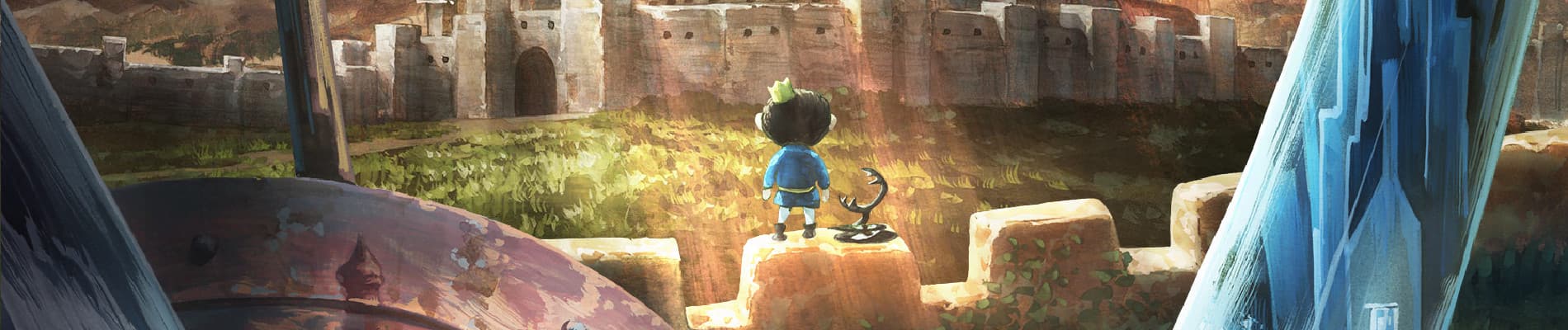
Now of course, we have the legendary Wit studio – the same studio who gave us shows like first 3 seasons of AoT and Vivy: Fluorite Eye’s Song, so naturally good visuals are expected. But what we got here, isn’t as flashy as modern day shows. But that is exactly where it shines. The simplistic character design utilizes the diverse height range of different characters really well. On one hand, it does give the show a comedic edge, and on the other hand it does add on to Bojji’s powerlessness. Yes, the animations could’ve been smoother; but apart from that it’s good. There are some really “trippy” animation styles in certain scenes, and I would’ve preferred if they used that a bit more. Nonetheless, good style. Does boost the overall experience.
Now this is where I can’t complain. The voice acting is very good, almost to perfection. Their respective characters are very well depicted by the respective voice actors and actresses. We also get a much deeper idea of their characteristic traits via this. And when it comes to the music score itself, it’s also incredibly well done. The medieval aspects of the environment, especially the fight scenes, is depicted really well here. The score feels like an Instrumental Folk suite, while using some Chamber and Gospel influences at times. The happier scenes also use some orchestral instrumentation, which makes it sound very beautiful and grand. And of course, we have the opening and ending tracks. The first 11 episodes and the next 12 episodes feature different sets of tracks. The former leans towards a much more fun and upbeat mood; while the latter leans towards a much more aggressive tone. Regardless, all of these are fantastic. I can’t think of any particular place where the music could’ve been used in a better way.
As mentioned before, this anime holds a lot of possibilities for a second season; and spinoffs on minor characters are also possible. Of course, it may not be as amazing as this season as the key factor won’t be there. Bojji’s pain and growth is one of the primary reasons why this anime never let us down. But since it has already been explained, we won’t be as engaged as before. Also, if they are doing some spinoffs on certain characters
In conclusion, I must say – this is certainly one of the most unique shows I’ve watched in a long time. There is comedy, there are some heartbreaking moments, and there are inspiring characters. We see Bojji grow from an apparently powerless kid to a worthy king, and we see everyone around him emotionally detaching themselves – and then coming back to him, all because of their love for Bojji. The latter is especially true for Queen Hilling. The moments where she reunited with Bojji are beautiful and heartwarming. Note that all of the above-mentioned plot negatives were very much rectifiable, which leaves the show in a near-perfect state. Phenomenal show, offers a diverse range of emotions, easily worth your time.
34.5 out of 40 users liked this review
