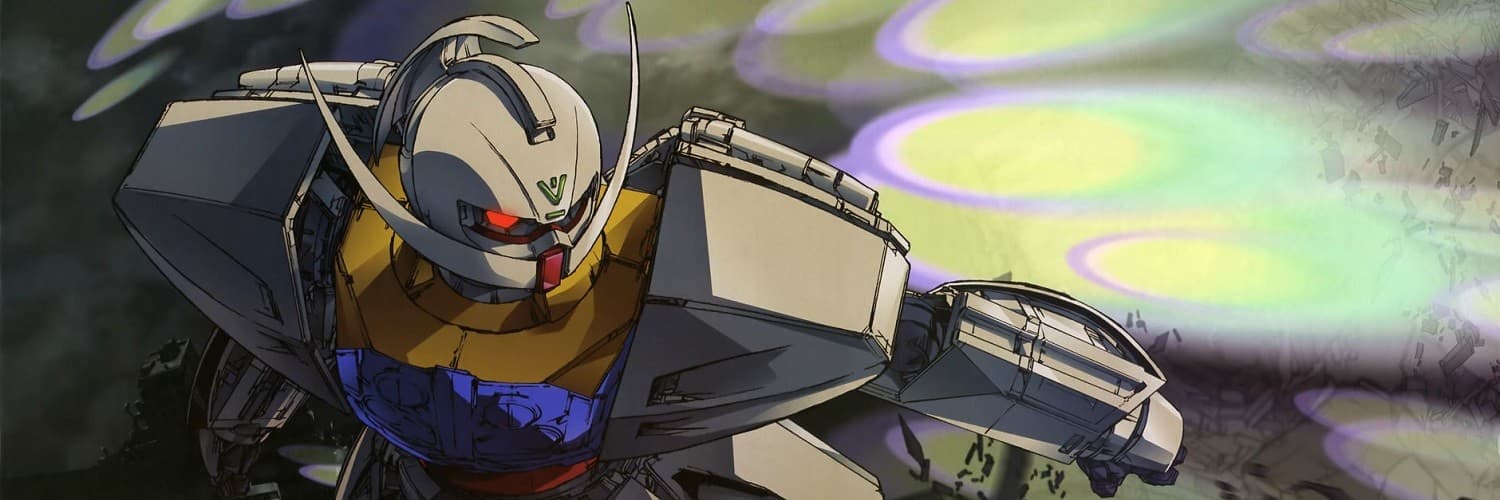
Turn A Gundam
a review by BeatleJews
a review by BeatleJews
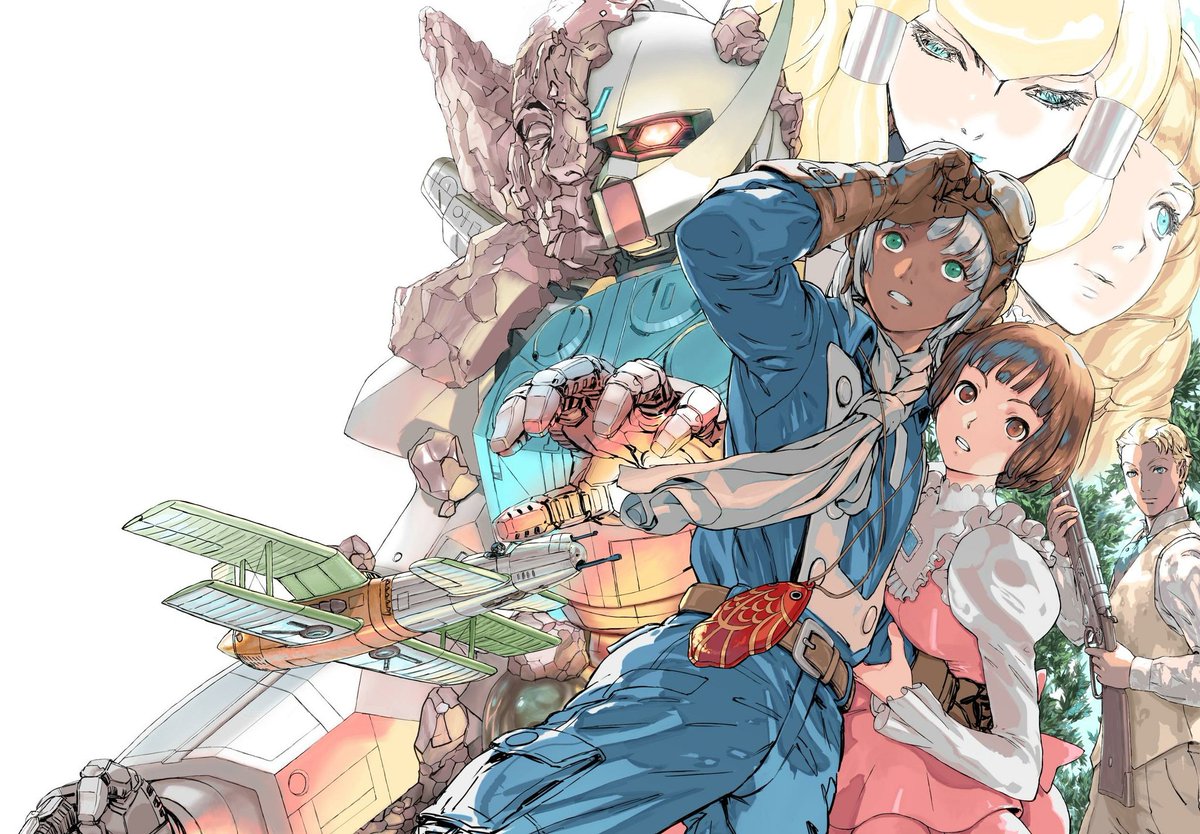
Before starting this review I’d like to make some clarifications in order to add some context to the way this review was written. You see, I completed Turn A Gundam back in January 2021 (this review being published in early April of the same year) and told to myself that I would write a review of it but never got around to it—don’t think about it too much, sometimes I can be a very lazy arse.
That said, don’t think this timespan between completion and review was enough for me to forget my impressions about this show; I still have the basic idea of the story in my head as well as my (notably few) real criticisms thanks to some notes and conversations I’ve had with acquaintances.
Even so, I still want to warn you that this analysis may look more rambly than my previous works due to all the reasons explained above. I will still try to keep the text as structured as I possibly can. So, if you don’t mind those types of reviews, then I hope you like this one. Also, needless to say:
The Mobile Suit Gundam franchise is a series that, for me, is like contemplating a landscape full of geographical formations when it comes to the quality and remarkability of the shows therein. From the stunning and sublime frosted peaks like 0080, Unicorn and 08th MS Team; to the uneven, but not less remarkable valleys below (Zeta Gundam, ZZ Gundam, etc). ~~There’s also the forest fires but we don’t talk about them (Narrative)~~
The thing about this franchise though, is that it has always tried to deliver a similar message across all its entries—with varying degrees of success. Said themes mostly revolving around the nature of conflict, the fragility of maintaining peace, the resulting paradoxical loop that ensues when you resort to violence in order to keep peace; as well as presenting a genre defining take on the future of space exploration and its consequences on a societal and cultural level.
So, what did Turn A Gundam do in order to follow this long running tradition while simultaneously feeling like such a breath of fresh air to watch and simply stand out as one of the franchise’s most important entries to date? I shall set as my objective to prove this argument for the duration of this review, as well as pointing out all the things that it did exceedingly well and the things that it did not do so great….
Turn A Gundam breaks the mold from the very beginning by setting the audience in a world where the great stories and tragedies of the Universal Century have all but become ancient tales of millennia ago, in fact; this era is so long forgotten by the present humanity that a term has been coined in order to refer to this period: The Dark History. For reasons that we aren’t explained initially the flourishing space era had been wiped out from the face of the Earth so drastically that human civilization has simply receded to the technological levels present in the 19th century—economies are largely agrarian, industrialization is at its infancy and normal commodities for us like vehicles are still a luxury prevalent in the aristocratic landowning elite that have become the rulers of the few States that survive in what used to be North America.
In addition, one interesting thing about this initial premise is that our protagonist does not belong in this terrestrial world; Loran Cehack is, quite literally, an emissary from the stars. He is part of a special reconnaissance team sent by the Moonrace civilization; a human faction that has set up a colony in the moon and, expectedly counts with the technological edge unlike the Terrans. Loran’s objective is to blend in with the Terran population and determine whether it is safe for the Moonrace population to return to earth once again. In order to achieve this, he quickly becomes a driver and general assistant to one of the previously mentioned wealthy landowning families, where he will meet his fellow heroines: The Heim sisters; Sochie and Kihel, as well as the important aristocrat Guin Rhineford. As time passes and Loran and his fellow moonrace friends have all but settled in their new lives. The Moonrace finally shows up to the unsuspecting Terran population with a sizable expeditionary force acting in name of the Lunar Queen, the mysterious yet captivating Dianna Soriel.
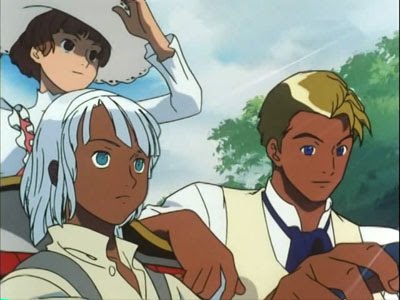
I think one of the best things about this setting is how the world has suddenly been reduced in scope in order for our main characters to explore it, and discover whatever has been hidden from them by the Dark History. Most of the show takes place on Earth and it isn’t until the third act that the space element kicks in, to the audience’s total gratification. This same theme of exploration is also applied to the mecha element as well, seeing how all the mobile suits that the Terrans muster to fight back against the Moonrace are found under rocks—well, not literally but they do have to dig them from underground. One of said mobile suits also happens to be the namesake of the show.
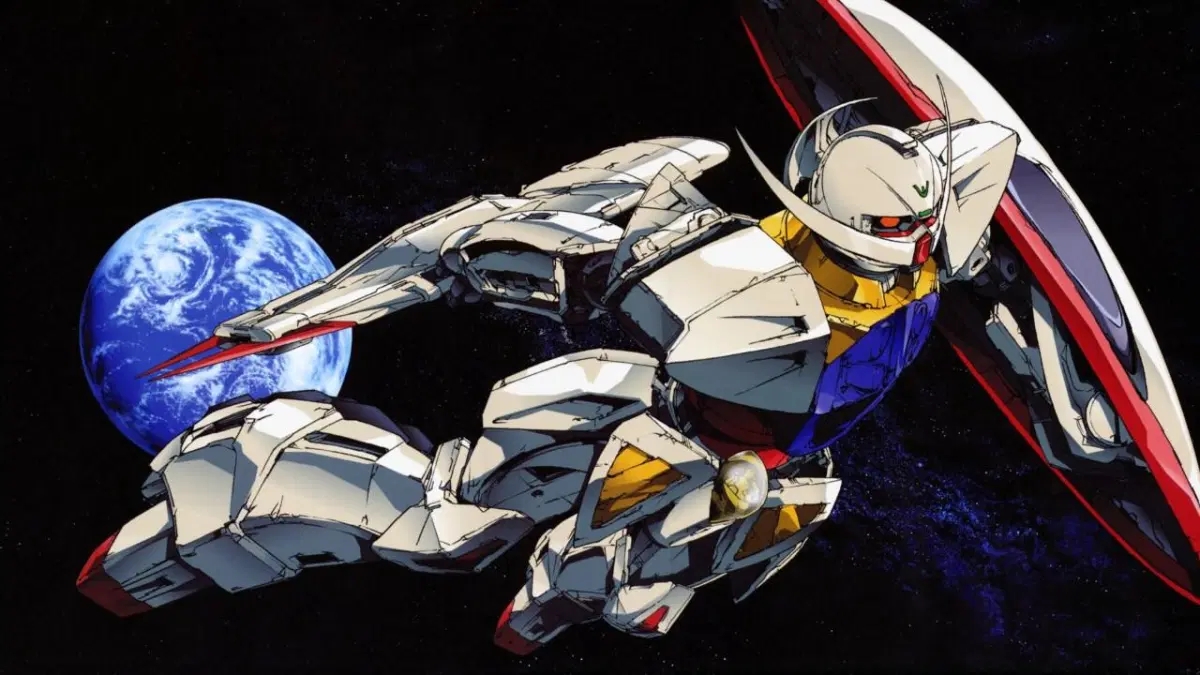
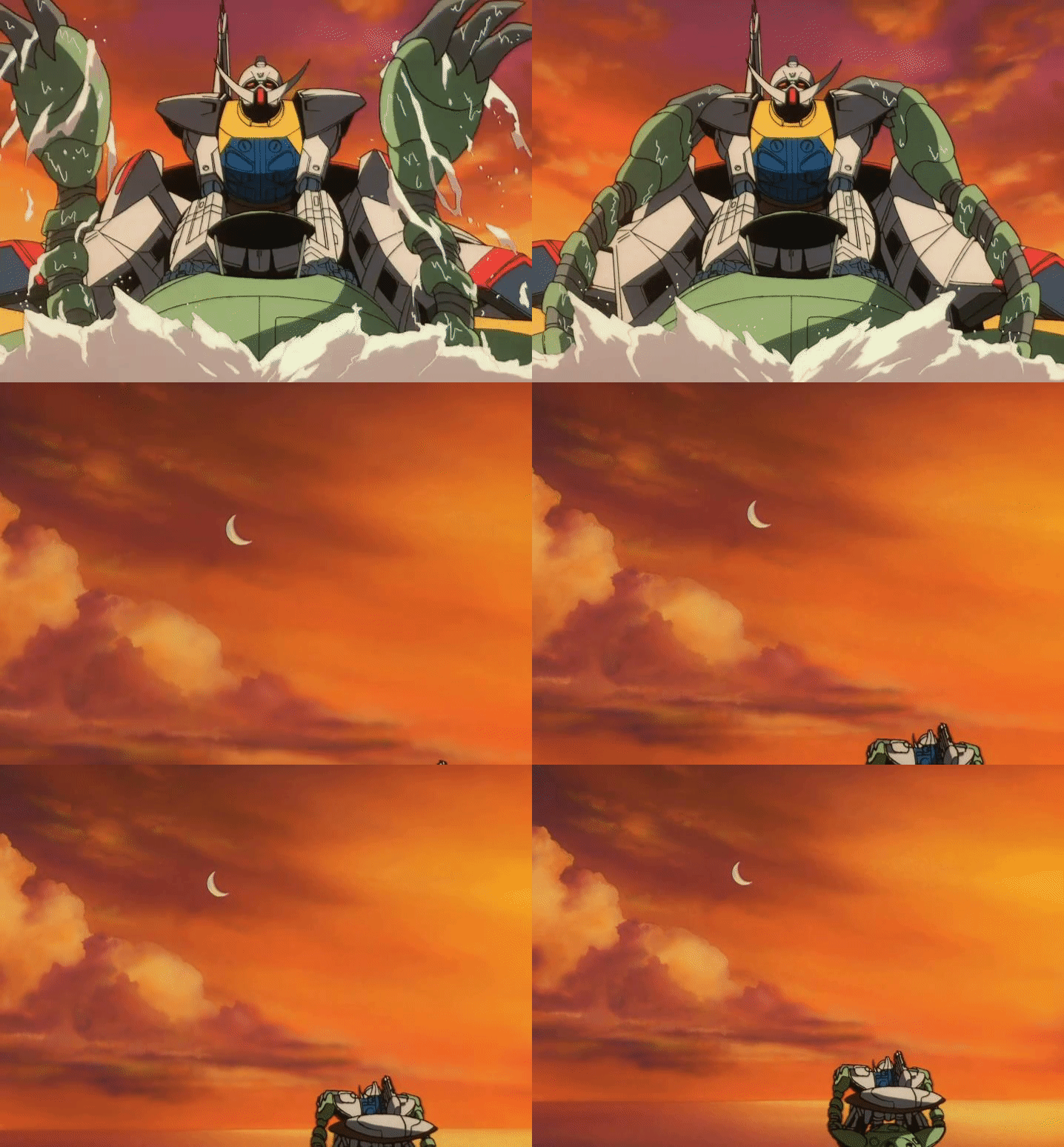
And let me just say right off the bat, that the Turn A’s design is some of the most interesting and beautiful mecha designs I have ever seen. I will not go into many details on this so I will just leave some pictures of this MS so you can see what I mean with interesting. Coming from the pen of legendary concept artist of Blade Runner and Aliens fame (yeah I’m not joking), Syd Mead. The Turn A’s Art Deco-ish design with sharp lines and the mustache-shaped face, coupled with the way Loran pilots it does give this mobile suit a very distinct personality that I have yet to see replicated in any other mecha show to date.

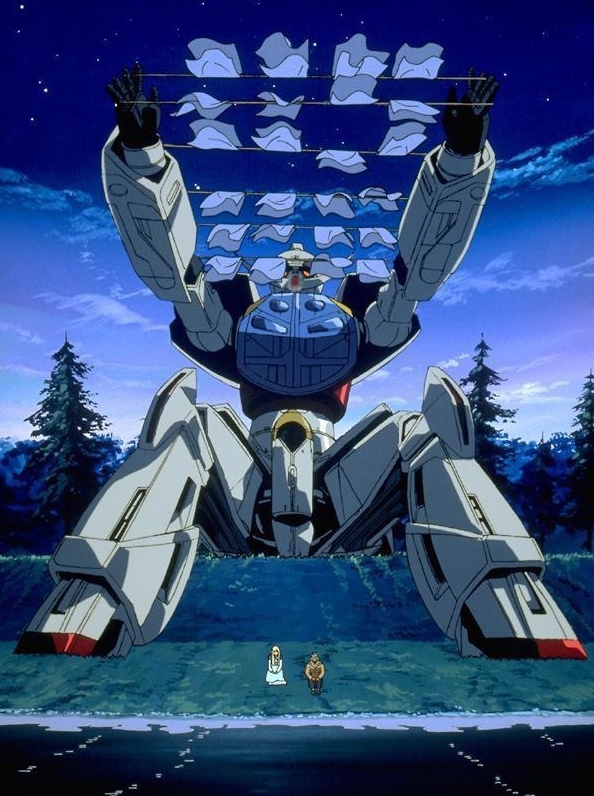
Speaking of personalities, it is time for me to talk about the character drama that takes center stage in this show.
Gundam is no stranger to character centered narratives like this, yet, I also think that it doesn’t have the best track record in this department either; Zeta Gundam being a good example of this (hot take, I know). Turn A Gundam, on the other hand, just proceeds to deliver a general slap in the face to all the Gundam shows that preceded it and it did it in a way that felt so at home with the way it presented its narrative. What do I mean by this? Well, there’s a noticeably bigger nuance between friends and foes because the show is not really trying to deliver a story from a single perspective, like say, of the Terrans. It doesn’t try to portray the Moonrace as a bunch of genocidal maniacs either. Loran and some of his friends, are Moonrace after all but that doesn’t mean they want to exclude their fellow Terran friends from coexisting on Earth in peace. The way the show pretends to deliver its story is by putting the audience in an elevated ground right in between both factions so it is easier for us to observe the unique circumstances and their motivations to act the way they do. Sitting next to the audience there’s also part of our main cast, namely: Loran, Kihel, Dianna; and later on, Sochie; who have to deal with both sides vying for their support—we can see firsthand the physical and mental struggles they have to go through in order to not betray their friends nor their own ideals and ultimately preserve peace. Another reason the characterization goes along with the themes of the show is because, almost everyone here is a hopeless idealist. From Loran Cehack to Guin Rhineford. Loran being the embodiment of the anti-war protagonist done extremely well and Guin being the overly ambitious schemer that has his mind set into reaching a single goal, not for himself, but for humanity as a whole; not to mention, there’s this aura of hopefulness and optimism that irradiates from every character interaction, and I’m not trying to make fun of the show with this. To tell the truth, I think it is something that was made on purpose by the writers to drive home the fact that the people who live in this world have no idea how horrible their past really is—the real extent of the destruction humanity is capable of reaching. This veil of ignorance is slowly lifted by our characters as the show progresses and it will be their reaction to knowing this vile past that will motivate them to try to correct the errors of their shared past once and for all.
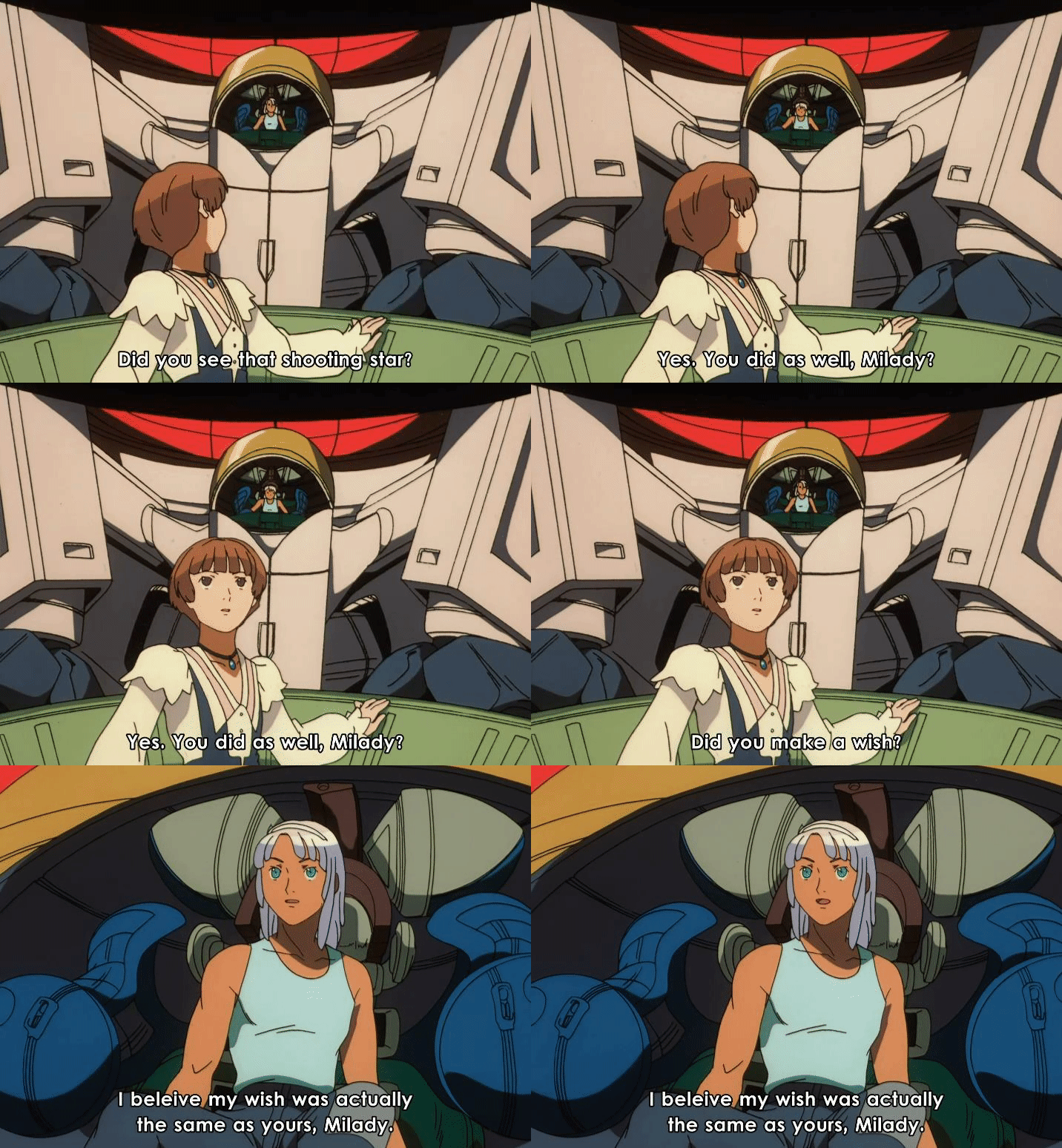
One final caveat about the characterization in Turn A Gundam is how it all feels very slice of life in the best way possible. In many ways it shows us it is just as easy for humans to live peacefully no matter if they are Terrans or Moonrace; as it is easy to wreak havoc in a senseless conflict for whatever reasons. In more than one occasion, the show portrays Terrans and Moonrace people working together for a common goal and getting to know each other; Loran's Moonrace friends that descended with him on Earth, Fran Doll and Keith Laijie are prime examples of this: Fran trying to pursue her career as a photographer and getting in a relationship with Terran Joseph Yaht, and Keith just wanting to make his small business flourish and be able to feed as many people as he can, while also getting in a relationship with a Terran girl. You can’t help but root for these characters from the very beginning and hope to see them overcome their hurdles.
If telling you that I wrote this whole review listening to Turn A Gundam’s OST does not convince you that this anime’s music absolutely and positively kicks ass then I don’t know what to tell you. The score being written by iconic composer Yoko Kanno (Cowboy Bebop, Ghost in the Shell) there is simply no way you can go wrong with this. The musical style mostly focuses on elaborate orchestral pieces resembling the likes of Gustav Holst. Just like the overall vibe of the show, the music oozes with joy and energetic choruses; while also keeping a touch of solemnity, calmness and gentleness for the more character focused moments.
The animation on the other hand was something that had me worried for a few episodes due to it not looking as good, even for 1999 standards. My main problems had to do with the animation quality for the mobile suits and the fight sequences; I just didn’t feel enough weight from these fights nor from the mobile suits themselves, it is hard to explain. All these animation problems would all but vanish soon enough and the overall quality would just get better, even for a 50 episode show.


For all the praise I have given to this anime I still think it had some important flaws that prevented it from being a perfect show. So I will talk about them with full spoilers below. I will also bring up some things that I enjoyed but can’t discuss in detail without getting into spoilers, so you can see this as the spoiler section. If you read them without having watched the show it is at your own risk.
I also didn’t find the final villain of the show, Gym Ghingham to be even remotely interesting compared to Guin. Gym just wasn’t built up properly; in most of his appearances he came off as villain in a comedic sense, like; I could not take him seriously. I guess you could make the argument that Gym was supposed to encapsulate the human potential for destruction but even then this angle doesn’t even remotely stand a chance against Guin Rhineford’s naïve delusions of becoming the next messiah that would usher in a new era of technological progress not taking into account that just as technological advance can bring prosperity to everyone it would also bring about the risks of conflicts the likes of which could destroy civilization just as it did with the Dark History.
On a lighter note, I liked the way the Heim sisters are developed and how their interactions are affected by the fact that Dianna is the one that interacts with Sochie during most of the show. A good reason why Dianna and Kihel switched places early on was in order to further develop their character arcs, seeing that both characters complement each other in more ways than just appearances; Kihel playing the role of Dianna gave her a purpose that she was established to be looking for, now that she was entering adulthood (she even got womanizer Harry Ord to fall for her LMAO). On the other hand, Dianna playing the role of Kihel gave her a glimpse into the peaceful life on Earth she wished to obtain for herself and for her fellow Moonrace members. It is a very sweet dichotomy that cannot be understated in my opinion. Sochie initially started as the character with the biggest grudge against anything Moonrace, blaming them for the death of her dad. Unknowingly learned to move on from her resentment by interacting with not one, but two Moonrace people: Loran and Dianna posing as Kihel. She started to humanize the people she had come to despise so much while also exploring her side as a grown up woman with Loran.
I WILL NEVER forgive Tomino for separating her from Loran at the end though. My girl didn’t deserve to go through that :’(


Turn A Gundam might as well be the swan song of the entire franchise; to me it was one of those shows that I felt a little bad that it had to end. Getting immersed in this world and with these characters was an experience that was worth every episode. I remember watching a review once comparing Turn A with a Ghibli movie and, to be honest, the comparison holds up really well. In hindsight, I have to accept that this show had some really glaring faults. However, for a Gundam show; no, for any show—of this length! To have it do so many things right in exchange for almost no serious flaws to speak of I would take this deal any other day of the week without hesitation.
In the end, Turn A Gundam was a tale about the curiosity that drives us to discover everything that the world is, was and could ever be. Just as the world is full of threats, humans who won’t learn from the mistakes of their pasts and conflict; there’s also an inherent beauty to it that is out there to be found.

14 out of 15 users liked this review
