Goodbye, Eri
a review by AshenCant
a review by AshenCant
I take a lot of photographs. Last year I took a combined four thousand, three hundred and thirty-four - which averages out to about eleven or twelve a day. Prior years are about the same. I spend a lot of money on SD cards. Almost all of my friends I’ve talked to about Goodbye Eri have reflected on their own lives, their own grief, and their own relationship with archival and art.
The line between performance, creation, and falsification is a thread that links everybody in our current age. As people of all stripes get better at holding cameras, at editing, at correcting, we all collectively understand on some level that there’s so much to the world you never see in the photos. A vista that spreads out in every direction away from you gets flattened into a mere two dimensions, and an expression you hold would fall apart in an angle mere degrees to the left or the right.
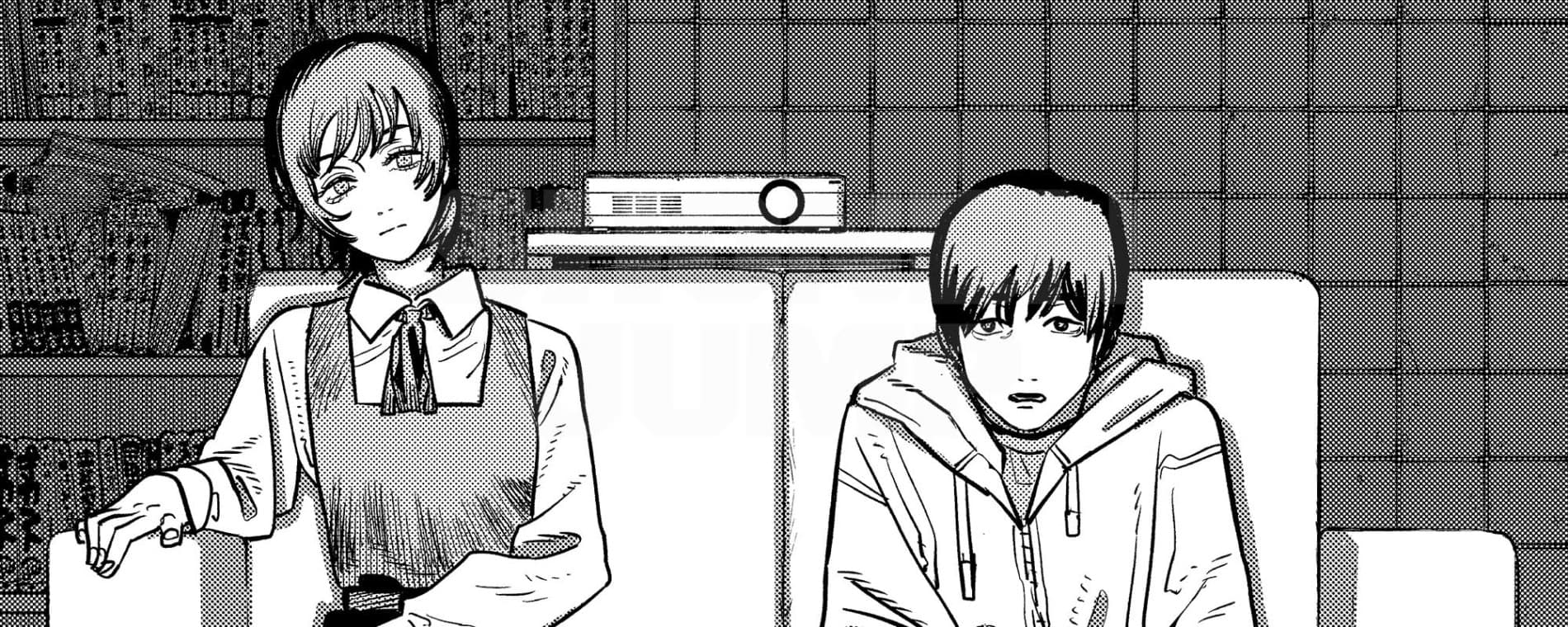
Fujimoto arranges the panels here in what feels like screenshots from a movie, or maybe storyboards. Unbroken scenes persist in the mind and in the memory, the tops and bottoms of the frame absorbing the entire page only when he wants them to. Overtly aping film through 21:9ish paneling (that still brings to mind 4koma as much as it does a screen) would come off as stiff and limiting by anybody else, but the easygoing dialogue and weighty subject matter make it readily flow.
And its inspirations do feel incredibly filmic - the premise feels very cinema verite, the blurry digital cameras as a Japanese middle schooler navigates loss and mass media feel very Lily Chou-Chou, and I cannot help but relate Dead Explosion Mother to I Think This Is The Closest To How The Footage Looked.
Remembering the truth is something that takes work. It’s something that you only see in those little moments you’d never think to jot down or record, those frozen conversations that stretch into infinity. Eri forces those into being, dragging strangers into movie marathons, asking to re-record idle conversations, turning pain into something that makes everybody except the sufferer cry. Even afterwards, he can't help but try to tighten it up, re-edit it, and make it bigger and smaller and clearer and safer all at once. It's easier to understand it from there, in something you can replay and rewatch and remember. But, in the end, you have to say goodbye to her.
There’s a sort of “stickiness” to this stuff - it’s much easier to remember the things happening around those photos, even without the original files. I recorded a funeral. The people around me lit lanterns and cast them into the sky. I promised to share it with everybody. My SD card broke on the drive home. Nobody ever asked me for a link.
Maybe it should've ended with a big CGI explosion.
160 out of 164 users liked this review
