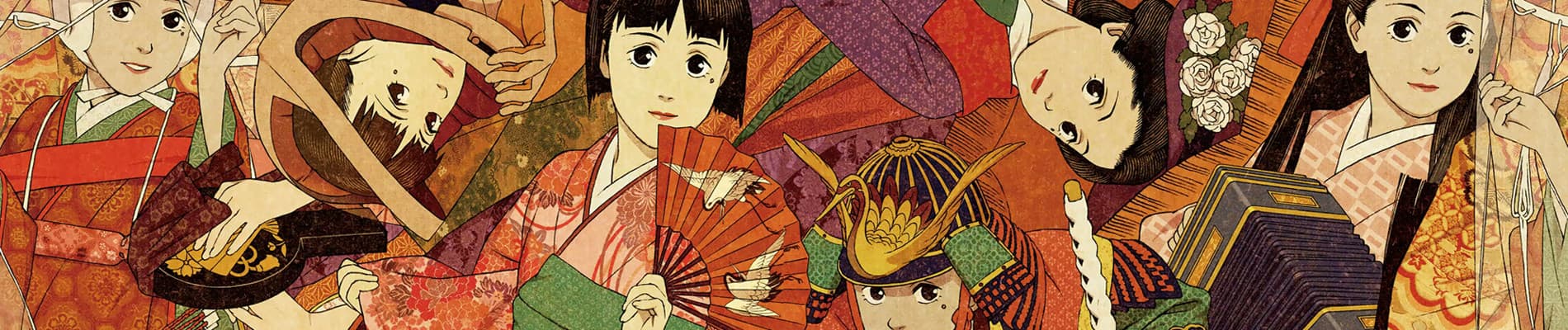
Unlike most anime fans familiar with his body of work, I didn't know much about Satoshi Kon and his influence on the anime/manga industry. At one point, when I was in college, an anime club I joined showed Perfect Blue for a movie night once, but I didn't like it as I'm not really into horror, and I didn't see the whole thing, as I had to leave due to other obligations. But Kon was considered one of anime's greatest movie directors, and fans eagerly wanted him to make more movies, which would be rendered impossible due to his untimely passing in August 2010. In recent years, there's been a sort of Kon renaissance in the West, as licensing companies have been not only giving his movies and shows newer releases, but in some cases, giving them completely new dubs, whether they be from whole cloth (Eleven Arts' dub for Tokyo Godfathers and Discotek Media's dub for Memories, particularly the Magnetic Rose segment, which Kon did the screenplay for) or re-dubs to replace older dubs that were seen as inferior, with the latter being the case for Millennium Actress, the subject of today's review. I went to see the new English dub at a limited screening in my area because a coworker recommended it to me, and...I'm really surprised at how much I liked this, and now I see why Kon is so revered in the anime movie circle.
The story goes as follows: A filmmaker, Genya Tachibana, discovers that an old movie studio he worked at, Ginei Studios, is being torn down on its 70th anniversary. This event motivates him to track down the elusive film actress who sustained it for several decades, Chiyoko Fujiwara, and interview her for a documentary. He and his cameraman manage to find her, even though she had been living as a recluse for 30 years, and he even gives her an item of hers that she once lost long ago: A key on a string, which serves as the impetus for getting her life story. Chiyoko uses the films she starred in to frame her life story, and her roles span a thousand years over Japan's overall history, all of them tied to one thing: The mysterious man who gave Chiyoko the key.
Kon as a filmmaker is pretty well-known for blurring/blending the lines and boundaries between illusion and reality in his films, making the viewer unable to tell if what's going on is really happening or even just some weird dream. His visual and psychological trickery would pretty much become his signature style, and in Millennium Actress, it's presented as Genya and his cameraman not only actively observing the events in Chiyoko's life and movies in-person, but becoming participants in them as well. In less dept hands, doing this would make a movie either extremely confusing or wind up being a huge disaster. But here, Kon's signature style is used to great effect, because the approach used here implies that the reason Chiyoko was successful as an actress is because she was basically playing out her life story, putting on display her passions, desires, and what drives her, and that kind of sincerity speaks to people. Plus, bringing this story to life with animation was a good move on Madhouse's part, because animation is able to seamlessly accomplish what Millennium Actress as a movie in itself wanted to convey than the more limited scope of live-action, barring CGI advancements that would come later. The animation has some rough spots, and the visual aesthetic may come off as dull and muted to modern audiences nowadays, but it's clear the animators put a lot of effort into it. The character designs and background art all serve the story amazingly well, so I have no complaints here.
I have a little less to say about the soundtrack, though. Not because it's bad or anything, as I did genuinely like it, especially the song sung by Susumu Hirasawa at the end. The OST itself is fine, but mixing piano and synthesizer, especially at the end, can come across as a bit dated. But it does its job, so I don't mean that as a knock against it. Of course, what would a movie like this be without a cast of characters to back it up? Thankfully, every member of the cast, from Chiyoko herself to the people she worked with during her acting years all serve their roles amazingly well and are as far away from the usual stereotypes as humanly possible. It helps that the cast mainly consists of adults, and they're all fun to watch, even if some of them aren't exactly the most likeable. I also found the cameraman's commentary on all the weird events playing out before his eyes to be pretty funny. Speaking of him, there is one complaint I have about the movie: The cameraman is never referred to by name throughout the film. I know his name is Kyoji Ida, but I only found that out by looking it up on Anime News Network, and at one point in the movie, when he and Genya find themselves in 1860s Kyoto, Genya calls him Torakichi, and I thought that was his name throughout the entire movie, as nothing indicated that he was known by any other name, so when I found out that wasn't his name, I was really confused. Is Torakichi the name of a character in the movie that they were living through in that one segment? It's not made clear, and like I said before, Kon really likes to blur the lines between what's real and what's not in his movies.
Honestly, the only other issue I have with Millennium Actress is a couple of unanswered questions, but they're small potatoes in light of everything else the movie has going for it, and I think its positives far outweigh its negatives. I read that apparently Millennium Actress is meant to be a foil to one of Kon's other movies, Perfect Blue, with both movies focusing on the life of an actress, with one exploring the darker, less savory aspects of the movie industry and its fans, and the other, which is Millennium Actress, highlighting the good parts of it. With this, now I see why Kon was so beloved back when he was alive. I wouldn't say I've become a fan, as every project he's worked on is different, and some of his stuff as elements that don't sit right with me, but I can wholeheartedly say that this is my favorite movie of his. Plus, Millennium Actress is now more readily available thanks to Eleven Arts and Shout Factory putting it out on DVD and Blu-Ray with a shiny new English dub. It was originally put out by a different company back in 2003 with no dub, though Manga Entertainment did make a British dub for it for its own release in the UK, which, from what I've heard...is not very good. You're better off watching the Japanese version or the new English dub that Eleven Arts put out three years ago. The latter has its own issues, such as the occasional off lip-sync and one line repeated by accident, but it's far superior to the original dub by a country mile. It helps that it's also streaming on a bunch of websites for free, including YouTube and Tubi.
A loving homage to the film industry helmed by one of anime's greatest directors who passed before his time, and definitely a favorite film of mine. I'm glad I took the chance to see it, so give it a shot if you can.
22.5 out of 23 users liked this review