
_Patriarchy and Revolution _
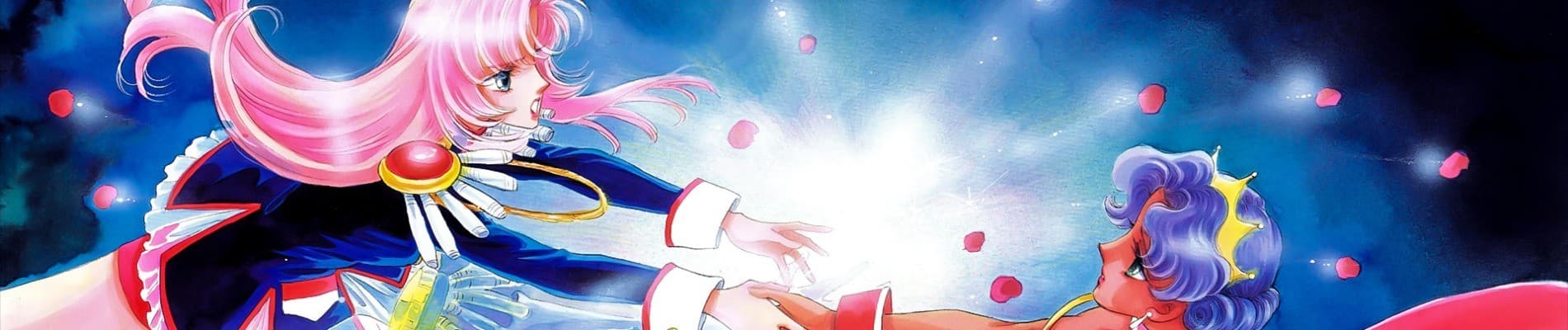
Revolutionary Girl Utena explores the coercive behaviors of those in power, and illustrates the pressures patriarchy subdues onto women in various ways. It outlines how narratives and roles that permeate society can have a destructive effect on those within it. It then follows one girl, a revolutionary girl, from her journey through this normalized cycle of injustice, showcasing the effect she has on those around her, to her individual revolution beyond it.
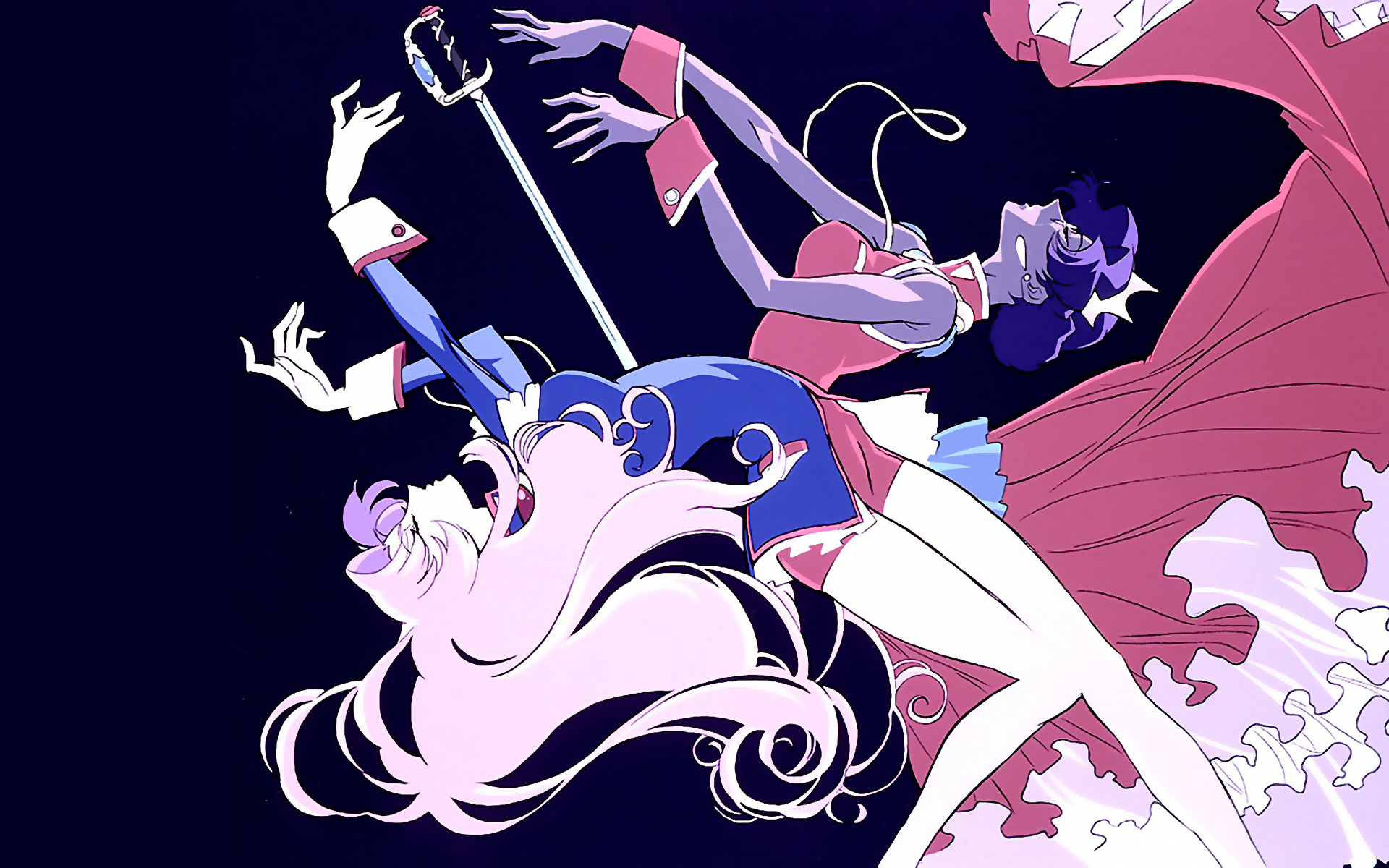
Power is something that very easily becomes coercive and corrupt. Oftentimes this corruption isn’t immediately apparent, as that very power is what sets the standard for what is “corrupt”, and it has the ability to direct those under it’s attention elsewhere. So, by virtue of being a form of power, patriarchy becomes a structure of society that has destructive effects on, women in particular, but ultimately everyone in some ways.
The dynamics of this power are shown in subtle and overt ways all throughout the show’s run. Himemiya’s character is a representation of these effects to an extreme, hyperbolic level. She has taken on the role of the “Rose Bride”, which we learn to be a figure who is meant to be a sacrifice for the prince for the sake of revolutionizing the world. Throughout the show, the duelists fight for this rose bride who has no say of her own. Saionji is the first duelist we come across who is in possession of the rose bride. We come to learn that he genuinely loves her and thinks that she loves him as well. However, it is obvious that he is exceedingly toxic—physically and emotionally abusing her constantly. When in power as the duelist that has earned possession over her, he is an overt embodiment of patriarchy’s potential direct effects on those that have accepted a role of being controlled within it as a consequence of their circumstances. Characters like Touga and Ruka explore more facets of the effects of patriarchy as well in their relationships and general thought processes throughout the series. These characters aren’t all necessarily entirely evil people, though. They all have their own issues and humanity behind them, such as Saionji’s genuine love for Himemiya--However the society that they are in and the patriarchal reality of it has shaped their behaviors and placed them in positions of power that have influenced their toxic beliefs and actions. The effects of patriarchy are seen in other miscellaneous ways as well, such as the school’s irrational opposition to Utena wearing a boy’s uniform, or the girls who follow around Nanami being incentivized to abuse Himemiya because of Saionji’s influence.
This exploration of power dynamics, however, are not solely in relation to patriarchy. This can also be seen as a general allegory for the ways in which power structures affect any minority group. In the interview linked below, Ikuhara explains his use of lesbianism to this effect.


Akio is probably the most thoroughly explored character on the oppressing side of the power dynamics and patriarchy. His position of chairman in the school setting and his identity as The End of the World make him the single most powerful figure in the show. His view of the world and others outline the kinds of thought processes that lead to the negative outcomes we see for those under the power of others. Manipulative, toxic behaviors hide themselves behind unfounded justifications and self-righteousness. Akio claims to “see the world as it truly is”, which hold some truth to it—but it excludes the possibility for the world to be changed. He views the roles and hierarchies in place to simply be how things are—so not only does he not want Utena to become a prince or revolutionize the world, he doesn’t believe she is able to. He views others as the roles they must fill, and therefore inferior to him, the prince, because of his privilege of being in power. He sees himself as the only one capable of being the prince. However, in order to even attempt to revolutionize the world, he must sacrifice the rose bride. This is represented by a beautifully tragic scene of thousands swords all piercing Himemiya in the air. Akio has to stand on the backs of those he has oppressed in order to get to where he wants—but, this still isn’t enough to revolutionize the world.
Utena, throughout most of the show, seems to embody a subversion of gender roles—a counter-culture to the norm and power structures in place. Most of the other students and girls like her quite a bit for this. She has a generally positive impact on those around her and this counter-culture aesthetic and adopting of labels such as being a “prince” can be empowering. It utilizes this fierce aesthetic to serve as a source of inspiration. Touching on many personal issues and illustrating the ways in which our environment negatively affects us, it offers this subversive nature as an alternative and something that provides hope despite it all. However, this is only to an extent. One of the driving motivations for Utena to do this is her memory of the prince who saved her when she was young. This prince gave her a ring that she now treasures. Because of this memory of hers, she has decided that she wants to be a prince as well. This is what causes her to be so protective and chivalrous toward Himemiya. Utena is doing her best to fill a role because of her memory of an idealized prince that she holds so dear. This ends up backfiring on her. She meets Akio, who fits her idea of the prince that saved her, and is therefore easily manipulated by him. He ends up convincing her that she is more fit for the role of the princess, because she is a girl. These roles and narratives of princes and princesses and witches, while in some cases empowering, are ultimately nothing more than illusions created by patriarchal powers--This is symbolized by the upside down castle that floats above the dueling arena. Akio says that "eternity" lies within it, which can be seen as his believing that change is impossible, but it ends up being an illusion created by him. This castle has obvious ties to the medieval fairy tale narratives and roles that are pushed onto people, as well as representing an authoritarian power structure, being related heavily to monarchy. This "eternity" he speaks of, or "The End of the World", is nothing but a fabricated narrative constructed by those that wish for things to stay as they are, benefitting them, and not revolutionize beyond the current state. Utena internalized patriarchal roles and narratives when she was young, which made her especially susceptible to the destructive effects of the patriarchy later in her life.

However, Utena is a revolutionary girl. After Akio is contented by the result of not being able to revolutionize the world and things staying same, Utena crawls her way to the door where this revolution is supposed to occur. She is not able to revolutionize the world, as she is contingent to her own experiences and life, she is only one revolutionary girl—but she is able to revolutionize herself. In doing this, she stops Himemiya from being sacrificed, as its not on the backs of the oppressed that real positive change can be made. Instead, it is connection that strengthens our possibility for change. This genuine connection that she shows Himemiya inspires her to reject the role of the rose bride and follow in Utena’s footsteps toward freedom. Revolution as it happens to Utena is breaking free from the structures that surround her. She escapes the cycles of injustice that held her down. She refuses to be the princess, but she also doesn’t feel the need to fill the role of the prince, as its only without the predisposition to these roles altogether that she is truly able to be herself. Subversion is not enough—or else the proletariat will simply become the next bourgeoisie. Real revolution is a discerning of the narratives, roles, and powers that limit and control us to a negative effect, and a transcendence beyond them.
(Btw I also wrote a review for the film Adolescence of Utena, which I think adds a lot of thematic weight to the series as a whole, so check that out)
~~~~~~