Disclaimer: you’ll probably want to read my review for the series before reading this if you haven’t, as I reference and rely on a lot of ideas that I went over in that review in order to analyze this.

Revolutionary Girl Utena: Adolescence of Utena is technically a retelling of the tv series, as it re-treads the events of it quite thoroughly for its runtime. However, it functions more as a sequel or companion piece thematically. Being a film-length retelling of a 39-episode long series, Adolescence of Utena inevitably cuts out many details that add nuance and explore the idiosyncrasies of some of the characters and messaging. Yet, it also uses its time to refine some elements and iron out the thematic consistency and impact of the series. It doesn’t hold the viewer’s hand in explaining any of the differing events, it uses every second of its runtime to build upon the context and ideas from the series. This film and the series add a lot to each other and should be viewed in conjunction rather than as one simply being a retelling or sequel to the other. This focuses more on Utena and Himemiya’s relationship together, on the surface turning itself into more of a love story. However, just as Utena’s individual revolution in the series can be seen as a microcosm for a more grandiose idea of a transcendence beyond power structures and general change for the better, Utena and Himemiya’s relationship in this film can be seen in a similar light.
Much of this film relies on the context of the series, but at the same time recontextualizes and refines it. To succinctly display the influence of the power structures of the academy, it has the chalk boards in the classroom and the walkways and structures of the school itself mechanically shifting and being moved around, as if something was in direct control of it all. Lines like, “Everything here is entirely built around the prince”, give a concise but impactful examination of what the patriarchy is. The film then says, “There is no prince in the flesh”, clarifying that it’s not referring to Akio, or any individual person, but rather the broader system and influences of power in general. These things, along with the castle being the final obstacle for Utena and Himemiya, give a more mechanical and systemic representation to the power structures that have destructive effects on those under it, rather than an individual one, which I think is more accurate. Akio’s character was drastically changed. His character in the film, especially in relation his portrayal in the series, adds a lot to the franchise’s analysis of patriarchy and power. His character is still seen as “the prince”, and he strives to fill that role. However, revealed by his behaviors around Himemiya, he is actually a broken and unstable person. He has been drugging and raping his sister all this time, and once caught, he’s unable to come to terms with his own actions—because he is supposed to be the prince. The patriarchal roles and narratives of society hurt even the beloved Akio, as the expectations pushed onto him to be this idealized prince figure wore and broke him down. So, instead of a layered representation of the patriarchy itself, he becomes simply another individual within the system, victim to it in his own ways.

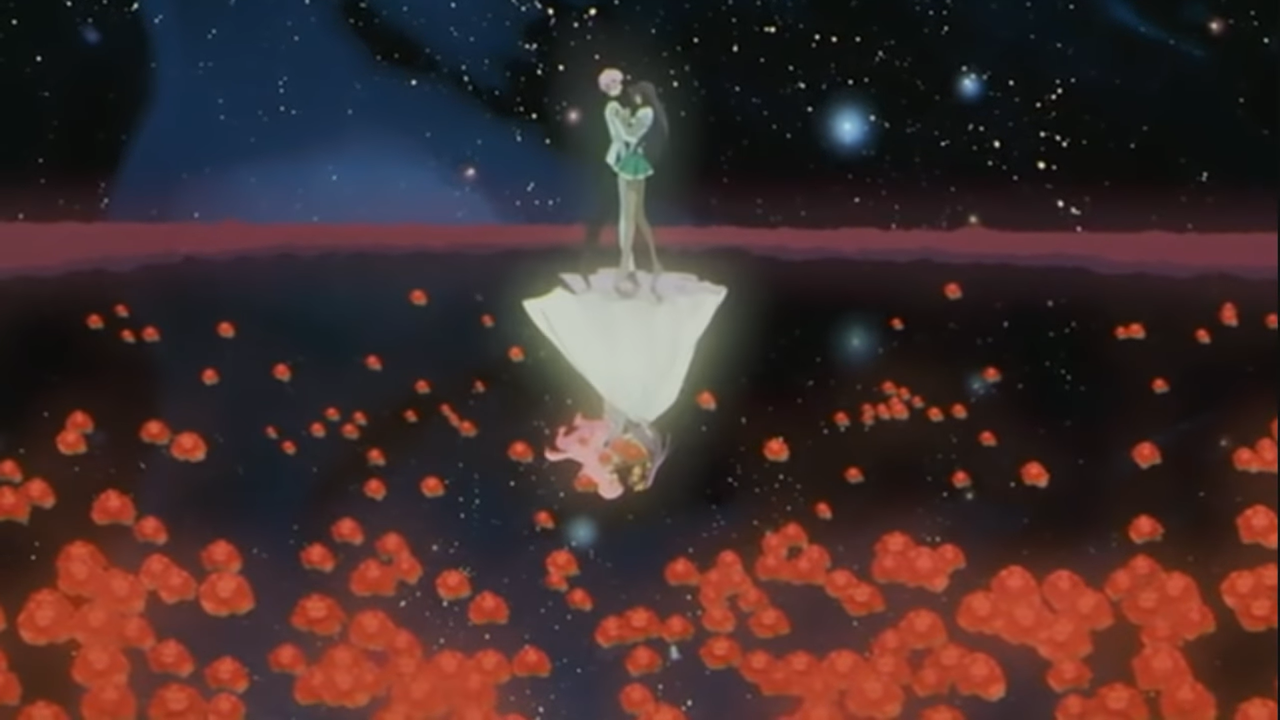
Adolescence of Utena is more focused on Utena and Himemiya’s relationship together than the series was. It spends much of its time developing their relationship, which eventually becomes explicitly romantic. This development is portrayed through a few, brilliantly presented scenes. First, after Utena has “won” Himemiya and they are in her room at night, Utena’s insecurity with her own sexuality is expressed. Then, in the scene where they are drawing each other’s portraits, where they get to know each other more and Utena is forced to confront her insecurity more directly. And finally, in their scene together up on the dueling stage, where Ikuhara’s masterful direction creates a magical scene of them dancing together amongst the water-filled rose garden—getting lost in the stars together. In this scene, Himemiya floods her rose garden, symbolizing her giving up her title of the rose bride, rejecting her status at the academy, and embracing Utena instead.
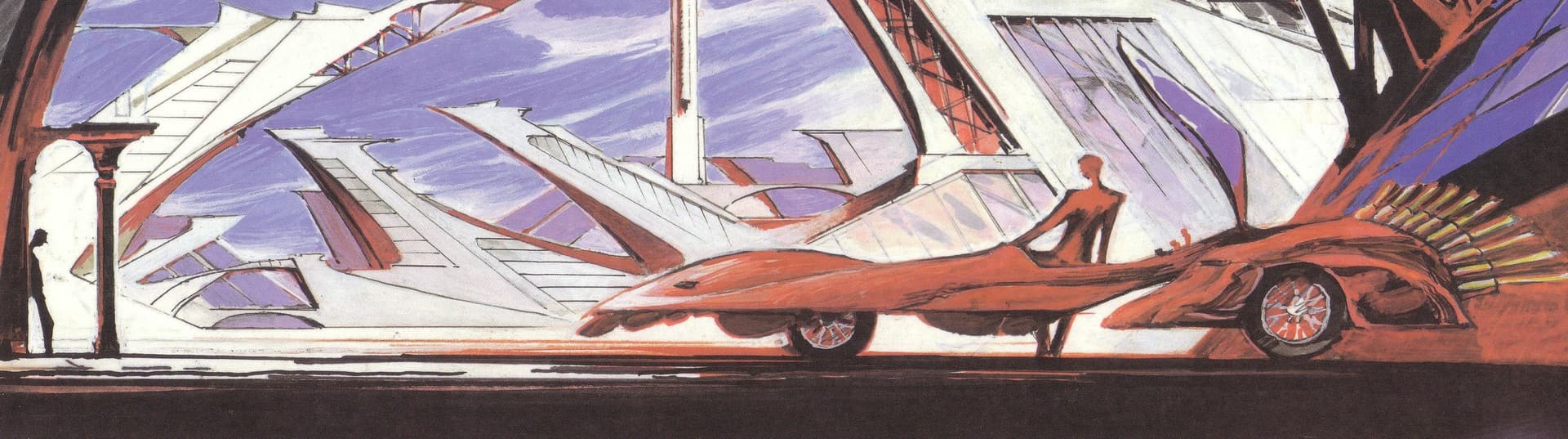
Instead of continuing with the dueling process, Utena and Himemiya decide to run away. To escape the destructive powers that attempt to limit and control them, to revolutionize beyond them, they attempt to get out of the academy and the system, and make it to the “outside world”. This is illustrated by a car chase sequence, in which Utena becomes a car that Himemiya drives, escaping from the other cars chasing them. At one point during the chase, Akio appears in front of them and says, “You will only reach The End of the World”. This is his attempt to discourage them from escaping, claiming that there is no outside world, there is no change that can be made for the better—this patriarchal and destructive academy, or society, is all that is possible. Yet, they are able to escape, overcoming the obstacle of the castle—which takes form as a car as well—on their way. Their defeating the castle is them breaking through the systemic powers that had such an influence over them. This car chase sequence is the act of revolutionization. It is the reaching toward and achieving freedom. As they have escaped, Utena and Himemiya travel the outside world which “has no roads”. However, they have the freedom to build new roads. The capacity for change and the development of that which is good is within us. This applies on a societal level of course, but also on an individual and interpersonal one. Break away from the forces in your own life that keep you down. Free yourself of roles and expectations that inevitably have a destructive effect and limit you. Use your ability to connect with others as an avenue for positive change within yourself. Don’t believe in The End of the World.

24.5 out of 26 users liked this review
