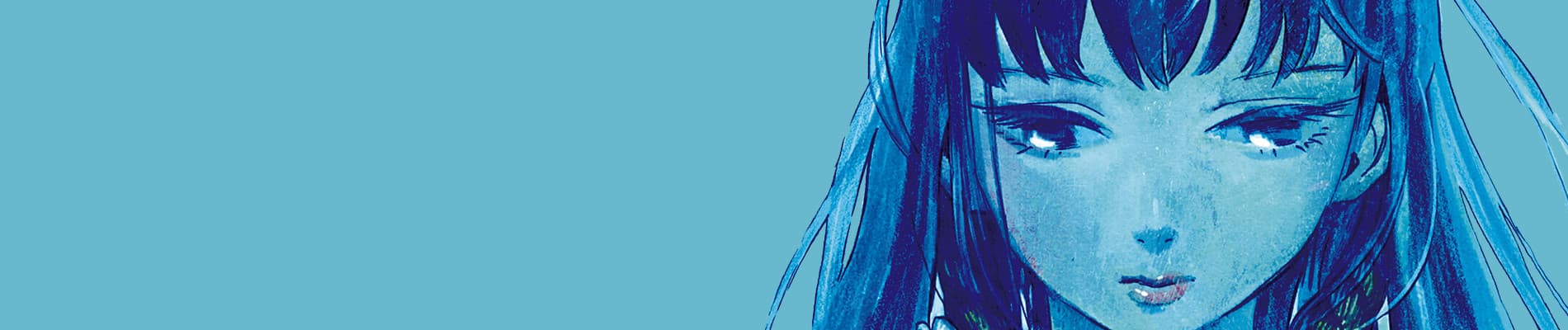
I picked up Yakedo Shoujo after watching a multi-hour long iceberg video in whence the Youtuber cold-opened the video with the dictionary definition of the word "Horror." So basically I knew I was going to be getting exactly the kind of content I was looking for there. Yakedo appealed to me in particular because I'm finishing up another semester in my endless groundhog day length career of school, and I'm slipping further into the pit of despair, and I just need some good, fun, wholesome edge, okay? And Yakedo delivers perfectly on that promise.
The concept of edge as a narrative tool in general has been fascinating for me to think about lately. I was the edgelord back in my middlehighschool emo conservative-christian-family-girl, sneaking-over-to-my-friend's-house-to-smoke-cigarettes, being-told-I'm-mature-for-my-age-by-boys-5-years-my-senior, Gir-backpack-wearing days. I was writing the edgy Dark!Hetalia fanfiction on DeviantArt. I had an entire birthday party where my friends gathered around my shitty laptop to play The Path. I was definitely terrified of Salad Fingers but watched it all anyways. My most beloved manga growing up were Elfen Lied and Mirai Nikki. Edge will always hold a special place in my heart. And Yakedo has some interesting things to say about the nature of edge.
On its surface, Yakedo Shoujo is a manga about a girl who's bubbly and wants to die and a boy who's gloomy and doesn't want to live (a very important distinction here). It's about these two falling in love and being in a dysfunctional relationship and having a plethora of other dysfunctional relationships surrounding them. So basically it's about any group of alternative high schoolers. You'll have people online talk about this manga and list it on their Top 50 Most Disturbing Manga of All Time, but in comparison to a lot of other fucked up manga, Yakedo is pretty tame. It has some relatively disturbing scenes of animal abuse and there is sexual abuse and suicide, but if you watch/read a fair amount of edgy shit, you've likely seen most of it before. I don't think the content in this manga is there for shock value but is rather there to be a narrative device for getting its characters to a certain emotional state. There are some things that are just best expressed through messy edge.
On the internet, and especially on review websites such as this one, the term "edge" is almost exclusively used as a derisive term. If a piece of art utilizes edge is is bad because it has not expressed itself through a more sophisticated means or it is making light of serious topics that deserve to be explored with more tactfulness. I agree with this to some extent. There are definitely moments when edge is used for shock value and since edge is an aesthetic, that necessitates aestheticizing certain taboo topics like abuse and suicide and underage drug usage and suffering in general. I think these are valuable conversations to have, and I would never say that people are wrong to be put off by these aspects of a piece of media. However, as a former edgelord, I must go to bat for edge and attempt to make a case that it can be a valuable tool and that, most importantly, preteen and teenage suffering deserves to be taken seriously rather than chided for being "just a phase" that the teens in question will grow out of.
But now we must return to this manga that I am purportedly writing a review of. I don't find it useful to examine the story of this manga because there really isn't much of one to speak of. Girlfriend wants to die but Boyfriend only kind of wants to die. They are both into some pretty fucked up shit, but it's clear that they both care for each other even though they're perpetuating a toxic mindset cycle for themselves. They have both also suffered some pretty massive trauma that ends up playing a big role in why they're both fucked up and want to die. At the end of their journey, Boyfriend decides that he does not want to commit double suicide with his girlfriend and then Girlfriend promptly disappears out of his life forever. I find this to be particularly interesting because the girlfriend, Shiina, blends the chuunibyou archetype with the depressed gf archetype (I mean c'mon she's eve got the eyepatch). In this way, she becomes the perfect manic pixie dream girl for our male MC. She allows him to have sex with her, to strangle her, to use her. She commits acts of violence in front of him so he can be a voyeur and learn about himself through this violence. Then at the end of his journey (because let's not kid ourselves, it is his journey), he learns that he actually doesn't want to die and ends up leaving this messy situation a changed and better man while we never get to know the conclusion of Miss Thanatos.
Well that sounds entirely unappealing. So then why does this story, and any story with edge in it for that matter, attract any kind of female audience. I can't speak for everyone, but in my case it's because these Death Drive girlfriends are iconic and relatable. I can see so much of myself and my former friends in these characters. I thought they were cool when I was their age, and now that I'm an adult, I find them nostalgic. There is also a part of me that wants to be able to shield these characters, and by extension my former self, from the trauma that is being a 14-year-old. Being 14 is fucking hellish, and I do not wish it on anybody. It is shocking to me that so many people make it past their teenage years with the no support that is there for them. Especially 14 year olds that are neurodivergent or queer or marginalized or part of an alternative subculture or are going through abuse or any of those things combined. I remember what it was like back then, and it fucking sucked, and sometimes the only way you have to express any of that teen angst is through edge. Once you get older and are able to reflect and crystalize your experiences, you and express those feelings in a more codified, avant-garde way (a la Houseki no Kuni), but until you get to that point, you just have to paint your nails black, cut thumb holes in your hoodies, wear knee high socks, put on some MCR and muck it out in the trenches. And that's why I will always have a special place in my heart for edge. Even the bad edge.
And don't get me wrong, Yakedo isn't bad by any means. It fumbles the landing on some of its characters but ultimately I find it treats its death-obsessed teens with respect. It never once points a finger at them and laughs at their suffering. These teens also find a support network within themselves. God knows it's not a perfect support network, but I think a lot of people will be able to relate to having most of your friends in high school be suicidal and having to stay up with them some nights just to be there for them. Yakedo also makes some attempt to explain why teens would be suicidal and why saying things like "it gets better!!!" rarely works. I saw one review on MAL mention that this manga was made for people who think "im14andthisisdeep" posts are actually deep, and they were saying that as a point of derision but also they were right. Yakedo is for 14 year old edgelords ,and I think that's great. Teenagers deserve to have their suffering taken seriously and edge deserves to be examined as any other narrative technique would be.