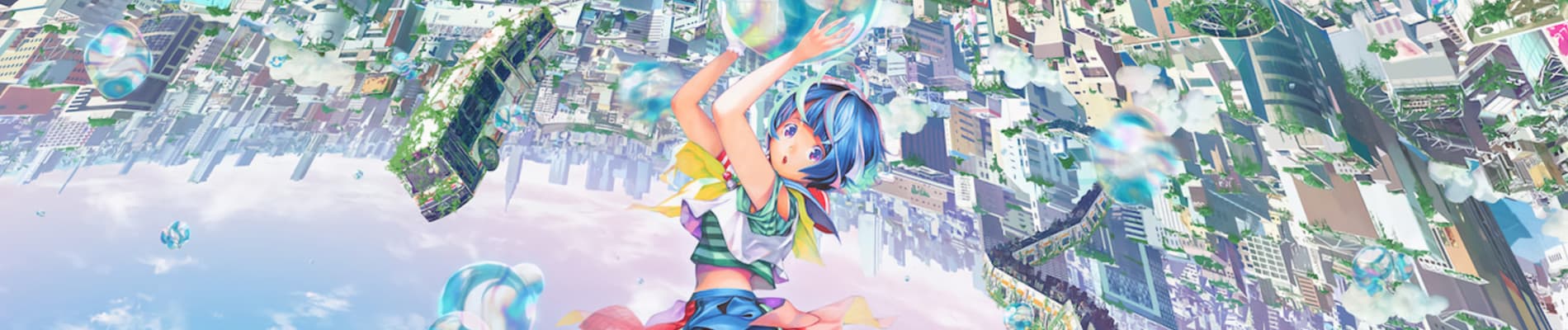
This film is just like a bubble - aesthetically pleasing but ultimately useless.
I would like to start by apologizing for that horrible simile I subjected you to. I only did that so you, the reader, would feel frustrated just like I did while watching Wit Studio’s new feature film Bubble, released exclusively on Netflix. We’ll come back to that at the end. My thoughts on this movie aren’t ground-breaking or different than the majority of viewers but I’d like to selfishly voice them anyway –
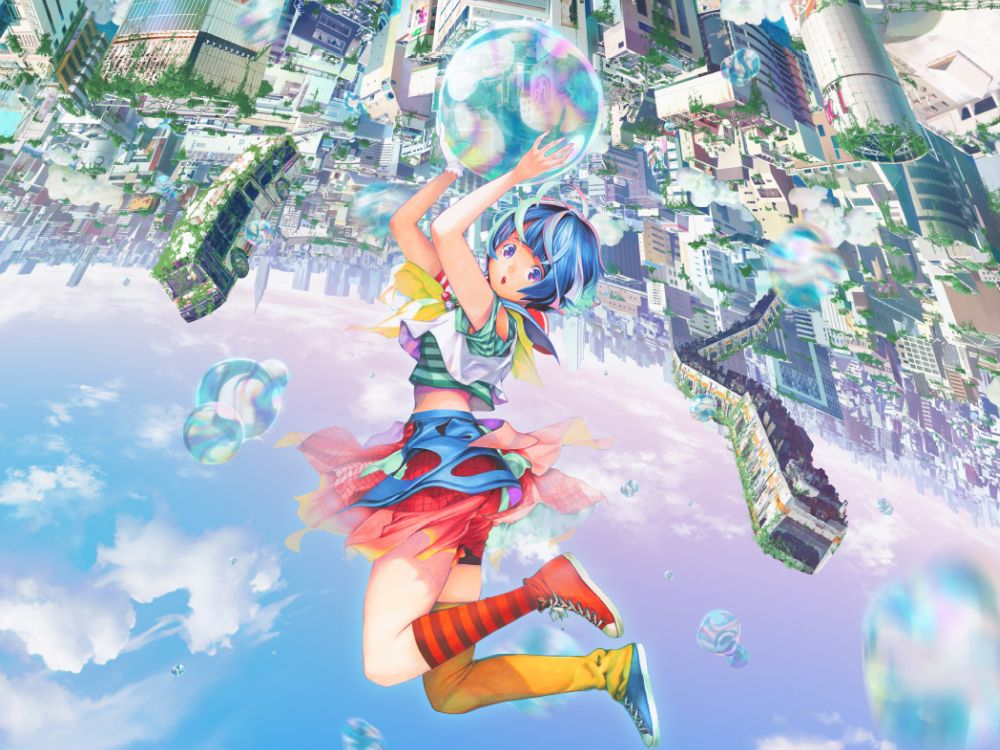
This movie does do some things right and you know exactly what they are so let’s get them out of the way first. The animation is absolutely stunning. Almost each and every single frame from the movie looks like a work of art that could be framed and put up on a wall. From the fluid animation of the gymnastics and incredibly detailed backgrounds to the stunning scenes of Uta and Hibiki as the sunlight lights up their glistening skin and reflects off of the water droplets on their faces, from the refreshing camera angles that brilliantly incorporate shallow depth of field and subtle lens flares to the complex camera movements that follow the characters as they soar across the dilapidated buildings of an abandoned Tokyo city, this movie is a reminder that Wit Studio still stands beside the likes of ufotable and Kyoto Animation. While the CGI in some of the scenes is questionable, the quality of animation stays fairly consistent and is capable of repeatedly blowing you away by constantly one-upping itself.

Now, the music. While the animation is stunning, the soundtracks of this movie, composed by the legendary Hiroyuki Sawano, are in a league of their own. The calming notes emanating from the Tokyo Tower that progressively get more and more menacing and repeat throughout the soundtrack really blew me away (they reminded me of the repeating melody from Cornfield Chase by Hans Zimmer which is my favourite soundtrack of all time). The music is honestly far too good for this project and the fact that the soundtracks weren’t utilised more effectively infuriated me. I’m not going to elaborate any further on this topic but do yourself a favour and listen to the soundtrack on YouTube while reading the rest of this review.
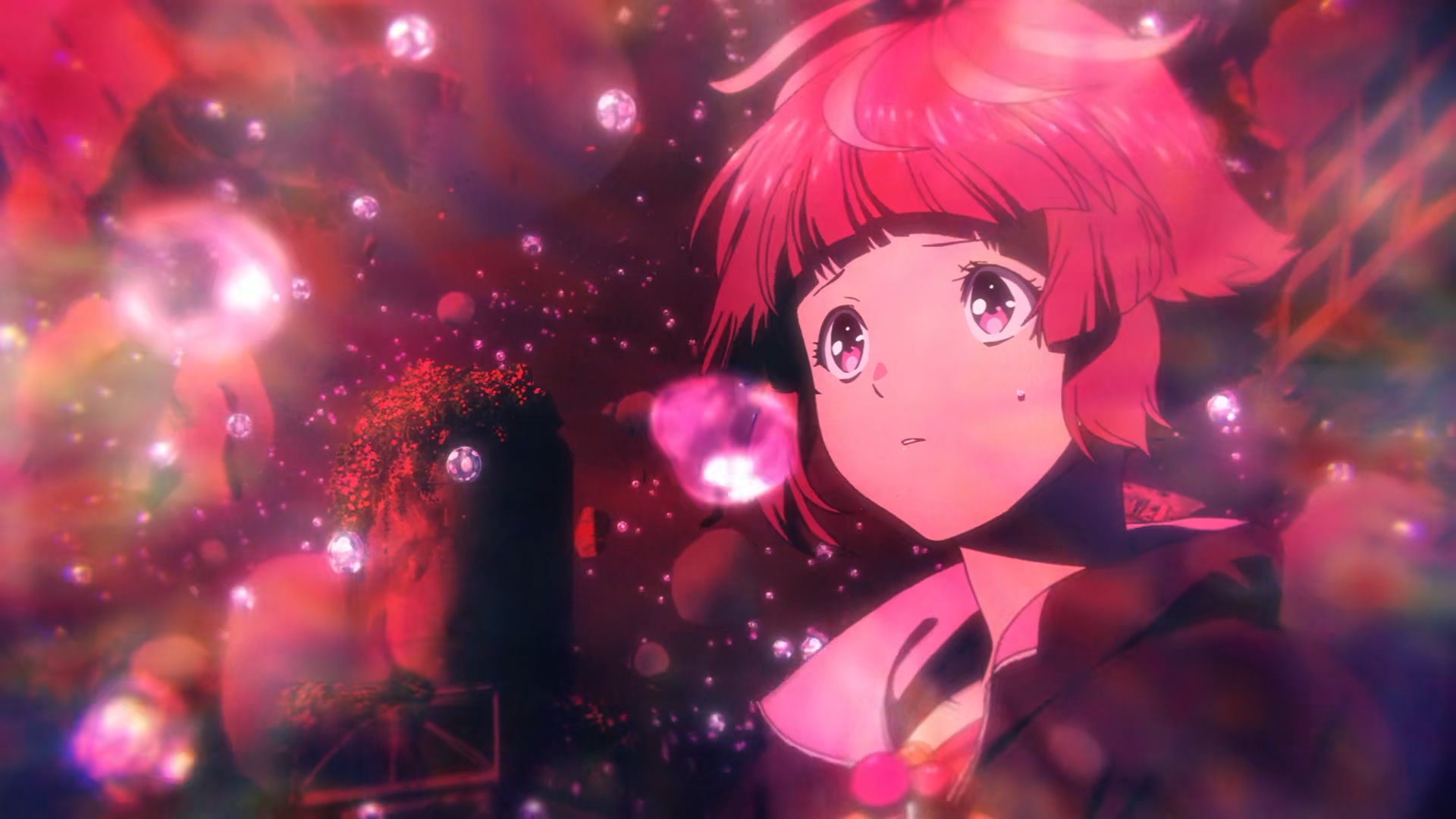
Now, onto the negatives. I started by saying this film was like a bubble, nice to look at but serving no real purpose. Unfortunately, the similarities end there since with a runtime of 1 hour 40 minutes the film isn’t exactly fleeting like a bubble’s lifespan and I wish it was. The movie can get tedious to follow at times. One might even go as far as calling it boring. There are a few scenes that bring the progression of the plot to a screeching halt while trying to poorly develop the characters. These scenes make the movie feel longer than it is and the pacing of the film would really benefit from them being cut for reasons I’ll get into while talking about the characters. The movie begins with a bang but it thoroughly fails to keep the momentum. I found myself being forcibly pulled out of the universe by scenes that moved along at a snail’s pace and frankly bored me to the point that I wasn’t invested even when the pace picked up speed during the action. Though this is a problem prevalent in most anime films, it was the severity of this very issue that allowed me time to pen my thoughts about the movie down while watching it.
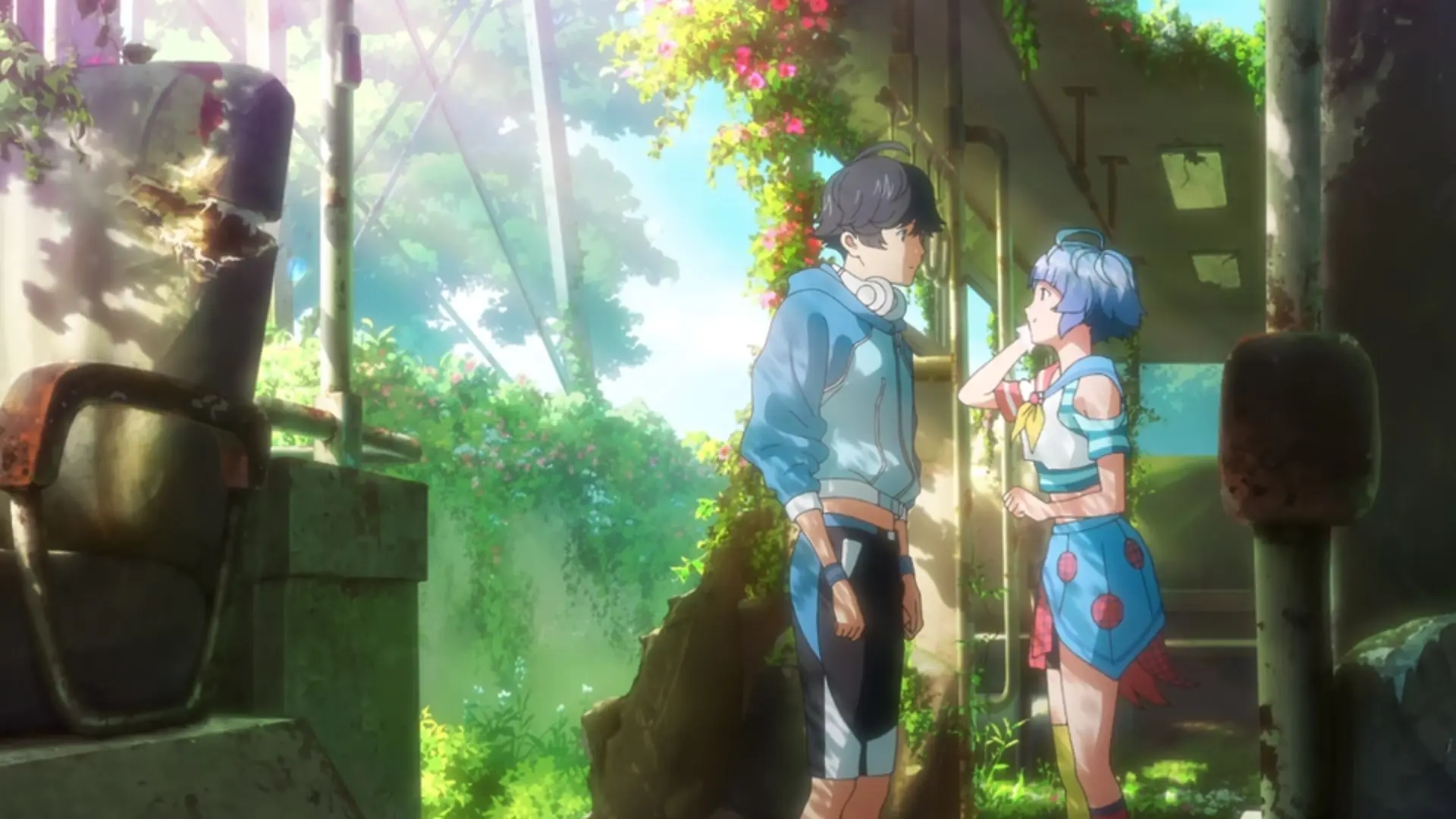
Now I would like to talk about one of this movie’s biggest weaknesses. The characters. The main cast is so bland, so generic that I struggled to remember their names five minutes after I finished watching the movie. Most of them can be dissected down to one or two traits that define their entire personality and that is never a good thing. None of them feel like real, tangible people I could find in real life.
The protagonist, Hibiki, suffers from auditory hypersensitivity which is the reason for his closed-off nature. However, he also suffers from a number of narrative problems. His attitude towards others is always inconsistent. He can’t decide whether he wants to be the cool, stoic and silent type or the relatable, awkward introvert which results in him just staying silent most of the time. Despite that, his biggest problem is the fact that he is a passive protagonist. Hibiki is more often than not spurred into action by the people or events around him instead of taking a proactive role in pushing the plot forward. When you combine these two flaws you end up with an uninteresting protagonist. Hibiki doesn’t really care about his own safety or about communicating with his team until he meets Uta, at which point, he somehow develops into a far more likable character at breakneck speed. His unnaturally rapid development makes his character development seem shallow and lazily thrown in as an afterthought.

Uta, the female lead, is a… bubble. Uta is probably my least favourite character from the movie. Most of her actions and reactions are made just to show us that she isn’t a normal gal and while that isn’t necessarily a bad thing… that is all she is – a slightly abnormal gal. Uta adds practically nothing to the story except for saving Hibiki’s life at the beginning and coincidentally being the key to defeating the big bad villain at the end. Hibiki claims she helped him discover his true self but none of the scenes in the movie ever show us this. The staff was painfully aware that Uta’s screentime was limited and so they tried to fit as many parkour scenes and singing performances into it as they could. Instead of developing a parental relationship by having Makoto read stories to her, this only occurs so the viewer is introduced to the ‘The Little Mermaid’ fable. The few scenes Uta has with Hibiki are either annoyingly slow and inconsequential to her development or Uta fearing for her life as Hibiki tries to touch her. Uta sacrifices herself or parts of herself for Hibiki several times but since she’s been doing it since the beginning of the movie, you’d be hard-pressed to call it character development. Hibiki only fell in love with Uta because she was pretty, could also hear the music from the Tokyo Tower and took a liking to him. Uta really didn’t influence him as much as the movie would lead us to believe, Hibiki changed on his own. Of course, knowing that she is a bubble and not a human doesn’t help when it comes to trying to sympathize with her either.

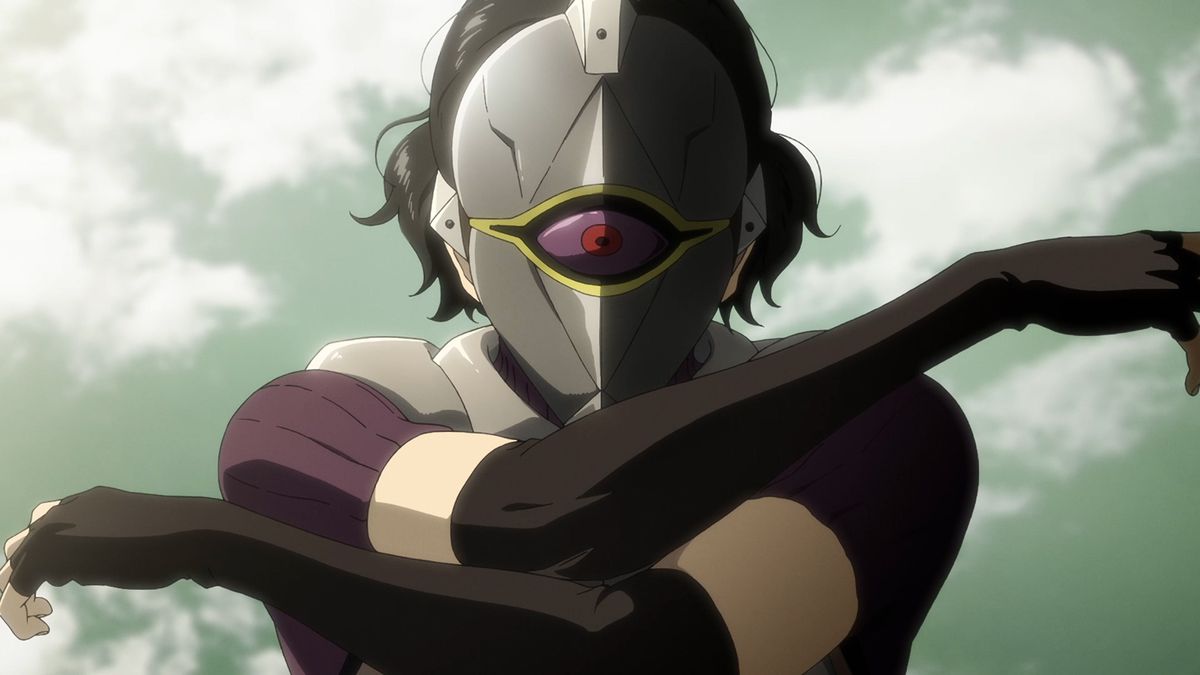
The tragedy of the matter is that the 2 leads are the only characters with any development at all. Kai is short-tempered, has a crush on Makoto and is slightly jealous of Hibiki but ultimately loves him as a close friend. The other members of the Blue Blazers aren’t even worth mentioning because you could remove them from the story and it wouldn’t make much of a difference at all. The other teams are incredibly forgettable except for the Morticians but they decide to turn over a new leaf almost immediately after a single defeat at the hands of an introvert and a girl melting into bubbles.
The adults in this world are as one-dimensional as the children. Makoto is a scientist who might have a thing for Hibiki and is used almost exclusively for exposition or to dump lore onto the viewer. She is also the only other female character in the movie so she has to play the damsel in distress by the process of elimination. Shin used to parkour but is now held back by his advancing age and prosthetic leg. Only until he magically breaks through those restrictions and overcomes them, of course. The adults choose to make a few decisions that exist only to push the plot forward instead of the rational, normal decisions one would make.
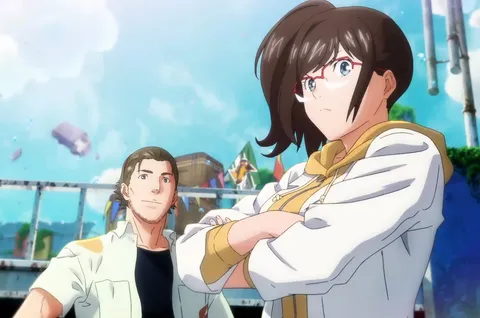
Before we talk about the plot, I want to take a moment to address the casting. Uta is played by Japanese singer Riria. This was a good decision since Uta sings way more than she speaks. Kai is played by Yuuki Kaji and he delivers a great performance as always. Hibiki is played by Japanese actor Jun Shison. I could not tell you why he was cast as the protagonist because his performance is devoid of any emotion or feeling. Makoto is played by Japanese actress Alice Hirose. While her attempt at voice acting is definitely better than Jun Shison’s performance, it comes off as annoying and amateurish most of the time. Shin is played by one of my favourites – Miyano Mamoru. However, this casting choice was slightly weird since Mamoru’s signature high-pitched voice doesn’t fit Shin’s character at all, despite his attempts at making it sound deep and gravelly. The rest of the characters have fitting voice actors. This movie is a loud PSA to the industry – stop casting actors in roles belonging to voice actors.
Now, onto this movie’s biggest problem – the horrible plot. I tried to keep the review as spoiler-free as possible until this point but I need to go into detail about the horrible plot of this movie to vent my frustrations. So, if you plan on watching Bubble, I’d advise you to stop reading now. If you’ve already watched Bubble, my condolences.
First let’s talk about the main sci-fi premise, the titular bubbles. The power of the bubbles is always vaguely described, almost as if the writers had no idea what the bubbles could do either. At times they affect gravity, and other times they are affected by gravity. Sometimes they can withstand the force exerted by a human body and other times they can pop through simply being touched. At times Uta can control the bubbles and other times she’s just as clueless about them as the humans. Some of them pop and release large amounts of water and others pop just like regular bubbles. None of this is ever explained or shown properly. The viewer is asked to believe whatever happens. At times the bubbles can have a consciousness and other times they’re just regular bubbles. Some of the bubbles are malignant and others are harmless. We are never told where the bubbles came from or why they’re here, which isn’t inherently a bad thing but it becomes an important issue to address when the female lead of the movie… is a bubble.
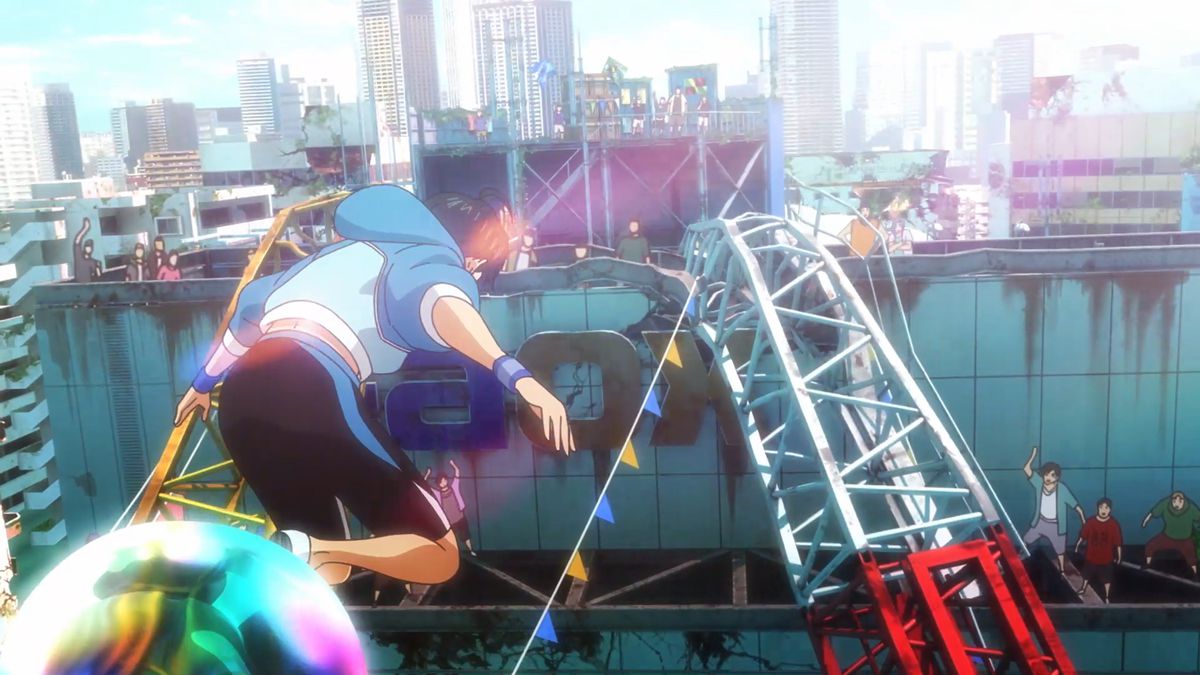
Towards the end of the movie, we’re shown a sequence of past events that would lead us to believe that Hibiki triggered the phenomenon which ruined a large part of the world by simply humming the tune he heard from Uta in her bubble form. This part of the movie made me want to throw something at my TV. Do you really expect me to believe he made the bubbles angry by humming their tune and this caused the end of Tokyo as we know it? As the bubbles start causing explosions, Uta saves him and becomes infatuated with him since he could hear her. At least that’s what I think…? This part of the movie is also extremely vague, almost as if they came up with the bubbles and then scrambled to give them some sort of origin related to the main character.
The main premise of the movie is based around children surviving in a world without gravity. So, imagine my surprise when I see children running across rooftops. Attached to the rooftops. By gravity. The gravity in this movie is incredibly picky about the objects it affects and only works in bizarre ways when it’s convenient. We are never given any criteria by which objects float and which ones don’t and the viewer is expected to just stare at the pretty floating concrete blocks without asking any questions. The danger posed by the Antlion pits and Spiderwebs is vaguely explained too. They’re both points at which gravity seems to be infinitely pulling in everything around them, except one of them is red and the other is black. We’re told they’re both dangerous but we’re never told what would happen if someone was to interact with either of them. Hibiki enters a Spiderweb at the end of the movie with seemingly no consequences so were they even dangerous in the first place? The repeated concept of vortexes confused me. The parallels drawn between the story and the universe as a whole using the vortexes are unnecessarily complicated. I believe the vortexes were introduced only so that Uta could use the theory to get past the Antlion pits.

A lot of the conflict in the movie comes off as lazily manufactured instead of organic. The city crumbles only when it is convenient to the story. Why did the children come to the dilapidated Tokyo in the first place? No child, no matter how young, would willingly choose a life of hardship. Why did Uta melt into bubbles whenever she touched Hibiki? Why didn’t she just touch him with her gloved hand? She didn’t because then we wouldn’t have had an impending sense of dread each time Hibiki and Uta were within six feet of each other. Why were the Morticians streamers? Were they only streamers so they would have some sort of superficial motive for their wrongdoings? Were they only a device for the Blue Blazers to obtain the jet boots at the end? Why did the Morticians kidnap Makoto in the first place? I would wager that this happened to create artificial conflict since the movie was a complete snooze fest before she got abducted. The Morticians had the potential to be complex characters who are forced to abduct people or cheat during matches by their financial backers. Instead, they’re reduced to scummy live-streamers willing to do anything for a quick buck.
Shin’s prosthetic leg is a joke. He says that he can’t parkour anymore because of it. Then he proceeds to parkour with the prosthetic leg which provides no real obstacle to him. We aren’t told how he lost the leg or why parkour is important to him so Shin overcoming his mental barrier comes off as cheap instead of a moving, emotional scene. The tensile strength of the prosthetic leg is inconsistent too. It could withstand the weight of a large metal beam but shattered under the weight of a teenage boy.
Finally, I want to talk about the parallels drawn between the story of the movie and the fable of The Little Mermaid. This simile is lazy and so obvious that everyone saw it coming from miles away. As soon as Makoto finished reading the story, anyone with even half a brain picked up on the not-so-subtle hint that Uta would die while saving Hibiki. The bubbles calling Uta back to them the same way the mermaid’s sisters called out to her and Hibiki fitting the role of the prince from the story is something anyone could have figured out. However, the movie feels the need to constantly remind the viewer that current events resemble the ones from the fable. We get it. You really don’t have to keep reminding us every two minutes. That brings us to Uta’s death. In a word, it was anticlimactic. I wanted to feel something as Uta melted away into bubbles but I just found myself wondering who allowed this script to be turned into a movie. Why did Uta’s sacrifice wipe out the malignant bubbles? Why did her death solve all the problems? How was her death at all related to the bubble over Tokyo? Again, it felt as though they had a concept but not much else and they came up with the rest as they went along.

Bubble is a visually stunning and auditorily beautiful movie. However, it lacks real substance and can be boring at times. In conclusion, I give this movie a watch-this-for-Hiroyuki-Sawano’s-music out of 10.
__
32 out of 35 users liked this review
