Bleach
a review by Iscarabaid
a review by Iscarabaid
In the present year, many people often misunderstand the Big Three Shonen. It is a term that refers to One Piece, Naruto, and Bleach. Exclusively One Piece, Naruto and Bleach. These three series hold this prestigious honor due to their influence in popularizing anime and manga in western cultures. People commonly fabricate arguments surrounding replacements and reinventions of the series in the Big Three. There is a group of people who believe Dragon Ball Z should be in the Big Three, when Dragon Ball Z aired well before any of them. There is a group of people who feel the urge to create a new Big Three with modern titles, as if one of the series in the Big Three isn't still on-going (two if we are counting sequels). There is a group of people who believe in the ludicrous conspiracy of a "Big Four" existing with an additional slot dedicated to Fairy Tail, because for some reason that mindset exists. Then, there is what seems to be the most common group of people who believe a certain series in the Big Three shouldn't be in the Big Three because they didn't like it. The frequent target of this just so happens to be Bleach.
Many factors come into play when considering the shonen community's disengagement of Bleach. Fans' frustration and vexation reading Bleach (especially while serializing) is completely understandable and justifiable. Bleach has a tendency to toy with the audience by distorting their perception of reality in the manga. This is achieved sometimes in a clever way with certain Bankai and sometimes in a dull, recycled, and unflattering way with lesser cool Bankai or some random unforeseen ability. For most of the series, the value of an ability comes from the reveal of its power in battle. This, in a formulaic battle layout, can be pretty patience testing in a series of this length. The comedy is haphazardly thrown into scenes, even during pivotal scenes. Enemies often explain their abilities to their opponent before they attack. And I literally mean telling their opponent how to beat them. Kubo often neglects a "Show, don't tell" approach to fights due to the lack of backgrounds. The absence of landscapes also sheds light to another common occurrence in Bleach. Characters frequently appear out of nowhere, and I literally mean nowhere. This happens way too frequently in the manga and is never considered when people total up the amount of plot holes, as the community has apparently accepted it. The list goes on.
When I look at Bleach, I try not to look at "right" or "wrong", because I tend to contradict myself. While I think the battles playing out like Death Note scenarios are silly, I also find the overall nature of Bleach to be awesome. The series does the bare minimum to set up the world, characters, and plot, yet the story is loaded with blood-pumping power battles and fights. Bleach doesn't inherit the tournament arc cliché, but the whole manga feels like a never-ending test of power. As a long-running shonen that competed with Naruto and One Piece in terms of length, popularity, and lack of hiatuses, Bleach is easily the most unique one. The protagonist, Ichigo, does not strive to become the greatest of something like Luffy or Naruto. There was no endgame for Bleach set in stone. People who think it should have ended after the Soul Society arc or the Hueco Mundo would be limiting Bleach from its full potential. And while I don't think Bleach nearly executed all of its ideas properly, I don't find a single arc to be out of place. I think the final arc, spanning for almost half of the entire manga's length, is a completely necessary one. It provided worthwhile answers from day-one questions in a digestible way, even if there was little to no foreshadowing. Characters redeemed themselves, and were mostly utilized for development rather than plot devices. I can even make a defense for some of the most overhated characters such as Orihime with the arc. The final fight itself is one of the most unique in battle shonen that I've seen. It's something I believe will inspire the ending of something like Jujutsu Kaisen. (The return of the anime is also a great opportunity to utilize the potential of this arc). I’m not using this arc as a crutch for the whole series either, I believe the Soul Society Invasion arc made Bleach what it is today and solidified it in the shonen community. The argument is often made that Bleach dips in quality after this arc, and there is some truth to it. The Arrancar Saga has its highs and lows, but I think the lows are exaggerated to a certain degree. The minor fights aren’t memorable and the major fights that don’t involve Ichigo aren’t compelling, but the ‘main event bouts’ are some of the most iconic in battle shonen. And the Lost Substitute Arc is just an underwhelming conclusion to the anime, not the manga. The arc is a necessary build up for the final arc, and enjoyable at that.
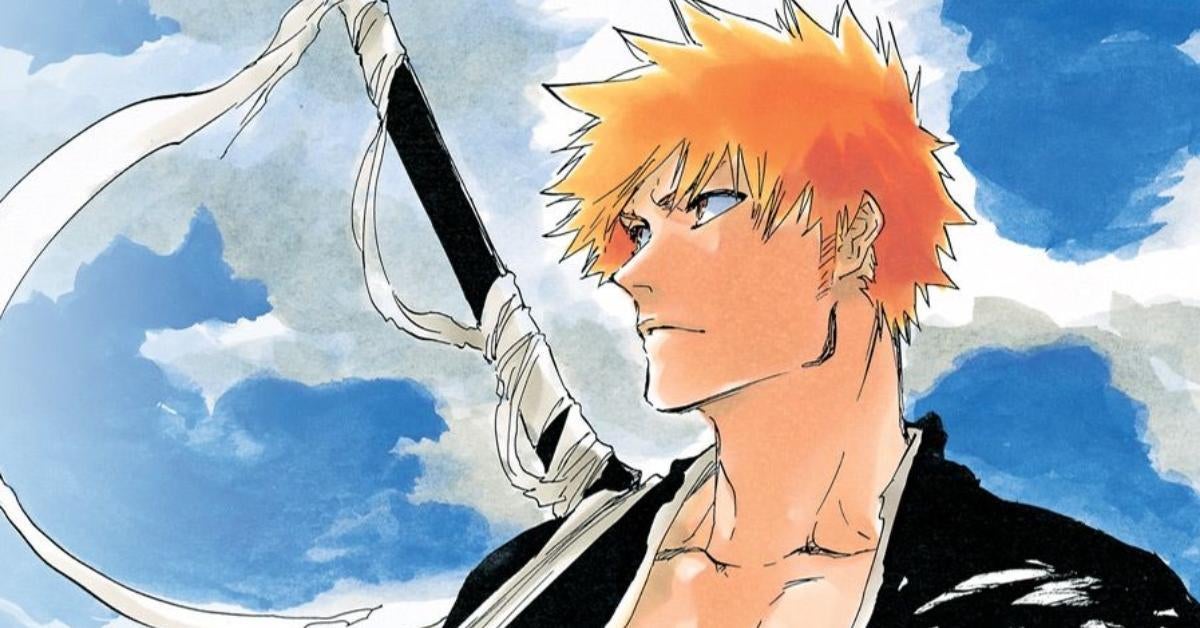
The art is another complaint by fans. Bleach's art progresses before your own eyes when reading it, and it certainly isn't an eyesore. In early chapters, the art is amateurish, but develops into something unreplicable. Backgrounds are sacrificed in order to focus on drawing characters and their emotions. This gives the manga an intimate feel during battles, something the anime lacks.
Bleach rarely copies from other shonen. The manga has its own identity and style, and works best when sung to its tune. It accepts its own strengths as well as its flaws, bursting out unique ideas and a sense of style in the process. Even though I would have wanted the series to play to its strengths more, Bleach is still a good battle shonen manga. It piques your curiosity and holds your attention while dishing out awesome fights, high-intensity action, and badass characters… It is one of the big three after all.
In the 'battle shonen' genre for manga, I give Bleach a...
14.5 out of 16 users liked this review
