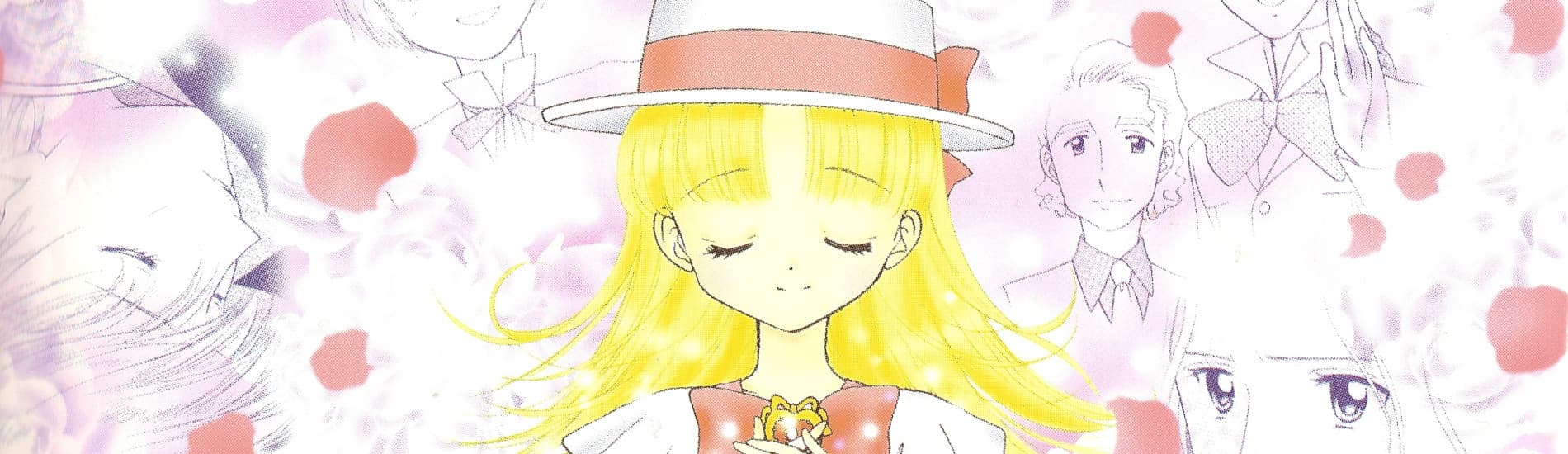
Ashita no Nadja
a review by Ezekiel01
a review by Ezekiel01

Nadja was one of my early childhood anime back in the early ’00s but I don’t seem to remember how it ended or how the story progresses. What I remember is the main plot itself when it aired on my local television network. It's been more than a decade since I watch it, so I decided to finally pick it up and make a full series rewatch on it. I was happy that I did. Because I am surprised the anime gave me a sort of diamond of the ruff impression about it. A good TV series for what it is from start to finish. This review will discuss further why this show is a hidden gem of its time and what makes Nadja a good show.
Starting off the Review of Ashita no Nadja or commonly known as Tomorrow's Nadja for international audiences, the story follows the Adventure of Nadja Applefield. Traveling around European Continent in search of clues about her mother’s whereabouts while meeting friends and learning about different cultures along the way. Nadja plays out like your classic late-century adventure stories where the protagonist needs to travel to new places to progress the story. We have lots of stories like that in animes based on western literature that is aired during the 80s and ’90s.
But sadly starting around the 2000s this type of story in the anime medium got a steady decline. In 2003 anime releases Nadja is the only show that uses the formula, thus making it very unique alongside the other series that were airing at the time. 2003 is flooded with a lot of shows with a variety of genres, with different target demographics ranging from adults, teenage and younger audiences. Nadja aims for much more younger viewers but it cannot compete with the more rule of cool focus shows that even younger kids want to watch. It's quite common that nobody actually remembers or talks about this show even today. This is where my review comes in.
For an Adventure Story, I can confidently say it’s well written and good. It has a beginning and an ending. Everything feels connected and consistent until the end of the show. Usually, for a children-oriented series, a lot of shows will make a lot of unnecessary filler episodes, especially if the show is around 50+ episodes. But in Nadja, the writers took an effort in connecting each individual episode. It makes each episode important in Nadja’s journey.
The story has a rather slow exposition, and pacing, and each of the first episodes only gives small fractions of information for the main plot. The main story doesn’t kick start until around episode 33. The initial episodes are all about establishing the characters and structuring a world-building by introducing various regions in Europe. The episodes focus on exploring the people in the region and cleverly describing people's lives. Nadja is also a very good example of a slice of life series. But for its credit, it gives us enough time to breathe and digests the characters and story overall.
The Setting is set to place between 19th and 20th Century Europe. It's lovely to see that this anime has a lot of educational content that feels natural for the plot. As Nadja learns new things as she explores new places, the audience learns from it by simply watching this show. Feels like a fun tour of 19th or 20th Century Europe. As if the Audience is also tagging along with Adventure. There is a sense of connection and pay-off. As Nadja travels around each country, new characters and new stories are introduced that complement the setting and the entire story feels layered in a way.

When it comes to characters, the show shines the best. Nadja is a dancer of the Dandelion Troupe, a Small Group of Circus Entertainers, which makes a living by moving from town to town to provide entertainment for the locals in the area. Each Troupe member has their own unique personality and appealing side story to share. Some are ok while others are good on their own. Aside from Nadja and Her Troupe Family, there are also some supporting characters that have their own appeal, own story, and ambitions that shape the entire narrative. Some characters, for the most part, reappear in later episodes. Revealing their own character growth and development in the process made the show even more exciting as it continues.

There is some antagonist in the show that moves the story forward but there are some very despicable moments in the show that might ignite the audience's emotion into the wall. If you wondering how nasty are the so-called villains? I recommend you guys to check it out from start to finish to understand what I am talking about. This show knows how to give a really bad time experience for our main heroine.

Now moving to our main heroine, “Nadja AppleField”, for a classic late-century female protagonist, there isn’t much anything special to say about her. She is good for what she does in her role, serving as a mediator for the character's conflict, the voice of reasons, and the eyes and ears of the audience in exploring the world surrounding her. The only gripe I have for Nadja as a person is that she sort of lacks an interesting personality. Sure, she got the looks of the main character, she is very beautiful, but she is very reactive in a lot of situations. There are moments in the show when her kind-hearted nature sometimes results in people taking advantage of her kindness. I consider this annoying. Luckily her flaws are corrected by supporting characters that compromise her weakness and save the day.
But Hey that’s what makes her likable in the first place. An innocent pure-hearted maiden who only wishes the best in a person. To me, I refer more proactive and dynamic heroines that plan ahead and are able to identify when a person is taking advantage of someone's good intentions.
In the technical aspect of the show, for a 2003 anime, it's good and well polished. Given that this is a 50-episode series where the art style and animation remain consistent. The aesthetic is pleasing though some character designs are rather dull. The only character that stands out, when it comes to design, is Nadja's design and the clothes she wears.
Music I think it's good for what it is. But wouldn’t say it's worth saving in your MP3 song list. The OP and ED are good for what they supposed to function. When it comes to the background music and sound effects it's Ok. Nothing special but classical music always works on the show set in the late century so it’s a pass.
This is the section I will say both my positive and negative personal comments about the show base on my own flawed reference. There are things that I found amazing in the show that I don’t see much on other shows and at the same time, there are some very boring and jarring moments in the show that I wish the show will continue giving me that magic. The show has some very cheesy cliché and a number of plot conveniences but I know myself that Nadja is a simple show that has its own strength and weaknesses. And to be fair there are more good moments in the show that far out weight the bad ones. And for an anime aimed at kids. It far exceeded what I was supposed to expect it to be.
Back then when I was a kid, Nadja was like another Saturday Morning Cartoon for me. Now as an adult I see it as one of the good series the 2003 era has to offer. It has far more meaningful moral content that can be applied in real life. I can appreciate the people who made this has some good intentions in mind. Personally, I think it’s a good show that is worth recommending to everyone that shares the same interest as me.
In summary, the show is all about Nadja Apple Field's life story but magnificently built upon collective stories of unique individuals from distinct places, cultural traditions, and social standing. You are given a variety of viewpoints to create a moral ground of what is good or bad with an added heartbreaking plot twist I wouldn’t expect on a show for kids.
I like that the anime's main moral lesson teaching follows the Japanese tradition of teaching children “omoiyari” or showing empathy to others, the ability to understand and share the feelings of another. In short caring for others. Which by the way, mature adults in the show teach Nadja when she creates a one-sided opinion on a person.
In a simple line of dialogue.
“Not all people are 100 percent good or evil. Everybody has their reason”
This line really hit me hard. Because this idea remains steady throughout the entire show. Most kids teach the younger audiences what a good guy and a bad guy look like but in Nadja. It teaches you to think and understand a person's situation. It encourages people to not draw out selfish conclusions in defining what a person is. A lesson that is more relevant today because of the advent of social media spreading wildfire of conspiracy about groups and specific individuals.
I might add, I didn’t expect this show to have complicated romances, social class conspiracy theory, and critical commentary about 19th and 20th Century mentality that seemingly controversial if ever talk about or look upon during that era.
I like the charm of the show is a mixed bag of sharing meaningful moral content and unnecessarily wackily looney quirks. Huge respect for this anime-original where the studio is making an effort to write a complete story entertainment for people to enjoy.
I hope when people watch Tomorrow's Nadja, the Inner “Noblesse Oblige” will surface in their hearts.
“With great wealth comes the responsibility to give back to those who are less fortunate than oneself”
“But Noblesse Oblige is not always giving material wealth”
“Everyone can give back in different ways, on any shape or forms that will truly help people to stand up in life”

11.5 out of 12 users liked this review
