
Whilst anything Evangelion is hard to disentangle from Hideaki Anno, the manga is a personal project of character designer Yoshiyuki Sadamoto and, as far as I can tell, no one else. Starting in 1994 as a companion to the upcoming TV series, it kept going all the way to 2013, telling the story from beginning to end with little-to-no nonsense.
What a shock.
Or maybe it shouldn’t be? Because the manga has no Anno attached, and considering that, it shouldn’t come as a surprise that this is the most consistent, coherent, and instantly enjoyable piece of Eva media. It tells an unsegmented story that closely resembles the original plus End of Evangelion, writing most characters better than ever and giving the series the optimistic ending Anno tried to do with the rebuilds, but ended up veering off the rails for twenty years only to produce an irrational, unconvincing, flea-ridden Eva fanfiction carried by a few Hikaru Utada songs.
Seems like, while certain others in the OG crew fell off (Tsurumaki too if he really was in charge of “Mari Makinami Illustrious”), Sadamoto held on. Maybe that’s because his version of Eva was not as dependent on his feelings. Or maybe, with this project, he had the benefit of working at his own pace, without merch-hungry producers breathing down his neck. Or maybe he’s just a better writer. Either way, this manga is good, and that’s coming from me, someone that doesn’t even adore Eva that much, save for the second moon of every month when I morph into a snarling, slobbering Shinji obsessive equipped with Mitski music and salty tears.
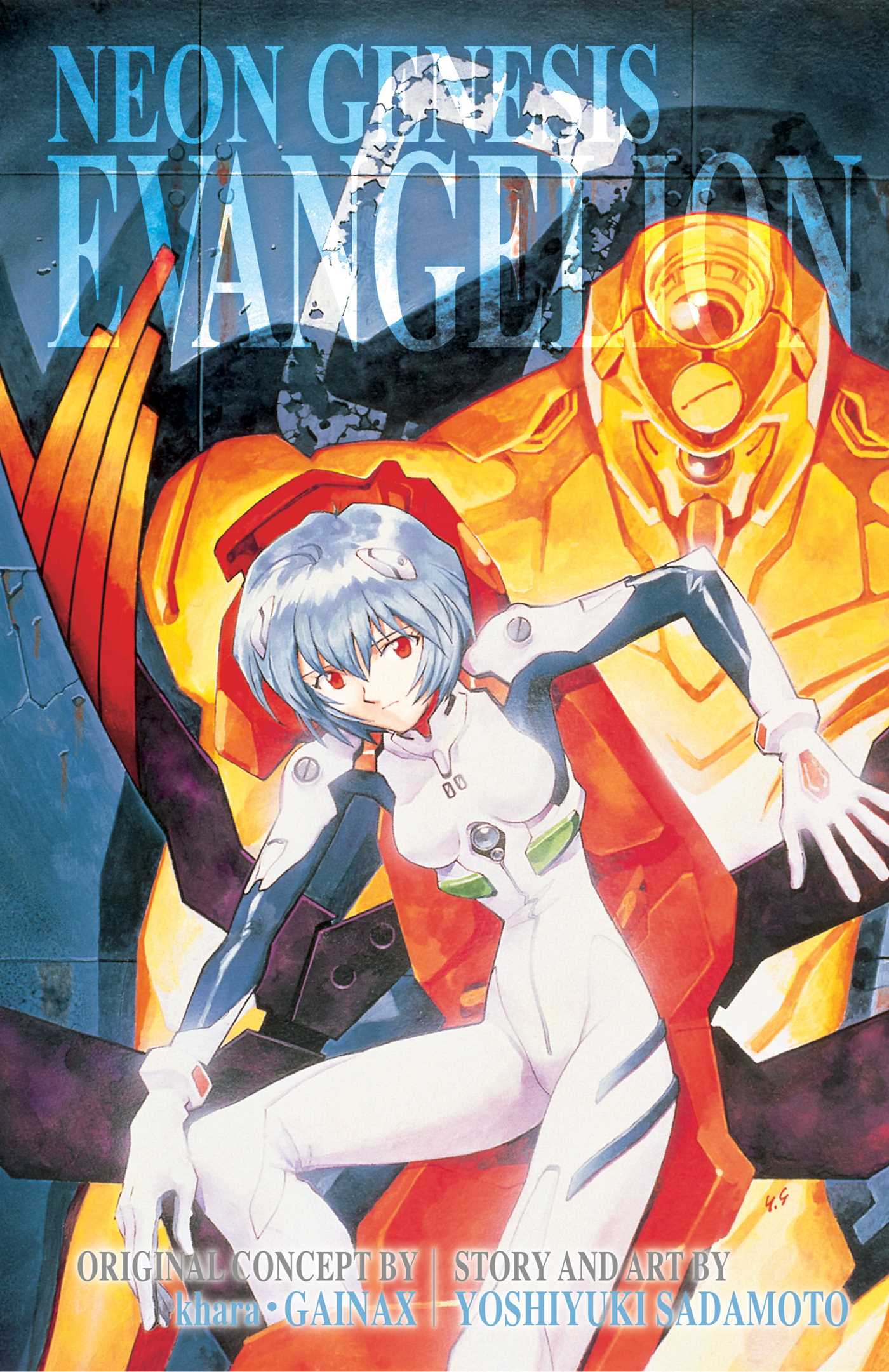
Changing Eva is always going to mean changing Shinji, so he's different here. He's actually almost cool. Sadamoto's protagonist certainly mopes around a bit, he doesn’t put up with other people’s shit nearly as much, and he’s even sassy in some interactions. NOT MY SHINJI. But I have to admit, he’s a lot more likeable. As such, I feel like this appeals to those who can’t wrap their head around sad, despondent Shinji (if so, practice empathy please), along with Eva non-fans in general. But it’s a refreshing change no matter who you are. I mean, I love him being a bitch, because same, but when my boy grows a backbone from time to time, I can’t help but enjoy that in a different way. In a “this might just be a competent story with likeable characters” type of way. Which... isn't the Eva I occasionally love. But it's not all that different, either.
What about everyone else? Rei is more defined and tangible compared to her anime counterpart, paving the way for several manga-only moments that elaborate on her relationship with Shinji, similar to the second rebuild (though without the housewife gymnastics). Asuka is also more likeable, meaning she is not quite so mean. Several characters (like Kaji) get expanded or original backstories that would have been welcome in the anime.
Kaoru is completely revised. No longer is our favourite homoerotic angel boy a cheeky homoerotic tease 100%-most-likely-inspired by Kunihiko Ikuhara blowing Anno in the hot springs. He's now a pussy slayer (he straight-up kills a cat) and a low-key sociopath, which, in some ways, fits a lot better with other Sadamoto changes (Shinji, we must remember, is not nearly as withdrawn as he is with Anno, meaning the normal relationship with Kaoru would not carry the same weight).
It is in this way that Sadamoto takes us through a familiar framework, but he throws in enough original curveballs to keep us on our toes. Much of the flub (content of episodes “A Human Work” and the notorious “Magma Diver") is cut out or replaced with more backstory. This makes for a fun, concise way to re-experience the story while still getting something new. Another great incentive for reading this after Anno's Eva is that it is willing to give characters the beats and triumphs that were denied in the past. I know a few Eva fans that dislike the tragedy of End of Evangelion, and while Sadamoto follows the same beats, he does so in a much rosier way. To provide a spoilery example...
Spoiler, click to viewclick to hide
THAT MOMENT WHEN RITSUKO ACTUALLY SHOOTS GENDO IN THE FUCKING THROAT AND KILLS HIM, LIKE I WAS WAITING FOR THAT MY WHOLE LIFE?? LIKE YES GIRL KILL THAT MAN FOR WHAT HE DID! Oh, and it was nice to see Shinji save Asuka from the MPE gang too, though as the world's only Ritsuko stan, I choose to fixate on other things.Oh, and in a bonus chapter, Sadamoto makes more of a character of Mari in a couple panels than Anno and the gang did across four movies. Not that I wanted to see her again.

I don’t think this does everything better. While certain characters are cleaner, they also lack some of the depth that they have on TV. Asuka, for instance, is flattened and straightened out in the manga, especially to do with her relationship with Shinji -- something that, whether you like it or not (I love that relationship) adds a lot. Also, TV Shinji was tripping esoteric budget-cut balls every few episodes, often to great effect. You won’t get any of that in the manga. It’s a lot more straightforward. Of course, it’s still Eva, so it’s not completely straightforward. But it is presented in a way that is stylistically consistent, lacking the bouts of pretentious confusion that leave people scratching their heads. It also lacks some of the most memorable flourishes of the anime, such as the soundtrack or Anno's taste for these eerie still frames.
So that’s the big forfeiture, right? This is consistent. It’s enjoyable. It even sticks the landing. You distil Eva to its strongest narratively, but you lose out on a lot too. You miss the awry, emotional chasms marked by Shinji’s depressive episodes, you miss those soaring, traumatic peaks accompanied by Megumi Ogata's ear-shredding screams, and of course engineering all of this is Hideaki Anno's bubbling, black-oil sincerity: his unique artistry that extends to all characters, all facets of the story, and sadly (though, really, happily for him) indiscernible but for small pockets in anything post-End of Evangelion.
But oh well. We've established the manga is quite good in its own right. With Eva, though, it all comes down to the final note. Where does Sadamoto leave us? Where does it fit? Here’s my opinion:
There are four Eva endings. They all push the same shit (it’s worth loving people even though they hurt you) (don’t run away from your problems) (probably best not to become fanta gloop) (just fucking go outside ok). One ending caps off the 1997 series: an improvised but thematically affirming project that takes us into Shinji’s psyche and basically just spells out his character growth, ending quasi-happily. It is usually combined with the End of Evangelion: a monumental movie that, while presenting a similar Ted Talk in theory, is set apart by its horrific framing that leaves our protagonist the psychological equivalent of a dumpster fire. Most recent is Thrice Upon a Time, that, after a mess of “rebuilds,” proves the series’ thesis with a no-nonsense sunshine-and-rainbows ending that (to me) feels unearned and unconvincing.
And then there’s also Sadamoto’s manga, which guides Shinji Ikari to a place that I do not want to fully describe if you haven’t seen it play out: stable but just slightly wobbling, standing before a billowing world of flecked snowflakes where an optimistic future, terrible as it could be, extends to infinity. There’s a real purity to it; purity that you could say is untrue to the spirit of Eva simply in how resigned it is to being clear and purposeful. It’s never going to be my favourite ending, not over what, due to the buzzing, resonant hive of flaws and contradictions of its creator, still stands as some of the most compelling animated anything for so many people.
But it is still special. It is, I’ll say, the least flawed. It is clear and true and still emotional in spades. And it is Evangelion.