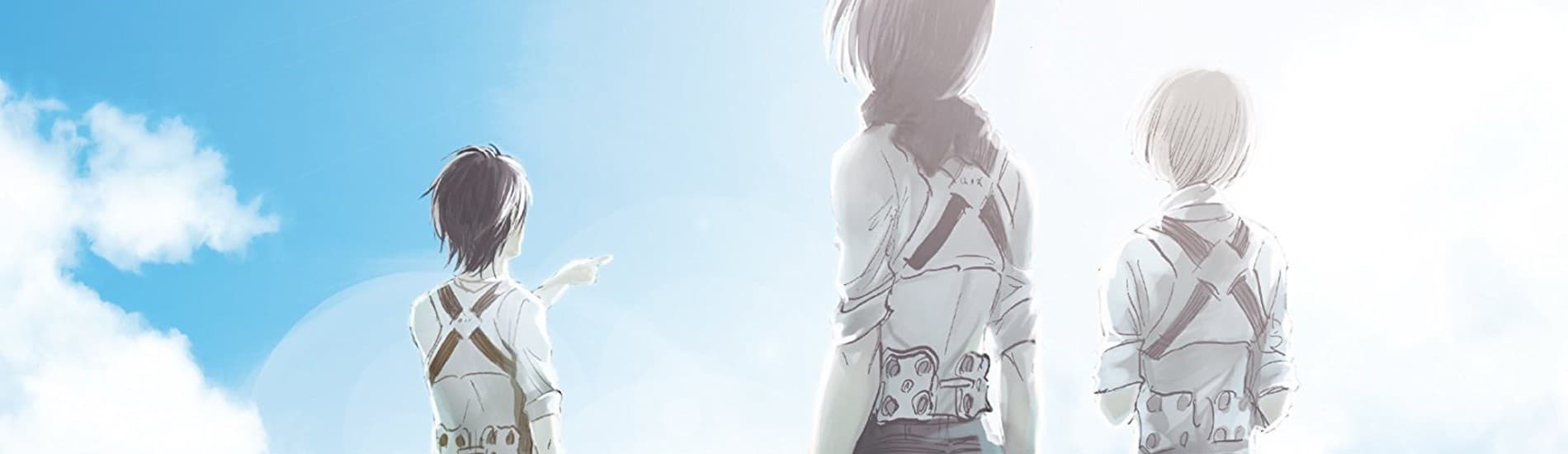
Hajime Isayama’s Attack on Titan is an amazing manga, full of well-written plot twists and an interconnected plot that extends for thousands of years without letting any detail pass by, where the protagonist goes from hero to one of the most memorable villains of modern anime. Or is it? First of all, this review will contain spoilers so reader discretion is advised! With that out of the way, let’s get to the review.
A quick summary of the plot: after being almost extinct by the titans (giant human-like creatures, varying from Shaquille O’Neal on steroids to taller than a two-story house), humanity confined itself within a perimeter that has been untouched for the last 100 years, thanks to its giant 50m tall walls. One day, a titan taller than the wall (called the Colossal Titan) appears with a flash, breaking the outer part of the city’s wall and disappearing as fast as he came, followed by a running titan covered in plates (called the Armored) destroying the inner wall. Now with 1/3 of its territory lost to the titans, humanity must fight back and regain the little freedom they had or perish inside the little space they have left. Having watched his mother get eaten in the Colossal attack, our protagonist Eren Yeager swears to become a soldier and kill every titan on earth, and we will follow his path of vengeance and fight for freedom.

While it seems like another generic battle shounen (and… it is, to some extent), some questions might arise. Where did the titans come from? Why is cutting the nape the only way to kill titans? Why did Eren become a sentient titan after being eaten alive? How were the walls built without titan interference? And why the hell are the walls MADE of titans? We see how Eren’s goals change each time humanity finds out more about the truth hidden deeply by government conspiracies, making his descent into madness and villainy, always moving forward and doing what he sees as his only choice, the necessary for the greater good. But what is this greater good?
At the end of volume 21, we finally find out the truth: humanity hasn’t perished, it is actually thriving outside the walls. Eren (and everyone living inside the walls) is from a race capable of turning into titans, that once used this power to rule the Entire earth, and now are feared and hated by the entire world. Also, the walls are actually on an island called Paradis. All of the titans we’ve been killing for 21 volumes were people punished by Marley’s military dictatorship, whose crimes were pretty much being born. Seeing this, Zeke (Eren’s half-brother) wants to use the power of the Founding Titan, capable of changing even the physiology of Eldians, to make them incapable of having children and dying peacefully as time progresses. And then the big question arrives, which is actually asked in real life as well: is not being born a solution to tyranny? Is it fair to not have children based only on the fact that the world is cruel?
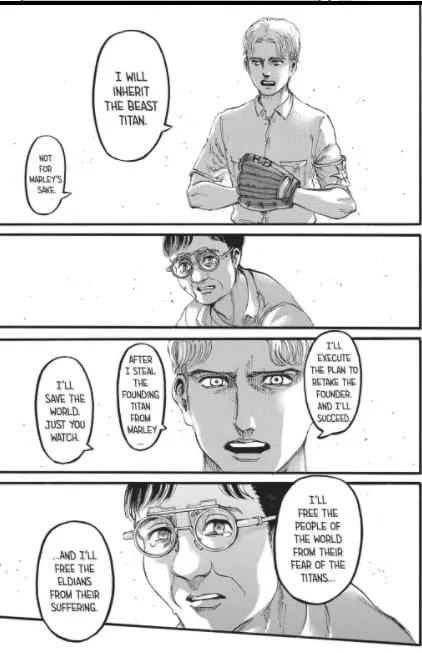
Of course this is not a simple question and it doesn’t have a single answer, but in my opinion it’s a bad thing if “world sucks” is your one and only reason to not have children. We as a society should fight for a better world instead of giving up on it. And turns out a lot of characters also think like that! Not Eren tho. Eren knows (or thinks so) that the world will always fear Eldians for their past and there’s no way to live without violence and oppression, so he wants to kill every human outside of Paradis so humanity can start from a blank slate. And all of this would be a cool story to ask if the ends justifies the means, the concept of freedom and how to deal with oppression, if not for a little tiny small detail, a colossal (pun unintended) elephant in the room: the nazi aesthetics.
In fact, this always sparks up debates and not-so gentle discussions, but nevertheless must be talked about. We, as a community, have the duty to analyze critically and think about the implications of controversial topics. Marley’s aesthetic and actions are inspired by nazi Germany, having “internment camps” where people from an ethnic minority identified by armbands live constantly threatened, killed and used in horrible ways. While the manga does take a stance and says it’s a bad thing at some occasions, it also says that Marley kind of has the right to do these things. By fence-sitting while using nazis and jews as an analogy (even if only visual), Isayama is walking a fine line between analogy and sympathy. As an author, you should know that some topics shouldn’t be used as simple analogies and deserve respect and care. For me, this is the worst take the manga could have and what almost ruins the entire experience. Showing a bunch of jew-coded and nazi-coded people and saying “Hey, but they both went through a lot you know!” is just… wrong. Also while the majority of the characters thankfully agree that genocide is wrong and they should unite and end thousands of years of violence, Eren is shown to the reader as a martyr, as someone that did what had to be done by being the common enemy of humanity by killing almost EVERYONE. Isayama says that genocide is wrong, but he doesn’t seem to really think that way.
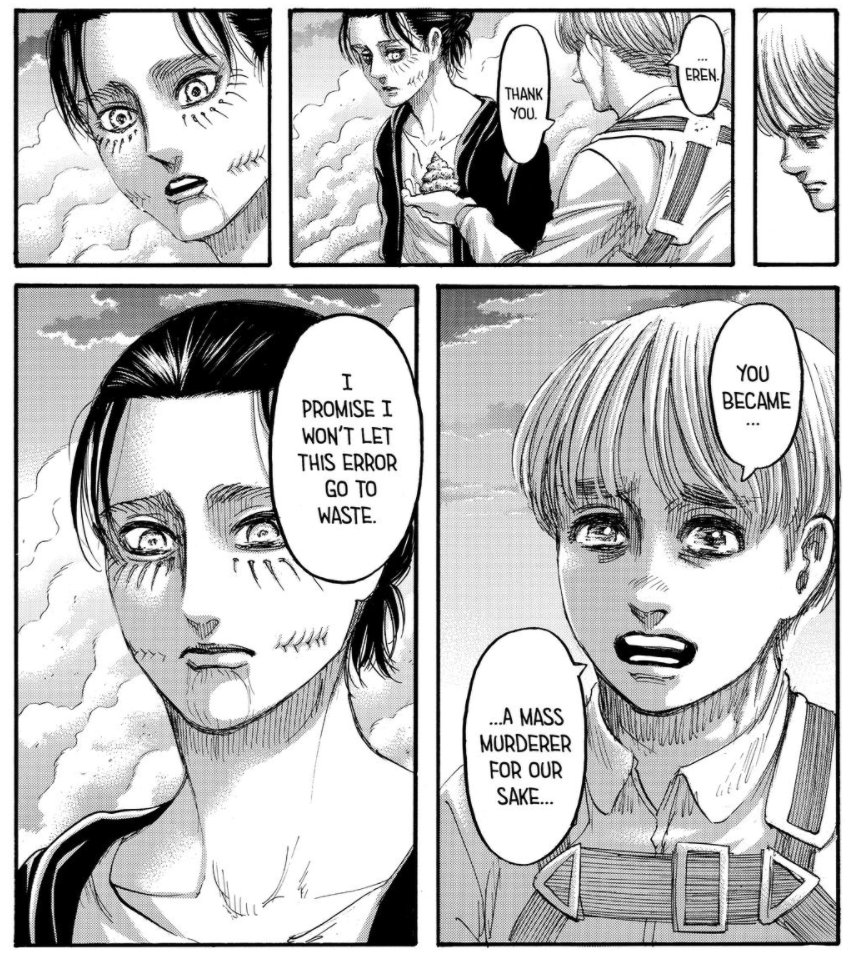
As a whole, AoT is a great experience with amazing writing and narrative, beautiful and unique art style, and wonderful characters that sometimes feel like close friends, and it’s really refreshing to see them growing as people and being the perfect versions of themselves. I think everyone should give AoT a read, despite the controversial aesthetics and fence-sitting, always being critical.