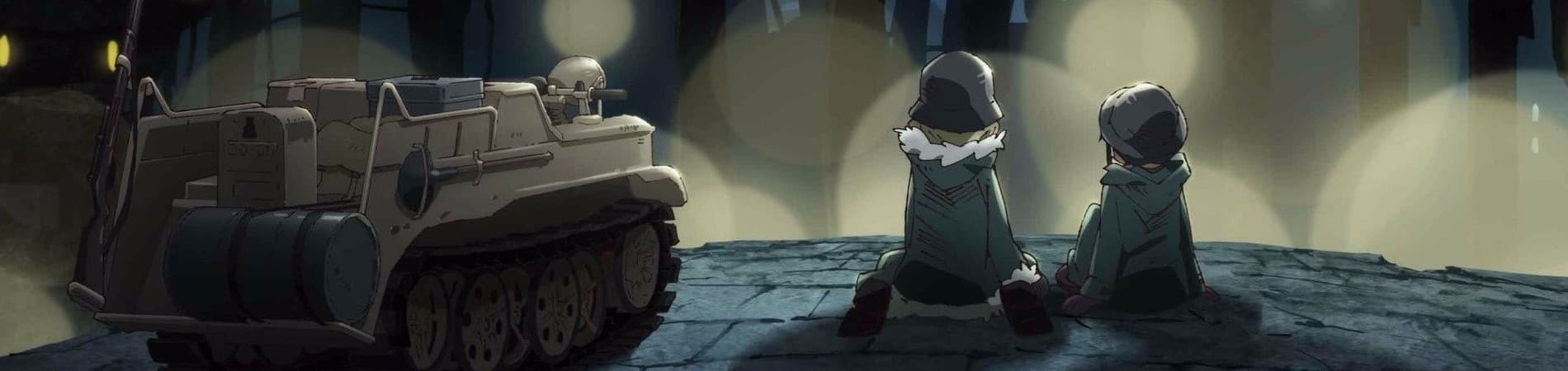
Post-apocalyse fiction is a surprisingly versatile genre. From zombie survival to natural disasters, from tales of humanity at war with itself to tales of humanity rising from the ashes, there’s a lot you can explore after the fall of civilization. As time goes on, though, I’ve found that my favorite sub-genre of post-apocalypse fiction involves stories that explore the very very end. Not just a world where society has collapsed, but a world that is, itself, staring down the barrel of its own demise. Maybe that’s just the sick, twisted freak in me, but I find something deeply compelling about stories that ask us to bear witness to the dying days of existence as we know it. When life itself is almost over, what purpose is left to pursue? What goal is left to fight over? How does one find meaning at the end of all things? These are heavy, heady questions, but when a story has the guts to ask them and the skill to answer them, the impact it leaves on me is second to none. And few stories in recent memory have pulled that off as spectacularly as Girls’ Last Tour.
To be honest, though, calling Girls’ Last Tour “spectacular” feels like doing it a disservice. Not because it’s inaccurate- it’s fucking great- but because it misrepresents what makes this show so powerful. To me, calling something “spectacular” suggests a high-impact, high-octane thrill ride that will have you cheering and crying at the intensity of the, well, spectacle unfolding before you. And Girls’ Last Tour is on the complete opposite end of the spectrum. It doesn’t seek to shock and awe, but to envelop you in its tone and themes, slowly marinating you in them until they permeate every fiber of your being. It’s the kind of show that creeps into your subconscious and unlocks emotions in you so raw and primal you struggle to put them into words. This anime affected me, on a deep, intimate level few anime ever reach. And it did so not with shocking plot twists or epic battles, but with two girls traveling a dying earth, contemplating their place in life as they explore the bones of a world long since faded into the past.
That sentence basically sums up the entire plot. Chi and Yuu are two girls set adrift in a world where life as we know it has all but ended. All that remains are a series of giant super-structure cities, stacked on top of each other in massive plains of metal, and a near-perpetual snowfall that blankets the wasteland outside in a cold, desolate white (Between this, Wolf’s Rain, and Vampire in the Garden, I’m starting to realize that post-apocalyptic steampunk ice worlds are one of my all-time favorite aesthetics). There are no signs of life, no pockets of civilization, no way to fix what’s been so thoroughly broken. The world ended long ago; all that’s left now are the last few fading embers struggling to stay alight. But Chi and Yuu carry on all the same, rolling through the endless supercity in their miniscule tank, searching for a path to the highest level for some unknown reason. Along the way, they contemplate the ruins of the world that was, stumbling across relics of what used to be in abundance- a fish, a temple, a house, a camera, the concept of music, the rare encounter with another living thing- and wonder what all this must have meant to the humans who lived here so long ago.
It wouldn’t be wrong to describe Girls’ Last Tour as a cute-girls slice-of-life show. Chi and Yuu are both adorable moeblobs with character designs that wouldn’t look out of place in Hidamari Sketch, and the show is all about them having episodic encounters with new and interesting situations. It’s just that the cute thing these girls are doing is pondering the meaning of life itself in a world where life is all but at its end. Or at least, Chi ponders it; Yuu’s content to just go with the flow and live for her next mealtime. And that push and pull between them lies at the heart of this show’s thematic power. Through Chi and Yuu’s intimate, bickering chemistry and the different ways they approach the world, Girls’ Last Tour asks us to consider: which is more important, the past or the present? Should be contemplate and record what used to be, even if no one will eventually be left to see it? Should we forget the past entirely and enjoy our too-brief time alive before its over? In a world where everything is about to end, is it still worth it to find meaning in what’s come before, or should we cherish what little time we have in the here and now before it slips through our fingers?
These questions are rarely stated aloud, but they hang over every transient episode in these girls’ lives. Every new object they find, every new person they talk to, every new concept they try to wrap their heads around, all of it bears the question of why. Why do these things matter? Why did people care so much about them? Why do we continue to care about them when their initial purpose is rendered meaningless? Why, in the end, do we live? And now that life itself is coming to a close and no one will be around to remember it, why was it worth living at all? The answers aren’t always painful; one of the greatest things about this show is how much joy there is to be found amidst the quiet, existential despair of a fading world. Simple actions like listening to the rain as it makes music by bouncing off various metal objects, or getting drunk and dancing under the moonlight, or Yuu drawing in Chi’s journal as a way of recording her own version of history, are able to rock you to your core with their understated sense of whimsy. Even when facing the end of all things, the human spirit remains as it ever was: curious, hopeful, forever reaching for the understanding that lies just beyond its grasp.
And perhaps that’s the best way to describe what makes Girls’ Last Tour so goddamn affecting. It’s a story that finds peace in the end of all things, not because it’s a release from a painful existence, but because it knows that we will continue to find a reason to live right up until it’s all over. It knows that everything will end someday, but it trusts us to make the most of the time we have left, whatever detours we end up taking along the way. It’s the ultimate artistic expression of that one Dr. Seuss quote: don’t cry because it’s over. Smile because it happened. Nothing is eternal, not people, not planets, not even existence itself. But right now, we’re still here. So let’s live and love and wonder and wander and find peace in the meaning we make ourselves. And when it’s finally over, let’s go out with a smile on our face, content in the knowledge that it was worth being alive after all. That is the message of Girls’ Last Tour, in all its moments of joy and sorrow alike. And it’s a message that will linger with me every time I think back to these two girls far in the future, searching for meaning in the long-forgotten ruins of my current existence.
If there’s anything to criticize about this show, it’s that it’s sadly incomplete. The anime only adapts the first two thirds of the manga, and while it comes to about as perfect an ending as it could under the circumstances, the realities of cours-based anime production make it unlikely we’ll ever see the manga’s final two volumes animated. And that is a fucking crime, because without spoiling anything, the final third of the Girls’ Last Tour manga solidifies it as my favorite manga of all time. Don’t get me wrong, the stuff this adaptation covers is plenty fantastic, and the anime does an incredible job bringing the manga’s melancholy aesthetic to life (it honestly feels like an early 2000s Kino’s Journey-alike in its animation and direction, though with much better CG integration and digital compositing). But the way the manga develops and resolves in that final stretch laid me out on the floor like almost nothing else. It is a masterpiece like none other, and it’s deeply sad we’ll likely never see it adapted to completion. Though maybe that’s for the best, honestly; seeing those final chapters brought to life with the anime’s incredible presentation might just actually kill me.
Still, if the worst I can say about an anime is that it doesn’t reach the absolute best part of its source material, I can’t really complain that much. Girls’ Last Tour the Manga may be the most complete version of this story, but Girls’ Last Tour the Anime stands on its own just fine. It’s a beautiful, breathtaking, achingly earnest rumination on our place in the world, from a scale as large as the sweep of human history to a scale as small as two girls finding happiness in a weird square potato. This may be, as the title says, these girls’ last tour, but I can’t think of any better journey to say goodbye with.
54.5 out of 57 users liked this review