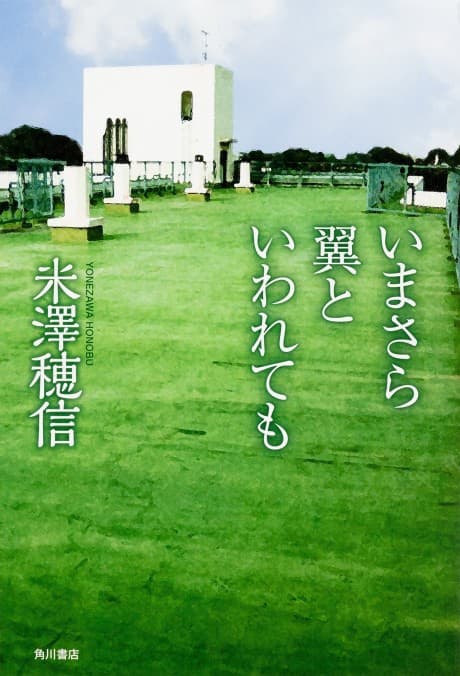
I read “Even Though I’m Told I Now Have Wings”. It was very interesting. I’m glad that Oreki had managed to find Chitanda at the end. It’s good that he was able to understand the situation that she was in.
Choosing the path that you want to take in life is not an easy task. It certainly doesn’t make it easier when you’re told that what you’ve been preparing for your entire life is no longer a burden you have to shoulder. Freedom is a fleeting thing; it is natural that we as human beings desire the ability to decide for ourselves, but a bird that has been in a cage its whole life, cannot simply fly away when you set her free.
The ending of this novel was very abrupt, it was a cliffhanger, it didn’t have a full conclusion, much like Chitanda’s future, so it felt as if it was the perfect way to end. Uncertainty is a terrifying thing, we fear the unknown, but when it looks us straight in the eyes, we have no choice but to face it.
I feel as if the ending was in direct contrast to the conclusion of Volume 4’s “The Doll That Took a Detour”. Back then, she was sure on what course to take since that burden was still for her to carry, her choices were certain. Chitanda Eru is a very responsible person, choosing to shoulder that responsibility without thinking for herself or her own goals first. I think that she embodies the sentiment of being the eldest child of a family, and as such, I’m sure that she will eventually leave the store room and perform in the cultural center as if nothing had happened, keeping up outside appearances while storing away that uncertainty building up inside her heart.
“Even though I’m told I now have wings, what am I supposed to do?”
Oreki Houtarou cannot answer this question. He is not in a position where he can decide another person’s future. He feels frustrated, not because he couldn’t come up with a solution to the problem, but because he isn’t allowed to meddle in it in the first place.
We learn in “The Long Holiday” that Oreki does not follow the energy-conserving lifestyle just for the sake of conserving his energy, but rather to avoid situations where he is being taken advantage of. Yet, he cannot decline Chitanda’s countless requests to solve even the most mundane of mysteries that are surrounding them, her curiosity is an unavoidable thing. However, he chooses to satisfy it not because he is obliged to, but rather because he does genuinely care about her in the end. Him being able to find out her situation, and her being able to ask him that question is a very firm notion of the depth of the trust and commitment between the two main characters.
I think that this volume is going to serve as a turning point for the series. I hope that Chitanda and Oreki’s relationship will continue to develop in future stories since their dynamic is very interesting to me. Perhaps Oreki Houtarou doesn’t need to answer Chitanda Eru’s question, but rather just be there for her, to help in finding the answer herself.
21 out of 21 users liked this review