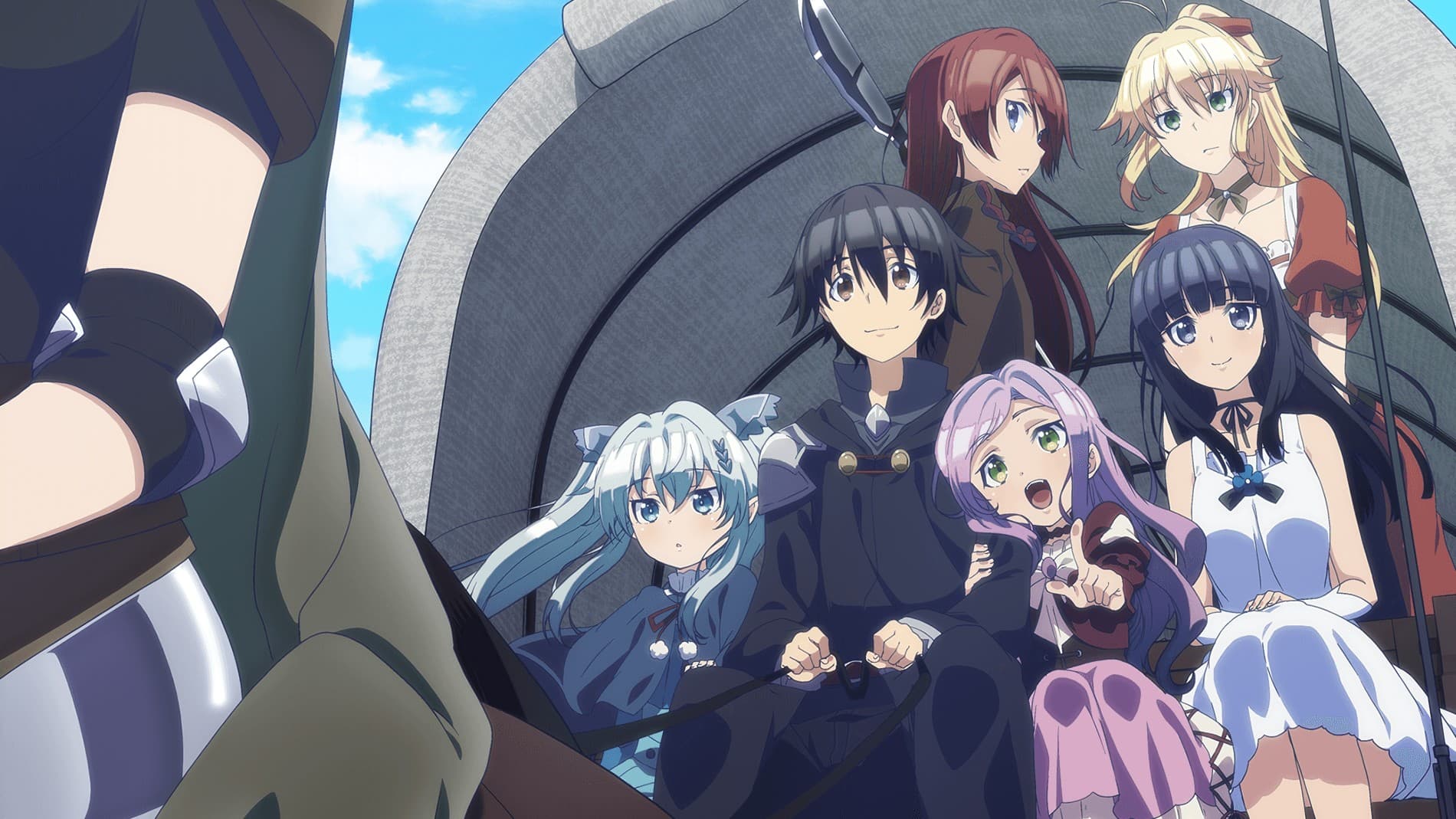
Controversial opinion: I'm not a fan of Isekai anime. There are few out there that I usually enjoy, but I wanted to try out something different as I'd heard good things about several recent ones. One of those was Death March to the Parallel World Rhapsody, which a friend described to me as having a protagonist who has to learn skills to become more overpowered as time passes. While this could be a clever idea, the show quickly becomes a standard modern Isekai anime with little new to offer.
Let's start with the main protagonist, Satou. Like other shows of this genre in recent years, he appears similar to how most Japanese men view themselves. Considering this type of show is often wish-fulfillment, it makes sense but makes for a bland-looking main character. As a character, he feels like a bigger imbecile than other Isekai protagonists. His biggest gimmick is claiming to be "just a merchant" when he uses insanely powerful skills, but no one should believe that, given how fast he learns and masters anything he does. The fact that no one seems to notice is either a testament to poor writing or thinking the audience won't pay it much mind. He also never keeps his resistance skills turned on, leading to at least one moment where I about stopped watching (around episode 8 if you've seen the show before). There's supposedly a manga-given reason for not having these abilities always on, but it isn't addressed in the show. Overall, I wish he was written smarter, or if he wanted to lay low, he made better efforts to fake being weaker than he is.
I witnessed two other extremely uncomfortable things that made me push my score further down. First is the harem situation. Look, it isn't uncommon for Isekai to have a harem surrounding the protagonist, and it's something I've had to get used to as an anime fan. But there were multiple girls under 16 in this show who were supposed to be enticed by Satou. The oldest of the bunch by looks and age is Liza at 18, leaps and bounds better than Arisa, 11, Lulu at 14, and Nana, who's only been alive for a month, but looks to be in her late teens or early twenties! If they were all around 16, I could forgive the ecchi moments in the show, even if Satou does his best not to be involved in the harem side of things. As it stands, I can't ignore these incidents due to the ages of these women.
The other thing requires a bit of a trigger warning. If you don't want to deal with issues of slavery at this time, please scroll to the bottom for final thoughts. Yes, there is slavery in this world, and several characters are legally slaves to the protagonist. At no time does Satou seem to consider freeing these women truly, nor does he fight to abolish it in this world. He goes about life and doesn't seem phased after a short while here and doesn't even attempt to justify his lack of advocating for the enslaved. I doubt I would've been swayed by his reasoning even if he did protest fighting against the institution, but it's clear the author didn't consider it as well. I've heard a few recent Isekai touch on the issue, but it's clear, at least for this one, that the author didn't pay it much mind other than an excuse to get more women into Satou's group.
To summarize, this show may be an okay Isekai to introduce someone to the genre. However, lackluster characters, an underage menagerie of girls, and the refusal to acknowledge the horrors of slavery hindered my enjoyment of the show. I don't think a second season is in my future, so that this show will be a 50 or 5/10 for me. Only watch this if you're a hardcore fan of Isekai anime or can stomach the issues I presented.
12.5 out of 14 users liked this review
