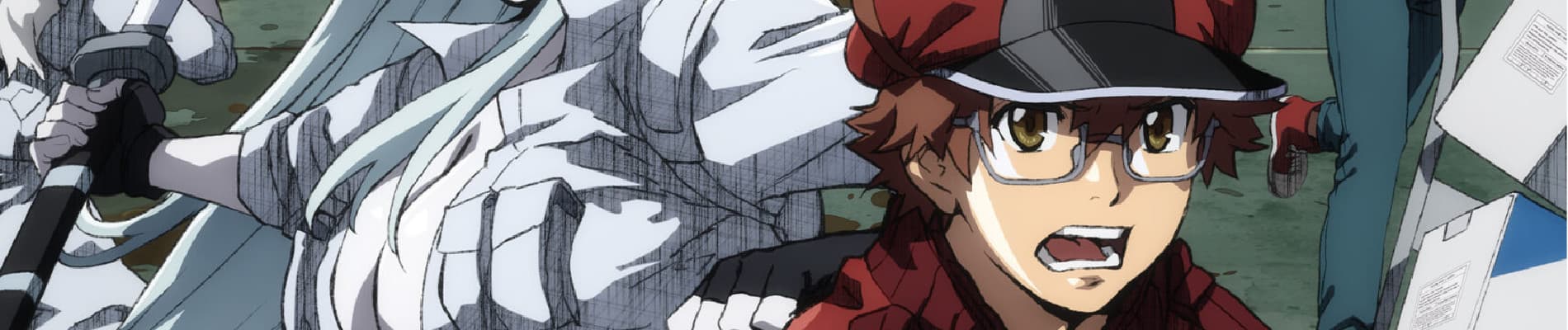
Sleep deprivation. Alcoholism. Smoking. Overconsumption of fast food. We all know these are bad for health but how bad is bad? Cells at work code black shows us the point of view of cells in these tough situations and what they do to help our body recover. Personifying cells can make a powerful impact and help us to sympathize with them. The combination between fact and fiction was wonderfully done. What makes code black different from the main series is that there are problems every episode that cannot be resolved. In some episodes, some external intervention was needed like antibiotics, surgery etc. This was not seen in the main series as the problems were overcome by the cells themselves. The message here is that some effects are irreversible and places huge stress on our bodies’ protective mechanism
I dare say that this is close to a war anime. If you are into relentless battles and emotional camaraderie-ship, this anime is for you. You can see that the cells fight painfully against any germ or bacteria only to be faced with more problems. What may seem as normal on the outside of our body is actually creating a living hell for our cells. While the show does have some wholesome moments where cells work together and appreciate each other, the show is generally has a doomsday vibe where the body is deteriorating episode by episode ( I was surprised he survived 13 episodes)
The main character is a rookie red blood cell learning the ropes being a full time red blood cell. He is your average protagonist: eager to do his work right, cherishes his friends and always wants to save the day. He is very passionate about his job and would do anything to save the body. Unfortunately, he started his work at the wrong time. His experience is very real: ragging from seniors, pressure from higher ups and taking advice from old and dying blood cells. His resilience and passion for work motivates him to run around the body delivering oxygen, vital to the body. This pressure is increased as regardless of the situation, oxygen is necessary to keep the body surviving. He understands the importance of his job. Unlike the main series where the focus in each episode was the cell in the target region, this whole series has emphasis on red blood cells and their struggle to deliver oxygen in plaque filled vessels and exposure to hazards like kidney stones. We also get to see mission control (the brain) sweating buckets whenever a problem has no hope of recovery.
This brings me to my point about the characters, While they do have human-like emotions, they are born to work. I found it philosophical that the reasons for cells to exist are to keep the body alive and save it from any impending doom. However, what happens when the body dies? The main conflict in the show is that the human keeps neglecting his health but the cells are constantly motivated to keep it alive. The concept of cell specialization is highlighted in the show where each cell has their own purpose in that organ which other cells cannot do. The last 2 episodes were the climax of the show and we can see all the cells at their peak, praying that the body stays alive. I like that they included some rebel cells who rejoice at the thought of the body dying and don't feel like working for the dying body. This way, a conflict is set up in the show and makes the cells more human.
The animation, although sketchy, was well done and helped to enhance the special effect of the show. The different parts of the body were creatively shown, Cells At Work speciality. The germs and pathogens were gnarly. I was hoping they could have included an episode on drugs and their effect on nerve cells. However, alcoholism and sleep deprivation are already pertinent problems plaguing our society today and it showed the many harms caused by them. The biological facts were digestible and everything was explained clearly. All in all, it was an entertaining show and very educational as well.
28 out of 30 users liked this review