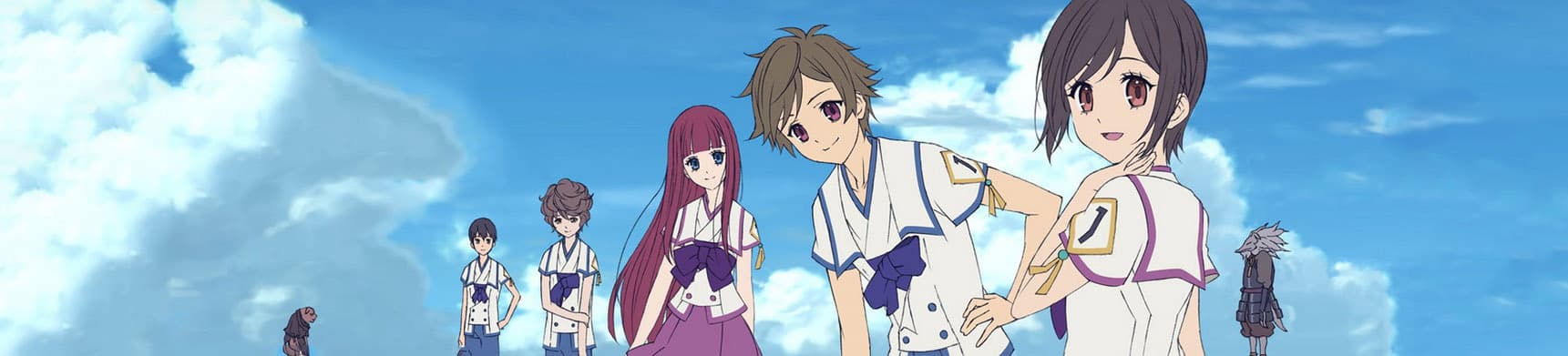
There once was a gifted boy who had one fatal flaw. Oh yeah, and like some rather ordinary girl? ‘Shinsekai’ is about her, and thank God for that.
Set aside for a moment the singularly mournful mood, the evocative use of music (especially Dvorak’s New World refrain), the rip-roaring plotting, and what do we have? A fable of heartbreak and its spectres. A parable about where we draw the line between kin and others, and the price we pay for doing so. An arguably problematic allegory about modernisation and imperialism. But these are grand themes and they unfold slowly — let’s back up a bit.
Saki — the rather ordinary girl — and her friends live peacefully in a rural Japanese village. They spend their days squabbling in the fields and learning to command their psionic powers at school. There is sport and adventure and mischief and romance and all the general fun of childhood. That — and kids keep going missing.
The trope of an apparent utopia which nests venomous secrets has been overused. Yet ‘Shinsekai’ refreshes it in one key way — this brutally idyllic society was formed out of necessity, to safeguard against real threats. This core distinction blurs the ethical line between the trope’s child-figure who seeks the dangerous truth, and the evil adults who conceal it at all costs to maintain the status quo. Indeed, towards the end the protagonists are adults themselves, faced with similar moral quandaries.
In fact, the thing that makes ‘Shinsekai’ so hard to review without spoilers is how much the show evolves. Love, allegiance, the very fabric of two social systems, are all subject to flux as the characters mature. The story unfolds very organically, but with such precise planning and structure that the final plot twist is both a shock and no surprise at all. It’s a very satisfying show in that regard; the author is always a step ahead — but we never really feel behind.
Nor is Saki left behind. Although she is not as brilliant as Shun or as popular as Maria, she is well-rounded, sensible and adaptable. As the tale unfolds she gradually grows into the roles set for her — and those that she sets for herself — gaining strength as a friend and leader. The supporting cast is balanced and has great chemistry. Despite their constantly bickering, their genuine care for one another is both a plot device and a model for solidarity amidst adversity. And then there is the relationship between the monster rats and the humans, which is one of the most interesting aspects of the show — but saying any more would be telling!
The show’s art is beautiful but not flashy.— one positively extraterrestrial scene involving the gifted boy aside. It makes no attempt to upstage the story, but rather focuses on fleshing out the New World that surrounds it. We are naturally interspersed into the pastoral wetlands, the monster rats’ warrens, the steel bowels of city ruins. The camera is all but invisible, reinforcing our immersion. I found the wide-eyed human character designs distinctive and appealing, and the contrasting monster rats rather unfortunately ugly. In short though, ‘Shinsekai’ is gorgeous when it wants to be — which only makes its horrors all the more unsettling.
‘Shinsekai Yori’ is a masterclass in storytelling. It combines relationship and character insights with subtle and mature themes, and a gorgeously designed world. While there are moments which feel anticlimactic, most of the plot points land hard, and the show is simultaneously thought-provoking and highly entertaining. The celebrated power of imagination might indeed be able to “change anything”, but even it may struggle to find elements to fault in this impeccable show.
Overall:
just watch it
36 out of 37 users liked this review