GRANBELM
a review by DigiTheMelon
a review by DigiTheMelon
Due to recent request: SPOILER WARNING! MAJOR PLOT POINT DISCUSSIONS
At its simplest, GRANBELM asks you to enjoy life.
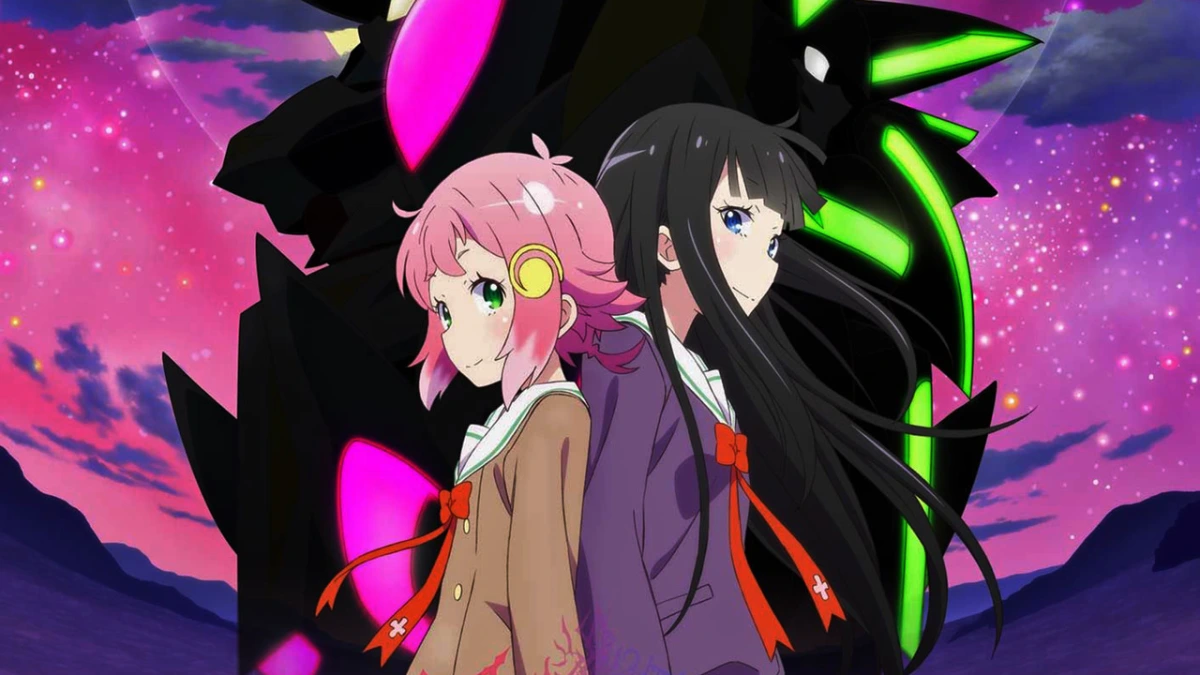
GRANBELM is almost an amalgamation of many different properties you’ve seen before: it’s as if Fate, Madoka, Ryuki, and Gundam were disassembled and reassembled into an entirely new show. Not that this is a negative to the show, it still stands out despite its obvious inspirations. If anything, the way it’s able to weave these genres is masterful.
I’ll be immediately honest and say that GRANBELM is an anime that feels completely catered to my tastes. It’s a battle royal with magical girls piloting mechas that espoused themes of predeterminism, the beauty of life, and self-worth. That’s what speaks to me. So, why didn’t I enjoy the show as much as I should’ve?
Let’s talk about it, starting with “magic.”
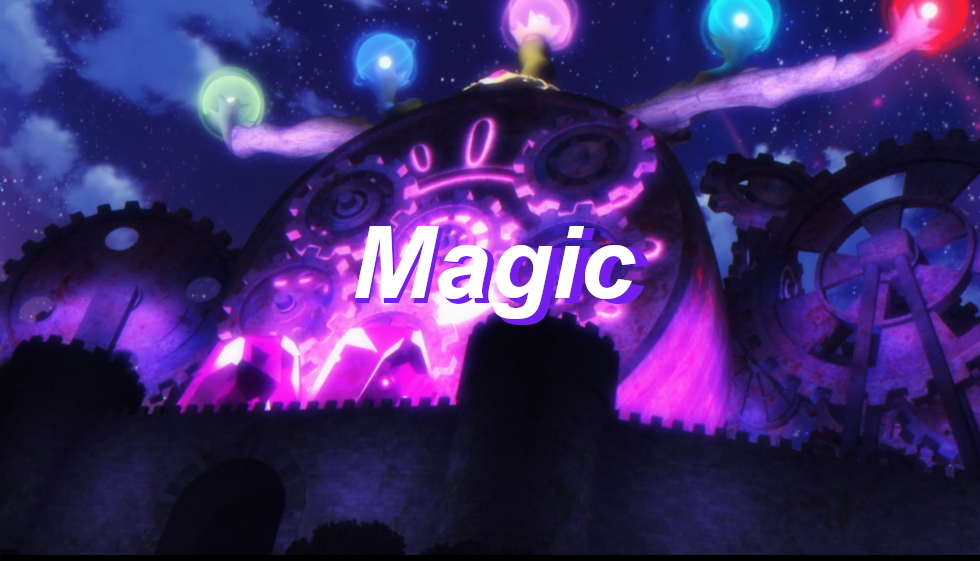
Magic in GRANBELM was created by humans. It had enriched their lives until it began to produce wars. Six mages worked to seal it inside Magiaconatus, a surprisingly active mcguffin. Now, a thousand years into the future since then, it’s wielded only by surviving mage families. All of these mage families have the singular desire to become the “Princeps Mage–” the true mage who wins the titular Granbelm and controls of all magic.
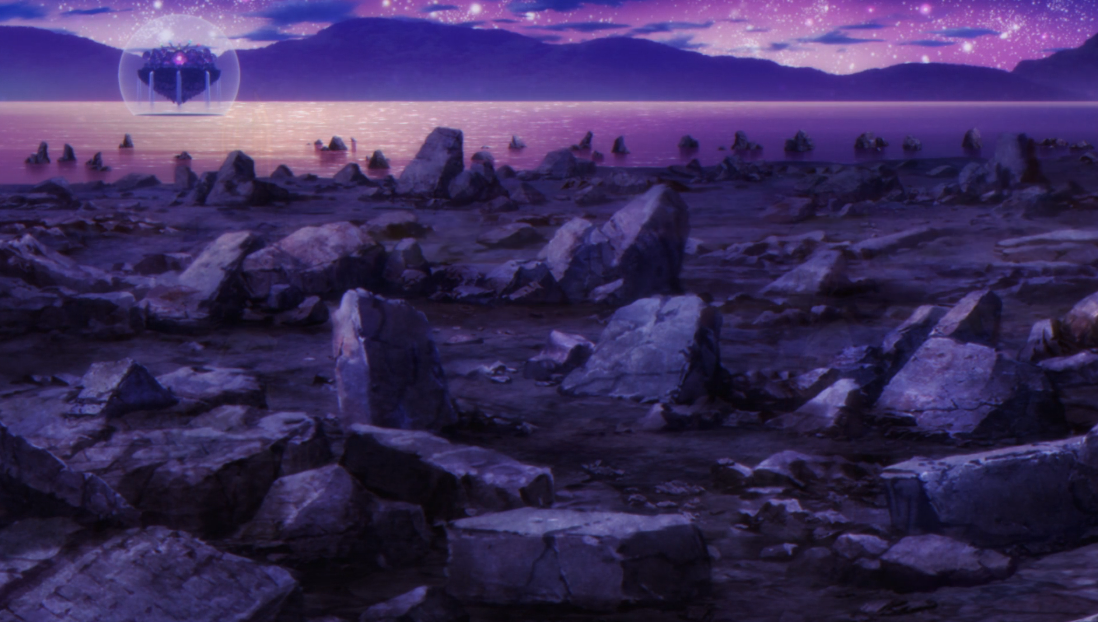
Magic as we first see it is completely destructive in nature. The Armanox–or the mechas– clash, shoot beams, and aim to destroy each other. The pilots aren’t much different with some exhibiting on pure bloodthirst. It’s our first visual introduction to the world of Granbelm. The setting of this premier fight is an empty zone with a lone castle. The start is telling us that the world is nothing but violence for a throne.
(I wanna make a quick note of saying that the arenas for the Granbelm rounds are a great way of showing where the characters are at mentally.)
A later showing has magic used in a conventionally positive light, encouraging the growth of plants. But, a character– the TRUE main character, Shingetsu Ernesta Fukami–provides an interesting perspective. By using magic, they stripped away the plants’ freedom to choose when they grow. Magic stole the future and forcibly chose how life would work.
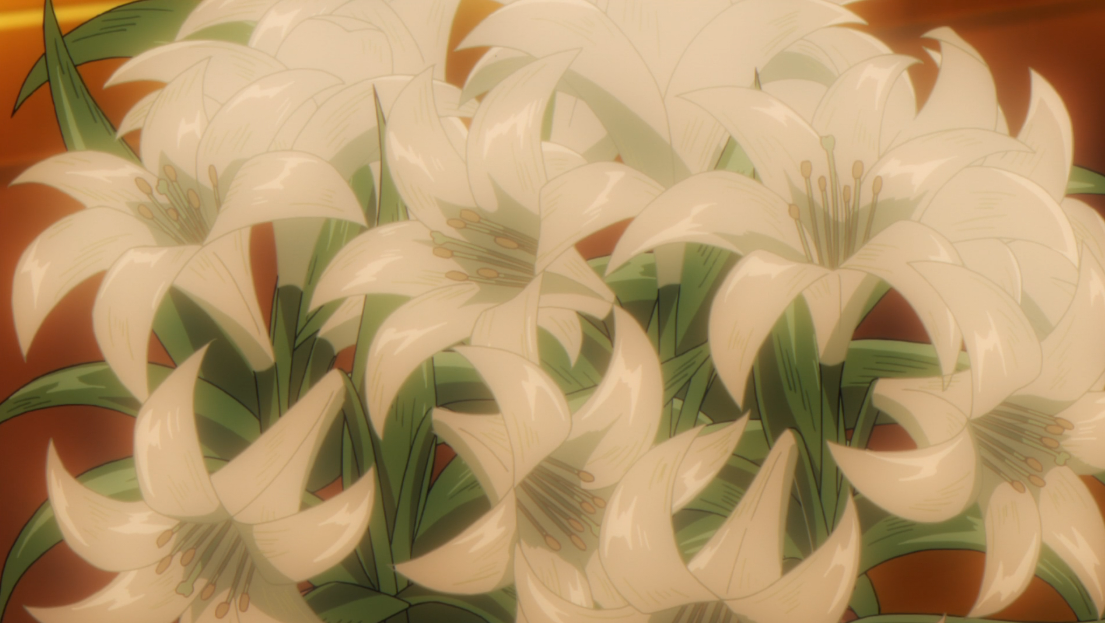
Every character interacts with magic, or the indirect effects of it, on a purely individual level. It’d be a mistake to say that any of the girl’s fight in Granbelm for a utilitarian purpose. It’s a universal human desire they all demonstrate, but it’s one fostered by magic. Whether they fight out of jealousy towards their magical superior, fight to save a cursed loved one, fight because it’s all they have, or even fight to destroy magic, it is all sourced in magic.
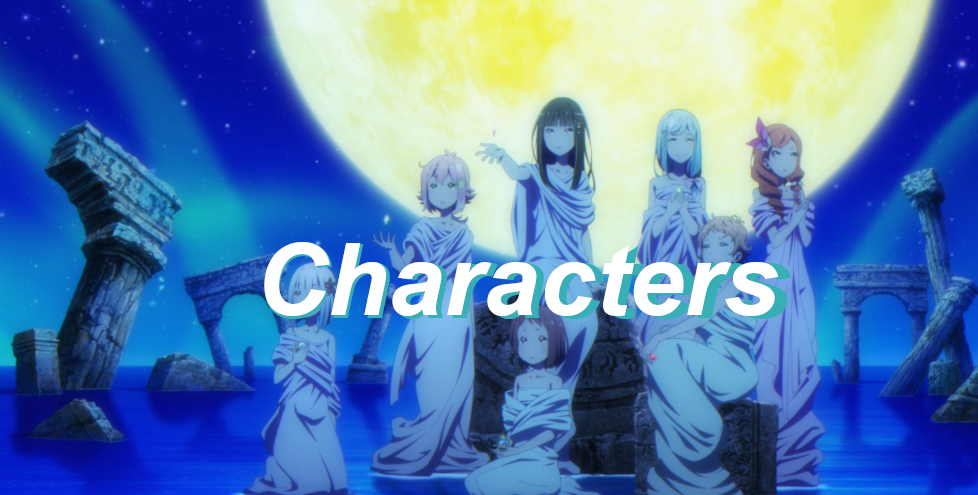
The characters are the primary means of which the story moves forward, which is self-evident due to its genre. But, it’s especially true in the case of GRANBELM which I feel perfectly split the time where the characters are free to interact and the time where they fight. The freetime does the best in building the main duo and showcases the more visually and narratively interesting, while also having the ability to host the show’s denser dialogue. It's also this freetime that allows us to breathe and soak in the town and world. Despite being normal, it comes off as more vibrant and colorful than the magical settings.
Let's dive a bit into the characters I want to talk about: Mangetsu Kohinata, Shingetsu Ernesta Fukami, and Suishou Hakamada. These three are the most blatantly controlled by Magiacanotus and expressive of the show’s themes:
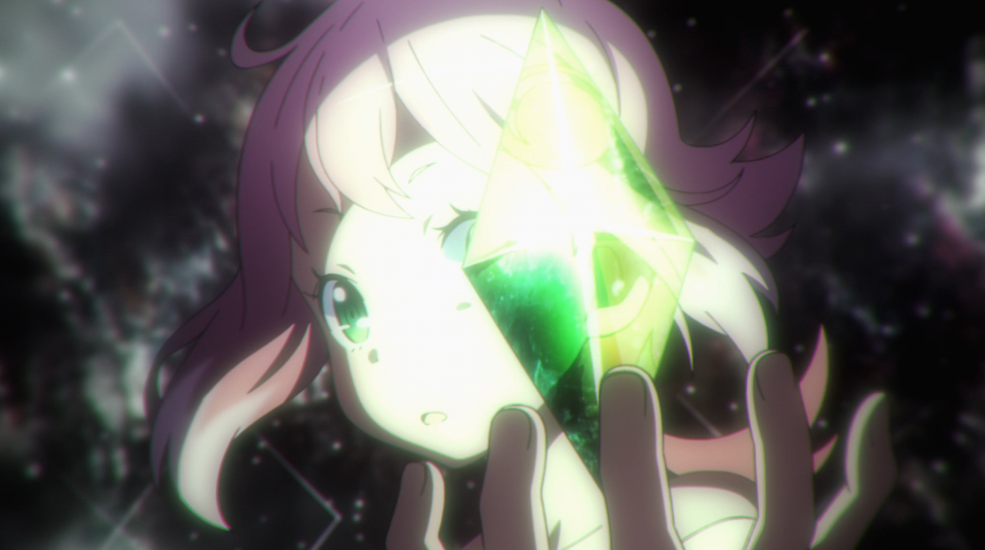
Mangetsu apparently has nothing going on for her. She isn’t good at sports or studies and believes no one would miss her if she were to disappear. When she enters Granbelm, she obtains a sense of purpose: fighting in the tournament is something only she can do. She further solidifies this decision in order to help Shingetsu accomplish her goal. It’s later revealed that Mangetsu never existed. She was a puppet constructed from Shingetsu’s wish for a friend. The reason she felt like she was nothing, could never make anything unique, and cooperated with Shingetsu was in her programming. She was created with a singular purpose. But, she’s the character to find the beauty in life and share it with Shingetsu. Without any pretenses, she looks up at the night sky and realizes it’s beautiful. If everyone’s gaze is locked onto some sort of power or desire, they miss out on some of life’s simple, elegant, and beautiful features.
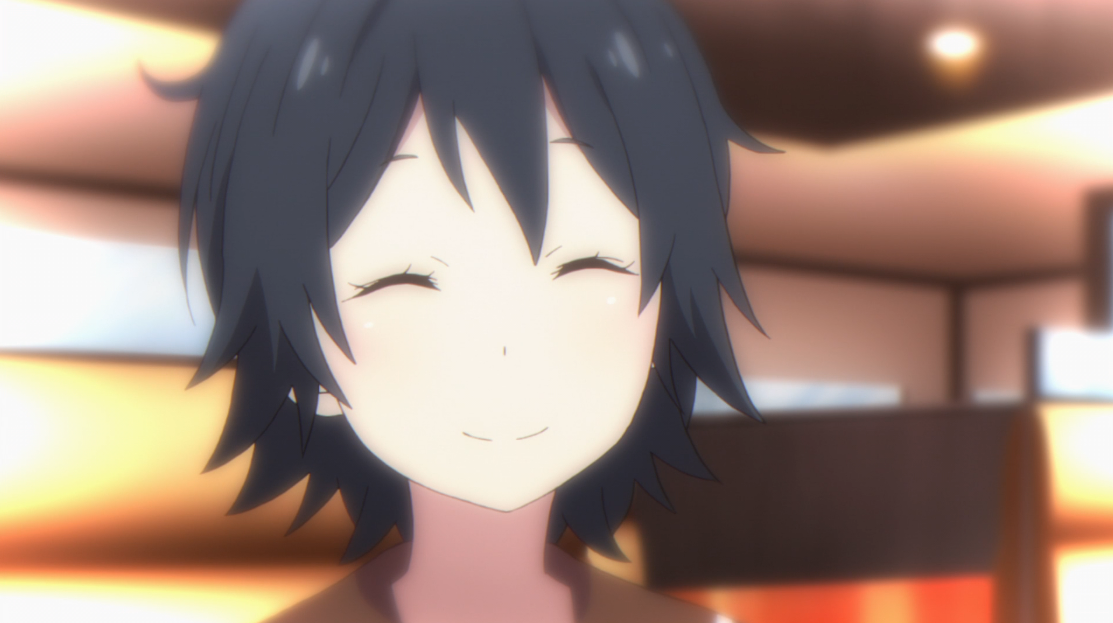
One of the best scenes in the show comes from a moment where Mangetsu talks about a conversation her classmates had. Despite the girl fading away from reality, her classmate remembered her and smiled at her. She wasn’t an important character by any means. But, Mangetsu’s existence was reaffirmed. Her life mattered and was noticed. Mangetsu had something.
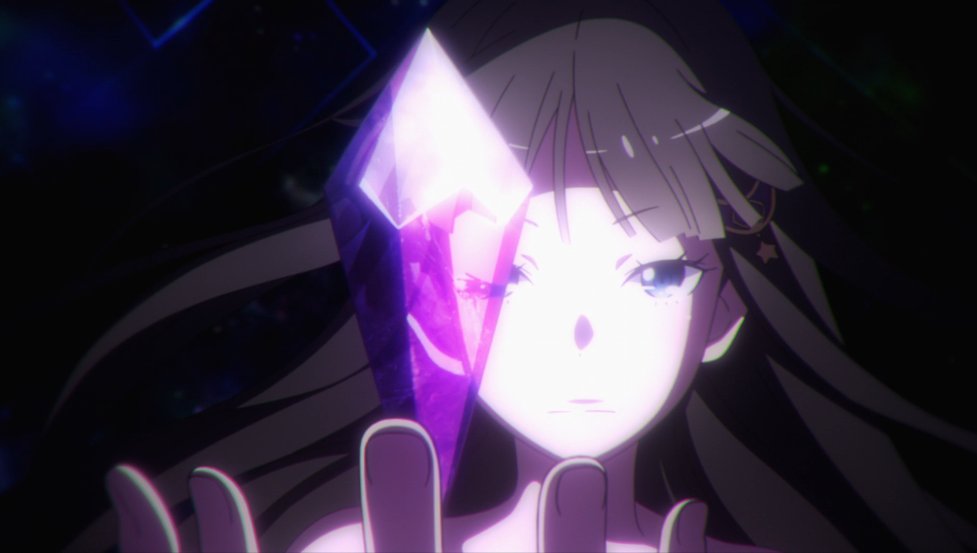
Shingetsu is chosen by magic. And she ironically chooses to destroy it, despite it being all she has. Her relationships were all born under magical contexts and some are destroyed the very same. She is, as I’ve noted, the show’s true protagonist. Out of the main duo, she is the active, purposeful member and faces the most acute struggles. Suishuo even reveals that she is the most favored out of all the mages Magiacanotus has ever blessed. The trajectory of her life has been decided for her by magic. And so she wants to destroy it, so everyone has access to a free life. It’s impossible to ignore that Magiacanotus continues to support her, as if it agrees with her worldview. With Mangetsu’s help, she learns to love herself and the world. Eventually choosing to maintain her selfishness.
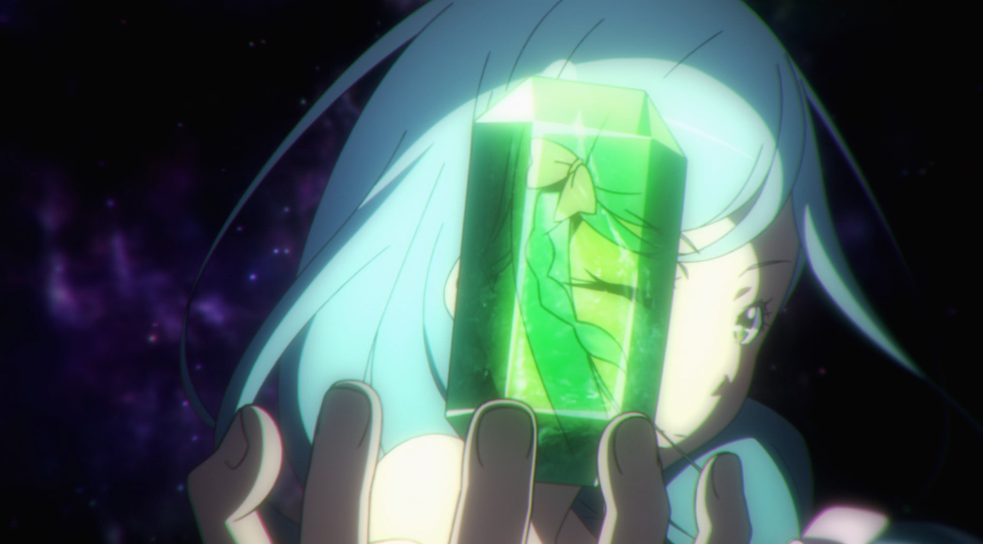
Suishou is the antagonist. Throughout the series, she’s manipulating others and hiding her true self. She breaks Anna and Kuon and is eventually the final opponent the main duo have to fight. In another case of irony, she reveals to be like Mangetsu–a puppet.. Suishou is the most interesting antagonist (Anna gets points for being in the show, though). She’s fought the battle for a thousand years and always won, but was never able to claim Magiacanotus. However, it chose her as a test. Anyone who could beat her would be capable of claiming it. She’s a set-in-stone final boss. And, her flaws are all projected onto Mangetsu. She constantly berates the doll and forces in the fact that she wasn’t real and her ambitions were decided. She violently forced her own inhibitions onto someone made similarly to her. She’s stagnant and entrenched in magic, unable to free herself of its corrupting worldview and pay notice to anything else around her.
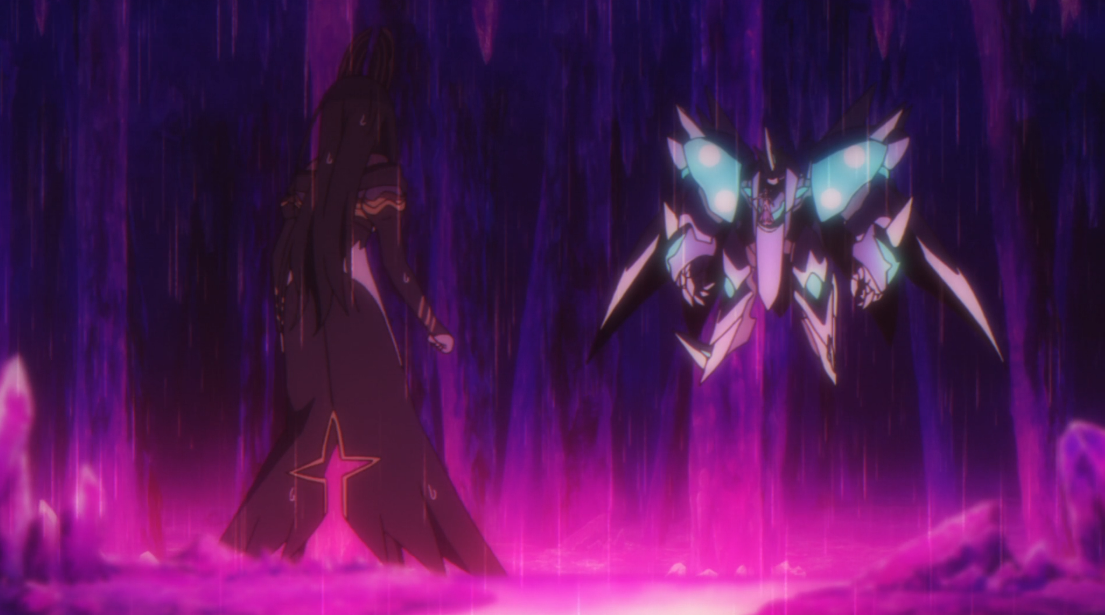
It’s a very simple dichotomy in the worldviews being presented, but I believe the show handles them incredibly well despite Suishou’s late revelation. They best represent characters consumed by the world of magic, while also showing the divergent viewpoints attainable for people who seek something outside of it.
(The show plays with the concept of dolls a bit as just another expression of freedom and predeterminism. An interesting line suggested that the Armanox and their pilots had the inverse relationship of what was originally thought. It’s another way of saying that magic has control over their lives and selves.)
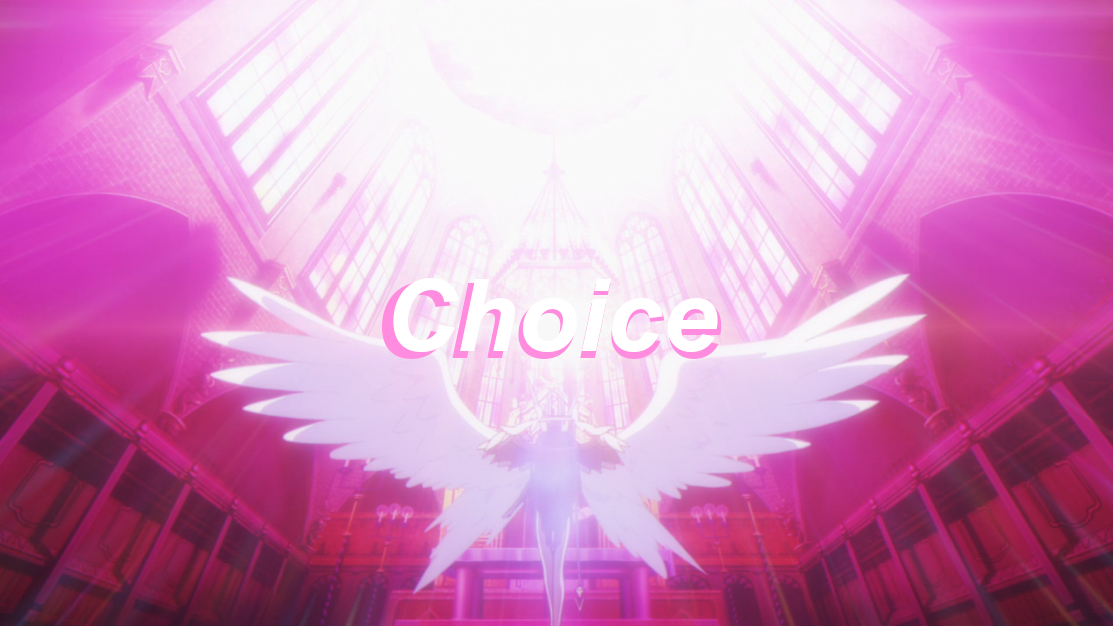
Yet even with all this, Shingetsu still makes a choice that feels full of her own passion. She chooses to go with her plan to destroy magic, which would even negate the lives of those who lost the tournament, erase Mangetsu, and put her in an infinite state of limbo. It’s a horribly selfish conclusion but she chooses it with a new perspective. Now, she has the time to do so much of what life has to offer. It’s poignant, it’s awful, but it’s oh-so inspiring. As I watched, I was silently hoping she would stick to her decision, knowing I could never bring myself to do the same. She would isolate herself forever while erasing every connection she made. But, she found ways to enjoy herself in spite of that. The scales of moral ambiguity are so unbalanced here you can’t help but keep thinking about her decision. But, it’s her decision and we have no place in the matter.

I can’t leave without talking about the final scene though. How horribly cruel I thought it was when I saw Shingetsu’s existence validated and her ethereal form became so much more corporeal. But, I was thinking about the mages when in that moment there was just a lonely girl given life by her friend. Her existence, her life, her very being were noticed and appreciated and it doesn't matter how unfair it was to anyone else.
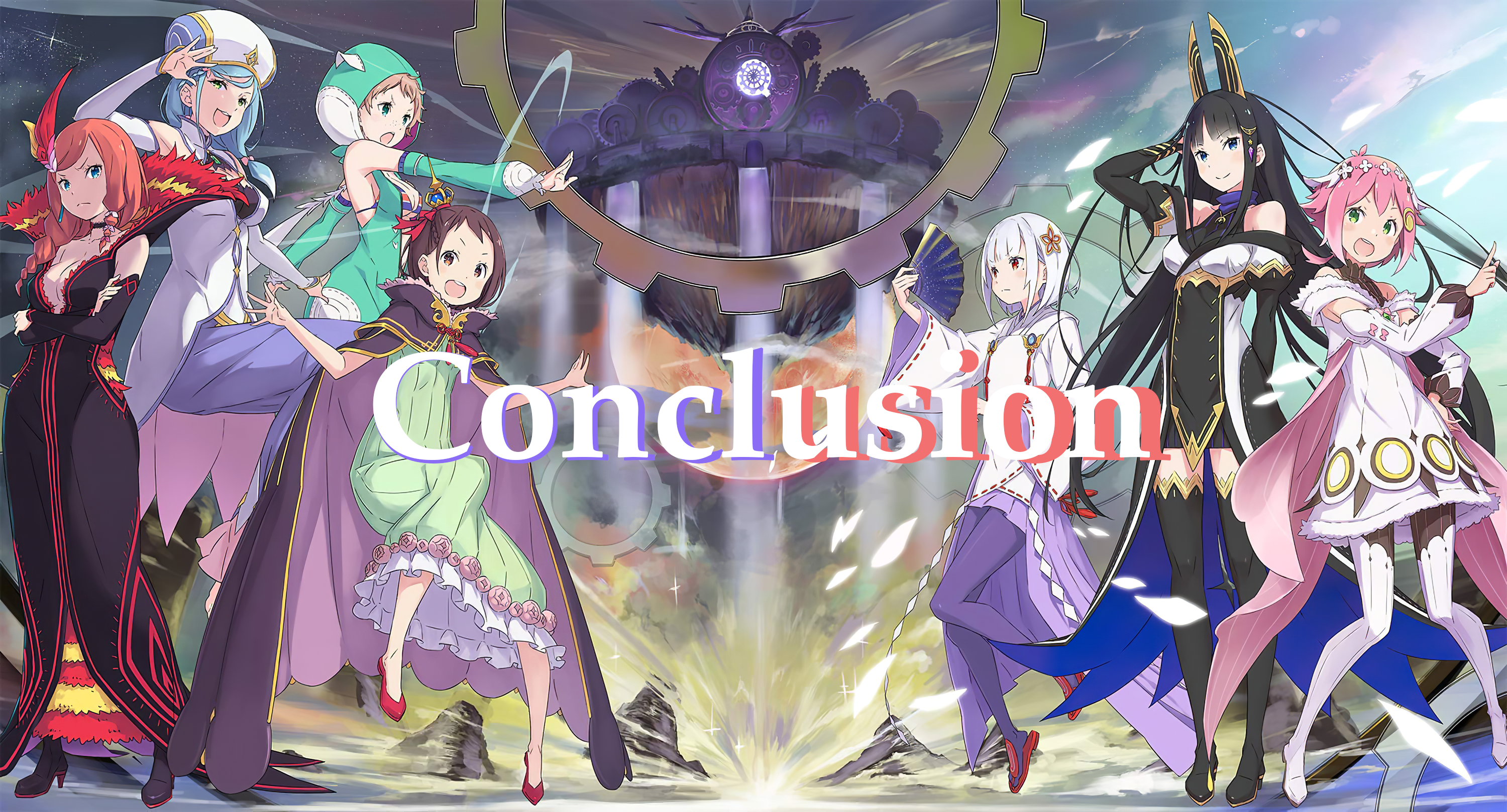
Now, I’ve hopefully driven across some of the thematic depth the character’s provide for the show and how the conclusion strikes you. Because, I have to talk further on how I felt watching the show. I could see all the bits and pieces working in tandem for the experience. I understood the character motivations and foreshadowing. The show was well-crafted, even on the production side. Looking back, I can even find some subtle pieces of visual storytelling that blows my mind.
But, why didn’t I love it as much as I should have?
I can say that some characters outside the three discussed lack the depth needed, the fight scenes were unclear, or that magic as a concept was wholly underdeveloped. All of these are valid concerns, but they aren’t right for me. I think it’s because I didn’t watch GRANBELM at the right time. GRANBELM is a show that matched me aesthetically, but I haven’t reached the point where I can completely relate to it. If I were in a mindset where I’ve lost myself in illusions or felt my life was meaningless and purposeless, then I’m sure GRANBELM would have reached me. Giving my experience a number is a bit tone-death, but I can appreciate the work for what it is and what it was trying to do. And, I suggest anyone who either appeals to my aesthetic or needs an anime like this in their life to definitely give the show a try.
There's a lot of things I also want to talk about further, like how Granbelm is essentially a ploy to destroy magic or going even further on the impact we leave as people. But, I'm not equipped well enough to try and tackle it here. All I can do is choose to end my scattered, little thoughts with the following image.
(This is my first Anilist review, hope it's not too bad.)
20.5 out of 22 users liked this review
