"I learned through those experiences about all the suffering of the people in this world. There is not one form of suffering that I do not understand."
_"How is it that one overcomes such suffering?"
"Prayer. There are still many things that I shall never forget. That is why all I can do is think of everyone, all those who I have loved, and pray for all the souls that have left this world. That is all I can do now."_
_"The buddha's temple bells toll the message
That all existence is impermanent.
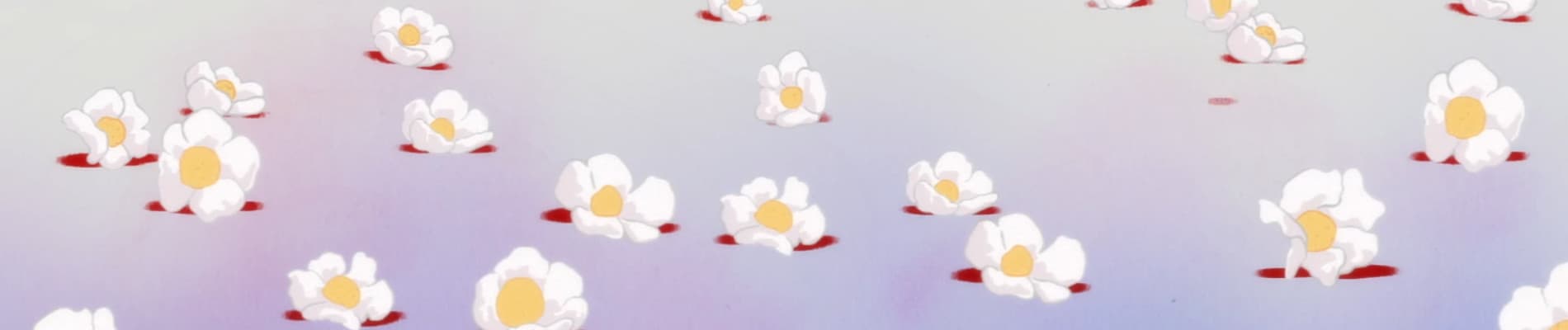
The sal tree's blossoms turn white to grieve him:
A reminder that all who flourish must fall.
Indulgence does not last.
It shall but be like a spring nights dream.
The dauntless shall meet their end.
They shall be as mere dust before the wind."_
First of all, I must apologize for how voyeuristic this review is. I can't help it. Blame my fingers.
Naoko Yamada is back, but now with the unusual crews: Science Saru, the studio that has backed up Masaaki Yuasa's ideas ever since Ping Pong the Animation. But she still has Reiko Yoshida and kensuke ushio with her, carrying around the very loose adaptation of a story about a fallen clan 800 years ago, a reminder that all who flourish must fall.
The fall of Heike is a story with a lot of blood spilling, greed, malicious human nature, that are to be expected. A lot of unnecessary war, claiming hundreds and thousands of lives for the sake of the heads of Taira clan's ambitions. Yet Yamada doesn't want to focus that much on the ugly side of the story. Being a method director she is, most of the times she presented the beauty that surrounds the Heike instead: the flowers, the changing seasons, the sun, the nature, the playful manner of the Heike brothers, the clasp of hands praying, the feet that hids emotion, and a lot more, even when the situation is sad, happy, tense, or meditative. Big events are heavily implied because they're nothing more than plot points to drive the narrative forward. Big names are skimmed without further, in depth development because they aren't necessary for Yamada's main reason of why the anime existed: to tell the story about how people deal with life and death itself.
Heike rise by hurting people, and it bits back at them. Common knowledge. Political conflicts, war, assassination, burning of a temple, they have weights even if they're just presented as a text in Wikipedia. But what about the people who are involved in it? How would they react and feel when all the tragedies happened back then? Yamada's questions were about the same as Tarkovsky when he was making Andrei Rublev and Parajanov when he was researching about Sayat Nova. How cold it was when the rain falls on the Heike at the time they were evacuating? How gloom the atmosphere was when Kiyomori's ash were spread, leaving his children without knowledge on what to do next?
Even with the story about big things happening, Yamada still cares more about the small. She probably knew that when she began to draw the first storyboard, she was just as small as Biwa: not being able to alter the story, however sad it may be. So with Biwa finally accepting her powerlessness, she's telling the audience to forgive, pray, and move forward instead. There are many things that we're also unable to do, unable to prevent from happening, and soon would put a burden to us in the future. So she's telling us to pray, like Tokuko after Heike falls, and keep on living.
Welcome back, Naoko Yamada. Thank you for leading the production of this masterpiece
16 out of 17 users liked this review