I will confess that, the first time I heard of Parallel World Pharmacy, my mind darted to last year’s Cheat Pharmacist’s Slow Life: Making a Drugstore in Another World, which I had reviewed beforehand. I wondered if I had fallen into some kind of temporal vortex where isekai plots were being recycled even down to the more-specific central concept or conceit. I then had to ask myself why I was watching this one, especially if the premise alone sounded like something that would offer no solid differentiation from the show that came before. But after thinking that, I couldn’t help but wonder – what’s the worst that could happen? At its best, I find a nice little surprise that I look forward to seeing every week. At its worst, it’s a show I can quickly forget about the week after it stops airing.
But to my unexpected relief, there were indeed some pleasant surprises that were within it. Describing Parallel World Pharmacy could best be done not just by explaining what it does, but by the little things that it does to help bring color to a genre whose face has had the color and blood leeched out of it recently. Are these things different enough that the show as a whole warrants a viewing or an earnest chance? Truthfully, I cannot say that it does. It does fall into several of the stereotypical trappings that plague the lesser efforts of the isekai genre, which does mean that if the genre has worn you out, it’s not likely to do anything to change your mind like others potentially might be able to.
________
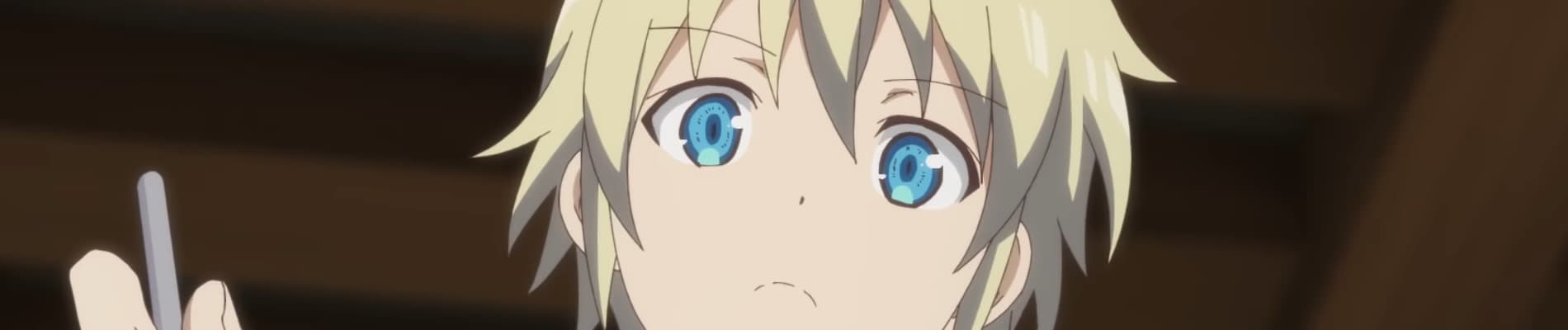
The main protagonist of the series, Farma, is emblematic of this simultaneous the-same-but-slightly-different approach. He thankfully does not get isekai’d by the more-conventional route of getting hit by a bus / car / train, and rather dies from overwork exhaustion (which, if you’re not familiar with workplace culture and attitude in Japan, it’s not pretty to read about). He is fortunate enough not to be reborn as a peasant or a working-class child, but as a wealthy son of a famed pharmacist – so to speak, it’s a match made in heaven, an entire bedrock of modern pharmaceutical knowledge being transported to a social environment where he can actually put his skills to use.
As has come to be expected, the powers bestowed upon him are indeed godly. We see through here the usual method of Farma not necessarily knowing why he has the powers he does, but he starts exercising them though the guidance of his teacher. But rather than being hailed as a paragon of magical genius and prowess, he is feared. This sets up one of the main focuses of the story – Farma’s powers both are a blessing and a curse in his new life, and because he is still just a child and does not yet have the prestige of the isekai world’s other pharmacists, he has to metaphorically fight to establish himself anew. Farma’s circumstances are thus woven into the show’s overarching mythology, and in a welcome little spin, it’s one that actually presents more problems for all involved rather than the more-conventional route of simply marking the overpowered protagonist as a praiseworthy savior who dazzles everyone he comes into contact with. Fear is more of an ingredient to making Parallel World Pharmacy work than what I expected, since Farma is, more or less, an alien figure in this already-established, storied universe.
A quintessential part of turning that around is recognizing the larger picture that looms over them. As a wealthy-born child, Farma learns through his interactions with others that there is an inherent inequality in how medicine and treatments are given in the kingdom. Gifted with his second life, he decides to set out and right what he sees as the inherent wrong that only those with the means to afford them get their medicines, while others have to settle for questionably-fraudulent scraps. As a result, Farma’s character is defined less by his fantastical powers and more by his altruism, being willing to give aid (publicly or secretly) to those of all socio-economic standing. The best scenes in the anime are when he’s talking to his patients, nursing them back to health both with his powers / medicines and in the comfort of his words. He does not just go through the motions of “giving care” like other doctors might, writing prescriptions and then shooing you out the door for the next patient – he actually does care in more than one sense of the word.
And it’s good that Farma’s inherently-altruistic attitude is beautiful, because the animation and overall aesthetic sadly is not. The color palette and sense of shading here is unfortunately not employed to any real eye-catching degrees. There is also a prevalence of some rather bright shots, where the lighting employed seems to wash out any other potential color schemes and tones that might have existed otherwise. While a couple of action-oriented scenes exist, or moments of demonstrating magical powers do manifest themselves every once in a while, the priority towards the production did not seem directed to making the visuals stand out. Studio Diomedéa’s most-notable visual shows tend to be when they indulge in darker or more inherently-brooding somber or dramatic moods (which could also just be chalked up to art and color direction). Since Parallel World Pharmacy doesn’t have many moments like this, the series feels aesthetically constrained.
It also manages to feel constrained in how it uses other characters. Like many other isekai before it, the series has such a strong protagonist (in power, if not in characterization) that much of the rest of the cast doesn’t quite ever feel as appropriately developed or engaging enough to feel justified being there. The two main female characters stand out in this respect. Lotte sadly does not develop into anything more beyond being a token cute female character who helps Farma out, while Eléonore gets shafted pretty badly. Although conceived as a character that is knowledgeable about her world and the Divine Arts, and is likewise altruistic, she eventually is relegated to little more than helping Farma. It’s a shame too, because the plot does give her an opportunity to develop into something more self-actualized and capable in the season’s final arc, though the narrative does not give her the appropriate time to follow suit.
The other ancillary members to the cast work best when they tie into that overarching problem I mentioned before about Farma being a fearful figure rather than an endearing one. When Farma’s powers manifest problems for the world rather than simply in chatting with other people, it manages to make the players involved more interesting, and the subsequent drama that ensues carries more weight behind it, even if that weight is not anything especially noteworthy. Yet, these moments are too few and far between in the course of its twelve episodes, despite the best efforts to frame them through cliffhangers as being significant.
But there are three final things that ultimately make Parallel World Pharmacy stand apart, which I would be remiss if I did not mention – one is that there is a beach episode that actually progresses the plot forward rather than being a shoehorned-in display of fanservice. Aside from the fact that the fanservice in the episode is incredibly tame, it also ties into another aspect, which is that there is no harem romance in this series. As a result, the female characters in the show are never presented to be overly-sexualized, or in a way that makes it clear they mostly serve to exist as candy for the viewing audience. Even if the actual characters that lie therein are not special, I sincerely appreciate the restraint shown here.
The last element to mention is that there is a flexing of knowledge on display throughout the series. A common convention of light novel or light novel adaptations like this is the idea of an author basically showcasing their interest or knowledge in a specialized subject, and then writing a story tailoring to that interest. Rather than a hodgepodge of various ideas, original author Liz Takayama keeps the focus squarely on pharmacology and virology, so there’s more of a solidified through-line in the material. Everything else surrounding it is mixed-at-best, but then again, this is also Takayama’s first published story, so we have to take that into consideration as well.
________
Parallel World Pharmacy has some spoonfuls of sugar to help its mediocre medicine go down, which do indeed provide some relief. It will never be confused as a series injecting new life into the isekai genre, and several aspects of its presentation are little more than standard for what the genre can offer. But in the handful of times that it manages to find the right formula, it can be a nice little time. It’s just a shame that there was not more of them. If his powers translate to metaphysical ideas, maybe Farma should open a pharmacy for the genre as a whole. At the very least, we’ll get to meet that one character who loved the sailor candy again.
65 out of 94 users liked this review