Rurouni Kenshin
a review by Kuma187
a review by Kuma187
Okay, that might be a bit too harsh of a summary but this show suffers from numerous issues that really can't be all excused by the year of release. 1996, a pretty bad year for Japanese animation. Sandwiched between the year of GitS, Evangelion, Gunsmith Cats, Memories, and the year of Berserk, Perfect Blue, Princess Mononoke, Utena, 1996 doesn't have much to show for, and feels pretty awkward with such towering older and younger siblings, and the fact that Kenshin is so highly regarded in that same year makes me believe that the situation is indeed pretty dire.
Rurouni Kenshin started actually pretty good. In fact, all the first part, with its presentation and SoL aspect of the series, topped with action that certainly reflected the idea of a time during which people strived to maintain a precarious peace after the events of the Meiji Restauration, offered a convincing story. Kenshin's vow to never kill again more than hinted at a painful trauma but he never outright spoke about it, and Yahiko deciding to follow both Kaoru's and Kenshin's styles in order to master the blade that protects people instead of killing them, Sanosuke's backstory as one of the many "orphans" of the conflict, and the perilous times of trust and betrayal that had plagued the country for centuries, were as many good reasons to be charmed by the series. In fact, for all "episodic" that the first part was, it certainly was the most effective at creating both a presentation and buildup, which peaked with the very beginning of the Kyoto arc.
Until that point, Rurouni Kenshin was walking a precarious balance between light and darkness, life and death by the sword, and Kenshin's desire to settle everything without killing, something that revenge-thirsty people like Sanosuke were certainly not used to and had difficulty accepting, and the result was certainly a shounen series, yes, but a shounen series that justified every defeat and every death. While there were already elements of that insufferable anime trope that I hate, powercreeping, those were very tame and Kenshin's strength was mostly used as a means to end the episodes while also bringing in some morale destined to young children: don't let blood get to your temper, don't be so swift as to choose violence when words might just be enough, don't cheat or lie, learn to forgive, don't misuse your power or stay silent when facing injustice, and so on. Among the highlight episodes, I could definitely point out episode 14, which is actually one of the best animated episodes in the series as well, episode 31 with Kenshin's goodbye scene, beautifully shot and worthy of a jidaigeki movie.
It's not like the first part is perfect and it's not like the second part is really bad. In fact, the very beginning of the Kyoto arc promised us a lot, with higher stakes, a continuous story about a coup d'état that would certainly result in another bloody massacre throughout the country after the political balance is shattered once more and Japan goes back to being a land of murderous conflict, and the first part certainly had a few small arc that were of little importance, like the island incident. The problem is that the series was limited in its scope due to the demography it was targeting: shounen, and that could be seen whenever someone got killed with the way it was all so obviously censored under an obviously poor excuse of visual restraint. What followed the buildup was ultimately nothing more than a tale that was INVADED by tired shounen tropes: the heroes training to unlock their full potential, making friends along the way, believing in their friends, a succession of fights very neatly set up and with very obvious plot armor, the villains having their backstory explored during the fights, and a terribly drawn out last part that really had managed to burn through the very limits of my patience with the useless fight commentary, and an overpowered villain that gets defeated due to sheer arrogance and carelessness. While I did enjoy the aspects that made Shishio and Kenshin so similar and yet so different, it was the only aspect I had actually liked during the previous 10 or so episodes and my patience had already run out a long time ago.
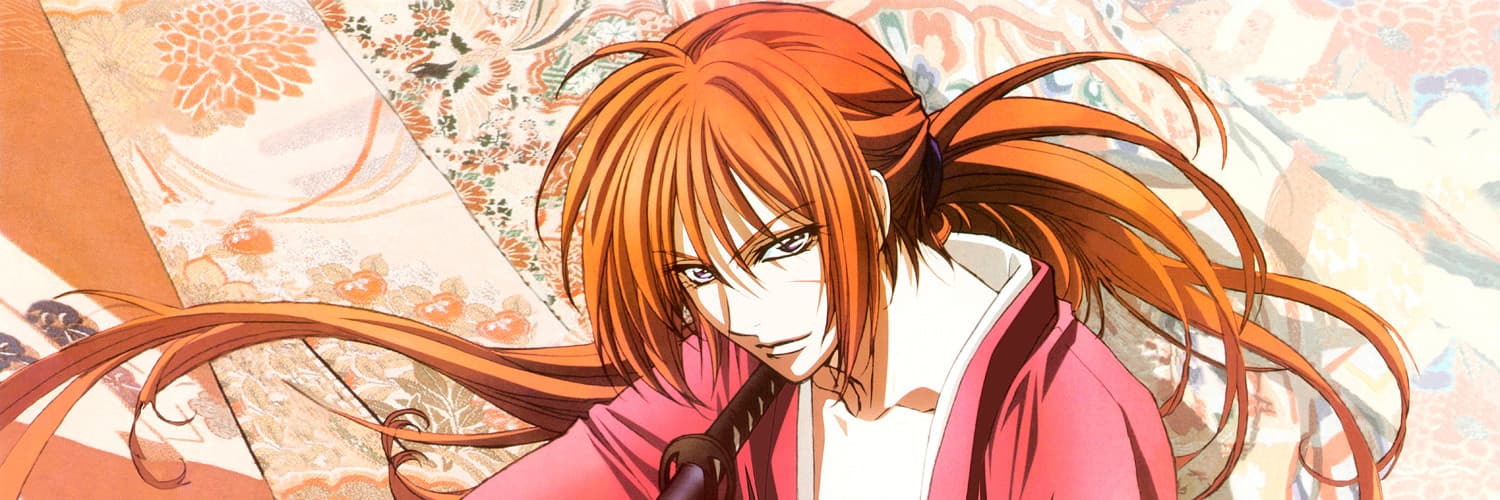
Regarding the technical aspects, I have already hinted at that but this anime is really questionable in terms of character animation: some episodes are better than others, and even betray the change in director or artists through slight modifications in the character designs or the presentation, but the overall product is, sadly, what you'd expect from a product made in the second half of the 90s: colors with very low saturation, which give the anime a very cheap and washed up aspect, low effort animation that really hurts the action sequences
There were other ways this story could have been done. Maybe by having Kenshin be forced to make a choice like Kiritsugu Emiya had to in Fate/Zero: an ultimatum that would have him kill someone, as unwilling as he would have been, because there would have been no choice if he wanted to save people dear to him.
That brings me back to my initial point: You want a story about a rurouni who wants to escape his past actions and atone for what he did? Just watch Sword of the Stranger instead of Rurouni Kenshin. The themes, the presentation, the animation, the narration... everything is done much better in that work. You'll also save time doing so.
Rurouni Kenshin isn't exactly a very "bad" series but it suffers from too many issues that ruin whatever emotional charge the anime wants to inflict on the viewer. It's definitely too childish: it idealizes the idea of a samurai hero that doesn't kill and protects others, and that is too difficult to swallow, especially after things really start going south.
37.5 out of 64 users liked this review
