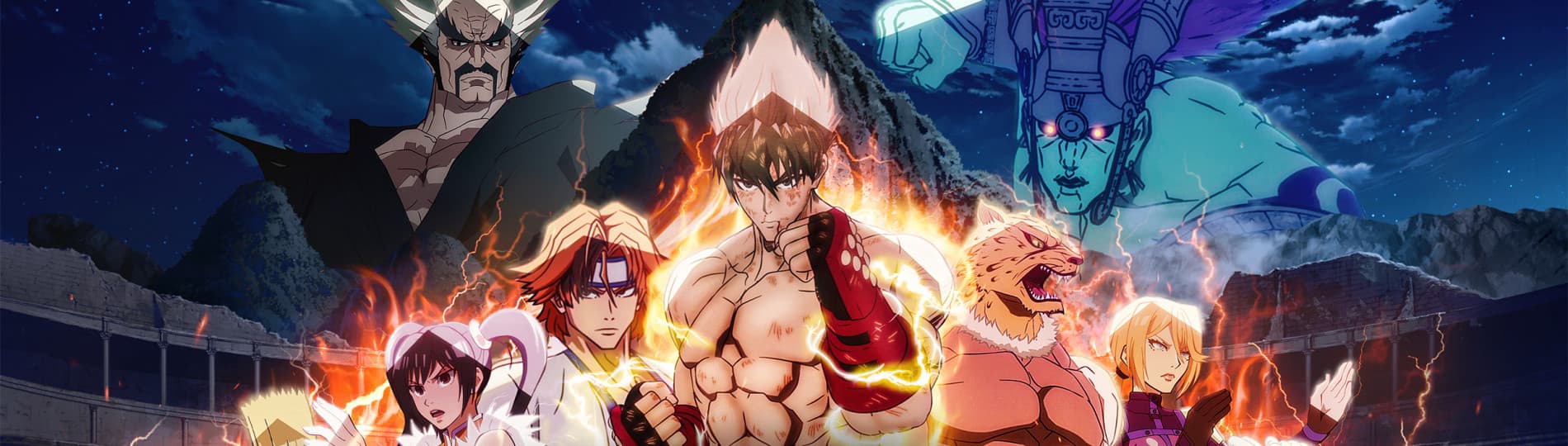
Overview
Clocking in at around 3 hours total for the entire series, Tekken: Bloodline is an easy Netflix anime to spend an evening watching, loosely understanding, and taking in its mixed to solid level of animation. Outside of that... you may struggle to enjoy it, especially if you aren't a fan of the now 3-decade established fighting game series.
The Main Points
Tekken: Bloodline uses the third instalment of the Tekken franchise as the basis for the show, with lead protagonist Jin Kazama's story of entering the King of Iron Fist providing the central storyline.
The show features Jin's coming-of-age story, initially formed by unseen tragedy and continued with his quest to become stronger and, ultimately, complete the goal of winning the King of Iron Fist tournament - a knockout-based tournament featuring the best fighters from around the world. This is all whilst his power-hungry grandfather - Heihachi Mishima - tests Kazama's strength and willpower in order to unlock his truly fearsome potential. Jin fights a host of combatants, but his true aim is to find and slay the demon Ogre.
!Heihachi (r) and a young Jin (l) readying to fight in the Mishima dojo
In the short time it has, Bloodline does well to flesh out Jin's character direction; classic morality choices, establishing friendships, guidance of more experienced fighters - the typical stuff you'd expect to see in a Shounen.
It does feel a little cookie-cutter, but it doesn't do anything wrong - just nothing particularly new. The show does a better job of developing Jin's grandfather Heihachi, and makes sure the character doesn't fall too deeply into the classic hard-as-nails tutor trope without establishing him as a force in other ways - something true to the source material.
Along the way, you'll see some of the other Tekken staple fighters in Bloodline, but in just 6 episodes, it's very difficult for any of them to provide any substance outside of fans having the "oh hey it's [Insert fighter name here]!". This is probably the biggest issue with Tekken: Bloodline as a Tekken fan; with such an eclectic and large roster that Tekken boasts, it's a shame that we only get any development of 2 or 3 characters, some of which can be very surface level stuff.
!Juila (l) and Paul (r) introducing themselves
This is paired with the somewhat middling animation, particularly in the fight scenes. In 2022, the level of detail and choreography in anime fights is at an all-time high, so Tekken: Bloodline's more meticulous and careful fight scene offering could be seen as slow and, often times, lazy. Tekken as a game, in all fairness, is quite slow and methodical, and that gameplay is adapted pace-for-pace, for better or for worse. Outside of the fights, the modelling and graphic detail of the show is wonderful, but the animation is a little mixed. I do think this is a bit of a problem with anime in general, so it's not something I would hold against Tekken: Bloodline too strongly.
How to improve - 3 simple steps
One thing I'd like to do in my anime reviews is to suggest three (3) simple improvements I would've liked to see in the show. I'm not an animator or writer, so do take this all with a pinch of salt!
Final Thoughts
On a personal note, I'm a huge fan of the stories and lore in the Tekken franchise - from the wacky to the wonderful. As a show, I couldn't help but smile when you see the same hit-confirm effects reflected in fight scenes within Bloodline, or seeing the interactions between some of the characters, as menial or minimal as they are at times. Tekken: Bloodline has its flaws and doesn't really break any new ground for those who have watched mainstream Shounen, but as an entry-level anime for those newer to the genre or for those well-versed with the game series, it hits the spots it should.
And for those who are fans of the Tekken series, it's better than the 90's motion picture. Any improvement is still improvement, right?
14.5 out of 16 users liked this review