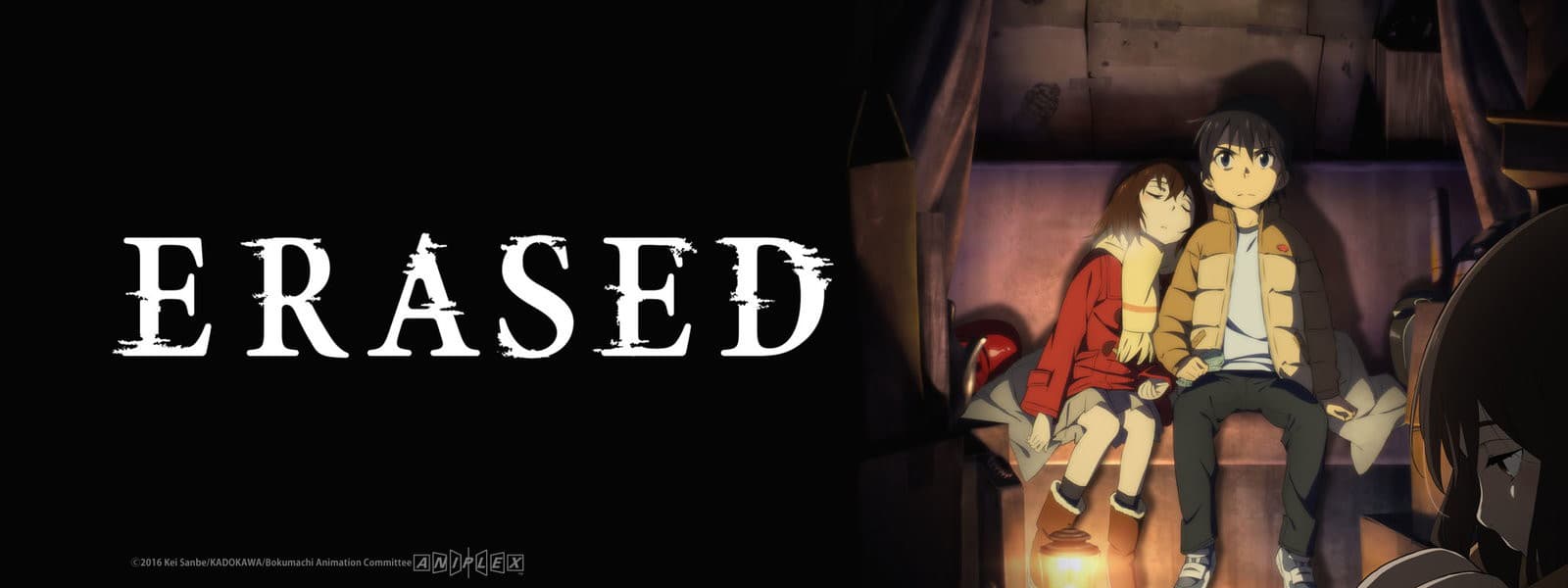
Finally! An anime where the protagonist child acting like a 29 year old actually makes sense! One of the worst TV tropes is children of 12 speaking and acting as if they're 30 year olds with lifelong experience. Even here we did have one (Kenya) that felt out of place, but pretty much every other child acted as if they were their age which is brilliant.

This was my second watch of Erased, my first was five years ago and there were some things that I just straight up forgot existed, which probably tells us it was a bad thing... Aaaaand that my memory is absolutely terrible. Though, some things stuck pretty hard.
Almost everything involving Kayo Hinazuki was easy to remember, and not just because of her as a character, or her relationship with Satoru. It was about the story that was shown through her and her relationship with not only Satoru, but his entire group of friends. The development of who she was at the very beginning , to who she became, was definitely the highlight of Erased. I know many dislike the idea that Erased isn't as good when Hinazuki leaves, but both times I watched it I had the exact same feeling, the feeling that the heart of this anime was seeing Hinazuki's progression and outcome. This doesn't mean the show got really bad, but nothing in those last few episodes touched me the same way that this did

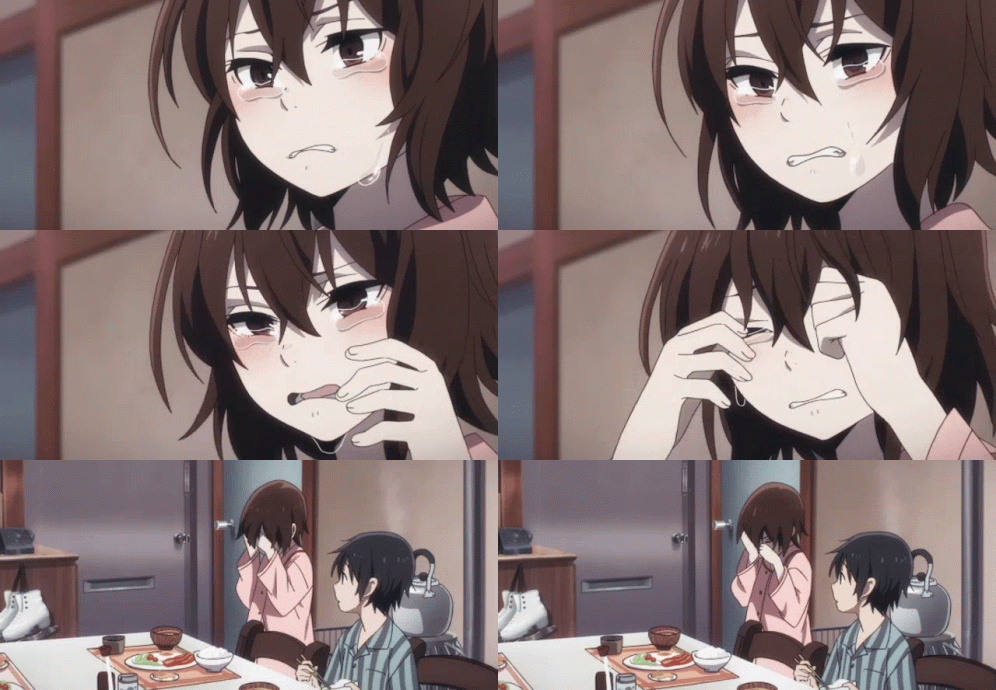
Anyone that was abused as a child knows the significance of this scene. When you're in that situation you spend a lot of time wishing you were someone else, wondering what life would be like with a loving happy family. Hinazuki gets to experience what her life not only could be, but what it probably should be, but it isn't because life just isn't that fair. As much as the viewers are intrigued by the child killer, they're also very invested in Hinazuki's safety when it comes to her own mother. So yes, when she is out of the anime, it definitely loses a bit of its charm.
I know most of the big critiques are based around Yashiro, that he's too obvious and his motivations make no sense. I somewhat can agree with the latter, but the former I disagree because whilst yes when he first appears I got the biggest sense of "okay this motherfucker
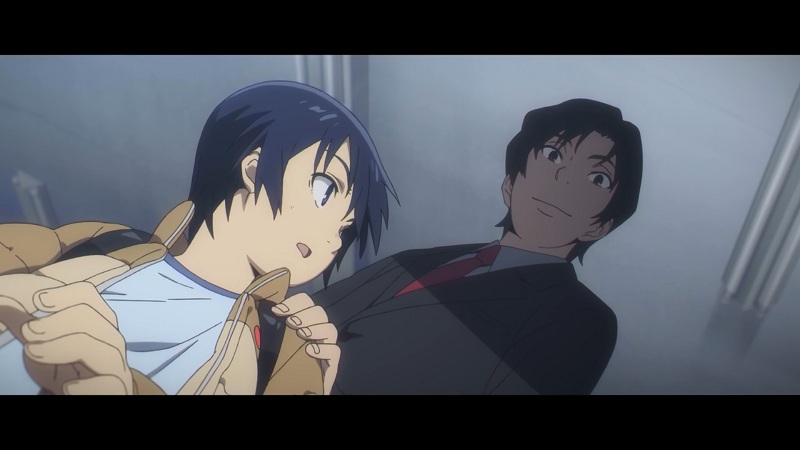
...is definitely a child murderer", as time went on, I did start to second guess myself as the guy actually seemed to come across as likeable and have good reasoning for his sus moments. Obviously, this may have been only me whereas everyone else wasn't fooled at all, because there were times I did ask myself "who else could it even be? There isn't anyone else in the show left." They may have created the Scooby Doo problem where you always know who the villain is because, well, there's only ever 2 or 3 characters in each episode that it even can be because it isn't a very big cast of characters. Erased really only had 4 or so suspects, and even some of them were very too obviously not the one
Okay, so even if we do agree that we created the Scooby Doo problem, how does a mystery show with a clear villain end up considered good? By not making the entire show about being a mystery, and I'd argue that it didn't. The fact many consider it to get worse after Hinazuki left kind of proves that point, right? It wasn't about who the killer was, it was about what happens to a character we were invested in. It was a thriller, a game of cat and mouse. The mystery is what hooked you, but the outcome of the character you felt invested in is what was most important here. Despite it maybe being too easy to figure out, I still think the reveal was done well

As far as Yashiro's motivations go, I can understand why people are confused by that. He did explain at the very beginning of the 11th episode in his monologue on "The Spider's Thread", though a lot of it doesn't match up easily. So here's my interpretation of him. He told us from a young age he simply killed a bunch of hamsters, this is probably showing us that he is sociopath. Though, he did get enjoyment when he realised one of them survived, and that he then could choose to keep it alive. He was the one that had control over these spider threads which made him feel like a God. His victims were people that were isolated around him because those are the ones who are easiest to snatch and kill. He became enamoured with Satoru because this kid was testing his own belief in if he was a "God" when he lost control and power over cutting the spider threads due to Satoru's interference. It's possible he thought they were both Gods, which is why he would kill himself after Satoru because he thought he finally found someone like himself. Although he was a sociopathic child murderer, he was alone in the world, which is why at the end he seen a spider thread above his head just like he did with all the isolated children.
Now, there is a few things people have mentioned on the Manga's side where his desires were explained more and it just seems like the guy was a nutcase who didn't feel much enjoyment like a normal person would.
We spend most of the anime seeing how Hinazuki was abused, and at the end of her story we saw flashbacks of her mother being abused too. It was a matter of the cycle of abuse. They handed it well I think, they allowed for the mother to seem human and give a reason for why she is this way, but didn't let her off the hook because having an understanding of something doesn't automatically mean you get to make it a justification for what you did. Jun Shiratori also had a story that many dudes will have experienced in their lives. It was easy to frame him merely because he wasn't your normal outgoing good looking guy. Satoru in the future does touch on this when he himself gets judgmental comments and side-eyes for helping some children fix their paper plane. I don't think Jun was supposed to ever be a suspect, but a highlight on how easy is it to believe some socially awkward slightly odd guy could do something so evil. Contrast that to the actual murderer that was never expected.
One of the main themes in this anime is belief, belief in other people. In the future he wasn't believed about his mother, until Airi who ended up helping him massively decided to. His friends and mother in the past believed in him, which helped him push forward and gain the trust, and belief, of Hinazuki, and in turn saved her life. In the future Yashiro died by himself as he was alone, he was defeated by a group of people that had belief in one another, because as Airi said "I want to believe you for my own sake. It's the flip side to someone saying 'please believe me'."
Being unable to believe in others means you don't have hope in anyone, which makes for a pretty nihilistic world
26.5 out of 28 users liked this review
