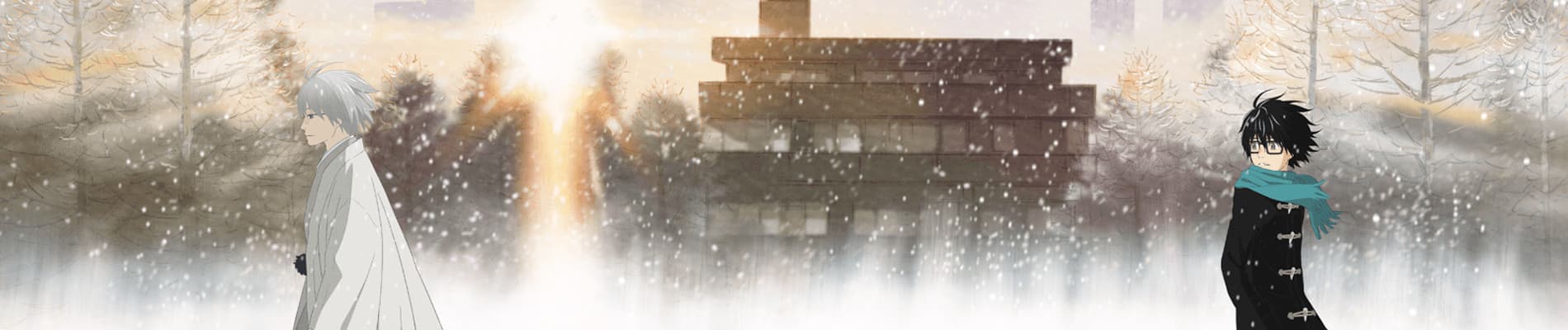

>“Gaining and losing things are an unavoidable part of life for everyone… Because of loneliness people master courage and reach out to a new world.” – Eisaku Noguchi
March Comes in Like a Lion feels like watching someone slowly learn how to stand up straight while the world keeps trying to push them back into the river. It starts as Rei’s story—a lonely, burnt-out teenage shogi pro drifting through life—but by the time you’re deep into the bullying arc, it quietly shifts into something bigger about family, hurt, and how people keep moving even when they’re cracked all the way through.
Rei’s growth is the quiet backbone of all this. Early on he’s all empty rooms, convenience store dinners, and shogi matches that feel more like self-punishment than passion. By the time Hinata’s arc hits, he’s not “fixed,” but he has enough strength to notice when someone else is drowning the way he did, and that’s huge. The show doesn’t magically transform him into a perfect savior; he stumbles, makes misguided attempts to help, and thinks that earning money or winning more games might somehow pay back the Kawamotos for pulling him out of his own darkness. That’s what makes his support for Hina feel so honest—he’s still learning how to be there for people in real time.
Hinata’s bullying arc is where the series stops being “a shogi show with feelings” and becomes something much heavier. She stands up for her friend Chiho when the class goes feral, and when Chiho is driven out, that cruelty just pivots and lands squarely on Hinata instead. Shoes stolen, desk vandalized, fake rumors, a teacher who refuses to see what’s obviously happening and blames her for not “getting along” — it’s textbook group bullying, and the show doesn’t look away or wrap it up neatly. Hina knows she did the right thing morally, but knowing that doesn’t stop her stomach from hurting every morning or keep her from breaking down when it all becomes too much.
What March does right is showing that “just try harder” is nonsense in situations like this. Rei and Akari both feel like they’re failing Hinata: Rei tries to fix everything by throwing himself into work and shogi, Akari shoulders this impossible sense of responsibility passed on from her late mother, like she has to be strong enough for everyone. Neither of them can wave a magic wand and stop the bullying, and the story doesn’t pretend they can. Instead, it frames their so-called “failures” as exactly what Hinata needs most—people who chase after her when she runs, sit with her when she cries, and refuse to let her carry all that shame alone. The win isn’t that everything is fixed; it’s that she isn’t abandoned.
The show keeps widening the lens beyond just the kids. You see how bullying scars families, how administrators dodge responsibility, how older generations see echoes of headlines and past cases and feel both scared and proud that Hina chose not to look away. In parallel, you get someone like Yanagihara, the aging shogi veteran whose peers have retired or burned out, still dragging his tired body into matches because the game is his last remaining proof that he’s alive. His arc mirrors Hinata’s and Rei’s in a different key: he’s standing in the ashes of everything he’s lost, but he keeps playing anyway, knowing the board will outlast him. The series is full of those little echoes—different lives, same currents.
Visually, SHAFT makes all of this land without needing constant dialogue. Soft watercolors for warmth, stark emptiness for loneliness, abstract imagery for emotional overload—it’s all used to pull you inside the characters’ heads. When Rei isolates in his bare apartment, the emptiness around the shogi board practically hums; when he’s with the Kawamotos, the frame fills with food, color, and clutter that feels like being hugged. During matches, or in the height of Hina’s distress, the show leans into storms, floods, burning fields—big visual metaphors that never feel random because they match exactly how heavy everything feels in the moment.
By the time all these threads weave together—Rei’s loneliness, Hina’s pain, Yanagihara’s stubborn pride—you’re not just watching a “shogi anime” anymore. You’re watching a story about how people keep living with the parts of themselves and their past that never fully heal, and how small acts of kindness stack up into something big enough to lean on. March Comes in Like a Lion doesn’t pretend that everyone gets better or that every wound closes; it just insists that disappointment, loneliness, and fear don’t have to be the end of the story.