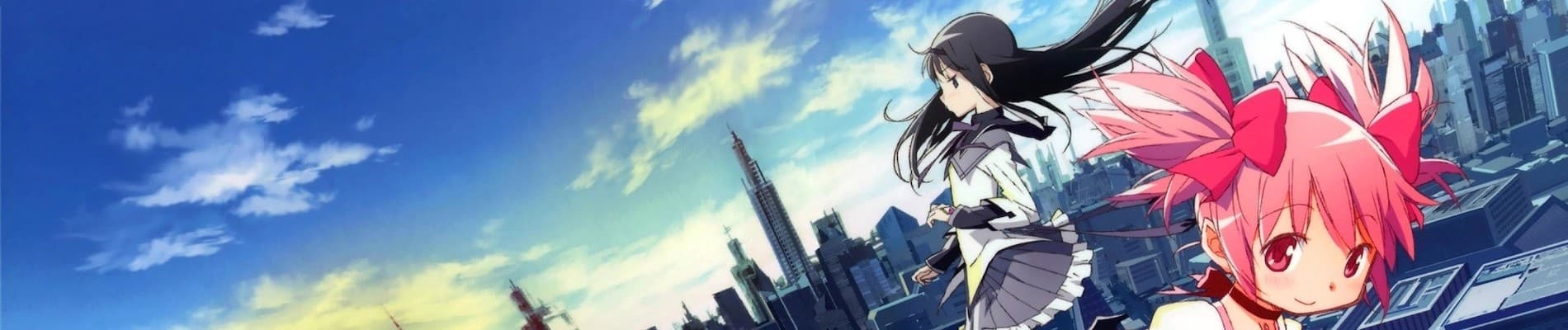
In January of 2011, a magical girl anime called Puella Magi Madoka Magica aired on Japanese airwaves, but it was very different from the typical happy, lighthearted, idealistic magical girl anime that many people were used to and familiar with. This anime was a deliberate deconstruction of the genre, analyzing and examining it from a more critical, realistic, even dark angle. Most magical girl anime focused on young girls who encounter cute animals, transform into heroes, and fight evil. Madoka Magica eschewed all of that in favor of a serious take, focusing on the darker aspects of being a magical girl and the consequences that come from it. Surprisingly, it was very well received on both sides of the Pacific for its new take on the genre, though it wasn't the first to really do so. I watched it when it first came out, and I really liked it. Watching it again, I still feel like it holds up decently well. I did originally review this when it first came out, but looking back, my old review was really, REALLY overly gushy and fangirly and crappy, even more so than my old AnoHana review. It's not up to par with my current reviews now, so I think it's time I gave it a proper, more objective analysis.
Madoka Kaname is a normal girl with a normal life, but lately she's been having strange dreams involving a furry white animal and a black haired girl fighting a mysterious monster in a destroyed city. The next day, said black haired girl, Homura Akemi, transfers into her school and seems to have her eye on Madoka. Later, Madoka and her friend Sayaka encounter said furry white animal, Kyubey, along with a friend of his, Mami Tomoe, who happens to be a magical girl. Kyubey wants to make contracts with Madoka and Sayaka so they can become magical girls and fight grotesque beings called Witches, and in exchange, he grants them each one wish. But as the girls learn more about the Witches, magical girls, and what it means to become one, they start to wonder just what is going on. What is Kyubey, and what are his plans? Why does he want Madoka to become a magical girl specifically, and why is Homura intent on keeping Madoka from becoming one?
One thing Madoka fans will tell you about is that the anime can get very experimental with its animation, and at points, they can be gorgeous. Madoka's setting has a very distinct look about it, with glassy, modernized buildings with golden cage-like bars on the walls. During the battle scenes, paper cut-outs and strange, artistic images splash across the screen in vivid, colorful detail, from cotton balls with mustaches on stick figure bodies to a world of candy inhabited by a head-eating monster, giving the world a surreal, almost nightmarish look about it, and it really works. It helps that the animation knows when to be normal and when to be experimental, so any transitions made between segments never feel jarring or out of place. The girls still look cute, though their faces are strangely angular than what I usually see in anime character designs. I don't consider that a point against it though. I don't have much to say about the music as...well, it's Yuki Kajiura. How do you mess her up? I don't think this OST is as good as some of her other works, but it's still a great soundtrack overall.
But you can't have a good story without a good cast of characters to back it up, so how are they? Well...it depends. Everyone has their own feelings and views on the characters. Some say they're a loveable, three-dimensional cast, and others feel they're little more than one-note archetypes that only act as props to move the story forward without any agency of their own. I'm kind of in the middle here. I like them well enough, though they are admittedly not the most developed. I guess this is due to seeing other shows that actually developed its characters and had them evolve, but that's not intended to be a slight against Madoka in any way. But if the characters had been put in more mundane situations, or a more conventional action series, they wouldn't be interesting to follow at all, and the way the story makes use of them is what makes them memorable. One thing I can say in the show's favor in regards to its characters is that every character has their purpose, and they all fulfill their roles perfectly. That doesn't mean they're completely one note, as they make decisions and mistakes and have to deal with them. It helps that the show kept the cast relatively small, and with the anime being only 12 episodes long, it had more wiggle room to let them grow and deal with the situations they find themselves in, rather than trying to make the cast as big as possible and wind up bloating the story in the process (coughcoughMagiaRecordcoughcough).
Which leads to what I feel made Madoka Magica so successful. It's not that it's dark, angsty, or edgy or anything like that, it's how everything fits together in the overall narrative. Again, the show is twelve episodes long, but the creators made optimal use of the time they had, and not a single moment or story beat is wasted, ignored, or just forgotten by way of plot convenience. When something happens, the show always addresses it in some way, establishing a strong continuity that requires you to pay attention to details that you may or may not have noticed on the first watch. Every episode adds something to the overall story and its characters, even if it's not apparent right off. The story is always moving forward, with a specific goal in mind, and it never gets sidetracked or go all over the place, something many longer shows often struggle with. Basically, the show strikes a good balance and makes use of all the ingredients it has to make a truly good show that has a set beginning, middle, and end, with no fluff or filler to leave any bumps in its smooth surface.
That said, there's no denying that Madoka Magica changed the landscape of what people expect from magical girl anime. Some say it was for the better, others say for the worse. Many shows attempted to ride off its heels and achieve the same fame, such as Daybreak Illusion, Magical Girl Apocalypse, Magical Girl Raising Project, and Magical Girl Site, with varying degrees of success. Many say that Madoka Magica sullied the magical girl genre by establishing dark and edgy as being the new norm for magical girl series to follow, but based on the evidence I gave, and from seeing the show itself, I don't feel Madoka qualifies as being dark and grim. At least, not as much as people are making it out to be. If I were to use a word to describe Madoka, it would be serious, not grimdark. I don't think the creators of Madoka intended to change the landscape of the genre, or establish girls continually suffering on a regular basis be the new normal for the genre, and considering how the other shows I named didn't achieve the same fame and level of success and Madoka did, it goes to show that the other shows missed what made Madoka work as well as it did. The three shows I mentioned relied too much on being dark, violent, and edgy, with Magical Girl Site in particular being infamous for how dark and violent it can get, and actually fit the descriptions that many people claim that Madoka is. So do I think Madoka Magica is a needlessly violent, grimdark show that think its deep and mature when it isn't and gets off on torturing young girls with endless despair and making them suffer as much as possible in order to solely appeal to otaku men? My answer is no. The problem isn't that Madoka changed the landscape for the magical girl genre. It's more how others miss the mark on trying to emulate its success by putting emphasis on darkness and suffering at the expense of everything else, something even Madoka managed to avoid at points.
If you're looking for a show that actually fits that description, check out Magical Girl Site. You won't find that level of grimdarkness here in Madoka, which I feel does deserve its popularity, if only for just being a good show that's well put together and has its heart in the right place. It may not be for everyone, as it really all comes down to personal taste, but it's a show I won't forget any time soon, even if I like a lot of other shows better than it.
20 out of 24 users liked this review