LOVE FLOPS
a review by DigiTheMelon
a review by DigiTheMelon
NOTICE: Major Spoilers for Renai Flops. Non-specific spoilers for details post-episode 7.
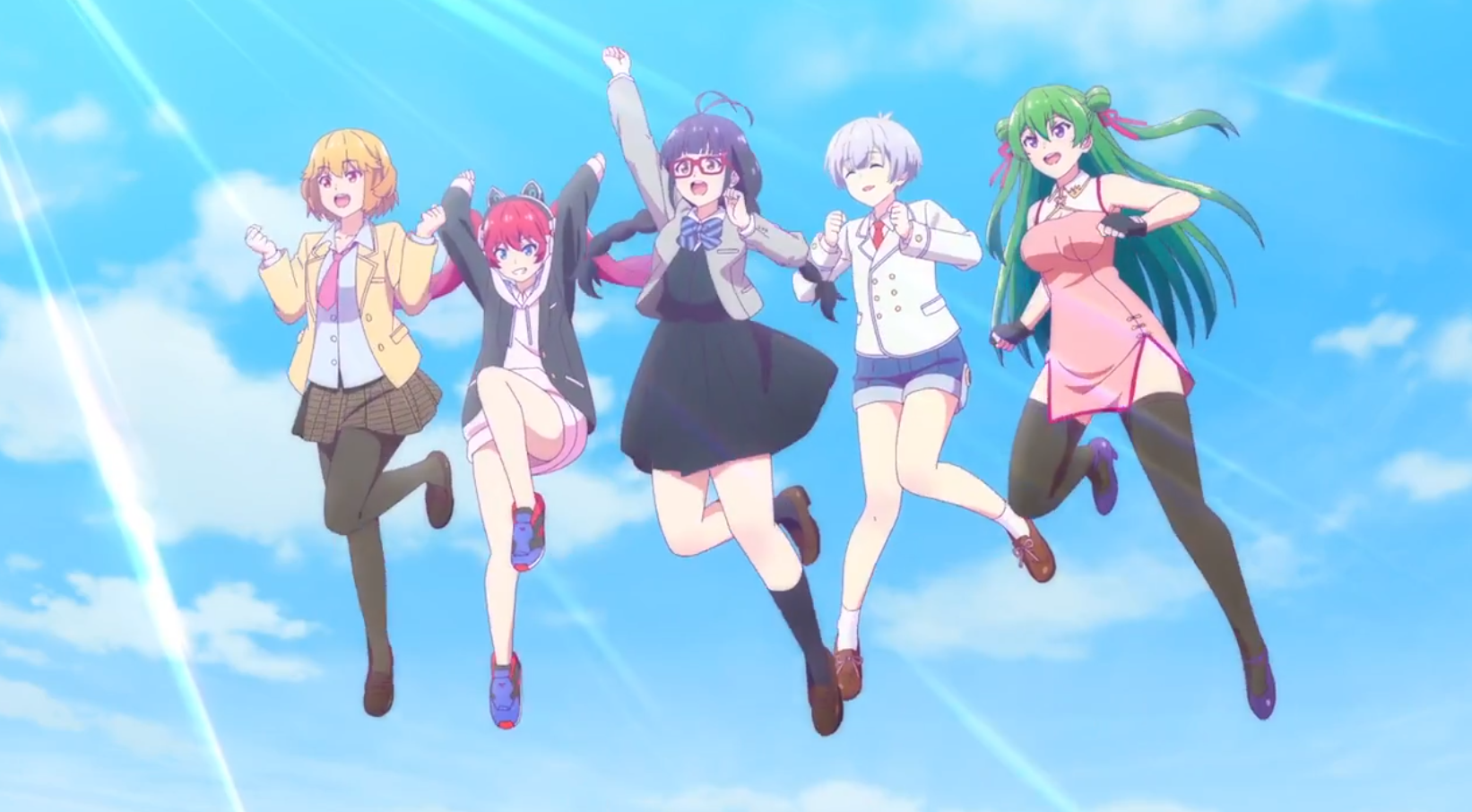
Out of all the shows airing in Winter 2022, the one I did not expect to get the most attached to was Passione’s Renai Flops. It was seemingly the dime a dozen harem anime, with exactly nothing to boast about. The art and animation was passing and the soundtrack just existed, and the girls were cute enough (while packing surprising firepower in the voice department). The first episode could not even fully deliver on the more perverse aspects: a shame when the alternative manga version indulges in its lewd, explicit, and compromising scenes and adorable art style. As odd as it sounds, I was actively waiting for the show to at least have a panty shot. That feeling evolved into actively waiting each week for the show’s next ridiculous episode.
Dire lack of ecchi aside, Renai Flops was more than it let on. It attempted to be more than it was. Renai Flops isn’t just a harem anime. It’s a mess. An entertaining, ambitious, and incapable mess. One that captured me and had me craving more, as if its trashiness and underlying dread– yes, DREAD– were personally making sure I woke up every Wednesday just to watch the show.
But, how? I said the show had nothing unique. Well, that was a facetious statement on my part. Renai Flops is an example of a perfect twist, soured by its adherence to its premise.
Renai Flops was the archetypal harem. It’s more appropriate to refer to it as formerly the archetypal galge. The main character Asahi Kashiwagi is introduced to five girls in rapid succession through silly, perverted incidents as if he were at the start of a game. Within the first seven episodes he goes through their routes, obtains their flags, and they truly fall in love with him when his actions align with a locked memory they have.
Throughout these episodes, the show takes a sharp turn toward the bizarre. Each of the episodes stands at the impasse between mediocre and genuinely good, with the cast having the potential to endear you. Let’s use this opportunity to discuss the characters, as with the exception of two episodes, the first seven focus on one girl at a time:
Amelia Irving says funny sex words. Her episode was surprisingly successful in endearing me to her. As well as the fact, I find her character design visually appealing. Throughout her episode, she struggles with Kanji due to being an American transfer–being a foreigner is a trait shared amongst most of the girls but she’s the only one with this difficulty. She’s shown to be a sort of perpetual loser, never really winning at anything. But, watching her move forward, persevere, and show so much effort makes it impossible to dislike her.
Irina Ilyukhin doesn’t have a dick, but she does have the funniest episode. Her shy personality had to bounce off uncomfortable circumstances and her own increasing desperation for some really great comedy that forced her to be aggressive and active. She fulfilled the “trap” niche. Illya ends her episode learning to be true to herself, abandoning her disguise and embracing her femininity.
Bai Mongfa kills people in her episode. It’s one of the earliest examples of the show diverting from the norm. She’s foreshadowed to have been an assassin, but it’s taken to the extreme. Her backstory eclipses the former two girls’ and she changes the tone completely. She’s given a place to belong, a refuge from her encroaching past as a killer. She’s my favorite of the girls, which put me into quite the unique dilemma in the show’s final act. Mongfa is the perfect package of mature, aloof, sexy, and adorable.
Karin Istel is a magical girl. I know what I typed there, the episode was a shock to me too. It was a major suspension of disbelief and part of the show’s worst episode. As much as I like Karen, it was unsalvageable. The preachy moral of valuing herself more felt incredibly disingenuous, for an ecchi harem. It gets even weirder when the entire episode is also just a dick joke. The character herself is one of the more fun ones: she has enough personality, snark, charm, and energy to make her likable. But, it seems that the world was against her.
Before discussing the final two initial main characters, I have to note the massive shift in the character-focused episodes. It went from normal, albeit with quirky hijinks ensuing, to off the deep end. It doesn’t make sense for there to be such a divorce in the character settings, but Renai Flops relishes in that level of insanity. After all, the girls had all initially fallen in love with him over inane actions. Only with these later ones is there any meaning in their love.
Aoi Izumisawa slowly goes insane. Her character type isn’t one that’s appealing to me. She’s the typical shy, megane character. The type you expect to be the main heroine and envelope the majority of the screen time. But, she surprisingly lacks a dedicated episode: a fact of her presence that becomes increasingly ominous as the show progresses. It’s something that’d be overlooked if you didn’t have an eye for foreshadowing and had no knowledge (either as the show aired or posthumously) of the twist.
Asahi Kashiwagi is fine. He’s not an insultingly bad lead, nor is he one that I’m excited to watch. He falls into the same conservative pitfalls as his contemporaries. But his general kindness, in spite of his lackings, made me like him a small amount. The latter half of the show is where he truly shines, anyways.
The cast is admittedly fun to watch, which is a necessity for success in the genre. Appealing character designs complemented by personality is what sells. The issue arrives with the episodes themselves. Their basic premises aren’t bad by any means, but the execution is middling. This is a critique that may describe the show as a whole. It’s packed with absurdist humor that either makes or cripples an episode, especially since they struggle to begin with. The girls are the saving grace for the premier half of the show. This means that if you don’t love the girls, there is no reason to sit through six episodes. Thankfully, I liked the girls.
Then the show flips itself on its head. There’s a lot of visual information littered throughout the show that foreshadowed the twist. Even the theme song has constant hints that something is wrong with the show. It’s what will make the show for most people, and anticipating it was one of the best parts of watching the show weekly. Alongside that is the odd behavior in which Asahi starts the show, Aoi’s inconsistent appearances, the insanity of the situations, the AI in each of the girls' name and that key moment where each girl falls in love with Asahi. Everything was building up for the eventual twist, as if it mattered more than anything else throughout the show. Episode 7, after having some of the worst parts in this entire anime, reveals the truth of the world: it’s all a simulation. Doing so in such an eerie manner was a definitive plus and makes the reveal so much more worth it. It’s creepy, well-directed, and leaves a viewer shocked.
Through this twist, the themes of the show evolve as the world expands. Renai Flops begins to espouse themes of humanity, the love, grief, and moving on and attempts to transform into an emotional rollercoaster. The recontextualization of the show created an opportunity to both dissect the nature of the world, our main protagonist, and the show itself. It provides an astounding amount of depth to a show that was masking as a simple harem. Looking back at parts of the show only demonstrates how much care was put into the twist. The setting, characters, theme songs, and even the anime's website was all a massive hint for the story that the writers wanted to tell.
And that story is a mess. Episodes 7 and 8 were executed surprisingly well until you realize the show’s quick descent into cliche and predictability, as if the ridiculous soul was sucked out and replaced with a stronger narrative. Yet this is the moment the show picks up and has genuine direction. It’d be a lie if I said that aspects of the climax didn’t make me feel anything. Especially since it redeemed Asahi for me. He has some really heartwarming scenes within this mess of a final act. Still, a lot happens in such quick succession with such predictability that it drains so much of the climax’s weight as well as having decisions at the very end that will actually ruin the series for some viewers. This coupled with the fact that this latter half can be so distinctly described as such hurts the general experience of the show. All without mentioning the actual quality of the genre shift which left much to be desired.
The execution of the premise struggled with cohesion. On the level of foreshadowing and generally performing the twist, the show excelled. When presenting a likable cast of girls, the show delivered. On creating a consistent experience with functioning parts, the show flailed about. The independent pieces don’t add up because the show was so focused on its grander endeavors. The early episodes’ greatest strength in absurdity is their greatest weakness and contrasts too heavily with the latter half especially since it insists on having comedy still be present. There is no internal consistency because everything is in purpose of the twist. The final episodes become too predictable and have choices of varying agreeability. Its mask and twist, the most important part of the Renai Flops experience, will make it hard to watch for people. The galge and drama collide for questionable results. However, I still had fun despite its flaws. The show was entertaining if not much else and that allows me to be appreciative of it. Anyone can respect and admire the lengths taken for the experience, but the journey ventured may not be worth it. At least I can attest for this messy little show.
42 out of 47 users liked this review
