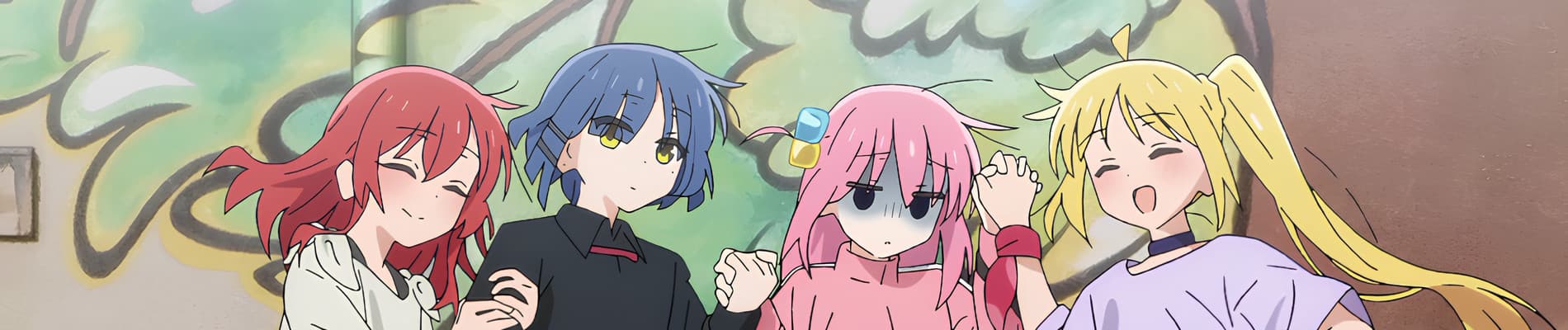
A nice spin on the "high school girls doing things after school" genre, the best way to tackle the theme of social anxiety in a light way and some great artistic choices, may make this anime of the season for many people.
The plot is very simple (it is a slice of life after all) but it achieves what it sets out to do beautifully: a terribly introvert girl has a hobby that’s usually for extrovert people, so she has to fight against her social anxiety to finally share her passion with someone else.
How it’s told, though, is beautiful, showing a slow and steady growth for the main character, sure, but also showing a lot of failure and huge setbacks, some of which can’t even be overcome, yet this allows the characters to have a happy ending that’s different from what they imagined, but that’s good nonetheless.
The characters are what makes you love this anime, as they walk the thin line between overused stereotype and great writing, two of them especially: Hitori (better known as Bocchi) and Kita.
Kita seems like the usual “so cool she actually shines” type, and she kinda is, but the show makes her great by giving her flaws (the fact she ghosted her band little before a show, the fact she can’t really play as she told everyone, the mundane reason she has for joining the band in the first place), and by making her assume that everyone is just as good as hera t everything, which leads to shenanigans along the way.
For Bocchi, she may look like the typical shut-in introvert (and she is at first), but the fact that she actually wants change and fights herself to achieve it makes every setback very realistic and relatable. When she fails it’s not for lack of trying, the way she reacts to situations she is stuck in is always the best someone very creative could do if they were in her situation (leading to modern classics like the mango box).
We also see that Bocchi does indeed change along the way, but not really, and this is what makes her great: she overcomes her fears, not by not being afraid anymore, but by coping with them and being inventive when problems that only she can solve arise (what happens at the beginning of the final episode for example).
In one word, she is relatable, especially to everyone who suffers, or has suffered, from her same issues.
The art style and artistic choices in general are great, especially for representing Bocchi’s feelings: when she is drowning in her misery the style usually completely changes, which is not only hilarious for the viewer, but it also opens up chances to break the fourth wall, as usually the other character acknowledge what’s happening (“Bocchi exploded!”).
Also, these moments usually reference other much more famous anime, by replicating some scenes almost exactly at the most unexpected times.
I don’t need to talk much about sound, it’s great (what did you expect from a music anime?) not only during performances, but also the opening and endings and the soundtrack in general.
To wrap this up, this is an interesting watch for many people: anyone who played an instrument in their teenage years, introverts, slice of life lovers, music anime lovers, people who enjoy a different art style every once in a while, and among more action focused options and other animes in the same genre which I think slightly missed the mark, Bocchi The Rock is probably your best bet if you’re looking for something laid back and fun this season!
42 out of 44 users liked this review