“It gets better”
Such a phrase is commonly reserved for multi-season (sometimes action) comedies which take a few episodes or most of a season to experiment before hitting their stride, as well as long-running shounens which tend to explode at a certain arc. That being said, it’s also often used for shows that leave a mediocre or abysmal first impression before allegedly picking up in quality according to a consensus. Chivalry of a Failed Knight, Gundam ZZ, and Symphogear are somewhat popular examples. Whether or not such an argument is convincing or even true is obviously down to preference and case by case basis, but personally, Fuufu Ijou is a rare example of this actually being applicable.
There are two tremendous barriers to entry with this series which rear their heads immediately. Firstly, the backdrop is by far the most questionable element of the series. The series is predicated on a marriage practical, a course where everyone in high school is assigned a partner of the opposite sex to live with in a dorm. Cameras survey their every move, they earn and lose points based on how well they gel with each other as a couple, and the top 10 couples are encouraged to “divorce” so that they can be paired up. Also, this is a mandatory, graded course. The logistical, ethical, and consistency-based issues with this entire idea are numerous. It’s an albatross around the series’ neck, a shadow that underscores just about every single interaction in the show. No matter how cute the romance is, no matter how much character chemistry the main couple and supporting cast all have, you have to really get past and ignore said backdrop for it to not have a dramatic effect on your enjoyment.
Even if you can put up with all that and not be immediately driven away from the series, the first episode has other issues beyond introducing the broken marriage practical concept. The pacing and editing are rather rough and abrupt, only ceasing to be an issue around episode 3 or 4, barring the occasional abrupt end to some episodes throughout. Both are virginal gamer dweeb MC (Jirou) and our brash, confrontational gyaru MC (Akari) are a bit difficult to put up with at first, especially together. The typical tropes one would expect like an even more bitterly virginal 4th wall breaker best friend and the typical childhood friend with a crush on the MC are all unflatteringly tossed in, the former of which starts off incredibly annoying. There really is a lot going against the show from the start.
In spite of everything, Fuufu Ijou quickly manages to wind up as a cute wish fulfillment romcom with a surprising amount of fun and skill. Jirou and Akari quickly develop a fun chemistry together as the show transitions from the more cliche conflicts to surprisingly touchy and insecurity-driven ones even as early as episode 4. Jirou doesn’t expect anyone to love some horny teen loser like him who would just bring a popular girl like Akari down, while Akari feels over reliant on others and her self-esteem is absurdly fragile. Their insecurities and unwillingness to reconcile with their budding feelings for each other vs their feelings for their crushes are mostly nice to see, even if there are a few hijinks that probably go a bit too far and could use some rearranging. Even the annoying meta humor provided by best friend Kamo has its fun moments, with uproarious and dedicated references to Duel Monsters, and the fact that his fucking name hasn’t been properly introduced even 4 episodes in. There’s always a wrinkle to the usual or annoying ideas past episode 1 to help cushion the blow or surprise the viewer as things quickly tighten up and become more interesting. The second half has this in spades, especially as the admittedly gaudy vocalizing of what they expect from teenage boys and girls to typically feel and do further informs their insecurities. It does make it all the more frustrating just how close to saying how their insecurities and current issues are a product of their developing feelings for each other, but there are some engaging payoffs to everything by the end, even though it’s only adapting a fraction of the material.
The show isn’t immune from the aforementioned pains. While Jirou’s self-deprecating virgin monologues become more bearable, they’re still a little too frequent. Furthermore, the level of monologuing in this show is still annoying, and while it is refreshing when things go a little faster or differently than expected, there’s still some anxiety present given how the show does sometimes just go for the annoying idea flat out. The show is also too overbearingly blunt, thanks in no small part to the misunderstandings and an unceasing swarm of monologues, even if the resolutions and progression can sometimes be worth it. Part of why might be the exploration of both Jirou and Akari's personal insecurities, which drives practically every action and interaction of theirs. Plus, as bad as the backdrop is, it adds a sense of both inevitability and uncertainty to their destination, regardless of who they end up with, should they be with anyone at all by the time they swap partners. Of course, as this anime adapts what is projected to be about ⅓ of the manga, only so much progress can be made, but the partial journey is more engaging than expected.
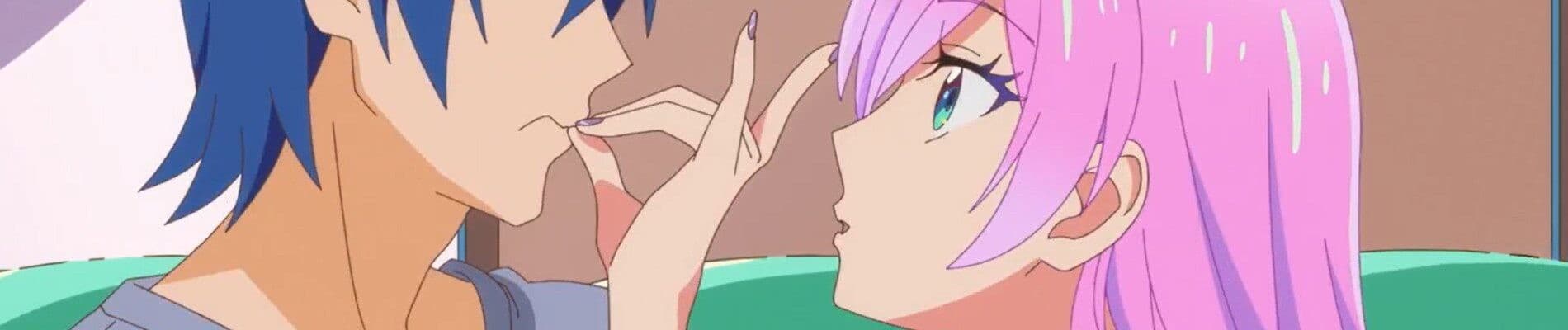
Another reason the show goes down smoother than expected is how the visuals help the material along. As bright as it is, the light pastel color pallet really does suit the show, and given how the backgrounds have the same aesthetic sensibilities as the character artwork, everything just compliments each other. It’s not like, say, Arifureta (the 2nd season of which Studio MOTHER helped out with before the release of this show) where absurdly bright character colors are contrasted with regular greens and browns to make the eye-searing colors stick out far too much. Fuufu Ijou actually has a uniform aesthetic, and a distinct one at that. There are also some neat visual gags and edits that punctuate some of the comedy, especially with the Final Fantasy and Duel Monsters references. The first scene of episode 1 certainly has dodgy CGI, but the show doesn’t employ that much past that, even with the buildings and interiors. Given how most modern anime look, that fact was absolutely refreshing. Additionally, outside of episodes 9-11 which make up one singular arc and defined timeframe, every episode sees Akari with a new, distinct set of nails. The show definitely has its wonky and flat artwork moments, the editing can be a little rough, and there are scenes that could stand to have a little bit more actual animation in them. Even still, for a modest production, there’s certainly some real charm given to the look of the show and its fun little details and intricacies. While director Junichi Yamamoto had only directed small music videos, OVAs, and smaller scale ONAs/ONA series, he and director Takao Kato did a generally solid job.
That being said, the music was honestly the least engaging part. There are a few decently evocative and dramatic tracks, but otherwise, Yuri Habuka’s OST kind of just exists. It does what it needs to do, occasionally does it well enough to slightly stand out, and leaves as if it was never there in the first place. The super cutesy Liyuu OP “TRUE FOOL LOVE” isn’t personally appealing either, and the main ED, “Stuck on you” by Nowlu is a decent smooth nocturnal pop song, it’s her ep 12 ED, “Shallow” that sticks out as a particularly pleasant song. There isn’t a whole lot else to say about the show’s music, unfortunately. It’s competent, but there’s little in the way of anything memorable.
In spite of everything going against it, Fuufu Ijou is a decent and likable wish-fulfillment romcom. It’s frustrating that the backdrop and incessant monologuing hold it back because this show is almost legitimately good. It may be tropey as hell, but when it’s executed with just enough finesse and with enough surprises and moments of character exploration, is that really so much of a bad thing? The fanservice may be both too constant yet too tame for the most part as well, but rarely is it particularly distracting given it’s done within the headspace of the male MC. While it’s marketed as a seinen, it’s not a bad romance for teenagers to be introduced to and even slightly challenged by regarding certain kinds of social expectations they place upon each other. Still, if you’re even remotely well-versed in romcoms and love triangle stories, and your standards for them are a bit stringent, this is a show you can take or leave. If you’re craving for more, you might find something worth your while, provided you can get past some of its awkward rough edges. It probably won’t be anyone’s anime of the year or anything, but it’s a little nicer and more interesting than one might expect.
33 out of 43 users liked this review
