"Be careful what you wish for."
Higurashi Gou and Sotsu are exactly what people mean when they say that phrase. I love Higurashi, but admittedly the original adaptation has aged poorly. I always wanted to see one of my favorite stories remade. And now that it finally has gotten a reboot, I wish it hadn't been.
Over a decade after the original anime aired, they have resurrected the franchise for no reason other than profit. Gou was purposefully mismarketed as a remake to attract curious new viewers—then it rebranded itself as a sequel to get the old fandom's attention. Occasionally it had scary moments, but it never proved why it should exist. Sotsu is supposedly the "answer arcs" but it is 90% reused footage with slight alterations.
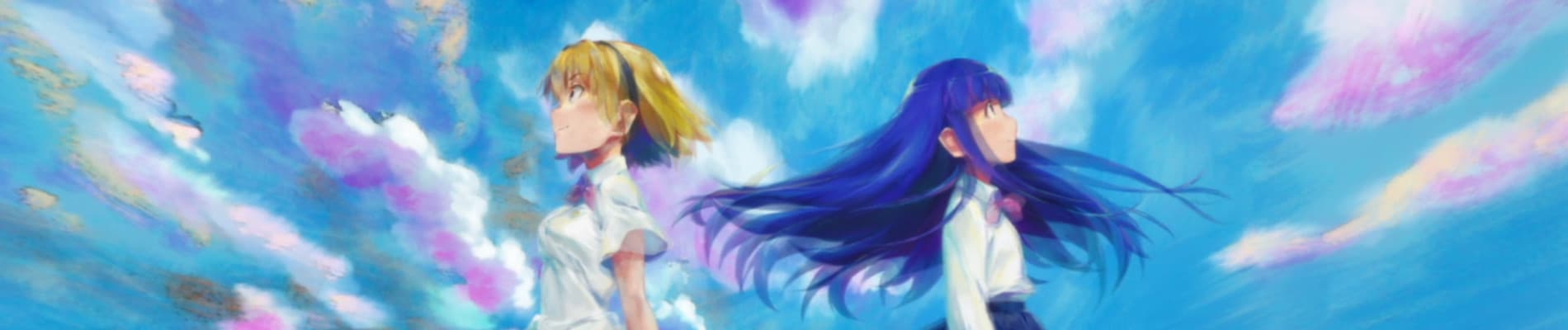
These reboots focus specifically on Rika and Satoko. Rika wants to leave Hinamizawa and go to a prestigious high school. Satoko dreams of staying in Hinamizawa forever, but she will not let Rika leave. What ensues is endless torture porn. With the help of an enigmatic spirit, Satoko gains the same looping ability as Rika. Every time they enter a new loop, a comically evil version of Satoko makes Rika suffer as much as possible. The end goal is for her to give up her dreams of escaping. That's it. That's your 39 episodes in a nutshell. I could end the review here, but we need to discuss what turned this from a lukewarm spin-off to the worst thing that has ever happened to When They Cry.
Higurashi's first two seasons were a nicely completed story. There's no reason to watch Gou. I only finished it because I wanted to see what would happen to my favorite characters. Sotsu had the same problem, and it failed to justify its existence. Supposedly, these anime are the bridge between this series and Umineko, but it would be less exhausting to read a Wikipedia summary. There's a common argument that this show can't possibly be crap because Ryukishi07, the original visual novel author, co-wrote the show's script! That's a pretty awful excuse; I shouldn't have to explain why, but I will. Writers mess up from time to time. Sometimes they lose their spark altogether. Have you ever heard of Star Wars: The Rise of Skywalker? George Lucas co-wrote the script, and it ended up being the worst received film in the franchise.
There's nothing new here; Keichi, Rena, Mion, and Shion have the same character arcs, except their personalities are stripped to outlines of their former selves. In terms of character development, do you remember Satoko's abusive uncle? Well, they gave him a redemption arc! Great work, guys. The only thing that distinguishes this as a sequel is Satoko's intervention. She injects various friendly faces with Hinamizawa Syndrome, the virus that causes psychosis. There's no deeper meaning for why the loveable cast of maniacs loses their grip on reality—wacky old Satoko pulls the strings. Water down themes from the original to act as set dressing; cycles of abuse, cultural preservation, evil government, harmful traditions, etcetera. The new theme is a shallow 'good versus bad' conflict. No nuance, Rika is the good guy because she wants to save everyone. Satoko is the big bad because she will kill anyone to keep Rika from escaping. Satoko turns from an abuse victim to faking getting abused to manipulate her friends. This sharp turn into foul territory makes me question the sincerity of the anti-child abuse messages in the original. Even with a stellar presentation, this would've still been an unengaging turd, but that's not good either.
The directing deserves its fair share of criticism too. Higurashi has always used tonal shifts to its advantage; half of the show is upbeat slice-of-life with family-friendly comedy. At the drop of a hat, it could turn sinister—Rena curses Keichi under her breath, then returns to her happy-go-lucky self. The reboots utilize this same technique to build tension, except WAY too much. It's cool to see Satoko go berserk after two whole seasons of her being the sane one. But we get it. She's bloodthirsty, evil, and manipulative. You don't need to beat us over the head with it every two seconds. At least Satoko's voice actress is trying, and that's all I'll say. I don't object to using violence in a horror anime. In Gou and Sotsu, I frequently wondered why the gore was there, just as I questioned why the rest of the show was there. Why use so much violence when Higurashi's strength was creating tension and shock without it? Sure, it has always had its fair share of violence, but they used it sparingly. Gou and Sotsu are filled to the brim with serial killers, stranglings, bloody knives, shootings, and immolations. In Gou, they censored it. Sotsu uncensored much of the carnage. I'd say it's better to watch it as a slasher thriller, but it gets trite quickly. You can only watch so many crazy people go on murderous rampages before it gets mind-numbingly banal.
I love Higurashi because no matter how many times I watch it, I notice new details. It foreshadows its twists; you can predict they're coming, but rewatching it will feel all the more rewarding. Sotsu and Gou are not like this. Their narratives are a means to get to shocking scenes. They never considered if the twists would linger with the audience. The most foreshadowing in both seasons is in the opening credits. Both seasons have dubstep theme songs that do not fit the show at all. The new art style doesn't work either. Sure, Studio Deen's adaptation left a lot to be desired, but it was an artistic representation of the mundane cute slice of life contrasted with violence for shock factor. They could've achieved the same effect with an art style similar to the visual novel remakes. Instead, they went with something generic. The use of visual effects, like CGI flames, was distractingly cheap.
Higurashi Sotsu could've been a two-hour movie—cut out the recaps, all that's left is Satoko screaming and people going crazy. It is a grossly mismarketed and unwatchable sequel. Unless you have seen every season of Higurashi (16+ hours) and read the Umineko no Naku Koro ni novels (110+ hours), do not bother watching these. The final arc of Gou set up an intriguing premise, but Sotsu never had a payoff. Even diehard When They Cry fans will be disappointed with the direction it takes. If you must see how it ends, start from episode 14 of Sotsu. It becomes Dragon Ball, equipped with neon color battles, super strength, and fighting that'd better suit a kids cartoon if you removed all the blood splatters.
Gou and Sotsu regurgitate as much of the imagery we expect from Higurashi as possible. It successfully drew the attention of long-time fans, only to waste our time on an absolutely meaningless sequel. The few effectively staged gory scares provide passing entertainment, but the rest is bland and tedious. The brief burst of spontaneous insanity in the final episode of Sotsu serves as the last gasp of air for this decaying, mutilated corpse of a franchise. Yet I doubt we've seen the last of When They Cry.
25.5 out of 32 users liked this review