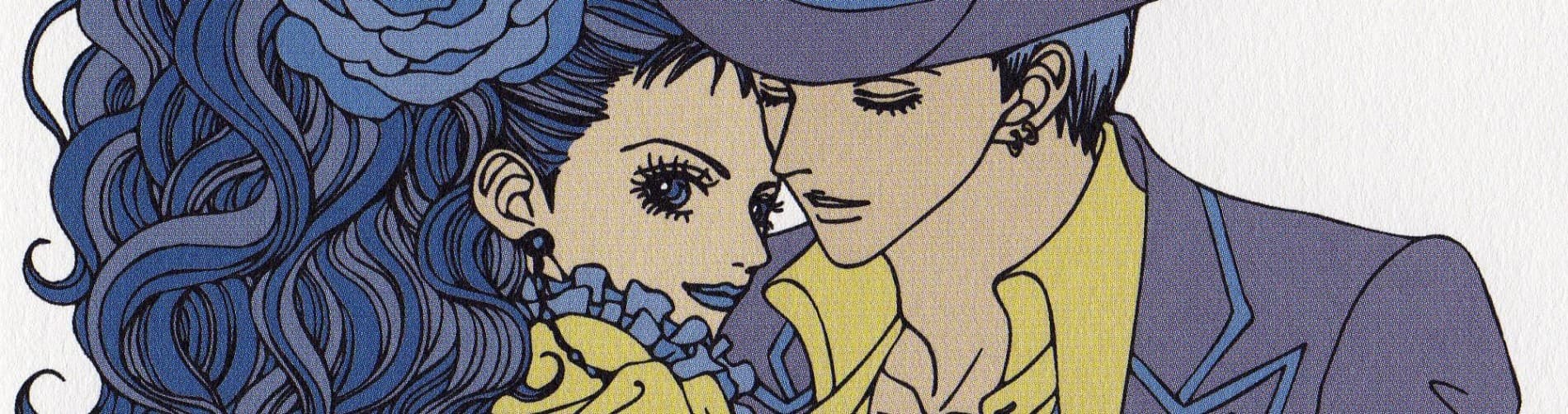
Paradise Kiss
a review by Aidashpy
a review by Aidashpy
Preface:
I was disappointed by the anime's ending as it failed to fully explore the emotional and relationship dynamics, and concluded with a sense of regret and dependence for Yukari. The anime displays this dismissive form of sexism, making the ending more about George than our obvious protagonist, Yukari. In contrast, the manga provided a much more fleshed-out and emotionally satisfying ending.
Review:
Paradise Kiss is a coming-of-age story that takes the reader on a journey of self-discovery and the pursuit of one's passions. The protagonist, Yukari, is a young woman who has never found her place in the world, but after being introduced to the world of fashion modeling, she finally discovers something she loves. The manga does not present a feel-good story of escapism, but instead it delves into the harsh realities of pursuing one's dreams and the constant obstacles and struggles that come with it.
The relationships between the characters in the story are portrayed as complex and challenging. The series does not shy away from depicting the toxic and imperfect nature of these relationships, with the relationship between Yukari and George being a prime example. George treats Yukari more like a sexual object than a person, while Yukari herself is still trying to understand and navigate this new adult world she has found herself in. These relationships can be seen as a representation of the difficulties and complexities that come with growing up and finding oneself in the world.
One of the main themes in Paradise Kiss is that even when working towards our dreams, there will always be rough spots and difficult decisions to make. This theme is echoed in the relationships between the other characters as well, with familial and romantic ties being portrayed as complicated and messy. It serves as a reminder that the journey towards our dreams is never easy, but it is worth it in the end.
The manga's ending is significantly more satisfying than the anime's. Unlike the anime, the manga's ending feels fully realized and brings complete context to the emotional development that was severely skipped out on in the final episode. In the anime, Yukari is portrayed as feeling full of regret and still attached to George. However, in the manga, Yukari's development is tied up as a strong independent model who is aware of the things that have both helped her and pulled her down in life. She has moved on from George and made a "brand" of herself, but she still looks back on the influence that they had on each other. The manga also delves further into how toxic their relationship was, showing how the two truly brought the worst out of each other and that it was definitely the best decision to move on from each other.
While the manga's ending is much more satisfying than the anime, it does have its own set of minor problems. The resolution of Isabella's character feels much better in the manga (though I still do wish she had a bigger role in the story), but there are a few dialogue inserts that feel unnecessary. There were a handful of moments where a character felt the need to poke at the fact that Isabella was a man pre-transition. These moments were just unnecessary, and ultimately a product of its time (even though animanga still does this a lot to this day). Another minor complaint I have about the manga is its recurring desire to break the fourth wall. A couple of times is okay, and it added a bit of humor, but the characters acknowledged the fact that they were in a manga a bit too much in my opinion.
Overall, Paradise Kiss is a very grounded and emotionally charged coming-of-age story that explores the complexities of relationships, societal pressures, and the pursuit of one's passions. If you watched the anime and remotely liked it, PLEASE check out the manga.
14 out of 14 users liked this review
