
THIS REVIEW CONTAINS SPOILERS
ABBREVIATIONS/TERMS
Spoiler, click to viewclick to hide
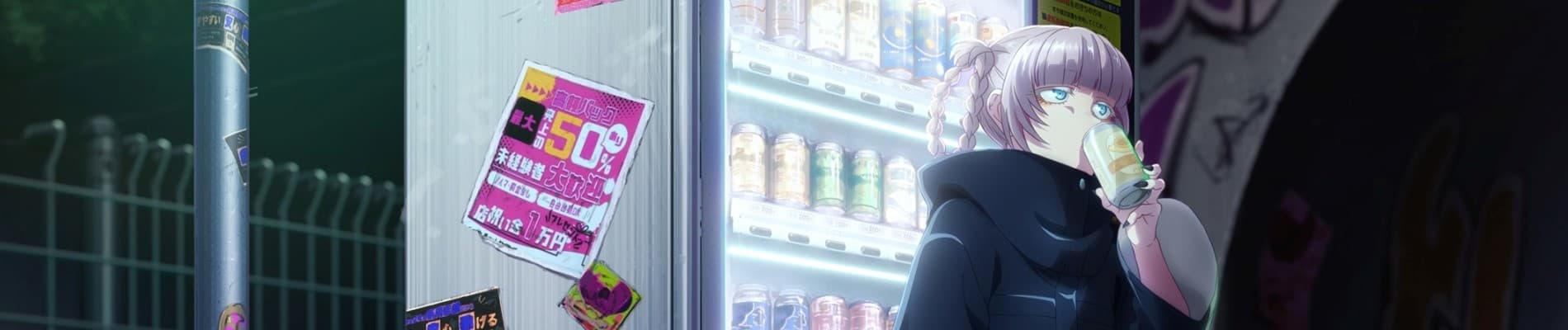
Genga: Drawn by the key animators, it only needs to be cleaned but is already the drawn key frames of the animation, along with shadow and highlight indications. Douga: Cleaned-up drawings, which can be colored and sent their way to post-production. Douga artists clean up the frames of the key animators, also do in-betweening, and in some cases even color the frames. Compositing: Putting layers on top of the douga, like for example environmental lighting. Digital compositing allows to even utilize a “digital camera”, using 3D lighting and models. Photography artists are responsible for compositing and try to create a cohesive world by blending backgrounds and animated cels together. Call of the Night is stylish with its colorful backgrounds and the songs by Creepy Nuts, it’s dazzling in its portrayal of the night, making it magical, as it is for Yamori Ko, our protagonist. He is fed up with his boring life and is enamored by the night, once experiencing it for the first time. Upon meeting Nazuna, a vampire who introduces him to the excitement of the night, he decides that he wants to be a vampire as well. It’s a coming-of-age story, with Yamori, young as he is, being exposed to new experiences, feelings and emotions, and learning how to deal and understand them. However, what makes Call of the Night stand out particularly is the strength of its side cast. The night is not only a symbol for new adventures for Yamori, but it also stands for freedom, and with its portrayal also for a unique sense of isolation. It’s a quiet world, seemingly fundamentally different from how we perceive it during the day and maybe because of that it attracts people with more unique circumstances or problems. Be it the vampires themselves, like Seri being fed up with meeting people just for “romance” and yearning for friendship, or normal people like Kiyosumi, who is fed up with her boss and her job. That makes up for a nice episodic approach, subtly exploring different facets of affection or maturity, while also allowing the main story to breathe and progress the relationship of our two main characters as they learn new things together.
 In terms of execution there are also many well decisions made. Tomoyuki Itamura is a director who stood out to me with Vanitas, and I already liked how he put focus on the environment, and with the night in Call of the Night being such a major factor it was a show which suited him well. Along with a nice score from Yoshiaki Dewa and several songs from Creepy Nuts, who inspired the original manga, it was musically very pleasing too and it gave just the right cozy vibe the show aimed for. Even with strong aspects it was ultimately flawed in its final product though, as the production was visibly strained, with a lot of broken layouts, often just bad compositing and sakkans/douga staff not keeping up properly, making drawings awkward and also the finished result of a probably initially pretty good genga poor. Surprisingly enough they did seem to handle the last episodes the most well, and it had good-looking moments in particularly important and tense scenes, but especially in the middle it was not a good-looking show at all, which is sad (it says something when the character designer rants about the production on twitter).
However, I still enjoyed Call of the Night. Looking forward to the second season, if we get one.
In terms of execution there are also many well decisions made. Tomoyuki Itamura is a director who stood out to me with Vanitas, and I already liked how he put focus on the environment, and with the night in Call of the Night being such a major factor it was a show which suited him well. Along with a nice score from Yoshiaki Dewa and several songs from Creepy Nuts, who inspired the original manga, it was musically very pleasing too and it gave just the right cozy vibe the show aimed for. Even with strong aspects it was ultimately flawed in its final product though, as the production was visibly strained, with a lot of broken layouts, often just bad compositing and sakkans/douga staff not keeping up properly, making drawings awkward and also the finished result of a probably initially pretty good genga poor. Surprisingly enough they did seem to handle the last episodes the most well, and it had good-looking moments in particularly important and tense scenes, but especially in the middle it was not a good-looking show at all, which is sad (it says something when the character designer rants about the production on twitter).
However, I still enjoyed Call of the Night. Looking forward to the second season, if we get one.