WARNING : LONG and lowkey messy REVIEW
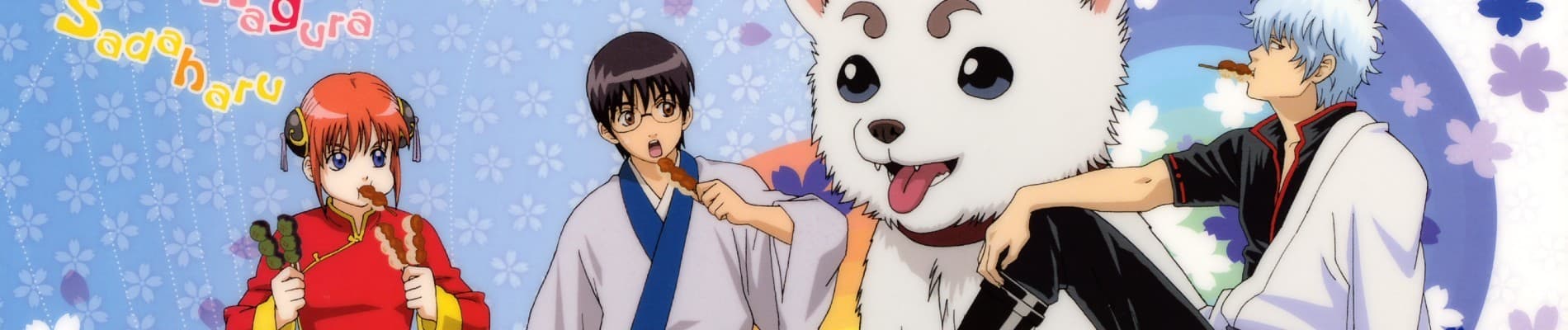
I finished Gintama. I loved it, the characters, the songs, the story, I loved everything and it easily made it into my top 10 favorite anime. Rather than reviewing it and talk about why I love this anime I decided to analyze and interpret it. Analyzing Gintama sounds kinda silly when all the messages are quite litteraly told verbally by some character at the mid-end of each episode. Still, I think the depth of Gintama's philosophy shouldn't be overlooked as it is the main reason I adore this story (along with it's god tier comedy and characters). Be aware : Spoilers all the way. Now let's get into the most important thing in Gintama.
THE SOUL
Gintoki (don't worry we'll get to Chadao) will always do what he thinks is right, even if that makes him an outcast or even if he's misunderstood. He's so bizarre and extravagant that he barely fit into the description of a righteous man. From a somewhat "objective" perspective and from societial point of view, he's a total failure. He lives dependent on Otose-san, an old woman who warmly gave him a home despite him being unemployed, disrespectful, and lazy. Knowing this, he still steals money from her by avoiding paying the housing every month. He does shady jobs and extorts the services of two teenagers without ever paying them. From an outside point of view the actions of Gintoki are inexplicable and the reason why people around him absolutely love him and have 100% percent trust in him are unclear.
If you look at him on a surface level he is nothing like a Luffy or any other classic shonen jump nekketsu protagonist, but if you take a look at his soul then he is the living incarnation of one.
Otose san couldn't care less about money, she keeps him around because she cares about him and he stays with her because he swore to always protect her. He does odd jobs but only as a way to help people. He saved an uncountable amount of lives, restored families and made a lot of people feel better. Even though they will always complain, Kagura and Shinpachi would never mind being dirt ass poor if it means staying with Gin san. He is seen as a bad influence but they're way better off staying with him poor and hungry than purposeless and despicable.
This is what is interesting about Gintama, it doesn't tell you that if you have a clean soul you'll lead a conformable life. If anything, it actively tells you the contrary since living comfortably and being at a high rank socially is often made possible by working for the government. Thing is, in Gintama's lore (and in real life) the government is corrupted af and it surrendered itself to aliens who don't give a f*ck about human lives. You can't make it to the top without putting some dirt on your hands since the top itself is dirty. Though when I say dirty I only mean it figuratively. The people at the top lead a life that is anything but dirty. The dirty ones actually are the Yorozuya and their friends. No matter how you put it it's undeniable that they have undesirable life conditions. What is better then? Dirty soul but clean life conditions or clean soul but dirty life conditions?
Well, let's take Shinpachi to answer this question.
It will surprise no one if I say that Shinpachi is unhappy at the beginning of the story. He was working a rough job with an asshole as an employer and if it wasn't enough that he had to lick his boss's boots he also has to lick those of aliens. He's completely humiliated and his ego is shattered in pieces. The hits he receives by his employer don't hurt him physically but mentally. The fact that he lets someone walk over him is the worst. Definitely, he was far from being at the top but he had somewhat of a stable life. He was getting paid, he had an official job. If someone asked him "what do you do in life" he could actually answer. He was part of societal case people could put him into. Would he have been better off, staying like and selling his sister (his pride) to clear his debts?
Hell nah.
This is also the case for Kagura, would she have been better, off staying in mafias, doing illicit work and beating up people for money and societal acceptance?
Hell nah.
Both of Shinpachi and Kagura sacrificed all the conveniences of society to join Gin but they saved one thing : their souls.
This is why the Yorozuya always mock the people who ask them for help. The clients could be ministers, orphans or their friends and they would still make fun of them. That's because underneath all these titles, the Yorozuya always see people for their souls, what they are in the inside. We do not have the same ranks but we all have a soul and in this sense we're all equal. Every single humans have flaws and bad habits that the Yorozuya will never fail to notice. :)
Now I still haven't precisely described what is a soul in Gintama. But do we really need a precise explanation? I think it's obvious and the author himself despite his love to thoroughly explain his messages made no exact explanation on souls. One can't just perfectly encapsulate the complexity of a soul.
Still, what makes a clean soul better than clean life conditions? I've answered hell nah without justifications. Let's answer with another question : Do Gintoki, Kagura and Shinpachi look unhappy to you? Even Otae-san or Otose-san, their lives are far from perfect but never once have I considered them as pitiful. That's because they're so fullfilled by their pathetic lives that you can't see it as pathetic while all I see in the government is pitiful men who lost their honor and obey to aliens because they were scared. (The Shinsengumi is different since they're still samurais which will bring us to the other section in few instants)
Another thing that proves that a clean soul is more valuable than anything : If Gintoki loses his house? Clear soul. If he loses an arm? Clear soul. If he loses his everything? (like what supposedly happened in his past but idk WE STILL DON'T HAVE THE DAMN FLASHBACKS) Clear soul. Whatever he loses he will still have his soul. Now let's take em corrupted governmental aliens bloodsuckers. If they lose their house? They have nothing. If they lose their money? They have nothing. If they lose their rank? They have nothing. Nothing is certain in life, they sacrificed their souls for the things mentioned before then what is left of them if we take that away? Gin will still have his soul. (1-0)
Some powerful quotes that renforces my statements :
No matter how many wrinkles they have...No matter how far their backs crumple forward. Their will is as strong and straight as a sword and will never break." Otae-san episode 118
Now let's talk about the second most important thing Gintama
THE SAMURAI WAY
What does it means to be a samurai? I'll let Shinpachi answer since he does that better than me
"Tama san, your calculations only apply to ordinary people. Samurai are off a different breed. Even If I leave you and use those 25% chances of survival to run my tail between my legs, for a samurai it means death. To live without protecting what shall be protected : this is the same as death for a samurai. If I only have 5% percent chances of survival while staying there then I'll use those 5% to protect you. When you decide to protect something, you do it until your death. That's the samurai way."
Kinda similarly to One Piece, Gintama uses a term, (samurai for Gintama /pirates for One Piece) put their own interpretation over it and deliver a general message. Gintama and One Piece messages are very intertwined but the absolute core message of One Piece is about freedom; represented by pirates : people who emancipate from society and the state rules to embark on their own journeys. The absolute core message of Gintama is apply your ideals and keep them clean no matter what ; represented by samurais : people who lives solely for their unique goal and would gladly give their lives for it.
This is where I wanna go with this comparaison : Gintama keeps the reality of samurai (who originally were assassins and protector of their almighty shogun, living solely in the purposeof serving him.) Both sugarcoat the terms (pirate/samurai) but what's interesting is that Gintama keeps it real at a higher degree : Just as samurai are deeply connected with death, some character's samurai way are deeply connected to death which is a real contrast with the idealistic image of the samurai way we have at the beginning of the series. (not a diss of any kind towards One Piece, I just use One Piece as my reference for everything and I think the comparaison solidifies the point)
This brings us to the characters we'll use to highlight my point (sorry Wadao, again, next time) : The Shinsengumi and more particularly Toshiro Hijikata. This character shocked me in my beloved Okita's big sister arc (which is btw one of the only arc where the big message isn't just completely explained, it's more subtle, my interpretation will go BRRRRR). I simply did not understand before to what extent he obeyed his own samurai way. We already sorta explained what the soul is. Now, a samurai is someone who protects their ideals and the samurai way are those ideals + the actions of defending them at any cost.
We know that Hijikata wrote the strict Bushido of the Shinsengumi that each member has to respect or they'll have to kill themselves. This showed right from the beginning that Hijikata was serious. Not so much for his personality but for his dedication to the strict rules he applied to himself. In Big Sister Okita arc we discover the cold Hijikata who refuses to let Okita's sister (who's also his crush) pass away before launching an attack and arresting her husband.
Okita, who's a character with gigantic pride, lowers himself and humbly request Hijikata to leave things as they are until his sister dies. Hijikata refuses. He doesn't care, what has to be done has to be done no matter the circumstances, this is a very important line so remember it. Okita who at first looks like the guy who's in the right is flabbergasted. How could Hijikata be such a cold hearted badass. The deeper I went into the arc the faster I realized that Okita was "wrong one" in the story. You may ask why, what did he do wrong? He was only trying to protect his sister.
The thing is that "protecting" his sister got into the way of his actual samurai way which is serving the Shinsengumi. He litteraly asked Hijikata to turn a blind eye and let a criminal run free, destroying more lives, exploiting more people all for the sake of his sister. Knowing that the life of his sister didn't depend on it, he arbitrarily decided to infantilize her by keeping her away from the truth. Okita was still "weak". There was something that kept him away from his duty. Even though being with his sister was the only moments where he showed vulnerability in his whole life, even though he tried his best to protect her it was all weakness. Okita chose the Shinsengumi and he knew what it implied yet he was the only one... When Okita's sister used to say goodbye to the Shinsengumi men every morning before they went out to train, Okita was the only one to look back at her. His resolve was weak.
Gotta say, I was surprised the story was going that way. After the big clash between Hijikata and Okita's sister husband, Gintoki gives spicy biscuits to Hijikata, the favorite treat of Okita's sister and he tells him to go see her and give her these biscuits in person. Now we're talking, I knew it couldn't end like this, now Hijikata and Okita were gonna have their big farewell scene with Okita's sister on her death bed. But the absolute unexpected happened. Sogo was alone in his sister's bedroom and Hijikata was alone on the roof. (the author be writting the goofiest stuff then break our hearts with the most dramatic sh*t like it's nothing)
Hijikata didn't even say farewell to Okita's sister in her last moments. Toshiro's will is unbreakable. He didn't waver once. To him it was clear : he couldn't get into a relationship the moment he joined the Shinsengumi, that's a decision he took and he wouldn't go back on it for any reason. Even if it destroyed him, even if it made him cry alone by himself. What's also rough is that when you think about it Okita also abandoned his sister before her last moments, he left her alone, dying in the cold and empty room to accomplish what he refused to because of his attachment for her : his duty. That's why I think he did the final shot at Okita's husband instead of Hijikata, he had to do it, to repent himself. While watching Gintama, I always had the feeling that it could go dark real quick but I didn't expect the moral of the story to be that "dark", only the events.
It made me think of a quote I absolutely hated while reading Vagabond, a character said something along the lines of "Once you've set your goal, you never go back on it, even if that makes you unhappy". My young self was like "The hell? What's even the point if you're unhappy, I'll never understand this type of reasoning" but now I understand and even respect this quote.
What makes you happy? Not just fulfilling your goals or things like that, most of our "happiness" is due to instant pleasure or satisfaction, dopamine, masturbation and such. (not exposing myself just trying to make a point LMAO).
I think we live in a society of consumers and that we're less to create or accomplish our own dreams, rather we're to rely on other little addictions to still feel satisfied despite not actively working for it. We give in to our desires for futile pleasure. This is our happiness. What's worse is that we do not actually have a word to say about our desires, we can control them to some extent yes but we did not even decided their existence to begin with.
By example if you wake up in the morning and you really want to stay in bed despite having things to do. You give in and stay in bed. You'd sorta be a slave, you'd obey to desires you did not even want to have. Making the choice to actually get up even if it's something you don't want THAT would be being free because you obey to your own will, something you decide, instead of something you don't. That won't instantly make you feel happy but it will be more rewarding along the way. It's basically Kant's categorical imperative, you set strict rules upon yourself and you follow them NO MATTER WHAT. Since their strict, your desires will naturally go against those rules but if you chose to go against those desires every day it will make your will unbreakable and you'll always live by your own terms. The terms are set by yourself so you're the slave of no one, you're serving yourself. This is Hijikata's samurai way. He'll always follow it and protect his rules no matter what and unregarding of the circumstances. That's what it means to be a samurai.
THE IMPORTANCE OF MADAO
We're finally here. Madao appreciation post. This is the last segment because it combines both the samurai way and the soul in a funny but more importantly realistic way. Gintoki and Hijikata are cool but they're both ideals. In real life, what would someone who listen to Gintama's advice be like?

Yup, him. Crazy right?
Madao is such an incredible character. Episode 16 perfectly encapsulate his dilemma and life as a whole. Before being a madao, Hasegawa was an official working for the state. He had the money, the social status, a wife a house etc. His job was to make sure the Amantos (Gintama's aliens) were pleased and satisfied. It seems I'm basically going to say the same thing than in The Soul section but it's a little more complex.
Hasegawa wanted to do the right thing, to him, serving Amantos was a way to make sure they weren't dissatisfied or angry about anything thus they wouldn't do anything bad to Edo. It was dirty but it was a way to regulate and control the aliens, Hasegawa protected the country in his own way. Thing is, sacrificing your morals for your morals makes absolutely 0 sense. What makes a character like Batman not an hypocrite is that he doesn't kill the bad guys. If he did, he would be off the same caliber than them thus he would have no right stop them, he'd be like them. (well he stills practically kills them but you get it) Kant said that even in a situation where you're hiding your best friend and an assassin comes at your house and asks you about where he is you must answer honestly. Kant believed in the worth of the truth.
If you compromise it for whatever reason even for one second you lose the right to complain or act on it. You'd be an hypocrite. How can you complain about a dishonest society when you are yourself dishonest? Hasegawa wanted to protect the country in his own way but it ended up creating paradoxal situations. In episode 8, Shinpachi was on the verge of dying to an Amanto's "pet". Hasegawa stopped Gin san when he tried to save Shinpachi because there was no way to stop the pet without killing it and it would piss of the Amantos. Even though the pet monster was litteraly going at Edo to rampage the city. See the hypocrisy? He says he wants to protect Edo's lives but he's ready to let Edo's lives be destroyed if it means protecting them. This is where always compromising leaves you. What was he even fighting for?
At the end of the episode he got inspired by Gin san who didn't give a fuck and killed the monster. Hasegawa decided to punch the sh*it outta the responsible Amantos. He defended and cleared his tainted soul. But he inevitably lost his job and now he's a Madao. Madao thought that shooting inspiring things and fighting for the good would only bring nice things to him. But only his soul has been saved, he sacrificed everything for it, he loses his wife, house, salary and he doesn't know why he's living anymore. He tries to get back on his feet and searches for a new job. His sunglasses are now the symbol of his soul and and in-the-making samurai way. Whenever he goes to job interviews it always go wrong because he keeps the glasses. Who would want to hire someone who comes dressed like that in an interview. Because of his glasses, wherever he goes he's a Madao. At some point, he starts to blame the glasses and Gintoki punches him to wake him up. "If you stumble on a rock, are you going to blame the rock, you stupid ? ". Madao being treated as a Madao is Madao's unique fault and responsibility. He refuses to let go of his soul (glasses) again and fails miserably at getting back anything because everything he had once was at the cost of his soul. If he wants to keep his glasses he'll have to live up to it and accept the consequences. This time he'll have to make no compromise.
Gintoki says "It's okay to have a set of rules to live by but if they don't bring anything good to you then you may change it" (Gintoki's samurai way is basically the opposite of Hijikata's so it isn't surprising for him to say that but later on the episode we'll see that this line didn't really help Hasegawa)
Hasegawa takes off his glasses and goes on a job interview. He gets accepted and start working as a taxi man. It's great. Life good, technically. But in reality he feels like he has no purpose and he's just driving for a living without anywhere clear to go to or to stop at. He still feels like a madao. The Amanto he once punched got in his taxi. He was driving him to the zoo when a man jumped in front of the car to beg Hasegawa to let his girlfriend get on the taxi because she was about to give birth. The Amanto, cruel bastard who only cares about himself screamed at Hasegawa and told him to go to the zoo and ignore the couple after insulting human race. Hasegawa, once again punches the sh*t outta the dude, drives the couple to an hospital and put his glasses back. Gintoki himself will say that he was wrong and that Hasegawa'd glasses suited him the best. When Hasegawa had to comprise his soul for the sake of his job, he immediately chose his soul, making him, once again, a jobless man. A madao. It is hilarious in a way because Madao thought that by punching the Amanto and living up to his ideal, life would award him and great things will happen but once again, he's here without a dime, a wife or anything but his clen soul to rely on.
I think it's important to have a character like Madao who reminds you the actual cost of completely staying true to yourself in a corrupted and disgusting society. Compared to Gintoki, when you look at Madao's life you kinda see it as pathetic because Madao himself isn't satisfied with it. Just because his soul is clean he's not always happy being dirt ass poor and that's a more realistic approach. He's not an ideal, he's a regular man who just wants to be true to himself.
CONCLUSION
I'm glad I completed this review. It's kinda frustrating to only talk about these aspects of the anime though. I wanted to talk about Hijikata's "weak" alter ego to nuance what I said about his character, I wanted to talk about the Hoshiwara's in flames arc, the great Yagyu arc. But at the end of the day, I did talk about everything that was necessary for "The soul", "The samurai way ", and the "Importance of Madao" subjects and taking about things that are irrelevant to these subjects would only make this review even longer. I just want to add that the Shinsengumi and Yorozuya's rivalry is underrated af.
Gintoki and Hijikata who are both respectively the representation of Yorozuya and the Shinsengumi are two sides of the same coin. Hijikata has strict rules that he lives by and he'll never betray them for anything. That's his samurai way. Gintoki respects no rules : that's his absolute rule. He's above laws because he just always does whatever he wants. Living by no rules is his only strict rule : that's his samurai way. They're both very different but also very similar, depending on how you look at it.
To get back on what I said on Madao's section. I think Gintama as an anime and as a manga perfectly embody the "stay true to himself despite the rules" attitude. The anime is a HUGE troll. I'm shocked at how many time they got aways with doing whatever they pleased. Making fun of the higher ups, criticizing the industry, pranking the viewers and ignoring complaints. The anime staff is litteraly the Yorozuya bruh. I do think that the episode that aren't based off manga's chapter are less funny and feel weirder to watch but I'm okay with it because they perfectly understand Gintama and their episodes share Gintama's spirit. I don't think of any studio that could have done better with such limited budget. Huge respect on them.
The manga is the same. Hideaki Sorachi pranked his readers and created a story that can't be put in a recognizable and comforting case. The story isn't restrained by any rules or expectations. Very few nekketsu shonen are similar to Gintama. A comedic slice of life that will make you ask where is the shonen part and a dramatic battle manga part that will make you ask where the comedic slice of life story went. Gintama is just Gintama and since the first episode I knew it was going to be one my favorite thing and it only surpassed my expectations episodes by episodes...
if you want to discuss this review : https://anilist.co/activity/519976133
36.5 out of 39 users liked this review
