BELLE
a review by TheAnimeBingeWatcher
a review by TheAnimeBingeWatcher
In a sense, Belle feels like the movie that Mamoru Hosoda has been building up to his entire life. Looking back at his work, Hosoda is primarily obsessed with three themes that appear time and time again in his movies. 1: Fairy tales (Wolf Children, Boy and the Beast). 2: Sci-fi, particularly time travel and cyberspace (The Girl Who Leapt Through Time, Summer Wars). 3: How those fantastical elements intersect with naturalistic, real-life stories of family and coming of age (Literally all those previous films). Those three themes permeate Hosoda’s filmography, but they’ve never all intersected at once… until now. Here, at last, we have a near-future sci-fi yarn that uses cyberspace to re-imagine a classic Disney fairy tale as the backdrop of a classic teenage coming-of-age story involving complicated family matters. All of the director’s fixations have finally been married in a single package, the definitive example of everything that inspires his creative process.
It’s just a shame the end result is such a disaster.
Okay, “disaster” is probably too harsh. Belle is far from the worst film ever made, and in the rare moments where everything clicks together, it’s damn near perfect. But my god, this movie is a mess. It’s at least three different stories fighting for attention at once, never coming together in the way they’re so clearly trying to, continuously pushing each other out of focus so no one thread is ever developed enough to matter. It jumps back and forth between ideas with minimal justification. It switches its emotional core at least twice without properly resolving what came before. And when it tries to tie everything together for the climax, it runs into yet more problems that transform what should have been a barn-burner ugly cry masterpiece of a finale into a confused and troubled message that doesn’t seem to know what it’s saying and might even end up saying some unintentionally really shitty things. I have liked and loved so much of Hosoda’s work, but this is unquestionably the worst thing he’s ever put out.
Our story, as you can probably guess from the name, is a take on Beauty and the Beast. Well, sort of. It actually starts with our protagonist Suzu joining the new cyberspace world U, a place I can only describe as VR Chat on all the steroids ever. It’s basically an entirely new virtual world that’s supplanted or fully integrated all other forms of social media, so the entire digital world uses it as a community hub. And if you’re already thinking this sounds suspiciously like the premise of Summer Wars, well, yeah. Hosoda likes his motifs, what can I say?
Anyway, the reason Suzu is drawn to U is because it’s an outlet for her to rediscover her love of singing. Singing was something that she shared with her mother, but after her mother died saving someone else’s kid from a flood, Suzu sunk into a depression that basically crippled her ability to sink without descending into a mess of emotions. The real world has become a listless place for her, a place where her connections to other people- including her father, who god bless him is trying his best to carry on- fray and fade more and more every day. But in the virtual world, hidden safely behind an anonymous, much-prettier-than-her-real-face avatar? Suddenly, she’s able to connect with those emotions again and sing unchained by her trauma. And thanks to a lucky video of her performances going viral, she suddenly finds herself possibly the most famous person in the digital frontier, a mega-diva whose songs inspire millions without anyone knowing who she really is. Everyone flocks to hear her sing, she’s beloved and over-scrutinized by everyone… while in real life she’s still an emotionally stunted teenage girl trying to reconnect with what it means to find happiness in life.
It’s at this point in my plot summary that a lot of you are probably asking, “Okay, but where does the whole Beauty and the Beast thing come in? Because that seems like an awful lot of setup for an entirely different movie that doesn’t leave much room for that Disney homage I was promised.” And… yeah.
Yeah.
This is what I mean about Belle feeling like multiple stories fighting for attention. After speedrunning the mom-death-to-digital-superstar plotline I mentioned above with liberal use of montage, the Beast literally comes crashing through the wall of one of Belle’s concerts, and she decided to take an interest in the bestial avatar pursued by justice-seeking mobs because… well, pretty much because. It literally feels like the story’s been hijacked and yanked down an entirely different path than the one it was setting up. And from then on, the plot just never comes together, it bounces back and forth between Suzu’s teen-melodrama struggles in the real world and full-on Disney homage in the digital world, but there’s almost nothing tying them together until the finale. The two sides of Suzu’s journey feel so disconnected they might as well be separate movies. And sometimes it feels like not even Hosoda understood these two stories were supposed to be part of the same movie. Suzu literally has two romantic subplots running simultaneously, one in the real world with her childhood friend and one in the digital world with the beast, and never once does it acknowledge the fact that she’s pining after two guys at once. It’s like she entirely forgets the other guy exists as soon as she leaves his world behind and goes right back to devoting all her attention to the other dude. This is literally the easiest conflict generator you can come up with in a YA story, and Belle can’t even do that right.
And because of this disconnect, both sides of the story are left feeling painfully skin-deep and skeletal. We don’t even get to hear Suzu sing once before her mom dies, so the attempts to wring drama out of her re-finding her voice in U feel like development for a conflict we never even set up. This should be the driving force of the movie’s emotional core, but because the setup is so rushed en route to aping Disney, huge parts of it feel like an afterthought. And the cyberspace side of things is somehow even worse. I don’t ask for exhaustive realism in my speculative sci-fi, especially one that’s literally based on a fairy tale, but I could write a whole separate essay on how U’s world makes no goddamn sense as anything beyond paper-thin allegory. It seems to exist as a perfect libertarian utopia where everyone has true freedom and everyone gets along perfectly, which is so laughably Not How Real Life Works I have to wonder if Hosoda’s actually, like, spent time on the internet at all. The closest it comes to doing something clever with the concept is re-imagining the Gaston figure trying to kill the beast as essentially a moral police doxxer who goes around trying to unmask “dangerous” users’ public identities while spouting the rhetoric of self-righteous justice to justify his hate campaign. But even that is shamefully under-utilized because of how fragmented the narrative is.
Actually, that’s a lie, the best part of the whole cyberspace side of things is a brief moment where Belle’s exploding popularity is showcased by people remixing her songs into different musical styles like electro-swing and hard rock. As someone who’s consumed his fair share of Megalovania jazz covers, I had to laugh at how accurate that was to the online experience.
But it’s in the Beauty and the Beast re-creation itself where Belle’s biggest ambitions and failures lie. Because of how little reason we’re given for Suzu to care about the Beast, every scene she has with him, recreating or paying homage to the most famous beats from the original Disney movie, feels hollow. It’s not until we reach the final act and finally discover the Beast’s identity in the real world that it becomes clear what this whole enterprise is even about. And good god, it is a can of worms. I won’t spoil anything, but the final act is where Belle finally starts trying to pull all its disparate threads together, connecting Suzu’s emotional trauma to what the Beast is suffering and dropping in some uncomfortably real portrayals of familial abuse and the difficulties our world has responding to it. It’s the moment the fairy tale crashes into reality, where the larger-than-life emotions become a vessel to channel something real and raw and powerful… and it ends up Disney-fying the issue to such an extent it honestly feels kind of insulting. You cannot treat real, grounded abuse the same way you treat a fairy tale about a monstrous being learning to love again. You cannot wave a magic wand over something this potent and pretend that makes everything okay. Hosoda used to be so good at marrying the grounded and fantastical sides of his stories, but ever since Wolf Children he’s just been getting worse and worse at it. You were a pro at this, man, what happened?
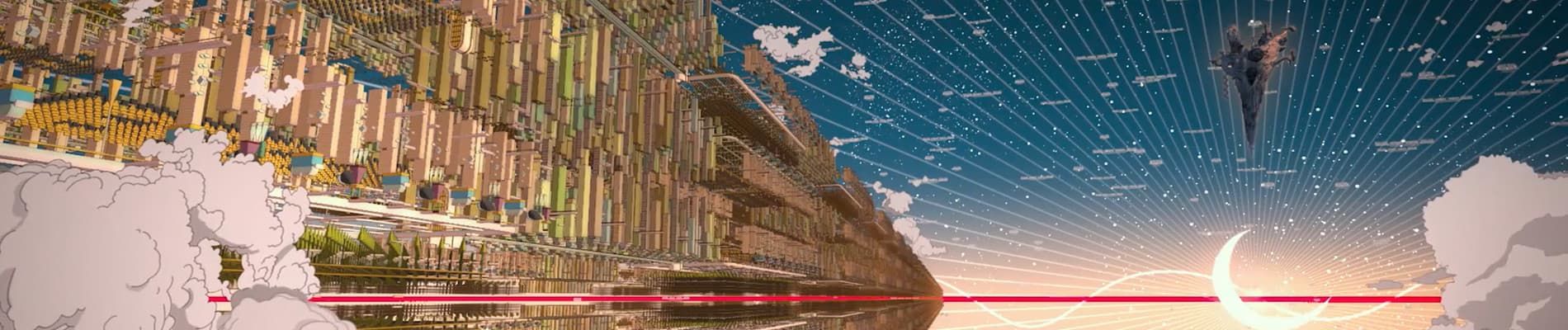
Look, I don’t hate Belle. If I’m honest, I don’t even dislike it. It’s a wildly ambitious movie trying to do so much at once, and it’s so earnest about it I want to root for it on principle. If nothing else, it’s certainly a gorgeous-looking movie, and the entirely-CG portrayal of the digital world marks another strong step forward for gorgeous and artistic CG anime. Belle’s avatar in particular does a freakishly good job of capturing the precise feel and movement of modern day Disney Princess design; you could slot her into Frozen and she wouldn’t feel out of place. But when the best, most fully realized scene in your movie is a romantic confession between two minor side characters with almost no impact on the main plot (I’m not even kidding, that scene is fucking wonderful), something has clearly gone wrong. But despite trying to say so much at once, it just isn’t well constructed enough to properly say anything at all. And unless Hosoda pulls himself out of this slump very soon, we may sadly have to come to terms with the fact that his days as a certified master are behind him.
23.5 out of 35 users liked this review
