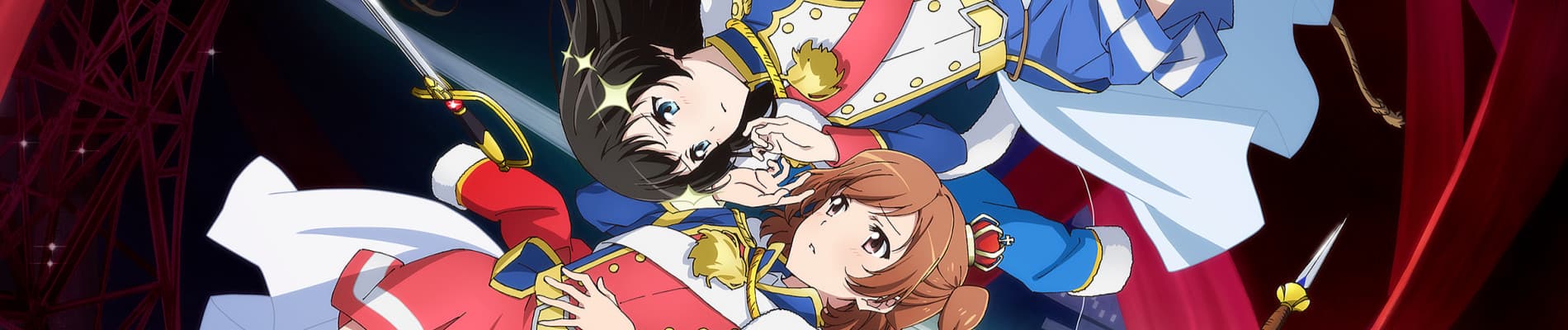
Revue Starlight
a review by aban
a review by aban
*NOTE: This review was written as part of my AP Literature & Composition practice, and as such, might appear rushed (I timed myself 40 minutes).
PROMPT: It has often been said that what we value can be determined only by what we sacrifice. Consider how this statement applies to a character from a novel or play. Select a character that has deliberately sacrificed, surrendered, or forfeited something in a way that highlights that character’s values. Then write a well-organized essay in which you analyze how the particular sacrifice illuminates the character’s values and provides a deeper understanding of the meaning of the work as a whole.
Sacrifices define people; in ways, giving up things in search for truth instills a sense of self-growth within humans. One person might "give up" a treasured avocation in pursuit of more instructional, pedagogical activities; another might "exchange" their hard-earned money to purchase something of equivalent importance—a car, perhaps. Revue Starlight, an animated series directed by Tomohiro Furukawa, is a show that fantastically links sacrifices as tragic representations of selves. As we follow Hikari Kagura, a character plighted by departure yet linked by promise, in her unending quest to discover her relationship with Aijo Karen, she ultimately imprisons herself in hopes of preserving the other stage girl's glimmer, showcasing that sometimes, the only way to protect what one wishes for most is to relinquish all they have.
"Things may not always be as they seem" is a wide-spread phrase that, frankly, could not appear more true in Revue Starlight's exposition. Although the withdrawn, taciturn Hikari Kagura initially avoids Karen when she first transfers to Seisho Music Academy, it is later revealed that she cares intimately for her, as she is bound by a powerful promise—a promise to "Starlight together"—made when they were mere children. Knowing that the Revue Auditions pilfer away stage girls' glimmer upon losing once, Hikari tries to thwart Karen's performances, establishing glints of protection from a very early point in the show. As the story progresses and the breadth between the two stage girls begins to close, Hikari becomes increasingly impressed by Karen's "shine," perhaps because of the strong bonds they created as children. In her transition from shy to affectionate regarding the two stage girls' heavily-contextualized relationship, the director accurately portrays Hikari's relationship with Karen as something uniquely special, making Hikari's prospective self-sacrifice tragic all while supporting the idea that things are not always as they seem.
When Hikari and Karen's promise draws closer to its denouement, Hikari becomes agitated. Though Kirin, the enigmatic spokesperson behind the Revue Auditions, states that the final performances will be held in the form a duet, she cannot help but be wary—after all, Starlight is meant to be a path of solitude, not a place where two stage girls can shine together. When it is revealed that Hikari must battle Karen in one last, final Revue Audition, many things course through the two girls' minds—but Hikari, reminiscent of their journeys, hardships, and pent-up aspirations in playwright, only entertains one thought: self-sacrifice. By surrendering, and thus, imprisoning herself in an eternal, bleak desert, bereft of both shimmer and stage, the audience becomes wholeheartedly engrossed in Tomohiro Furukawa's tragic, yet influential message: that, in pursuit of eternal smiles, one must be prepared to give up the things they wish for most—in this case, Hikari Kagura's dreams of shining on the most glistening, resplendent stage of all.
24.5 out of 26 users liked this review
