Cowboy Bebop
a review by Pursueth
a review by Pursueth

I can't even begin to try and put into words what Cowboy Bebop as an experience means to me. It's legitimately above almost every show I've ever seen. Every character here is so human and organic that they don't even belong to any archetypes. The show breaks every trope and flushes it down the drain like it's nothing. It's unfathomable just how unique and masterful every episode is. Every minute detail is given attention. Animation becomes a playground for merging genres. Score goes above and beyond even by film metrics. In every category Cowboy Bebop is a soaring hit. Perfection embodies itself with every set piece, frame and musical note.

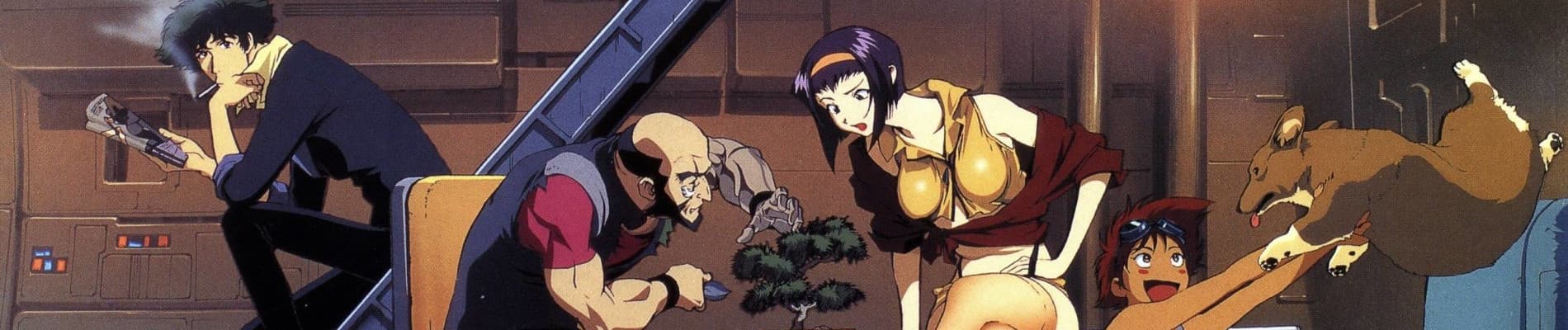
In 2071, an era where interstellar travel has become as common as traffic jams in Manhattan, takes place the story of 2 legal bounty hunters, Spike Spiegel and Jet Black drifting through the lonely cosmos as they hunt bounty heads. In a series of events Spike and Jet on their journey end up with 3 more lonely characters with their own unique stories to share. This completes our ragtag group of bounty hunters that we all know and love. Jet Black, a former police officer and the owner of the Bebop ship. Spike Spiegel, the cool guy(I can’t think of a better description for him). Faye Valentine (marry me, please) is introduced as the typical femme fatale and seemingly tokenistic female character whose main purpose is to serve as fresh fanservice for the audience. Edward Wong Hau Pepelu "Ed" Tivrusky IV is the happy go lucky genius hacker kid of the show for younger audiences to connect with and Ein is the cute little genetically engineered Corgi for marketing purposes. Bebop does a great job of establishing these familiar archetypes and uses them as springboards to delve into deeper topics of chronic loneliness, inability to escape from one's past and existentialism through boredom. It also references concepts like capitalism and environmentalism. (there's a whole episode with a Unabomber inspired character)
Through bounty hunting the show is given space to explore a variety of villains/antagonists. Each session there's either a new bounty to be caught (which rarely gets cashed out) or a new niche of Bebop's universe to be explored. Crime syndicates, terrorists, a deranged serial killer and even an actual American Cowboy confront Spike and co. The way Cowboy Bebop switches genres so effortlessly and executes them to near perfection always blows me away. I can never get tired of watching another Bebop session; it's just always so effortlessly phenomenal.
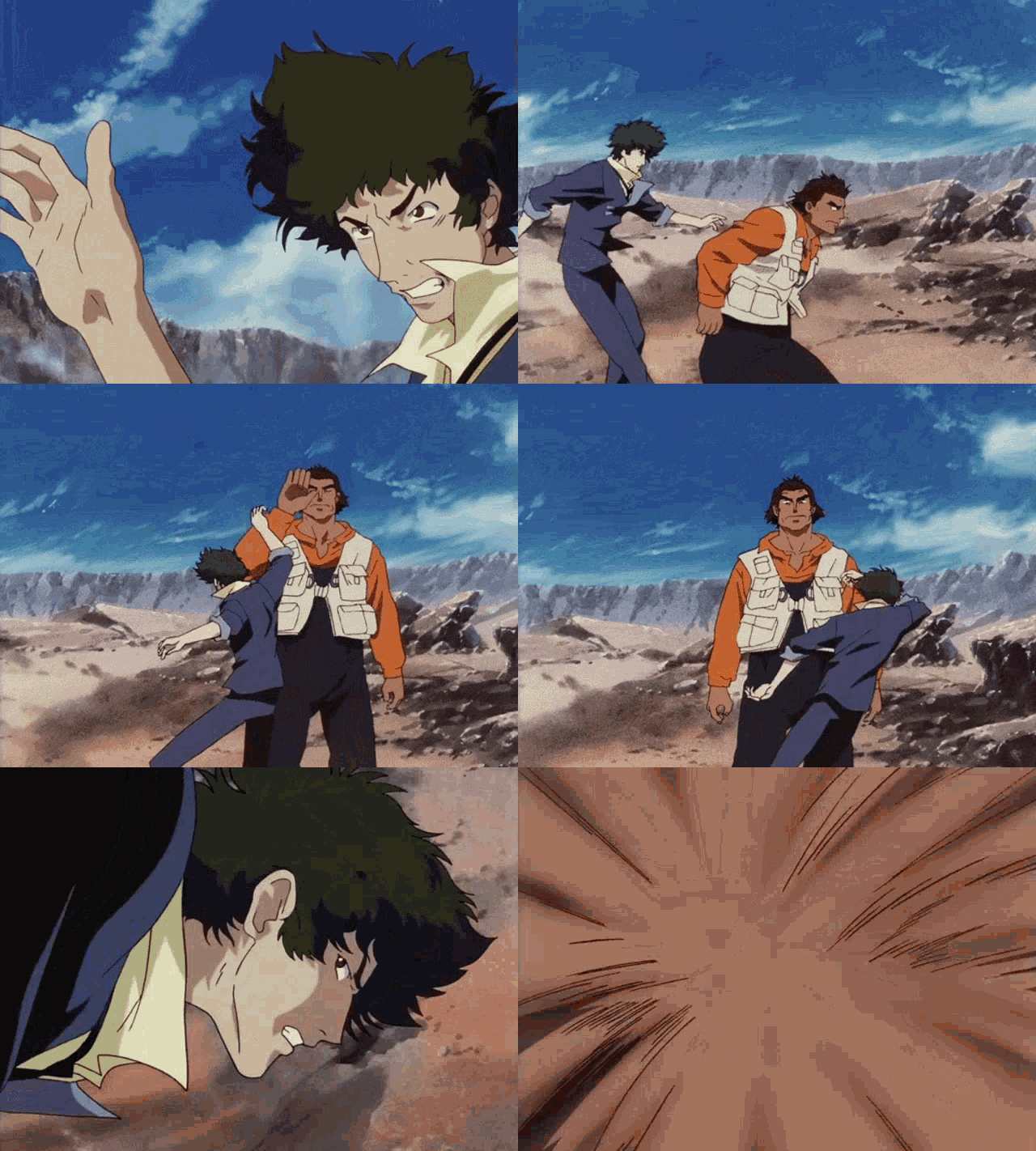
Music, sound, animation everything is crisp, catchy and a visual treat. Bebop frequently blends film noir with westerns. What's really cool about it is how much it values little details and always adds them here and there without making it totally explicit. For example how Spike's suspicion of that old lady in "Gateway Shuffle" was conveyed by subtle expression in just one frame. Blink and you miss it. This is one of the weaker episodes in terms of writing, yet the direction was just on point. The whole hyperspace sequence was stunningly animated. It also doesn't rely on exposition to create tense scenes like most sci-fi works would. When they're told that the gates are being shut down, the consequences of being left behind are not stated until after they manage to escape by a hair's breadth.
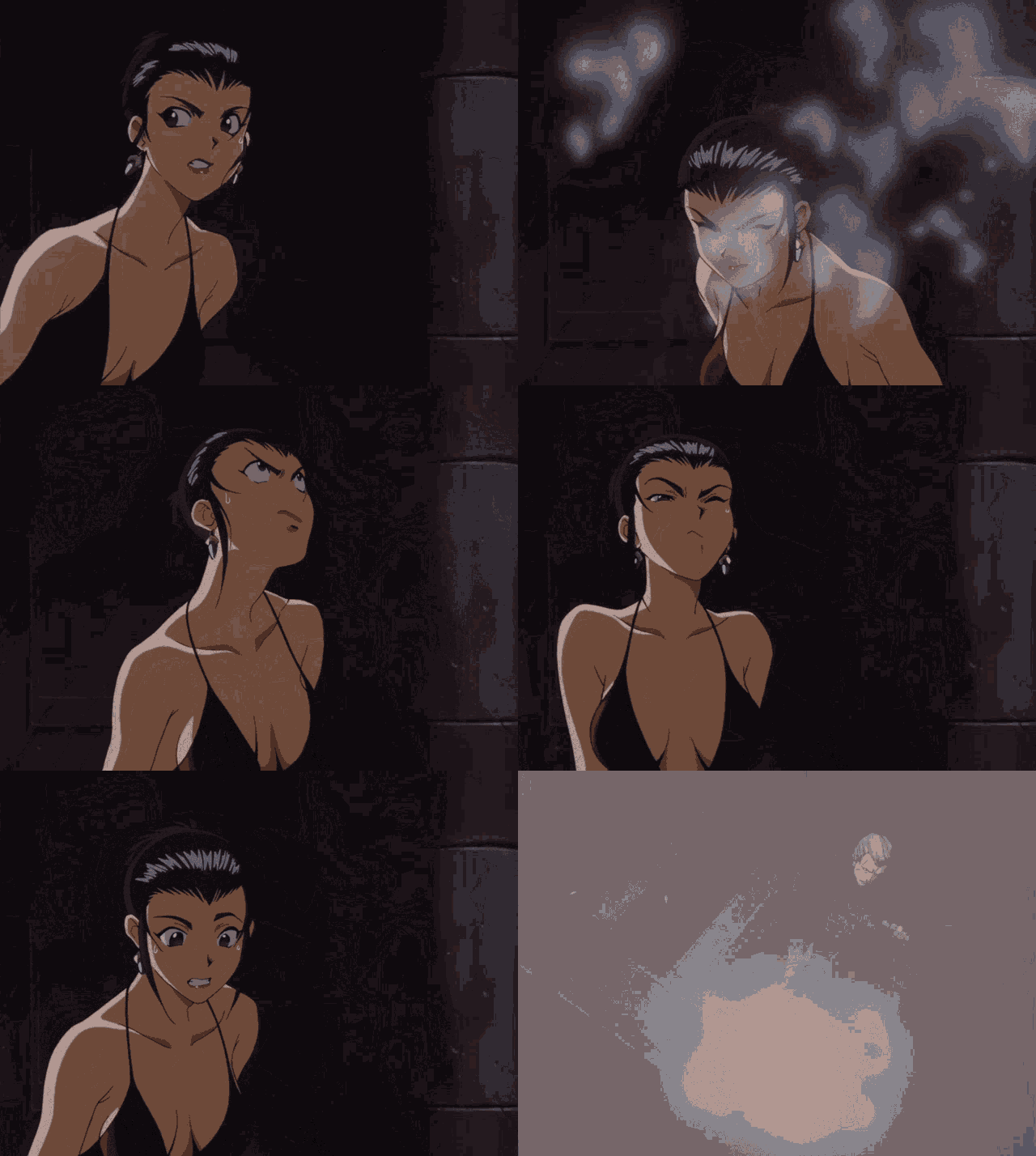
Most of Cowboy Bebop's episodes are light-hearted, chalk full of humour and filled with references to other works like 2001. The main cast sometimes aren’t even in the spotlight, it's the one-off characters that take centre stage. Through these characters we get a deeper understanding of The Bebop Crew. Each member of the crew gets their own “centric” sessions.
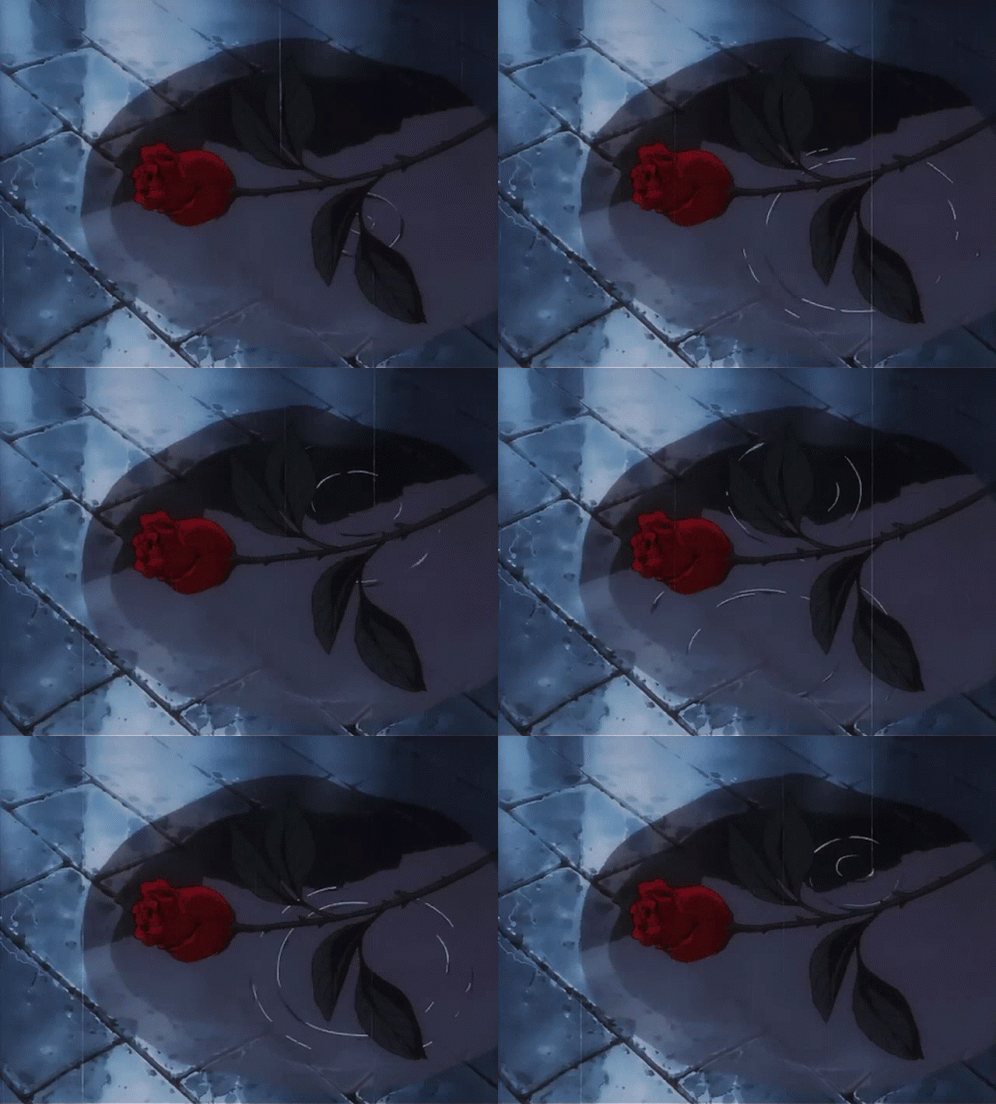
In "Sympathy for the Devil", Spike definitely seems to connect with Wen's dying words, "I see..I can finally die. I feel so heavy, but...I feel so at ease now. Do you know? Do you understand? Do YOU..." To which he replies, "Like I do." Both the flashback at the start and this last interaction give us a clue about the weight Spike carries with him. Spike tries to blow on his harmonica but gets no noise out of it. In the background however, "Spokey Dokey" harmonica plays. He then throws it in the air, points his finger at it and says the iconic line "bang." Truly a spectacular resolution. "Waltz for Venus" is a perfect film noir episode that furthers Spike's characterization while offering us two wonderful characters, Roco and Stella. Roco's final moment is heart-breaking. Not only his moment of progression is stolen from him, the plant withering away perfectly compliments his arc. Desperately holding onto his inherent goodness until it shatters and withers away. Stella's exchange with Spike makes for another tragic scene. I teared up, man. Exquisite writing and phenomenal world building as well. This show is not normal. There's also a Bruce Lee reference here as well.

These are just a few examples. Most of these characters are ever mentioned again, yet their impact on the show cannot be overstated.
"Ganymede Elegy" is about Jet, the unsung hero of the show who confronts his past. Here we get to see Spike sympathise with Jet as he encounters his ex-lover, Alisa who left without saying goodbye, leaving just a watch and a note behind. The watch represents the relentlessness of time. It’s a profound and simple episode that by the end sees Jet happy to put the past behind him. “My Funny Valentine” details the origin of Faye and gives us a glimpse into what happened in her past. And here we find out that Faye isn’t mysterious by her own choosing, she literally doesn’t remember anything from her past. Sessions like “Speak Like a Child” and “Hard Luck Woman” sees her getting more pieces of herself and understanding of her past. Her resolution becomes that much more impactful by the end. Ein and Ed’s centric episodes are more light-hearted but they still tell us a lot about them. Ein’s intelligence and how the only person who ever understood him was Ed. Ed actually has a future to look forward to unlike the rest of the Bebop crew tied to the past. Masterclass episodes are the norm here.

Its episodic format allows room for bebop to experiment with its style, create tension by virtue of there being no linear storyline and increase rewatch value tremendously. It's just conceptually phenomenal. Akin to none in structure and ideas. Cowboy Bebop through every session keeps on climbing the ranks as one of the greats until it truly and finally cements itself as a cultural touchstone and one of animation's greatest milestones with the final stretch of episodes.
Bebop doesn't have any "peaks" per se. Yes the best episodes of the show are the final three but Cowboy Bebop always maintains a consistent level of quality throughout the run of each and every one of its 26 episodes. This is again possible because of the episodic format and lack of focus on a central storyline. Each episode is its own self-contained story with its own unique ideas to explore with even separate genres and style. Music in this show acts as a backbone to everything on screen, instead of just an afterthought. Even at times replacing dialogue entirely as you absorb the visceral experience through the brilliant music composition alone.
There's also Bebop's phenomenal worldbuilding. Wormholes, spaceships, syndicates, intersolar police, hyperspace gates, the numerous professions side characters have, bounty hunters, cowboys and the list just goes on and on. The world of bebop is dense. None of the pseudoscience makes a lick of sense yet the detail with which the world is painted creates an immersive experience. In fact, every episode is unbelievably dense. I deliberately took a month to finish this show because there’s just too much contained in every episode. A binge watch couldn’t possibly allow me to fully appreciate the extent of bebop and even now I doubt I’m any closer to uncovering the endless layers this show presents. It's such a profound work of art.
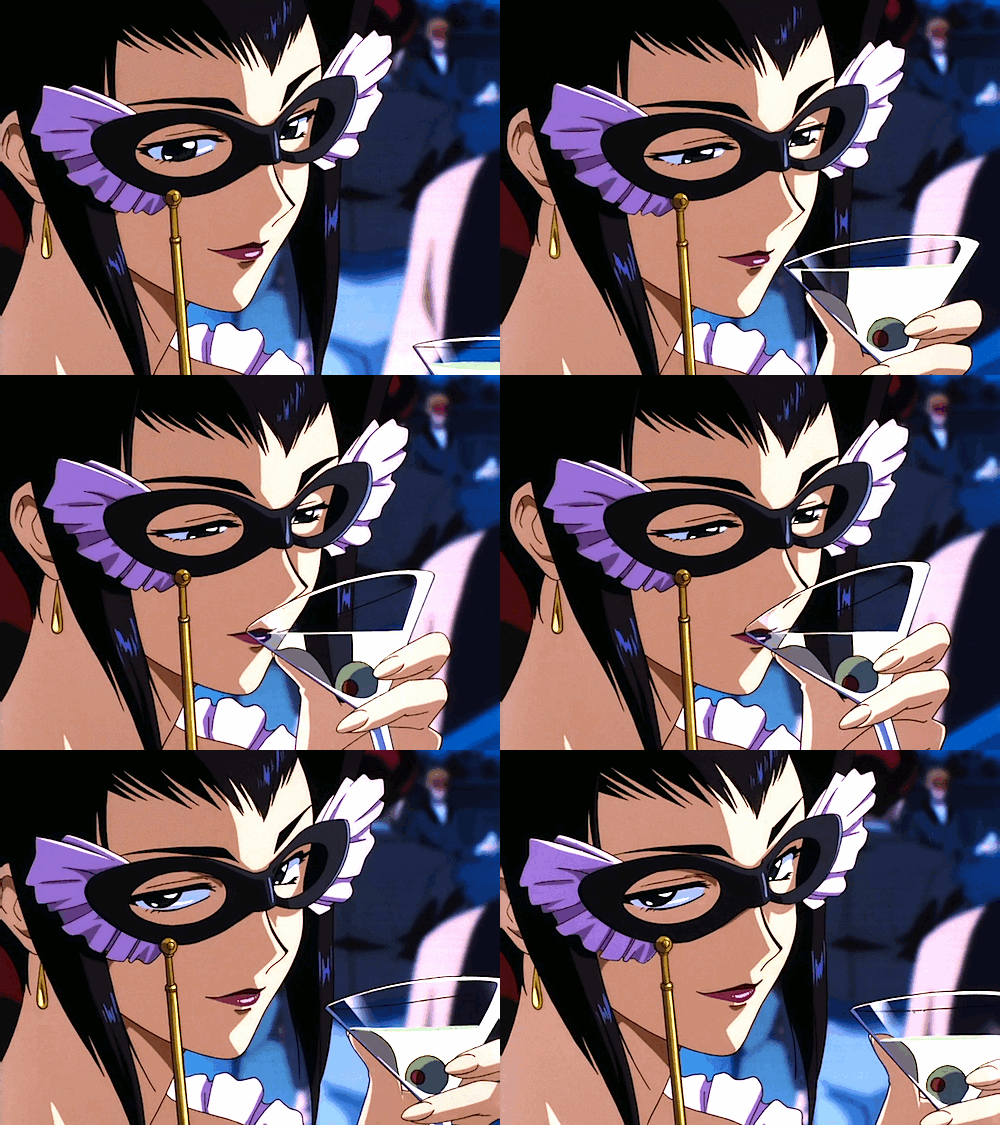
Cowboy Bebop is ultimately a show about nothing. Specifically how in the grander scheme of things human life can seem rather meaningless and insignificant. Yet despite this we keep on living and bring purpose into our own lives in a universe that is seemingly devoid of any meaning. The idea is reflected in the structure itself. How there are long stretches of our characters just being human. Bickering, eating and travelling. No rush to do a task because the show demands it. It’s just organic. Everything in this show is organic and real. The dialogue in this show can range from playful jests to beautifully melancholic interactions.
Speaking of melancholic, the last 3 episodes of bebop are bona fide masterpieces. No joke, some of the greatest tv episodes ever aired. In "Hard Luck Woman" seeing Faye curl up into a ball at her destroyed house, Ed's bye bye message, when Ein looks back at bebop almost as if contemplating if he should really leave with Ed or not and not to mention Spike and Jet just eating their feelings away as "Call me Call me" plays in the background... I felt so hollow. It's such a bittersweet moment.

"The Real Folk Blues" is an ever satisfying 2 parter that pulls the impossible job of ending a series like this perfectly. Every character's arc comes to a satisfying conclusion as the show signals the beginning of the end. Drawing the curtains to a classic unlike anything we have ever seen before or will ever see again. One final word to end it. One final moment to cap off an extraordinary journey of space cowboys and cowgirls.

Watch this show if you wanna treat yourself. Don't expect the world from it, that's disgustingly low. Expect more. You won't be disappointed.
And well, if you are disappointed by the end of it then...
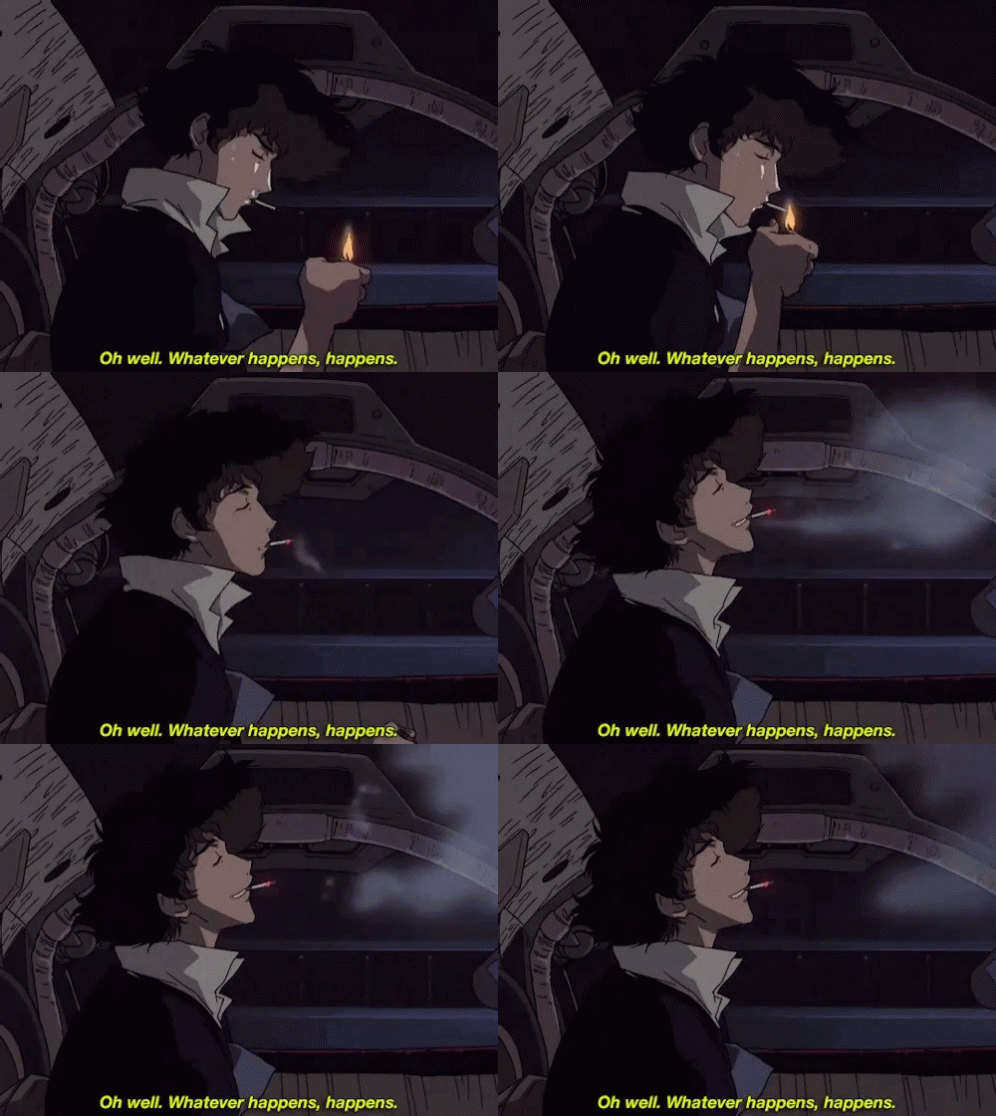
Now it's just me, depression and a folder with 5000 screenshots of Faye.
44 out of 46 users liked this review
