Whatever attempts it had on conveying the optimistic side of human relationships and the acceptance of connecting with oneself and with others as a way to achieve emotional growth was stale at best. It had messages that, despite being oversaturated, were still beautiful and helpful. At least, hypothetically. Say I Love You falls short in creatively telling a story about a high school misanthrope without any friends and a romantic partner and her daily school adventures with your quintessential campus crush and how they learn to acknowledge their scars, how to forgive ourselves, and how to trust. Already on the "pessimistic introverted female" and the "perfect idol guy" the grounds start to feel barren, yet the author was not able to spring up anything fruitful from it, making the journey towards the end more discomforting than what it already brings to the table from the start.
Say I Love You suffers from cliched tropes and melodramatic elements on a romance-centered tale that at many times just felt dreadful or just bland to even witness. Drama for the sake of drama, conflict for the sake of conflict. It really wasn't that convincing of a 13-episode presentation, what with weird pacing and random, disparate character interactions and played scenes.
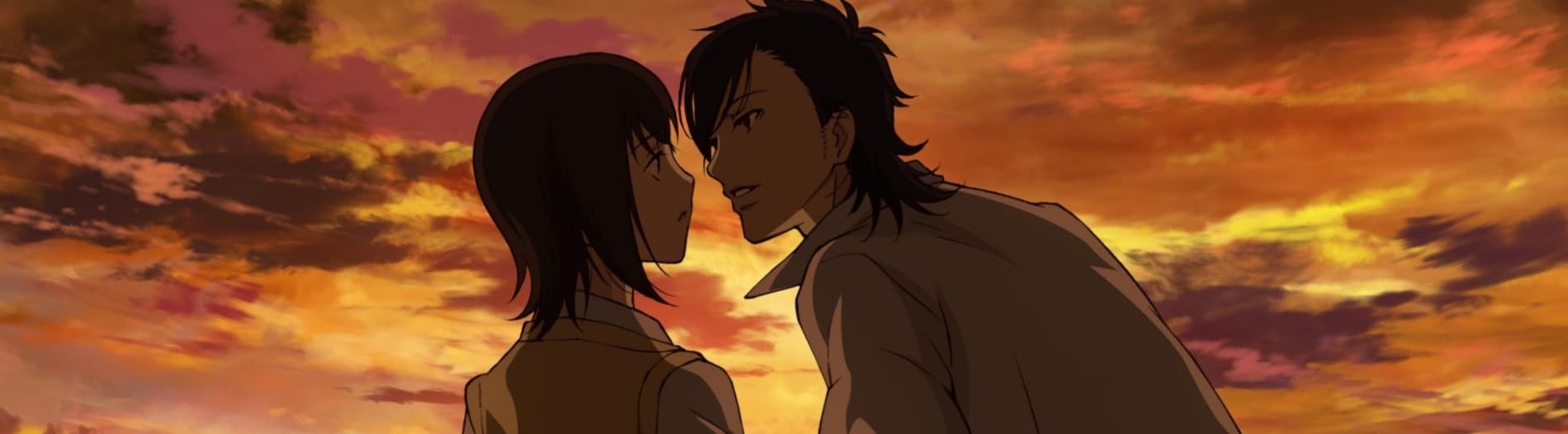
On that note, the characters are second-rate actors performing second-rate scripts. Tachibana Mei is a person of the background in the character cast sphere with nothing in her to stand out as someone "profound". Kurosawa Yamato was a weird guy who barraged timid Mei with unsolicited kisses on the lips (I counted 8 in the first 2 episodes) which felt so out of character as we found out how he is actually someone on the sensible and reasonable side of things. But at the same time, his interactions with Kitagawa Megumi and his treatment of Mei in specific occasions raises an eye. A bland protagonist and an inconsistent and unlikeable male lead is a recipe for a subpar junk food.
Enough of the criticisms, let's dive into the brighter side of things shall we? Say I Love You wasn't all bad. Despite everything I said about its painfully average storytelling and some downsides, I still have some gratefulness within me for the author's intent, regardless of its critical and technical executions. To not be afraid of trusting and to be open to opportunities on human connection is something integral which should be preached to the youth especially. On that ground, it had cool ideas. High school hormones are wild, teenagers are still at the peak of their flaws. Yet despite all that, authenticity is the key to meeting people who will love you for who you are, as well as the means to forgive yourself flaws and all.
Mei's background made her easily empathize with Yamato's lenience and inaction, Aiko's forced transformations, and Kai's desire for revenge. It was through Yamato's love for her (which came as sudden as a sneeze) which was rather bewildering considering their social positions and personality that Mei learned how to speak her own mind. It was through his relationship with her that Yamato learned to be more mindful of his actions, and to be more assertive in his values (minutely shown on the grand scheme of things, however). This theme continues on with Kitagawa Megumi and her desire for love done in a very self-harming manner. The human instinct for connection and intimacy rang strong for Megumi who was bullied for her outer appearance and lacked the care of a parental figure, making her blind to the people in her life who truly loves the girl behind the facade. Authenticity and tackling life head-on with bravery was wholly discussed in the story. These actions are requirements for self-actualization. The title speaks directly to this--speaking with truth and integrity. The fact that Mei never was able to externalize this feelings of hers shows that there is still much room left to grow, so much weaknesses left to conquer, not necessarily an off-putting hole in the heart of the story or anything.
In conclusion, I'm still in confusion. I admire the ideas presented by the author, but they were just not executed convincingly, leaving me with a regretfully bad taste. A core with distorted flesh does not do much. I mean, most stories are awesome in theory right? The act of creation is already applaudable. But how it's handled is a make or break situation. Additionally, as a romance story, I did not even receive any sweetness nor any romance-related sensations from it. It had me focus more on human connections in general. The romance is a mere stepping stone for that, I guess?
And so with all of that being said, I decide to mark Say I Love You as a hodgepodge melodrama that could have been more were it to calibrate its component cogs.
16.5 out of 21 users liked this review