
If you have any interest in Slice of Life anime, especially of the Cute Girls Doing Cute Things variety, you may have heard the phrase “show about nothing” before. These are shows without any meaningful plot, no real action, and no suspense or mystery. In essence, shows where nothing happens. What’s fun about a show like that? With no plot, no tension, nothing of anything, what point is there in watching a show about nothing?
Well, it’s because it’s not just a show about nothing, is it? In the absence of all these other things, the remaining actors can take center stage: the characters. Slice of Life media, to me, has an almost unparalleled ability to make its characters feel not only well-written but real. You can truly begin to relate to and empathize with these characters as they go through their daily lives, as they interact with the world and the people around them, and as they struggle through the hardships in their lives.
That’s why, when I was in high school and bawling my eyes out to K-ON! ’s second season, a spark hit me and I realized I’d found something truly special. It wasn’t a show about nothing, it was a show about characters, about people, going through the same things I was and that I could relate to. It would take a long time before that spark hit me again. It finally did when I decided to watch Hakumei & Mikochi on a whim one night, though this time for a slightly different reason: Not only did its characters strike a chord with me, but I also fell for its remarkable ability to turn the mundane everyday lives of its cast into something truly magical.
Premise
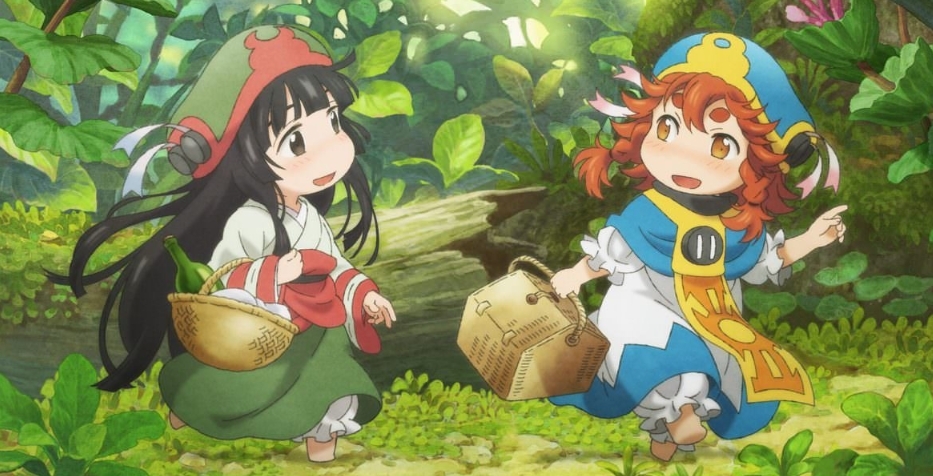
Hakumei & Mikochi follows the titular characters, Hakumei and Mikochi, as they live their daily lives in the small town of Makinata. They go to work, they go shopping, they hang out with their friends, and they do all the same things we do every day, but with some crucial differences: they’re 9 centimeters (3.5 inches) tall, and they live in a whimsical forest wonderland full of talking animals and other oddities rather than Earth.
Hakumei & Mikochi is a pure Iyashikei work. The show is here to do one thing and one thing only. It’s here to “heal” you and relax you through the heartwarming adventures of its two lead characters.
Narrative & Worldbuilding
Hakumei & Mikochi runs on an episodic format. There’s no real overarching story to speak of, and each episode is usually split into 2 or 3 separate little chapters each with a self-contained plotline. These range from a day at Hakumei’s workplace to the pair going to a festival and getting roped into a singing competition. It’s all very mundane, very podunk. That’s not to say there’s no tension or action. Quite the opposite. In between all the fluff, Hakumei & Mikochi does a very good job of showing that conflict and danger exist even in this idyllic world., In the first couple of episodes alone, Hakumei and Mikochi nearly die several times.
Beyond the narrative, the true strength of the show lies in its worldbuilding, and it’s what made me fall truly in love with it from the first time I watched it. There’s a sort of magical whimsy to the setting that makes it stand out from just about anything else I’ve seen in the medium. At first glance, it might seem like the sort of pseudo-medieval fantasy landscape that’s commonly seen in anime, but there’s one crucial little detail I’ve mentioned that propels it straight into fairy tale territory: the world is tiny, quite literally. This changes everything, and it’s what makes the show excel at its craft. It’s what makes me genuinely happy to watch Mikochi do household chores and to watch Hakumei go to work.
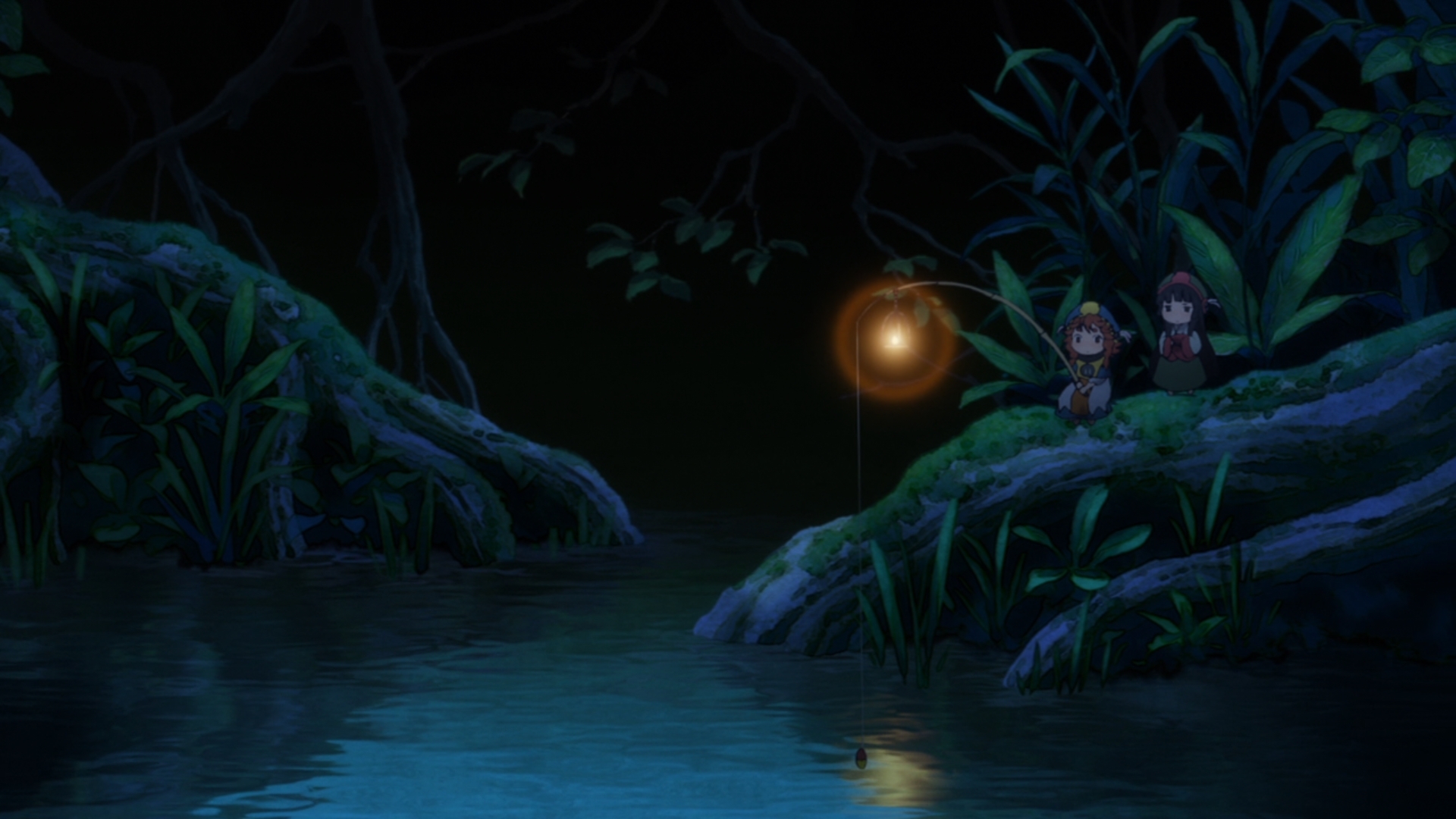
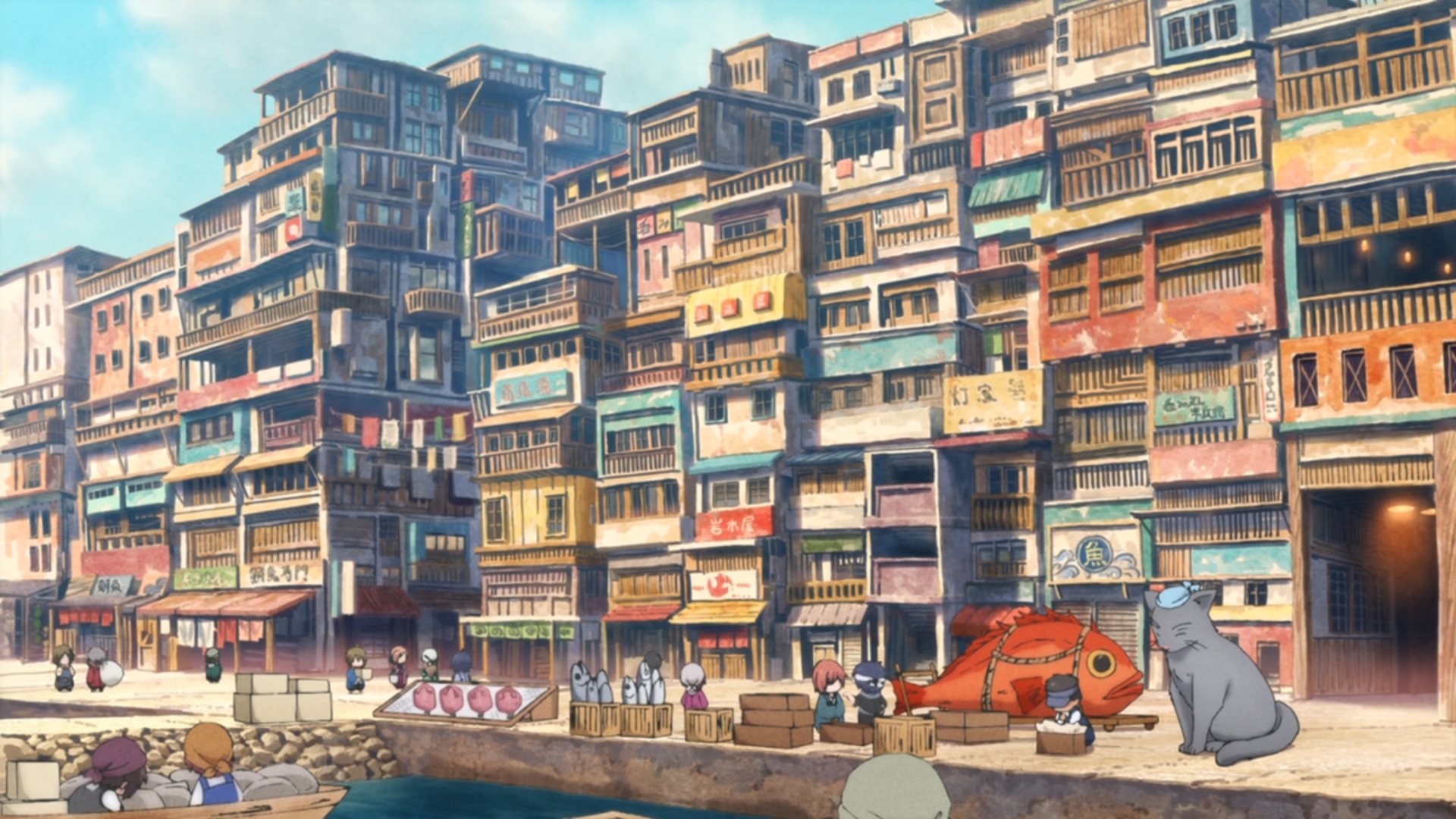
Despite how whimsical and slapdash the world feels, or perhaps because of it, everything makes perfect sense as you watch it. The general tech level seems equivalent to the late 1800s, as cameras and trains exist, but at the same time, there’s no visible industry anywhere. No cars or other vehicles seem to exist, beetles and larger animals like raccoons instead act like taxis and buses. People are self-sufficient and often live off the land, and Hakumei and Mikochi are shown foraging for food and wood several times. It’s an odd and interesting blend of an industrial society and a fairy tale forest realm. There’s also a hint of spirituality and possibly magic to the world. Spirits like tsukumogami are clearly shown to exist, and Sen can reanimate the dead through the power of music.
Hakumei & Mikochi takes a lot of care to show how life is different when you’re 9cm tall in an otherwise normal-sized world. Things that we’d never think to worry about can be life-threatening for Hakumei and Mikochi. An orange falling on my head would be a mild inconvenience at most, but for our protagonists, it’d mean instant death. An owl is just an owl to us, but for our protagonists, it’s a terrifying monster ten times their size that could swallow them both in one bite. It’s not all danger though: A normal watermelon, for instance, is shown to be enough to feed an entire crew of hungry construction workers, and we see how the small folk can comfortably live inside cute little tree stumps, turtle shells, and even eggs. A single peanut is enough for a snack for both Hakumei and Mikochi. The small folk and the talking animals also seem to live in harmony, and society in Makinata is designed to accommodate even the larger animals. Larger animals do the heavy lifting that the small folk aren’t strong enough to do, and the small folk do the detail work that the larger animals don’t have the dexterity for.
Characters
In the absence of any real plot Hakumei & Mikochi, like many Iyashikei, relies entirely on its cast of characters and how they interact with each other to keep the viewer engaged. Luckily, this particular cast is filled to the brim with a variety of colorful characters, both human (?) and animal, to enjoy.
Hakumei and Mikochi are, of course, our leads that the show centers itself around. Hakumei is a cheerful, energetic tomboy who loves the outdoors. She works as a carpenter and handyman, doing odd jobs fixing stuff around town for money. Mikochi on the other hand is more traditionally feminine, being kind and caring but more reserved than Hakumei. She’s also an incredibly skilled cook, singer, and seamstress. They complement each other very well: Hakumei’s adventurous nature helps bring Mikochi out of her cowardly shell, and conversely, Mikochi helps keep Hakumei grounded when things don’t go her way. Honestly, the chemistry these two have with each other is CRAZY. They’re always supporting each other in everything, and they’re both a total delight to watch no matter what they’re doing. Other characters mistake them for a married couple and you wouldn’t be wrong for thinking so yourself. You could very easily make a yuri ship with these two. I ship it, personally.
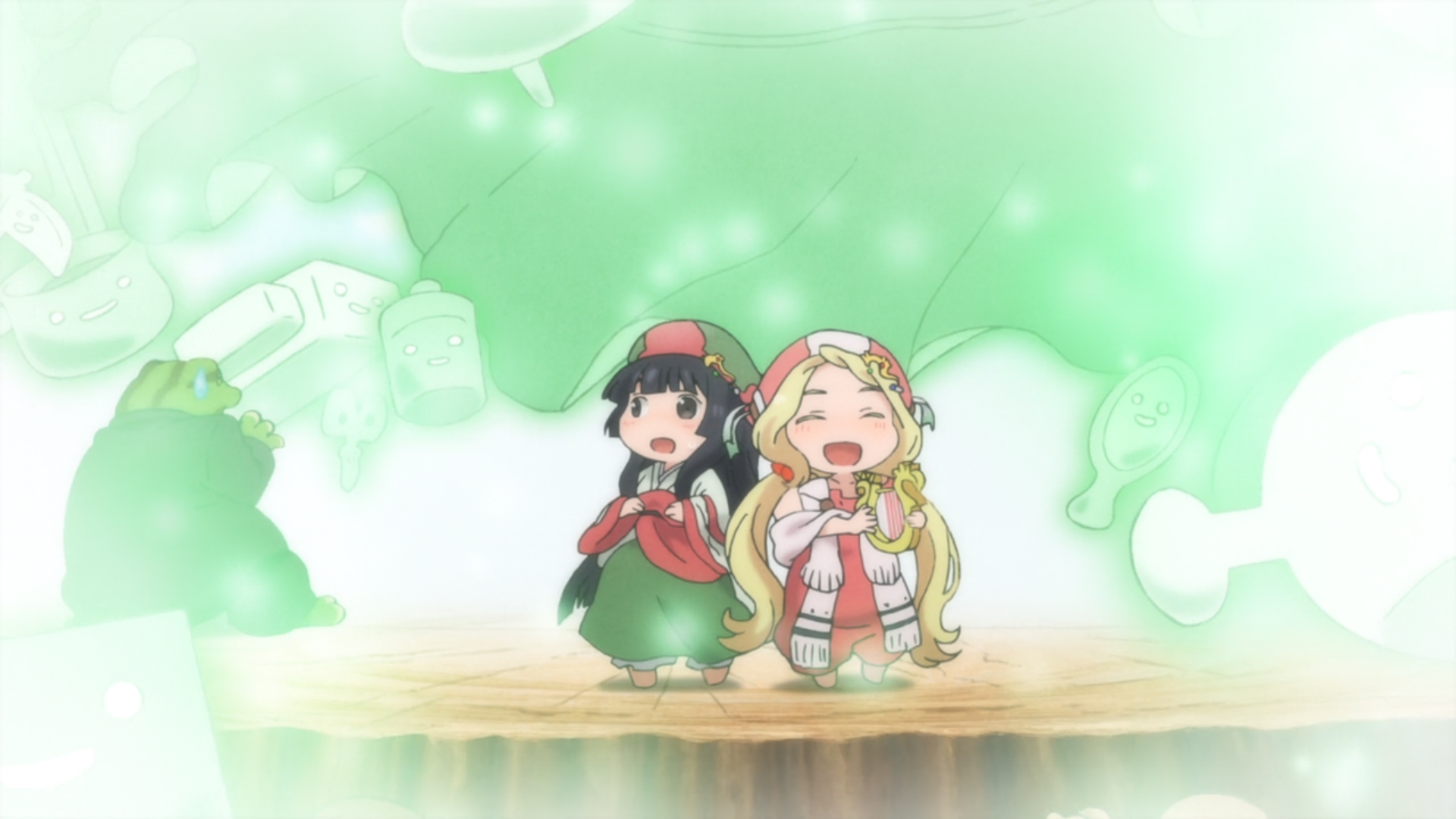
The supporting cast is large and varied, and several characters become reoccurring friends of the main pair and appear throughout the show’s runtime. The most prominent of these are Konju, a klutzy but skilled songstress, Sen, a shy necromancer, and Iwashi, a weasel who’s also Hakumei’s boss. Other highlights include Narai, the chief of the local construction guild, Jada the hairdresser, and the Master of the café Kobone.

Audiovisuals
I’ll be honest, Hakumei & Mikochi isn’t exactly what I would consider a masterpiece of animation. It doesn’t need to be, either. It’s not trying to wow you with extremely fluid character movements, awesome fight choreography, or breathtaking special effects. Fundamentally, this show is trying to relax you. Lerche does a fine job of that; They adapt the chibi artstyle of the manga perfectly, the characters are consistently on-model, even the animal characters, and the movement is generally smooth. One interesting and quite unique part of the visuals is the way the show makes use of paneling, which seems to be a trademark of director Masaomi Andou, to keep the momentum going and to always have something moving on the screen. The real strength of Hakumei & Mikochi to me, though, lies in its aesthetic.
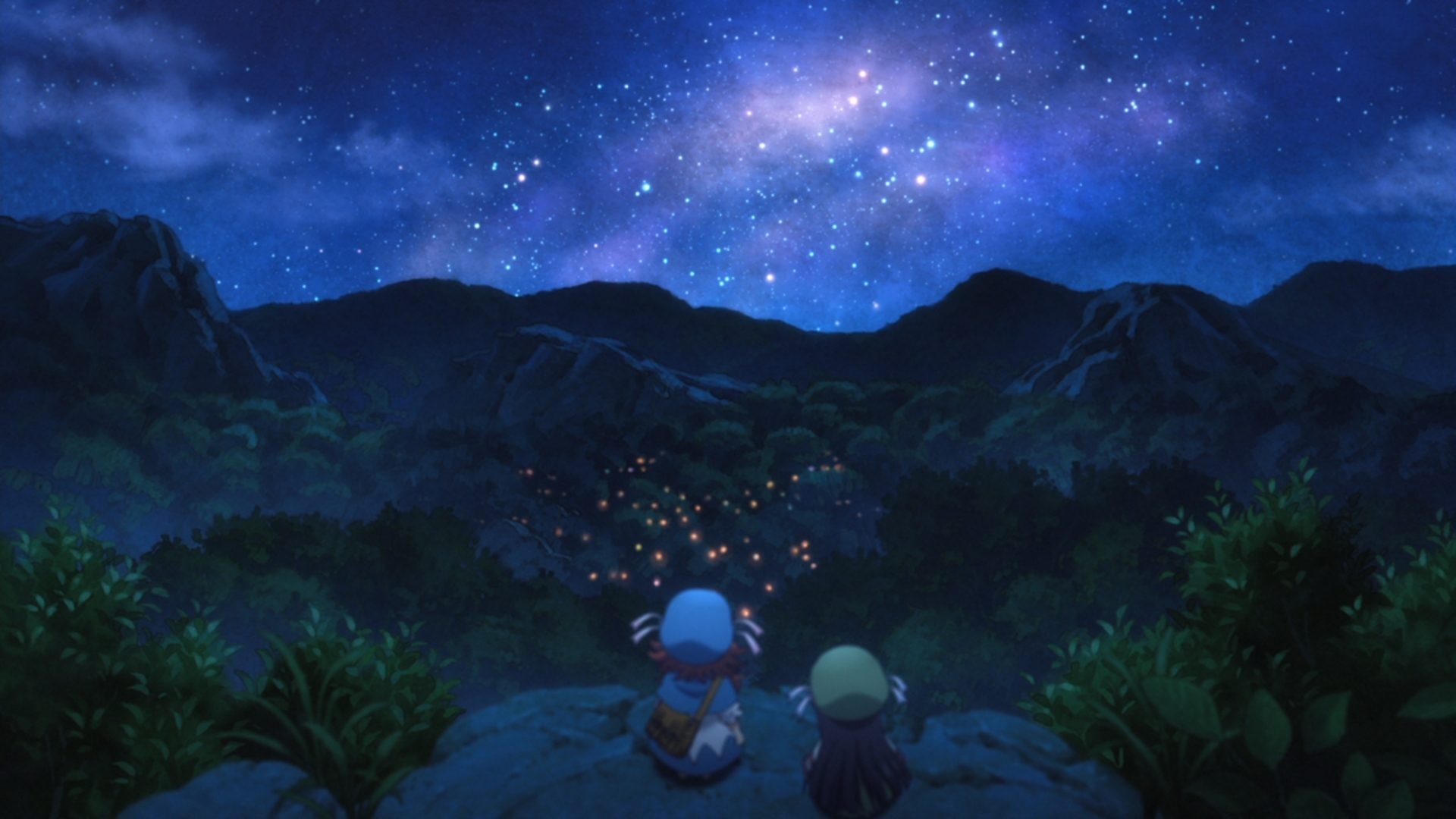
By aesthetic, I mean colors, designs, lighting, and just the general mood of the show. This is where the show really excels at making you feel relaxed and comfortable, as it makes excellent use of warm, vibrant colors and warm lighting to make each scene as cozy as possible. Many scenes are bathed in the golden glow of the sunset which, when contrasted against the green of the forest or the rooftops of Makinata, makes for a soothing vibe. The characters evoke this feeling as well through the way they dress. Most of the small folk, including Hakumei and Mikochi themselves, wear long flowing robes, dresses, and skirts in various vibrant patterns and colors.
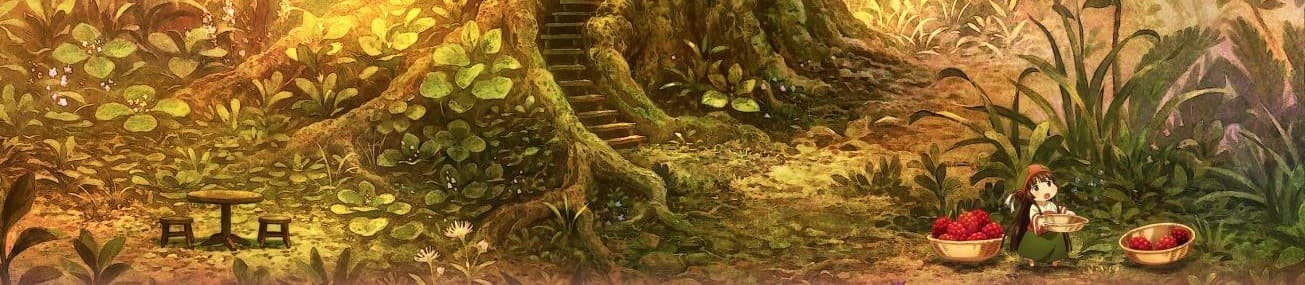
One huge part of what makes the aesthetic pop, and the REAL standout in terms of visuals, is the background art done by Studio Kusanagi. I have never before or since seen an anime with such beautiful background art as Hakumei & Mikochi. Kusanagi truly outdid themselves here. Every single scene, whether it’s the hustle and bustle of Makinata itself or the lush greenery surrounding the town, is a painting exploding with colors, and watching the characters interact with these gorgeous environments is a delight.
The voice acting is superb across the board, and there are some real all-stars in this cast for the seiyuu enthusiast. Standouts include Aoi Yuuki, Kenjirou Tsuda, Rie Takahashi, Junichi Suwabe, and Megumi Ogata. Risae Matsuda and Shino Shimoji, the voices of Hakumei and Mikochi respectively, do a fantastic job of making their characters come to life and reflect their personalities well, Hakumei sounding more upbeat and cheerful and Mikochi being a little more subdued and elegant.
The music ties the whole package together, being composed by Evan Call who also composed the soundtrack for the Violet Evergarden franchise. Call’s music enhances every scene it’s played in, no matter the mood: tensions run higher, sad scenes get sadder and that warm, fuzzy feeling gets even warmer as his genius serenades you. The OP and ED as well; "urar" by Chima gently sets the stage for the adventures to come. The ED, "Harvest Moon Night", sung by the VAs of Mikochi & Konju, is instead a jaunty tune about food & drink that closes out each episode on a lighthearted note.
Conclusion
There are many words I’d use to describe Hakumei & Mikochi, an anime that quickly became one of my favorites of all time. Cozy, warm, fuzzy, heartwarming… the list goes on. Cottagecore Propaganda is an apt description. To me, it’s the ultimate Iyashikei that embodies everything the genre wants to be: soothing, healing, and relaxing. There are no grandiose action scenes, no thrilling murder mysteries, and no whirlwind romances. If that’s what you’re looking for in an anime, you won’t find it here. Instead, all the moving parts, the characters, the worldbuilding, the visuals, the music, they all come together to create pure, unfiltered Comf.
Hakumei & Mikochi is a tiny little show with a very big heart, trying its very best to make the mundane into something magical.