Mieruko-chan
a review by Dunstklinge
a review by Dunstklinge
You've seen the summary, you know I’m going to praise this show to heavens and back, so lets start with the negatives:
 a negative
No, really. If you are alone right now, click on the directors name. Look at the animes he was involved with. The man basically spent the last 10 years of his life drawing and/or directing various shades of horny, and that influence is laid wide open in the first 3 episodes of the show (and its not the only thing that's laid wide open, if you catch my drift). If you have an allergy against pointless and unfitting fanservice, this shows beginning might be enough scare you off, and i can't deny that it's not exactly conductive to the atmosphere the show is trying to establish.
 CCTV footage of the animation studio after the third episode (colourised)
Thankfully, something must have happened after the third episode, because the fanservice-meter suddenly gets turned back down to an acceptable level, and we are left with what is one of my absolute favourite shows of the last decade.
#The basic Formula
 What’s wrong? Are you not hungry?
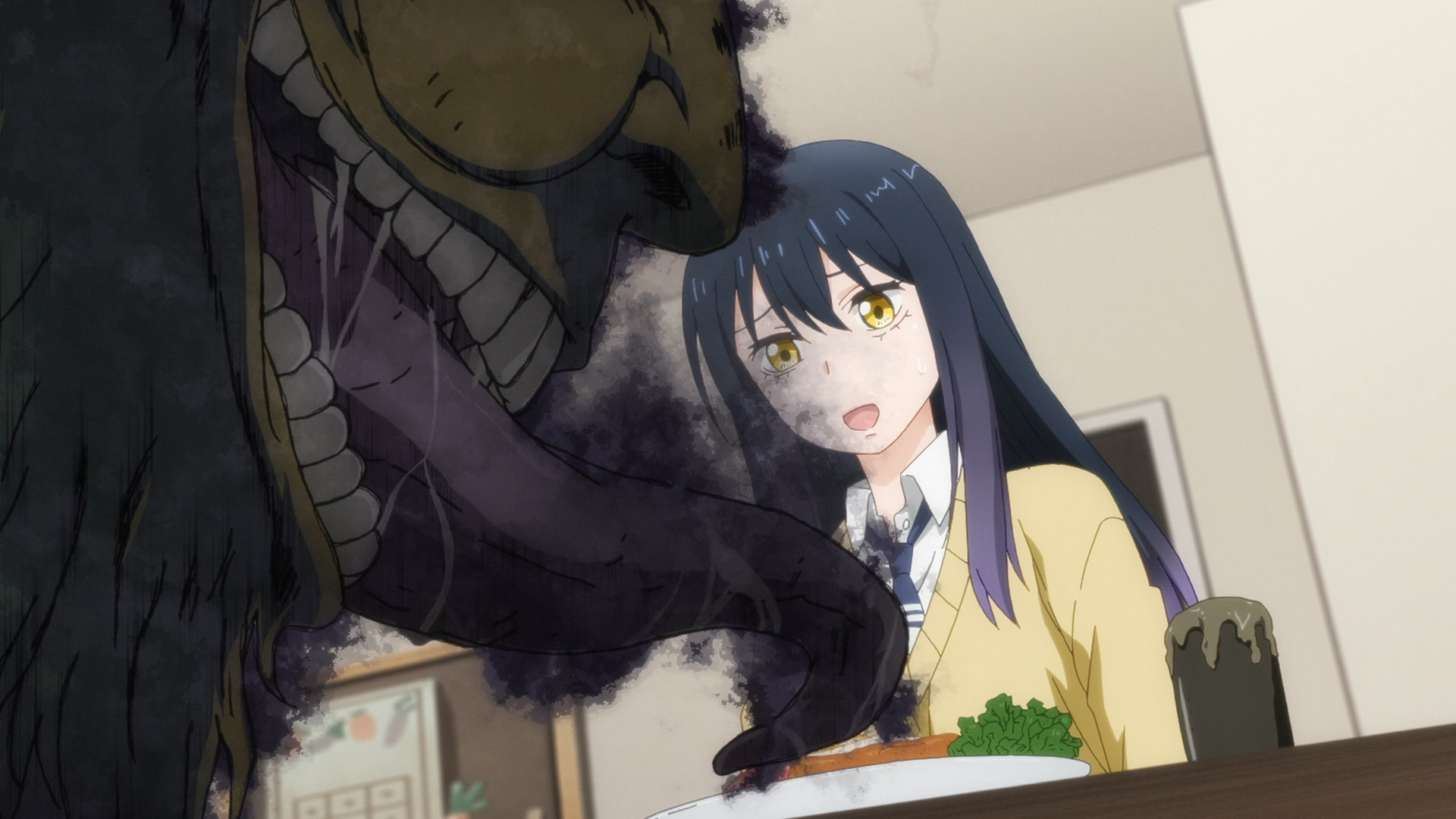
The show follows our main character Miko, who gains the ability to see a varying set of usually very unpleasant spirits – and chooses to ignore them. Not out of disinterest, or out of some comedic defiance, but because it was the natural thing to do in this situation – if you or me were in this situation, we would have done the same (except maybe with less success).
This isn’t always easy however, and repeatedly gets her into situations that, depending on the surroundings, vary between comedic when she makes up awkward excuses for not wanting to go to a certain place, to severely psychologically unnerving, and anything in-between.
Miko herself is designed to carry the unnerving parts of these encounters. She acts comparatively grounded and realistic, even outside of the ghost encounters (which is already incredibly rare for animes, where characters are usually highly exaggerated, let alone for horror shows). This helps sell the less pleasurable encounters – when you see Miko lose her nerves, you believe it. The rest of the cast are the typical types of personalities that you’d expect from a comedy or slice of life anime. Throw both of these together at one scene, and you’ve got a constant (and usually very well timed) shift in tone between light-hearted slice of life and psychological terror, which builds the foundation of this series.
#Horror? Comedy? Slice of life? What exactly is this?
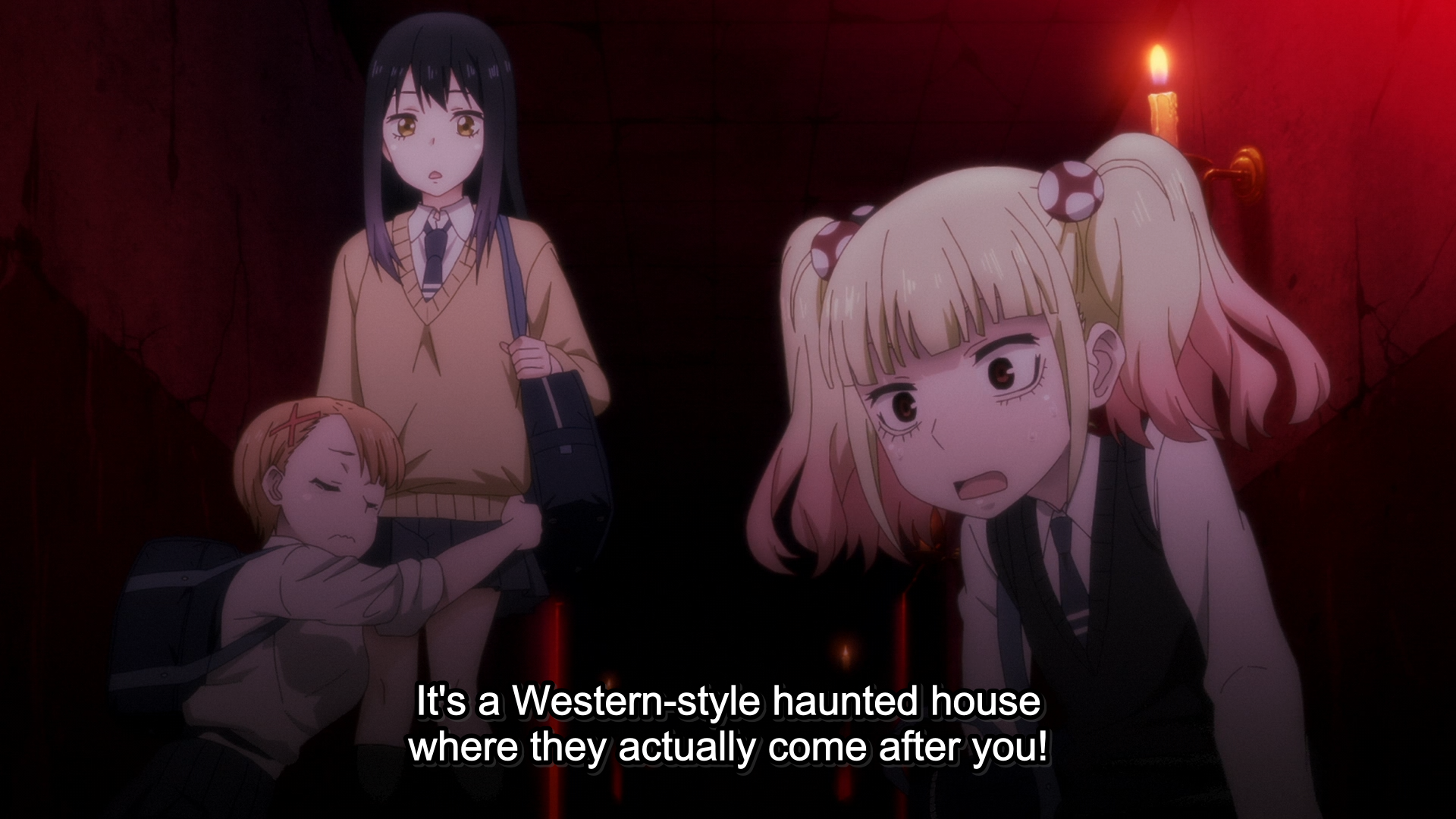
Its not really a Comedy. Jokes are few and far between, and usually placed to break up an unnerving moment, or to cleanse the pallet after a longer ghost encounter. They are definitely functional, but not the central point of the show.
There is quite a lot of slice of life in here, but that too is more of a logical consequence of the setup rather than the focus of the show – it’s about Miko trying to ignore the monstrosities around her, so logically, we are going to watch her try to live her normal life, try to get through everyday situations.
No, this really is a horror show – just not the kind that we here in the west are used to.
Genres can be a pretty confusing thing. Like with all broader words in life, different people tend to have a radically different understanding of the details, and this show is a pretty good representation of this fact. If you are looking for something like the gruesome horror of a saw movie or the cheap jumpscares of a round of five knights at ferdinands, you have come to the wrong place. The show doesn’t try to scare you out of your seat or make you eerily eye the dark corner of your room. The only person who is experiencing any horror here is the main character Miko – any feelings of horror or unease you will have are purely out of empathy to what she must be going through.
The whole thing is really about observing psychological terror. Sometimes it surprises you with multiple rapid swings in atmosphere, other times it decides to hide all spirits from you so you can see her acting as if she has bipolar disorder, and sometimes it just makes you feel relieved that Miko gets a second to feel easy for once.
To a Japanese, this probably seems like a regular description of the "horror" genre, but over here in the west, people would probably call that "psychological thriller" or something. Words are difficult.
Either way, its a pretty good horror show – but the real good thing about it, and what ultimately sold it to me, is the mystery.
#A perfectly executed mystery
Following the trend of confusing genre names, i don't mean what an American usually considers "mystery" – that is, a crime show that doesn't tell you who did it right away. Over here in Krautland, mystery has a very different meaning, and just like this show is a good representation of japanese horror, it too is an absolutely perfect representation of german mystery.
Not to undersell the psychological horror the show is trying to go for: it definitely does that pretty well. If that was all there is to this show, it would already be good enough.
But the true strength of the show lies in something completely different: how it decides to tell you about its world and the rules that govern it.
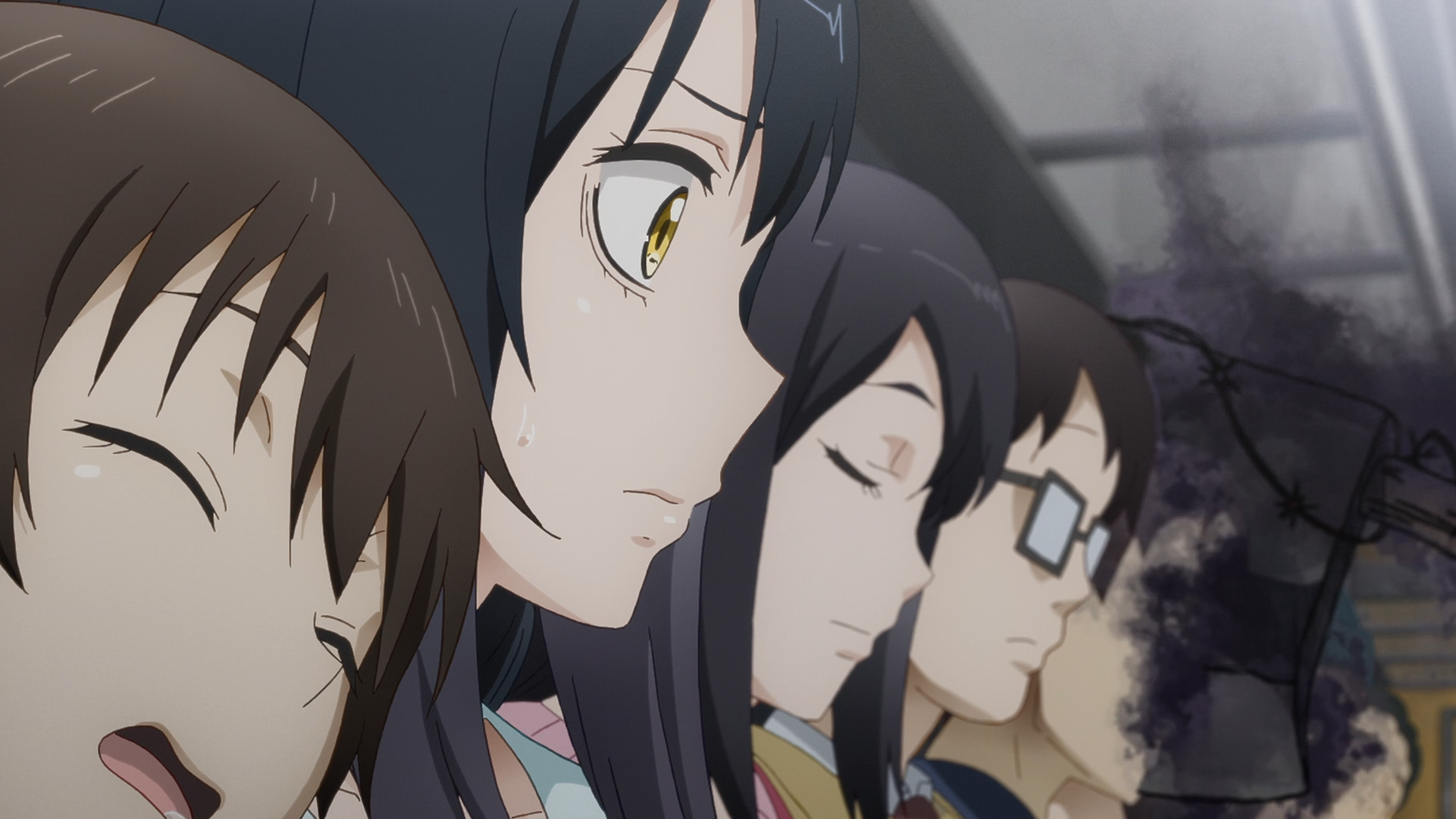 Do you think that axe is safe?
Every World needs some form of logic. Isekai writers like to come up with elaborate magic systems that nobody ends up caring about. Older cartoons from the last century loved to play with your expectations of its logic, moving mountains to clear otherwise insurmountable gaps, drawing paths or objects that suddenly become "real", or pulling ludicrous amounts of equipment from small pockets. Poorly written shows love to just wing it, constantly introducing new rules and breaking them again when they have become inconvenient.
The spirits in this show, too, seem to follow rules. However, no one ever tells you any of them. There is no intro that gives you background information on the world. There is no knowledgeable veteran that shows up and tells us what the ghosts can and can’t do, where they come from, how they act. Instead, every new ghost encounter comes with a slight twist to it, revealing some new information about how they work – never by outright telling us, but rather by showing us new types of interactions that we haven't seen before. The encounters never devolve into a “ghost of the day”-format or become repetitive, not because there is much of an iteration on the formula, but because every single new encounter rewards us with a new piece of information that we can analyse and try to put into the slowly growing puzzle that is this shows world building.
It's also incredibly careful to make sure that, at any point in time, we know pretty much as little as Miko herself – which means, in those moments where she is trying to figure out how things work, we are just as unsure about the outcome as she is.
At the same time, Miko herself is smart enough to make the same inferences that we do, and curious enough to try and push the boundaries – at least as far as her fear allows her to. Then, when new information appears, the show itself is considerate enough not to blurt it out in an unnatural way (as animes tend to do; Jujutsu Kaisen even turned that into an in-universe mechanic) – instead, it's trying to be as natural about it as possible. Sometimes we can hear relief or disgust in Mikos narration over it, sometimes Miko just gives out a small sigh or has a change in her facial expression, but most of the time it isn’t even mentioned at all, and we are forced to just carefully observe Miko for the next few minutes to see if she altered her behaviour accordingly.
Combined with her relatively grounded and realistic behaviour, this makes it incredibly easy to emphasise with her and her decisions. Look at the picture above. We can be sure that she isn’t going to die here – that would end the show. But is it really save? Do you think she ends up getting hit and finds out – or will she make an awkward excuse and walk away at the last minute? It’s always easy to be smug about a situation if you already know the answer – but in this show, we don’t. And the consequences of being wrong could be pretty severe, so as much as we would like to find out, it’s also perfectly understandable if she decides not to.
That is not to say that there are no more knowledgable people in the show; in fact, it makes it quite clear that there are plenty of them; and when we the viewer get some additional information that Miko doesn't get, it is usually through a side-comment from on of these. But even when the story seems to converge into a situation where we would expect to be told more, it always manages to blue ball us by weaselling itself out there without revealing too much. Pretty much everything we know gets drip-fed to us slowly through its encounters, making sure that this basic formula, the bread and butter of the show, stays interesting and engaging at all times.
And so we go from spirit to spirit, situation to situation, always waiting for that next slight piece of information, curious if Miko will have the nerves to find out about it at all, happy if she does, understanding if she doesn’t, then completely overjoyed when the show decides to give us a piece without the massive psychological terror of a bad encounter for once. It reminds me a lot of dark souls in that sense: a rather slow and uncertain trickle of massive rewards; except instead of ambition, it’s using your natural curiosity to string you along. By the first half, i was basically like a junkie hanging at the slowly leaking facet that this show drip-feeds you its background informations with, using the pretty well executed other parts to tie me over until it finally releases the next minor drop of information. (And unlike dark souls, I enjoyed every single second of it. But maybe I just have an oddly addictive personality.)
#Long story short
If you are looking for a traditional western horror story, you will be solely disappointed.
If you’re looking for a funny comedy with ghosts, you will also be disappointed.
If you want to watch surprisingly realistic reactions to severely unnerving situations, broken up by occasional comedy and slice of life, and maybe ponder about the impact of mind-compromising mental illnesses for a while, definitely give it a go.
But if you have an obsessive amount of curiosity for learning and understanding the exact rules of an imaginary world in an animated show that will probably not get a sequel for half a decade or more, if at all, then this might just be the best anime you will ever watch.
5.5 out of 6 users liked this review
