#
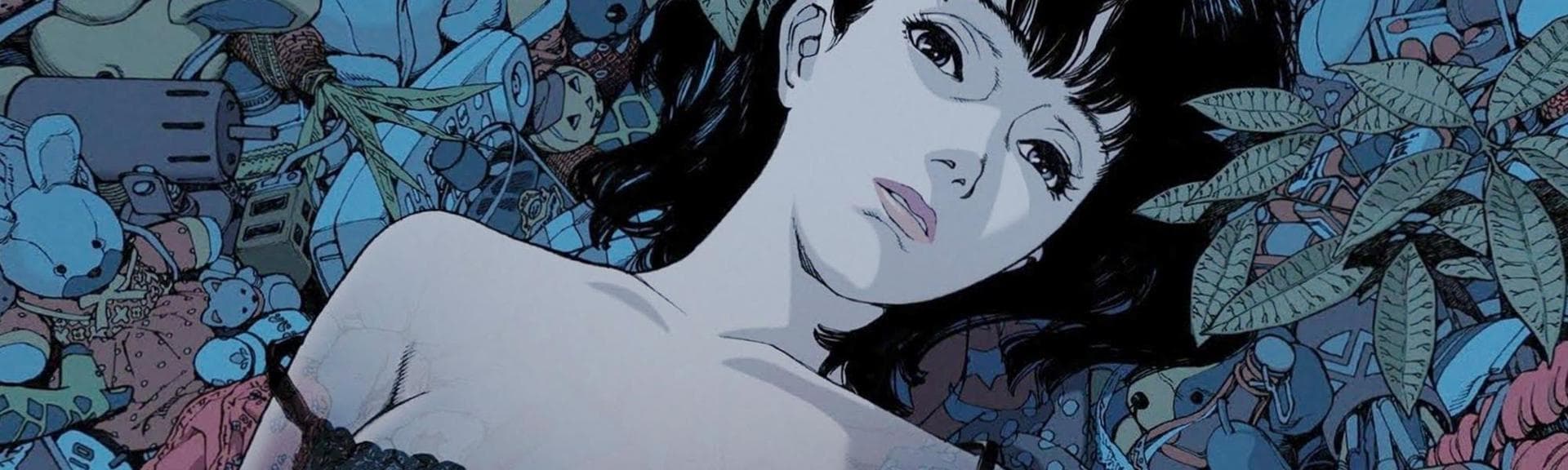
⬢⬡⬢| Perfect Blue |⬢⬡⬢
img100%(https://i.imgur.com/d9HeRlt.gif)"Who am I?", a chilling and thought provoking narrative that blurs the lines between reality and fantasy. It's purposefully confusing and misleading directing, well developed characters, genius animation, and haunting audio, Perfect Blue brilliantly delivers a profound message on what identity is. It's a must-watch for the psychological thriller genre fan.
##
⬢⬡| Overview |⬡⬢
- Story: It kept getting better and better until the end; insanity and identity
(9/10)
- Characters: You almost feel like you are the character, becoming more confused
(8/10)
- Visuals: Deliberately misleading, great transitions and use of colors
(8.6/10)
- Audio: Haunting and purposeful
(8/10)
- Bingeable/Hype: Didn't think I would like it but I became more and more captivated
(8.2/10)
- Enjoyment: It's one of my favorite anime movies
(8.5/10)
##
⬢⬡| Thoughts |⬡⬢I don't want to analyze it too much because for one, there's already a bunch of other reviews and video essays on it, but also because I don't think this is a film that's meant to be analyzed but rather experienced.
At first I was watching this and waiting for it to get good, (I don't mind a slow start or tons of exposition) and I didn't think it would end up being the kind of movie I'd like. However, as it started to pick up the pace it got better, and it got better again, and again until it ended. I'm not a film student, but even from the start I could tell that the director Satoshi Kon, did a fantastic job at presenting Yoshikazu Takeuchi's work; the man clearly had a vision.
Right from the get-go the viewer is intentionally mislead about what's going on, and this continues throughout the entire movie. Especially with the elevator scene and towards the end of the movie. You're meant to be just as confused as Mima, almost put into her shoes, her perspective. And that's why I think it's really a film that's meant to be experienced. You're meant to be Mima and everything you think about afterwards is, yes, analyzed, but not like a critic reviewing a movie, rather as an individual ruminating on their own memories and experiences.
\* My thoughts on the elevator scene and ending \*
Spoiler, click to viewclick to hide
I know I'm going against what I said about analyzing the film, but I couldn't help but talk about why the elevator scene is so great because it really sums up the essence of the entire movie.
This scene represents directing genius.
When Takao gets out of his car and sees the note he immediately disregards it, only to then hear the music and become worried. I became more anxious as the music played and the camera pans around as if I'm the one stalking him. And I am; the entire movie is from the perspective of Mima and Rumi, only at this point I didn't know it. Then he calls the elevator and the camera pans around him facing him head on. The doors open and all I can think is that I've seen this setup before and the stalker/killer is going to appear behind him and stab him or something. I was so prepared for a jumpscare, and then BOOM, a radio. All that build up for nothing. Then the next shot the elevator opens and I'm expecting him to walk out, but of course he doesn't. It was so stunning. My expectations were built up only to be tricked, and then tricked again once I wasn't expecting anything. Nothing is explained, and the story moves on, the music still playing in the background.
This one scene represents how the entire movie is directed. Constant misdirection, seamless cuts between scenes that leave you confused, and subverting your subconscious expectations. It brilliantly immerses you in the role of Mima keeping you just as on edge, and unsure of what's actually going on and what's going to happen.
img75%(https://i.imgur.com/HbMokot.gif)
The end?
The final reveal when Rumi completely tries to take over Mima's life explained everything. Except it didn't. It certainly explained how her stalker knew so much about her, but not her hallucinations, her confusion, or even if she was really the one who killed anybody. She probably fed into some of that, but I don't think she could have caused that level of multiple personality disorder or schizophrenia or whatever that was. The ending chase scene was great, but didn't make too much sense.
img75%(https://i.imgur.com/R6BfyOF.gif)
Mima took a hard tumble jumping off the balcony, while the hallucination, Rumi seemed to just float. Now, we do see that the "fake Mima" is not actually what Rumi looks like, but a delusion perhaps shared by both of them. But it still strikes me as odd.
img75%(https://i.imgur.com/IC2zimg.gif)
The final shot is the most certain, but also most ambiguous one in the whole movie. Mima, or rather, a reflection of Mima declares that she is the real one. But that's the thing isn't it? Both "Mimas" thought they were real. It honestly reminded me a lot of American Psycho, where the main character realizes just how insane they are and that they might not actually be who they thought they were. Of course in Perfect Blue, the main focus is Mima's struggles with identity throughout the entire film. It could be that the "real" Mima was actually Rumi the entire time; you can see how it works both ways. The "real" Mima could have been in the same exact position because she went through the same exact things. the only difference being that everything was in her head. Or was it? I love this ambiguous ending that's seemingly clear, but ultimately left for the viewer to interpret. Throughout the entire movie we're so confused about whats real or not, so why are we so certain now? You can see it as the real Rumi finally being confident in her own identity, or as fake Rumi coming out on top and living that delusion in reality. Because like I said before. The whole movie is meant for the viewer to be the one experiencing it. It's all in the perspective of "Rumi."
img75%(https://i.imgur.com/JLeouzT.gif)
##
⬢⬡| Plot |⬡⬢The story follows Mima Kirigoe, a former pop idol who decides to pursue a career in acting. During this transition she's targeted by a stalker who gradually infiltrates her life and psyche. The film delves into themes of identity, obsession, and the loss of self. What determines our identity, ourselves, or the perception by those around us? If it is us, do we allow others perception to influence our own sense of self? If it's others, who are we when nobody's around? It's brilliantly directed with confusing cuts, and a narrative that jumps around keeping the viewer just as confused as Mina, questioning what is reality, and what is delusion? All of this is caused by her rapidly moving life and acting career where she feels she needs to accept more and more explicit roles because of others. Because of this, she's tormented by who she is if she can't even make decisions without others, and who she is versus who she was. Even further, it's constantly switching between her actress, facade self and everyday, genuine self. Which one is the "real" Mima?
img80%(https://i.imgur.com/IZElHPV.gif)
##
⬢⬡| Characters |⬡⬢
The main focus is on Mima, and then her manager Rumi, and her stalker. Mima goes through a dramatic change throughout the movie, switching careers from idol to actress, and also from sane to crazy. The entire movie is basically her fighting an identity crisis and the intrusive presence of her stalker. She slowly loses grip on reality, not knowing what's real or not. It's a haunting portrayal of mental diseases/disorders people actually has and you really sympathize with her. We follow her as she keeps sacrificing more and more in pursuit of fame and gratification of those around her. And she reacts like a very real person would to all of this, humanizing her as someone who isn't just a character on a screen, but a real person, someone who you can imagine being.
img80%(https://i.imgur.com/OqXYBw8.gif)
##
⬢⬡| Visuals |⬡⬢
Unlike a lot of other anime, the people don't look stylized and look a lot like, well, people. It might seem like an insignificant detail, but I think it added to the realism and immersion of the film. The scenes were crafted in a way that was intentionally confusing. We see this right from the start when the Powertrons turn out to be a performance, and this kind of deception is repeated throughout the film.
Satoshi Hashimoto did a phenomenal job with the color design. It was a detail that almost went unnoticed, the gradual shift in colors and lighting from bright and soft, to darker and harsher colors. I don't have to be an English teacher to guess that this symbolizes Mima going from happy idol, to distraught actress, and her peace of mind slowly slipping away; another example of great directing.
img80%(https://i.imgur.com/vdIFF6z.gif)
##
⬢⬡| Audio |⬡⬢
Usually I think of the audio as more of an afterthought, something that's there to support the scene rather than be the sole focus. However the music in this movie played such a crucial role in intensifying the psychological thriller atmosphere. It was unnerving; shout out to
Masahiro Ikumi and
Shizou Kurahashi. There's one particular sound clip with screaming that just- ooo, it's so good; hard to explain sound in type though. I thought everything from the sound effects to the music was top notch. The voice acting was good too in both English and Japanese. I chose to watch it dubbed but switched a little bit and every actor had their moments, there were certain scenes where one language was just better, but overall solid performance from both sides. I wouldn't recommend watching it one way or the other, it's just up to personal preference.
img80%(https://i.imgur.com/7qEDtAe.gif)
##
⬢⬡| Bingeability/Hype |⬡⬢
I mentioned before that at first I didn't think I would like this movie. The beginning is good, no doubt, just as solid as the rest of it, but going into it knowing nothing about even what genre this was, I was truthfully expecting it to just be bout a young idols struggles with transferring professions.
However, as I continued to watch, I became more and more interested in this convoluted story unraveling around me. The story alone is quite good, but it's how it was presented that really captivated me.
img80%(https://i.imgur.com/zWXTdY9.gif)
##
⬢⬡| Enjoyment |⬡⬢
I think
Perfect Blue may have ruined the psychological genre for me. I don't think I can ever see a piece in the same genre now without comparing it to this master class of animation. It was one of the first anime I've seen that was so purely psychological. I have seen others that are psychological at the core, but this one had the most focus directed solely in that genre and it stood out from the rest. It checks all my boxes in how it was directed and presented. The story was captivating and thought provoking This, along with the complex characters, striking visuals, and haunting audio, it is an instant classic. I highly recommend it as a must-watch in the psychological and thriller genres.
img80%(https://i.imgur.com/LrZLYjO.gif)