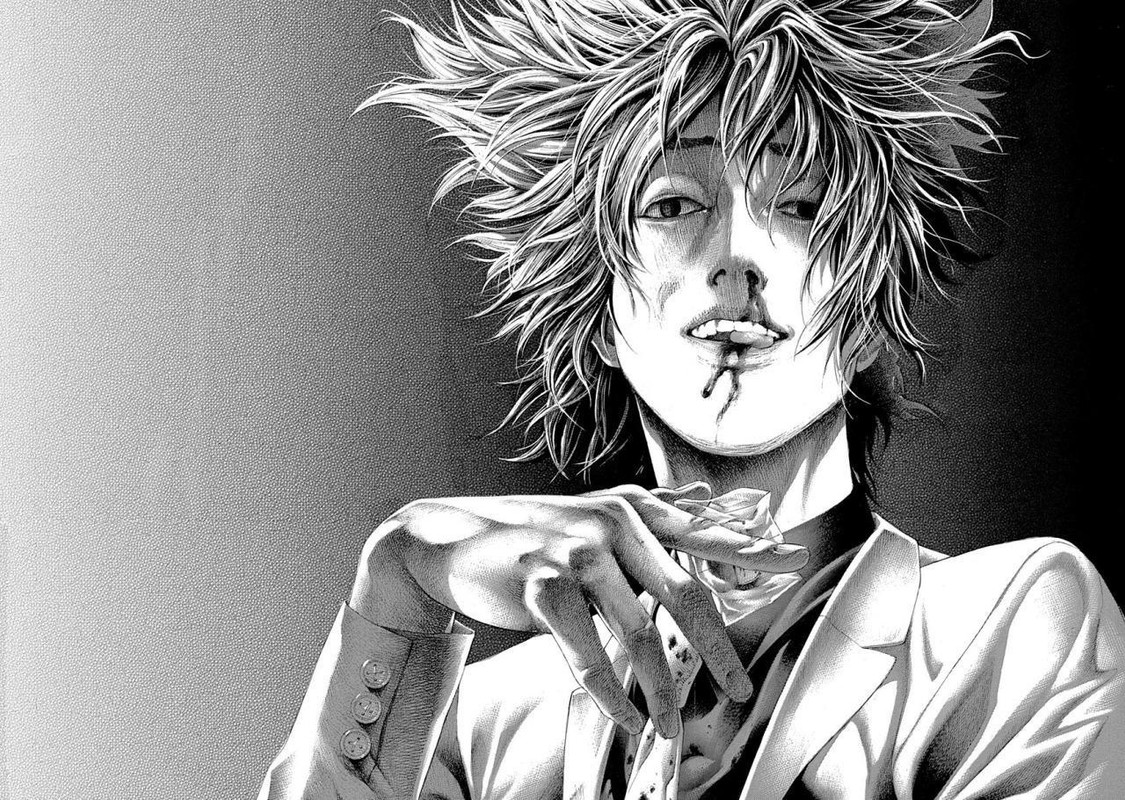
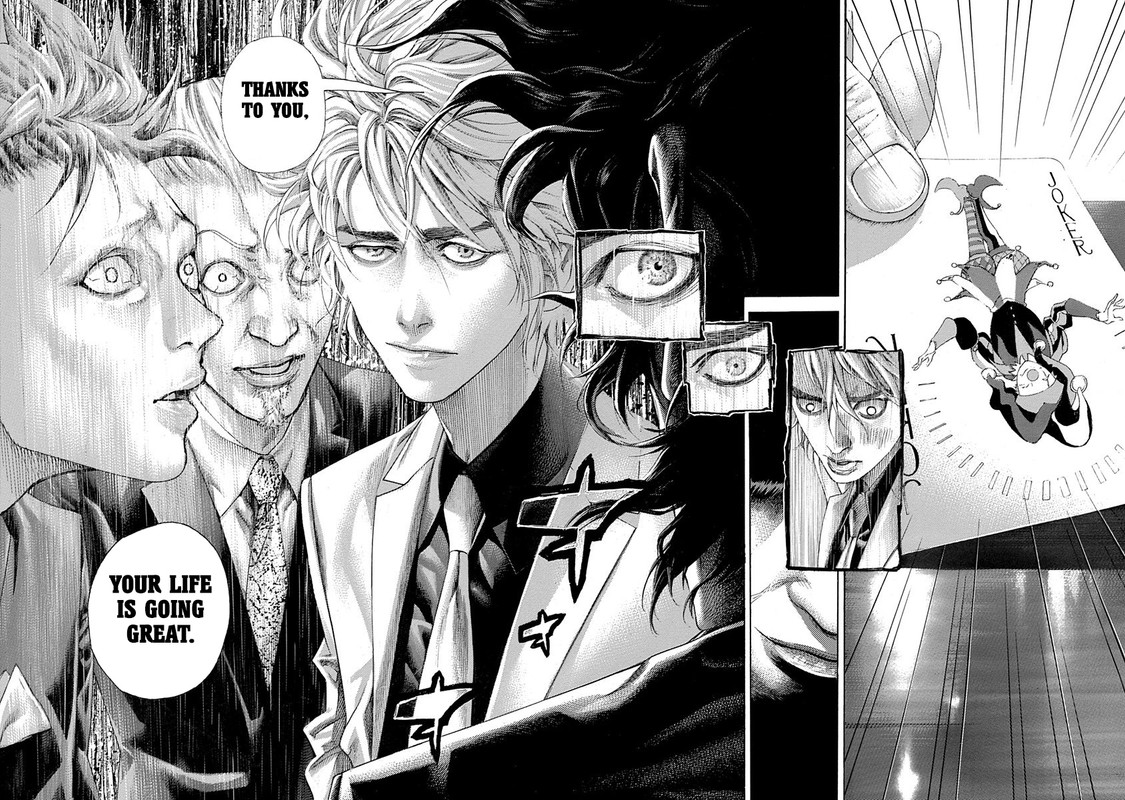
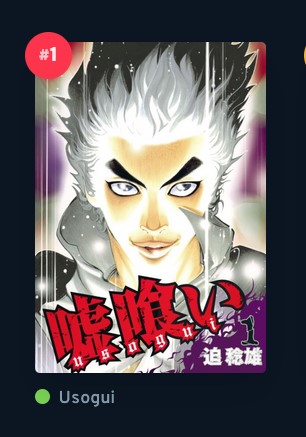
Is a fool much more different than a liar? Sako Toshio excels in creating fools, jokers if you will. Not so much jesters as actual cards in a deck. But what gives? Isn't it all the same? The point of the Joker is to entertain, but also to deceive. The Joker's nature becomes readily apparent... or does it? you want to pinpoint exactly what it wants to achieve and it seems plausible as a hypothetical, but it all fades away in the face of certainty. Isn’t life all the same? I’ve come to wonder about destiny. I’ve come to try and understand the ultimate higher order, ticking away, lurking. What is life if not our willingness to combat the impending proclamation of the unknown? A House of Cards…? Maybe. 52 cards in a deck. We know that. It doesn’t change, never change. I know it. All along, undeniable, albeit exciting. And how could it not be? Every card arrangement is different from the last. Distinct while as unquestionable as mine is that of everyone here. But I will not falter. Not here not now. That's what he would say. That's what I think. But he'd probably betray my expectations time and time again. When you think it's impossible, you've already fallen victim to the trick. Live and die by "challenging fate in its purest form".
Only read this review if you've finished the series
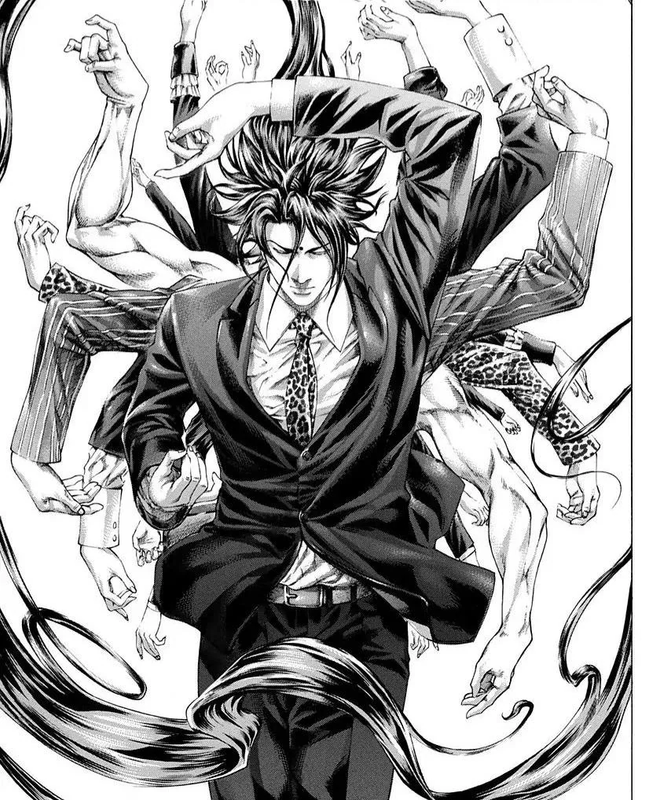
It is no mystery that the religion of Buddhism takes a major role in its underlying presence throughout the story. Souichi is seeking perfection, his ultimate goal in life. This is clearly of Buddhist influence in the form of enlightenment, a state required to reach Nirvana to be exempt from earthly meddling, abstaining oneself from their desires. A pure self. Souichi is the 21st leader of Kakerou in reference to Tibetan Buddhism which describes Tara, a major figure in Buddhism, as having 21 forms. The reverence for each of these forms represents the knots in one's frail and material body, which when resolved, make one achieve enlightenment, and thus, Buddhahood. More than that, the idea of "Samsara" as the endless cycle of death and rebirth necessary for reaching Nirvana, is very important to the final arc in the series, "Drop the Handkerchief". It is very clearly a game of death and rebirth in which failing to achieve perfection (especially in Souichi's case, in virtue of him forgetting the trap Baku set up for him), makes one have to revive to try again.
Baku And Souichi are two ends of a spectrum, the former being the personification of agency in one's own predetermined life, whilst the latter attempts to attain what he supposedly deserves in his karmic endeavor towards perfection. There is a problem though. Drop the Handkerchief is a game won by surviving, not by "eternally dying". These two are struggling to keep on living. Baku, as previously stated, is the agency in a world that seems to want the end of his free will. Not a grudge. Not because he is a threat. Because that's how it is. Because destiny will inevitably come for him. This is why he beat Fukuroku, a man who had everything to lose in the face of his greatness. He gambles not following what Baku deems important for a gamble and by extension for life itself, that is the mere weight of gambling. Chapter 473 is named "weight" chapter in which we are explained what Surpassing the Leader is as a gamble. Unequal yet not unbalanced. This is the same chapter in which we see Baku's heart, which we are later revealed he lost to Gonen. For Baku, the "weight" of a gamble comes in the form of his life. So it makes sense that his thrill for gambles comes from his intense pursuit of life itself. He wants to live, as he said so,
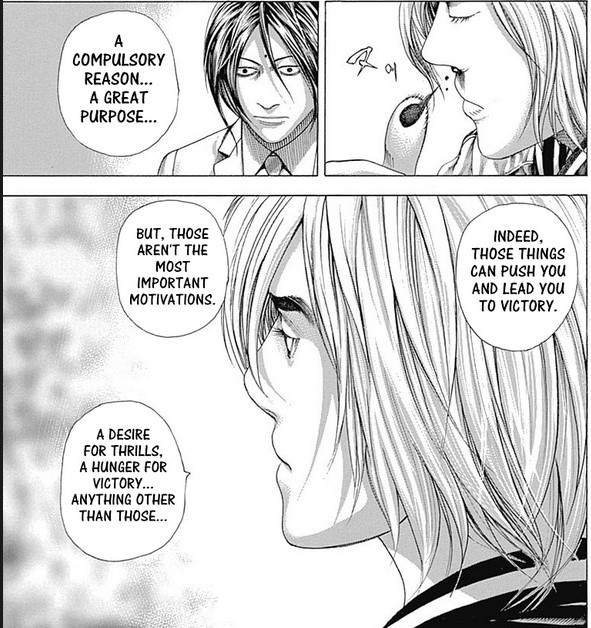
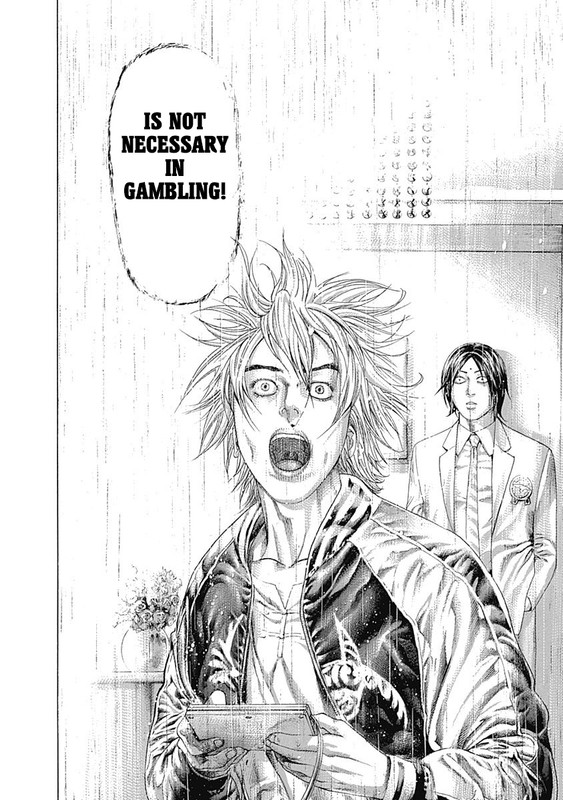
And what is a victory for Baku, a romantic at heart, infatuated with the idea of living, if not an intense, albeit temporal gamble to evade death for as long as he can; proving to himself how he has not only the talent, but the conviction to keep on struggling. We may think of a struggler in a character like Guts, a lost, broken, and adamant person despite being dealt a shit hand by fate. Baku is not any less of a struggler than Guts despite their differences. It's so amazing to see Baku not as a broken man fighting against his own miserable life, but as an avid enjoyer of life, trying to get as much of it as he can. In this sense, we could say that surviving Surpassing the Leader is actually winning for Baku... but is it? Let's look at Souichi first.
As I previously mentioned the "Samsara" is ended at the point of enlightenment, in which case Nirvana is reached, thus, a material being is no longer necessary, or more accurately, a hindrance towards perfection, being discarded as such. But we see Souichi wanting to win. He wants to win more than anything else. It's his destiny after all...
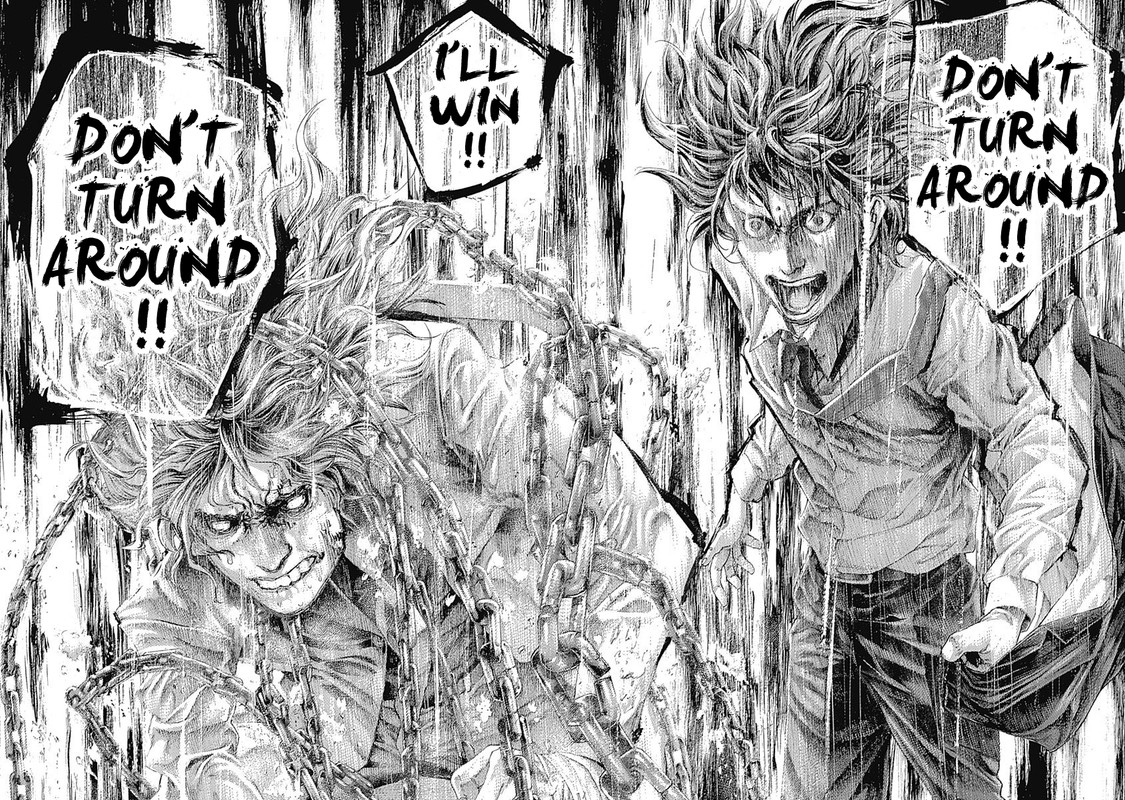
Despite his best efforts, however, Souichi, cannot win. His destiny appears conflicted as what he is as a person contradicts the story moving forward. He so desperately wants to win, he needs to keep true to his conviction. Interestingly, chapter 523 is named just that, conviction. And it tells us how Souichi deep down knows what Usogui will do. He will never turn around. And as such. He shouts. don't turn around. But it is just because of that reason that he cannot win. Because he knows. An approaching crisis. Not only does he want to follow fate, but he wants to one-up Baku. Baku is Souichi's reason to live. The reason he cannot become perfect. The reason why he forgets, yet cannot achieve enlightenment. His ultimate demise. He cares way too much about Baku. His memories of him are so precious he is trapped in a conundrum of eternal reach. And oh how eternal. He cannot escape this "Samsara", both as a game in Drop the Handkerchief, as well as in his eternal cycle of forgetting. He is trapped within his memories because of him. This is why he loses. He prioritizes Baku. The perfect being. The epitome of mankind. He lost to something so simple as... a friendship. Perfection, just in reach, slipped out of his hands, just like that... but did it?
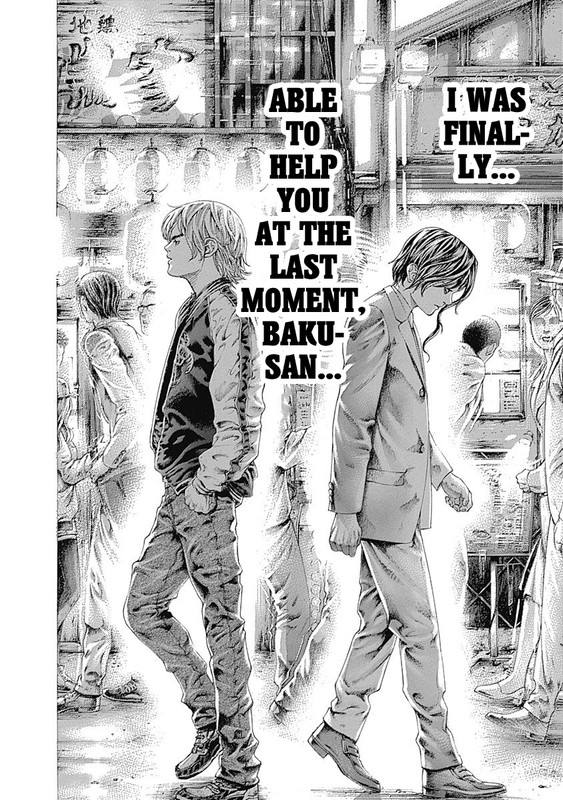
We assumed that Baku's ultimate goal would be to win Surpassing the Leader to keep his fight against fate. This isn't quite right. Just like Souichi, Baku becomes entrapped in the crushing reality of his gambles. All of the thrill he needed to reach that place...
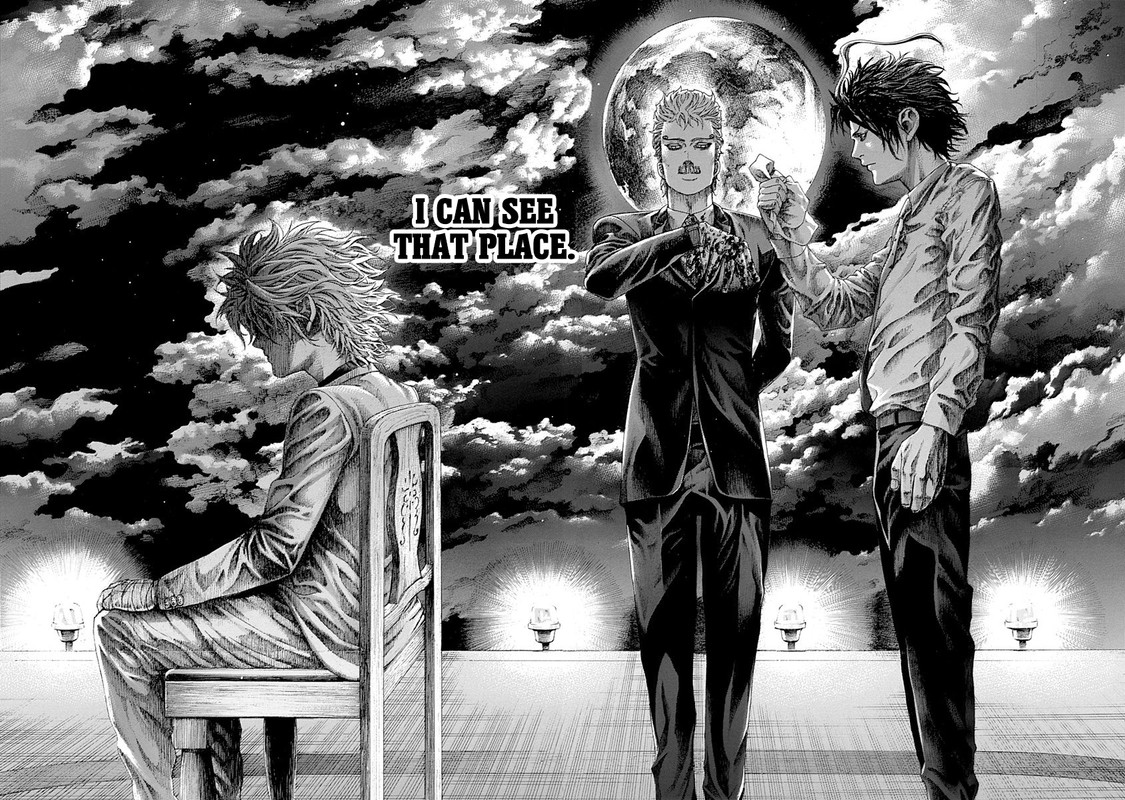
This place, (which might I add may as well be the direct representation of Nirvana) is not so much just the roof of a building, but the pinnacle of life. The ultimate crest of gambling. This place is brought forward by these two, and as Yakou envisions it, we can say that the relationship between Baku and Souichi is perfection. However, perfection is only achieved through others. Baku and Souichi. As friends. For this reason, Baku cannot win either. He wants to surpass the leader, and he does. But in the process, he loses the reason for why he wanted to in the first place. Baku is so consumed by winning that he kills, well, himself (writing this down I realize how gay Baku and Souichi are omg lmao I love it.)
Baku dying to Gonen is the only way for them to be together without this affecting them. At first, I thought that they both survived and kept on gambling as comrades. This, however, quickly melted as a plausible idea. Then I started to think about what if Souichi actually dies, and what we see in the hospital was just a representation of what the referees and Baku himself wanted, as well as wrapping up the "Samsara" in that Souichi finds enlightenment in being killed by Baku and living in his memory. This doesn't make sense, though, because the talk with Gonen leaves a lot of plotholes, that maybe even if forcefully resolved, would make for an unfulfilling ending. I thought this because I didn't know how to tie in together the last few pages of the manga with Baku alive if it were the case that he did indeed die to Gonen. It was at that point that I came across an account on Twitter that made a really good point, I'll credit him at the bottom of the review.
Baku does die to Gonen at the end of Usogui, as fate has caught up to him. He smiles as he falls on his knees to the floor. He dies happily. He has no regrets. He lived as he wanted. And that makes a lot more sense and solves the dilemma in STL. Now Baku essentially lives in Souichi, in this Nirvana created by their relationship. The chapter in which all of this occurs is called "what was coming" after all. Baku always knew death was coming, and that's why he always fought for his love for life with all his might. But just like that, it can go away, a thing which of course he is aware of. Now, they are stronger than ever as a prince duo has been born. And all of this has been foretold to Eba by Eko and written in the Prince Bee book as we see in the later chapters. "Being half satisfied is healthy". That's why we see Baku in the last chapter. The prince duo's relationship is ambiguous, just as the ending is. That's why being half satisfied is healthy.
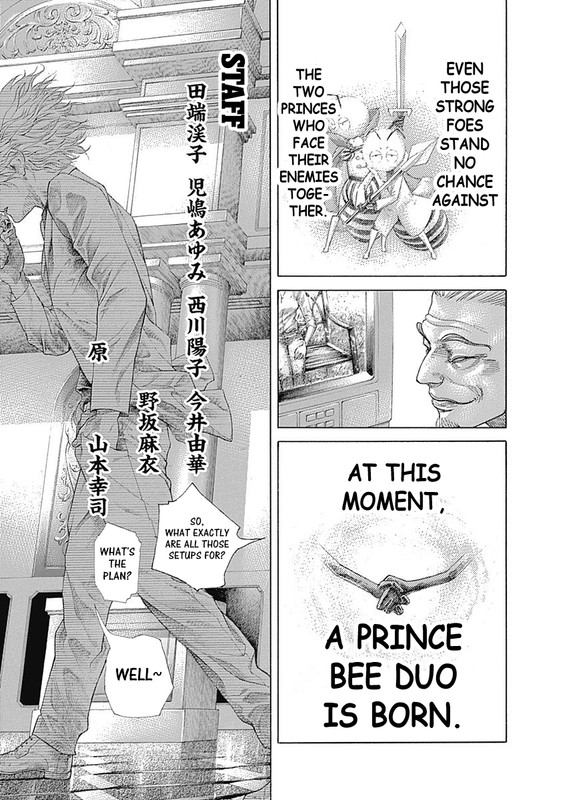
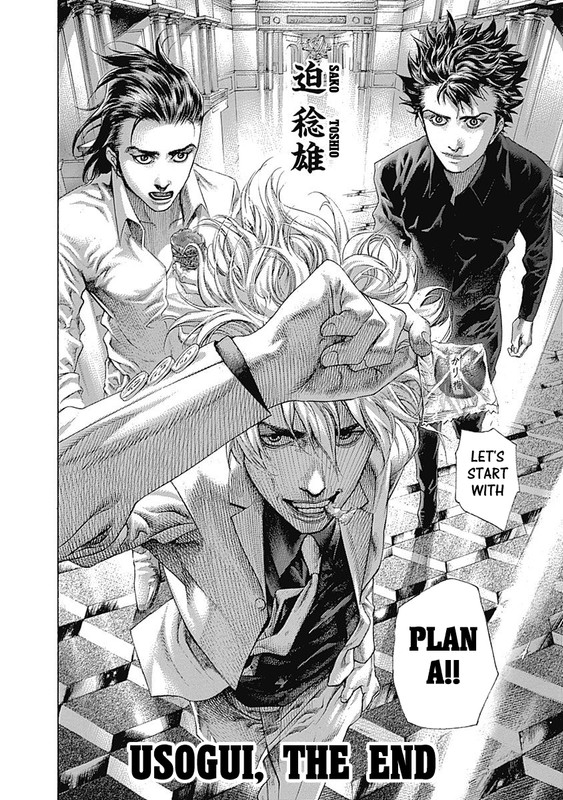
Like the joker, in its facade, and at the face of this double entendre, Baku shows us this has been his plan all along. But the thing is, it wasn't. He didn't know where and when he'd be there. He is not an oracle, capable of foreseeing the future. He is a person, a human being who may make himself appear as a demon, yet he cannot stop being just that, human. As such, this plan A is nothing more and nothing less than him achieving his desire to connect with Souichi through his sheer determination never to give up and trickle his way through fate by whatever means possible, which meant a shift in his worldview and how perceives life and what it's worth. He is happy now, he made it.
Humans are driven by connections and relationships in a world made possible by them. Finding ourselves through others. Being lifted alongside someone else, not carried by them. This does not imply that we ought to be saved by someone else, quite the opposite in fact. It's the fact that our relations with people are capable of driving us forward when we know ourselves. Souichi struggled to find his self. We may be entitled to look into it in the sense that a post-modernist self is only a decaying thought in the face of society. The upbringing of a relational self, where language creates realities in which we mold ourselves. There is interdependence with someone else.
Contemporary individualism implies, for the subject, the fact of having to define himself through his referents. Without the support of external collective regulations, he is forced to take the initiative, to find in himself the resources of meaning to remain the actor of his existence. The ambition is now to become oneself. Souichi is fond of his Rubik's cube, an object made to represent his memories and how they scramble. How they can be rearranged and still return to a perfect form. Yet he cannot complete it, as Baku is what he needs, and his relation to him is what builds him as a person. This is why he only resolves it at the end of the manga, in the hospital. He can only achieve "perfection" if it's with him. This is why we see the Rubik's cube disintegrating in his hand as he forgets about STL. He has to rearrange himself without forgetting about him. This is also why this panel is so fucking incredible.
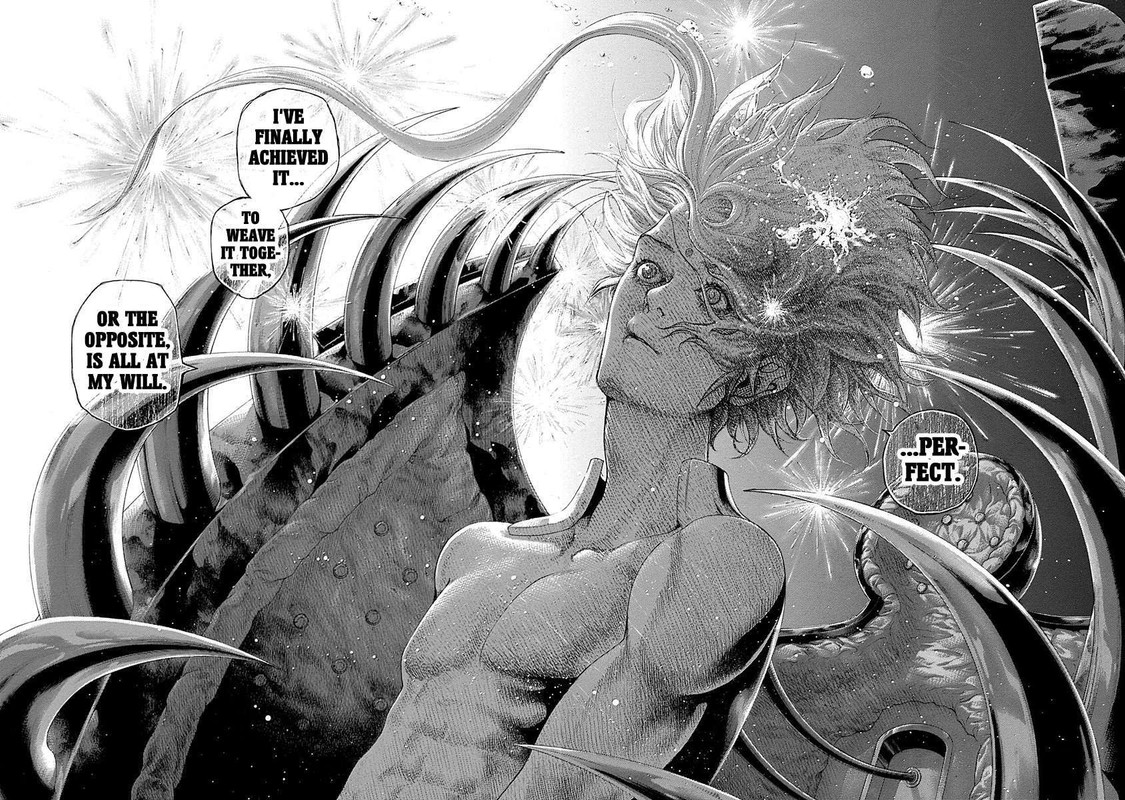
We essentially see Baku and Souichi sharing a body as the latter claims to have achieved perfection. Only through helping Baku in his gamble against Lalo is he able to at least grasp enlightenment. The prince duo.

Humans see faces everywhere in inanimate objects. It's a survival instinct. We fear for our lives and try to make sense of the unknown. But we also want to relate to each other. We want to believe in someone else. We wish for company. We look into the stars wondering if there's someone out there. We look into the moon. We see faces in the craters. We see figures in the stars and name them for our comfort in this unforgiving universe. It's a way to calm the existential dread of our insignificance. We long for the dead. Ghosts wander our plane. Ghosts of those we miss, or ghosts of those who meant something, anything, for someone else. We try to explain outer space. But we try to explain our earthly problems as well. Tucked under your bed. 3 am. You wake up, not fully conscious. Your eyes, trying to adapt to the light or lack thereof. You hear a sound. Your spine. Shivers. An intruder? A ghost? A ghost. "As long as humans are humans, they will keep on seeing ghosts, and ghosts exist outside of Earth all the same." Is this universe, fate, or whoever is responsible, going to give a fuck about us? There's no way to know for sure. We don't necessarily have to believe in these constellations. But we can believe in people. We can believe that someone put the figures we see in constellations, there. We can be guided by our belief in people and relationships. As long as we are humans, we will see ghosts. Souichi is often seen alongside his drifting memories, taking the form of his previous self. His ghosts. He will keep seeing these ghosts as long as he cannot connect with Baku. He's none of them. Because he keeps on forgetting. But not him. The aliens that have come to invade Earth. The ghosts that we as humans are bound to find. He is the manifestation of this idea. He is the manifestation of fate and destiny, those who have left us to our own devices to find a satisfying answer to cosmic insignificance. All of these forms he has to take.
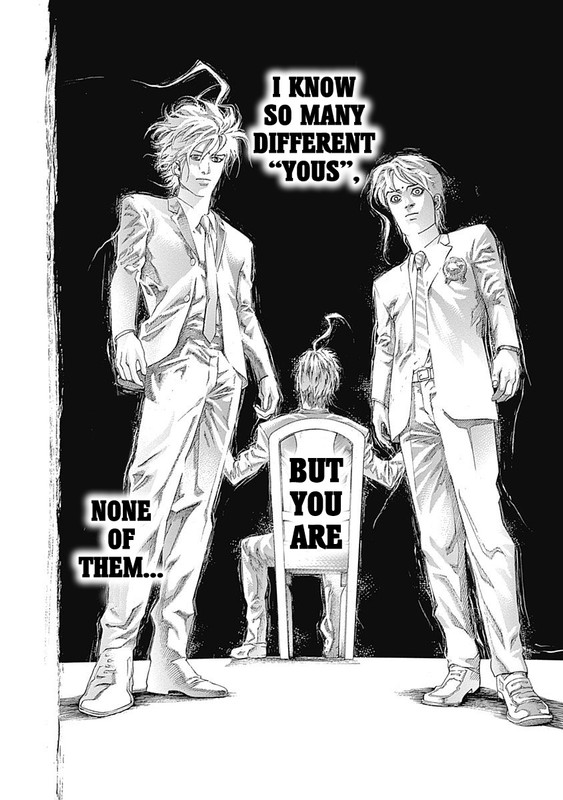
This is why Baku must not look back. Don't turn around, I'll win so don't turn around. That's what he would say. This a beautiful quote that so elegantly closes the gamble between these two. "Don't look back". But what should Baku do? As we've seen this gamble was a house of cards from the start. Bound to crumble. What does this even mean? What would Baku see if he turned around? Well, I think it's not as simple as a straightforward answer. "Madarame Baku, what did you see...?"
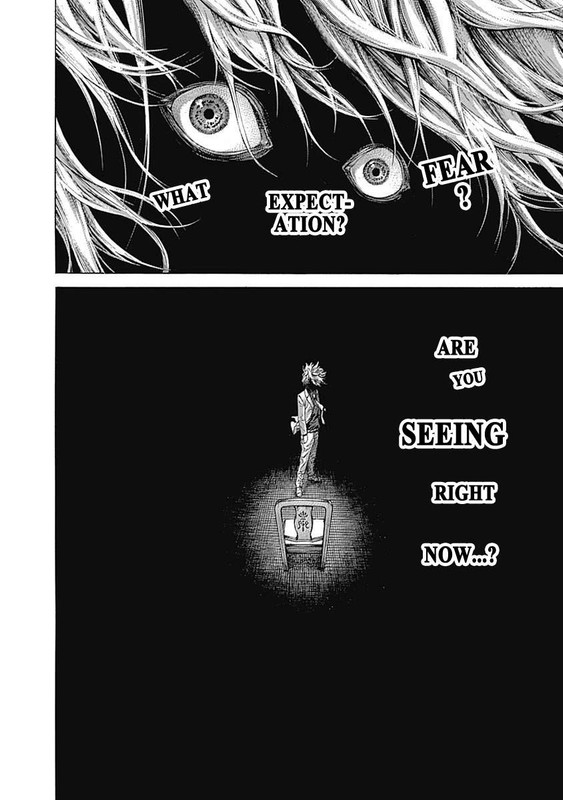
Baku never wanted Souichi to die, and killing him in STL was the demise of his idiosyncrasy. Of course, Souichi is dead when he tells Baku to never look back. It's a hallucination—a ghost. We could understand this as Baku still struggling within himself as he tries to resolve the fact that the reason for why he fought is now gone. "A part of myself I still can't see." He only realizes what Souichi meant for him then, and that's why Baku pretty much kills himself with STL (which is a perfect circle because although this is metaphorical, he ends up dying for real against Gonen later). He gaslights himself in his confusion as he realizes what he lost.
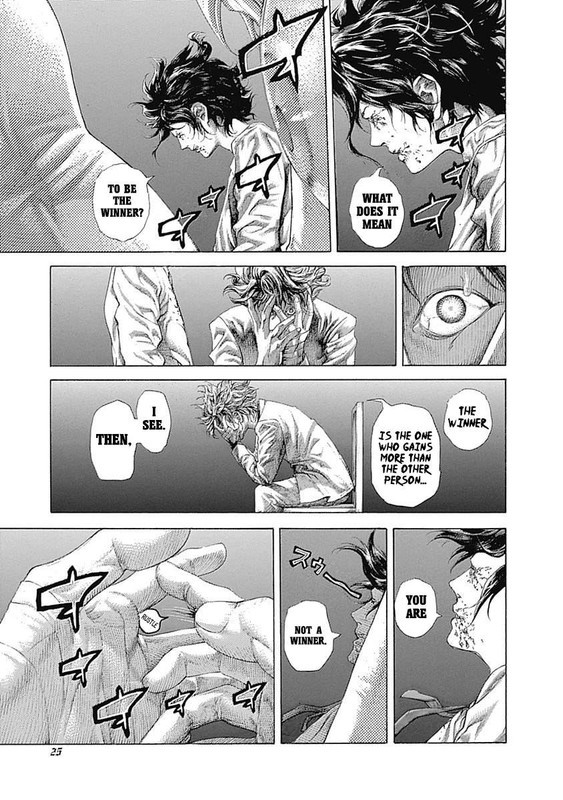
This is reinforced by this panel, in which we see how deeply rooted is Lalo's idea of losing in Baku. He is not a winner. Because he lost. He lost Souichi. And the only reason why Souichi brings this up in this panel is that Baku is talking with himself. But why does Yakou see him too? He asks Baku if he saw it as well. Yakou says that his ultimate goal as a referee is to become the epitome of violence, and by magnetism, fate, or willpower (make of this what you will), the zenith of gambling will come to him. This is why he wants to become number 0. Baku is the person making Yakou's dream possible. Once again returning to the idea of self-worth and self-improvement complimented by a relational self, that becomes "perfect" through relationships with others. Baku can show him what he wants to see. So does this mean that Yakou wanted Souichi to win STL? I wouldn't say so. What we see with Souichi "reviving" once more is what Baku wanted to see. And Yakou can only become his perfect self through him. This is why he shows him, willingly or not, that part of himself, that he still wasn't fully aware of.
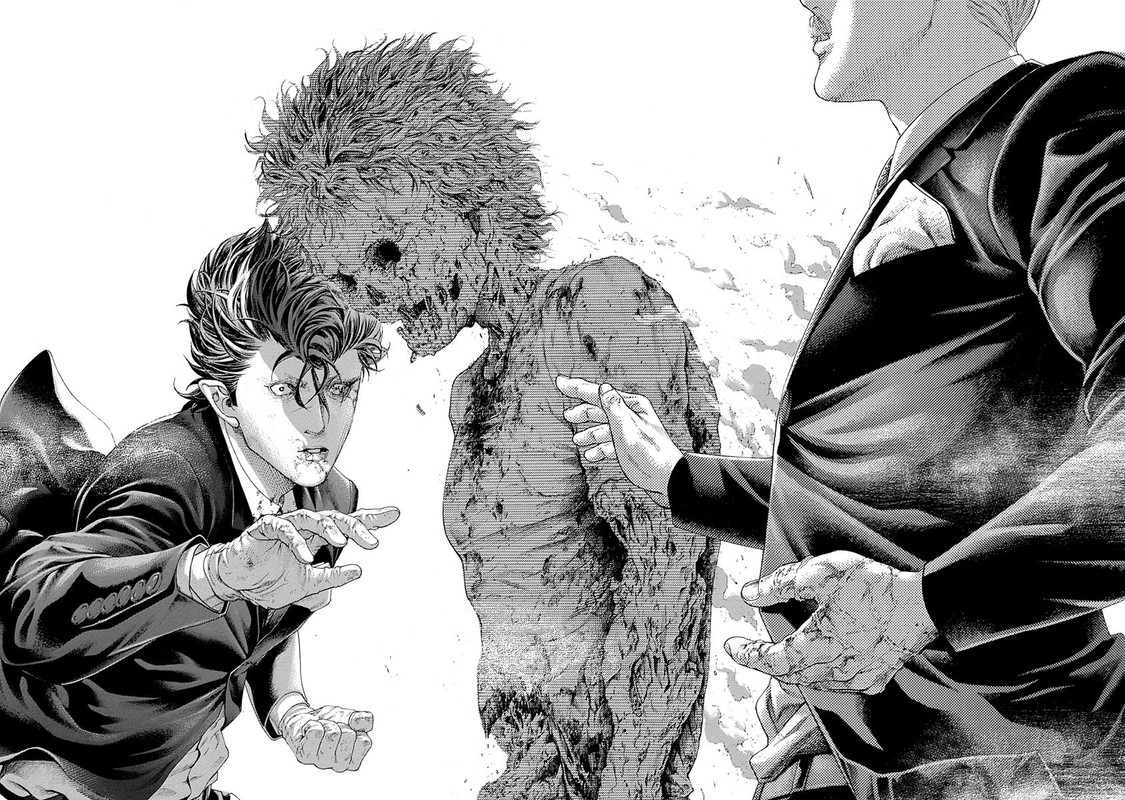
Moreover, we see this in the collecting the handkerchief game when Yakou and Kadokura are fighting. The fact that Kyara "revives" and is seen only by Yakou and Kadokura is proof of two important things. First, we can say that this further instigates the idea of relationships and unity after death as we see in Souichi and Baku, being the prince duo after the latter's demise. Kyara manages to help Baku win even after dying (trying to make Baku obtain the outlaws' privilege mind you, significant detail), but how? Well, this is part of the second point as Kyara ultimately assists Yakou to beat Kadokura making him the "most suitable one". Only these two manage to see Kyara as they are driven by Baku to witness Surpassing the Leader. "There is no man able to show us such things." (chapter 533, fittingly called, "What I Wanted to See"). As I've previously gone over Yakou manages to become the crest of violence through Baku and that's why he's helped by Kyara in this sequence. That's Kyara-san for you.
After all of these lies and deceptions in the relationship between Baku and Souichi, it becomes beautifully apparent why Baku is the lie eater. "If there was someone who could, as if manipulating chopsticks in their right hand, manage their own mind and memory—If someone were able to do it. That would be the final form of a liar.”
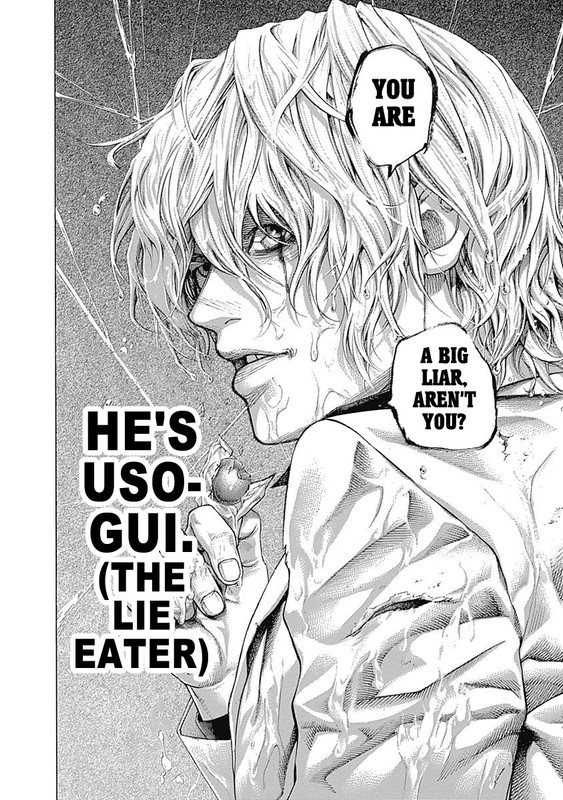
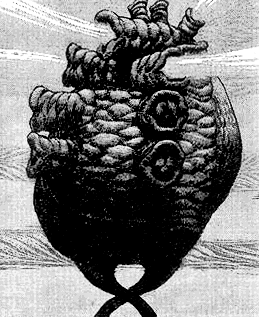
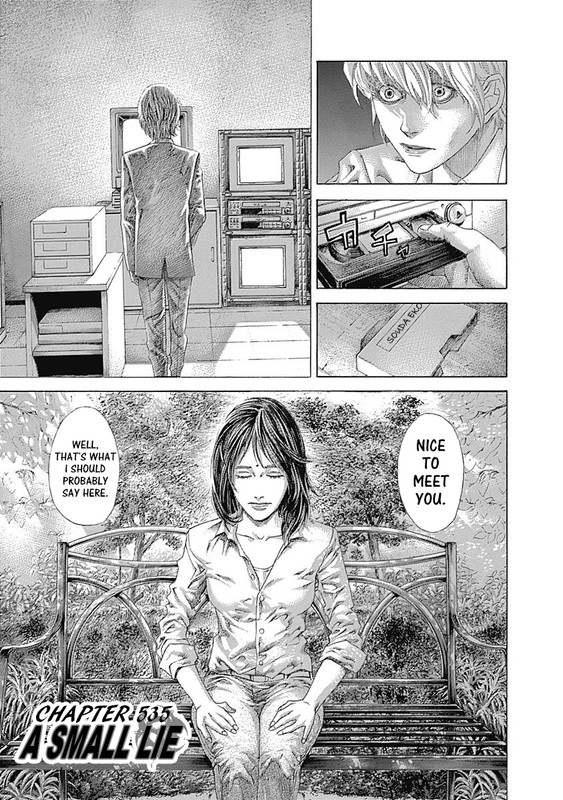
I think it's pretty crazy how these two are basically the same character idea (Iykyk). I don't know, I find it kind of amusing looking at them side by side. Especially considering the disparity of the series they come from (at least from what is visibly apparent). Regardless, Eko Souda is such an incredible fucking character that within the span of a few chapters just fucking stole the series for me. She is the representation made manifest of fate and destiny (fittingly called the woman of destiny). She is a god, and the person (or entity idk), that is responsible for Usogui and its events. I love to reread STL when I'm bored, and it's just so fucking amazing reading it from this perspective with Eko in this light. Both Baku and Souichi get so extremely elevated in quality by a character introduced near the end of the manga (a character which mind you appears in like 3 chapters only and never properly interacts with Baku).
Either way, there are a lot of things to talk about regarding her persona and influence. Eko is Souichi's mother, and although it's never really specified what it is she does, we can infer that she is a sort of guru who can see through people, what she describes as "a rare instinct and a little wisdom". She is of the creed that people and events are all tangled together by "unalterable destinies", conjoined by bliss or misfortune, and as such, she makes it her job to spread her knowledge with those lost at the hands of their karma. This instance is probably the most clear-cut reference to Buddhism in that karma is probably the most well-known term stemming from the religion. Just as apparent is the dot named "Urna" on Eko and Souichi alike. This is a characteristic that they share with Buddha and which signifies wisdom, the principle behind Eko as she is portrayed to essentially be an all-knowing creature in her god-like status (and the closest thing we can see to Buddha and enlightenment in Usogui).
We are told that Eko is like a Greenland Shark, or that's what she compares herself to at least. This type of shark is notably slow and of poor vision, if not blind. Not only that but as we also see in the manga, that more often than not, a crustacean parasite attaches itself to its eyes. From what we've reviewed up until now, it should be clear that this is a parallelism to the idea of parasitism in Baku and Souichi, as they are a big part of the cause of why these sharks are blind. However, there is a very prevalent hypothesis that these crustaceans use their bioluminescence as bait for the shark. This further instigates the idea of Baku and Souichi being part of both parasitic as well as symbiotic relationships, but as they are blinded, and fittingly so, by their ideals and idiosyncrasies, they cannot coexist.
Moreover, another clear parallelism can be seen in the fact that Eko accepts her fated death at the hands of her karma, while seemingly content with it, much like Baku (more on that in a bit). She is also seen playing with wire puzzles. This is relevant to her ideology, as wire puzzles are intertwined pieces of metal that must be separated to be completed. This reveals the idea of destiny in that, unlike her son and his Rubik's cube, the movements needed to complete the puzzle are set and linear, much like life for her. Different lines of events come together to form destiny, unavoidable throughout, and it is her job to see through them, that is, untangle them.
We can see on several occasions that Eba is working on the children's books that he gives Souichi under the videotapes that depict Eko. For this, it is reasonable to assume that she is, not only the author of the story but an extraordinary person. This concept of the "extraordinary person" is repeated throughout STL and used in the correlation of the Kiruma family, that is Souichi, Eko, and Tatsuki.
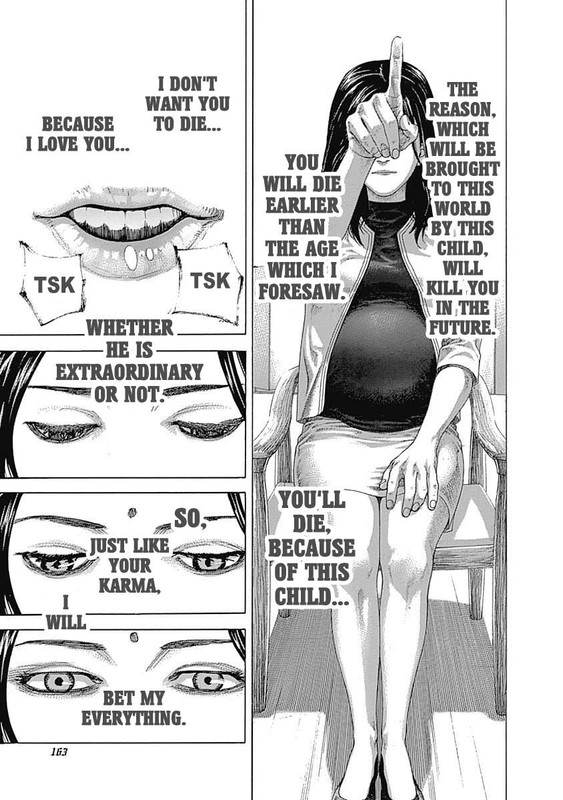
This panel here is so extremely charged with thematic significance and amazing undertones so very important to the underlying narrative that I cannot help but be amazed by what Eko can express as a character. Tatsuki believes his son, Souichi, even before he is born will be an "extraordinary person", to which, Eko, disagrees. "I don't think so. Even now, I can still see it" is what she says. When Eko says this and the panel showed above we don't see her talking out loud, but to herself. To confirm her destiny she must make face to her karma, which in this case would be owning up to the people she has tried to instill her wisdom in, this is why she will bet her everything, but why? She says that Souichi will be the reason that Tatsuki will die in the future, which we know to be true. In true karmic fashion, Yakou, and by extension Baku, is what ends up being the demise of Tatsuki as the latter, following his story is in pursuit of Souichi and the ultimate title of leader. Tatsuki will die earlier than she had once thought. This has to be because Souichi was born, which in turn would certainly imply that his birth has in some way or another caused a fluctuation in the flow of the universe.
Eko claims to love Tatsuki, and because of this, she doesn't want him to die. She doesn't care if Souichi is extraordinary or not, as Tatsuki is that which brings her hope in herself. Similar to his son, she has a battle against fate for someone she loves and is inclined to, bet her everything. She will make a gamble with fate (and in turn herself) for her lover, which is why she lets destiny take part and accepting her karma, lets the people who are mad with her, act.
" They are people I couldn't save. Unfortunate souls caused by my karma. If I accept my karma, maybe this child's future... maybe that unalterable destiny will disappear"
THIS IS SUCH AN FASCINATING SEQUENCE OH MY FUCKING GOD SAKO I LOVE YOU.
In letting herself get killed by the hand of destiny (which, I insist, is her own, which is made clear as she pushes the psychologist away) she has made the pinnacle of gambling. These souls caused by her karma not only included those she did business with but Souichi also. She sets out to challenge fate. Even when her fate is sealed when all is said and done, she goes out of her way to seek her desires within it. Just like, you guessed it, Baku does.
"If you're extraordinary, don't worry, you won't die". Let's not forget that Eko is pregnant with Souichi when all of this is happening. This is also a gamble. She wants to gamble that her son will be extraordinary, just like Tatsuki said. She goes against her own beliefs (thus challenging destiny, bc she is just that. Sorry if I sound like a broken record but I think it is important to emphasize that) and bets that Souichi won't die as he is an extraordinary person, which proves right and foreshadows his surviving to Baku in STL and ultimately being united with him just like Eko wants of Tatsuki, which they do, as in Tower of Karma (extremely important namesake), he dies as predicted by her karma.
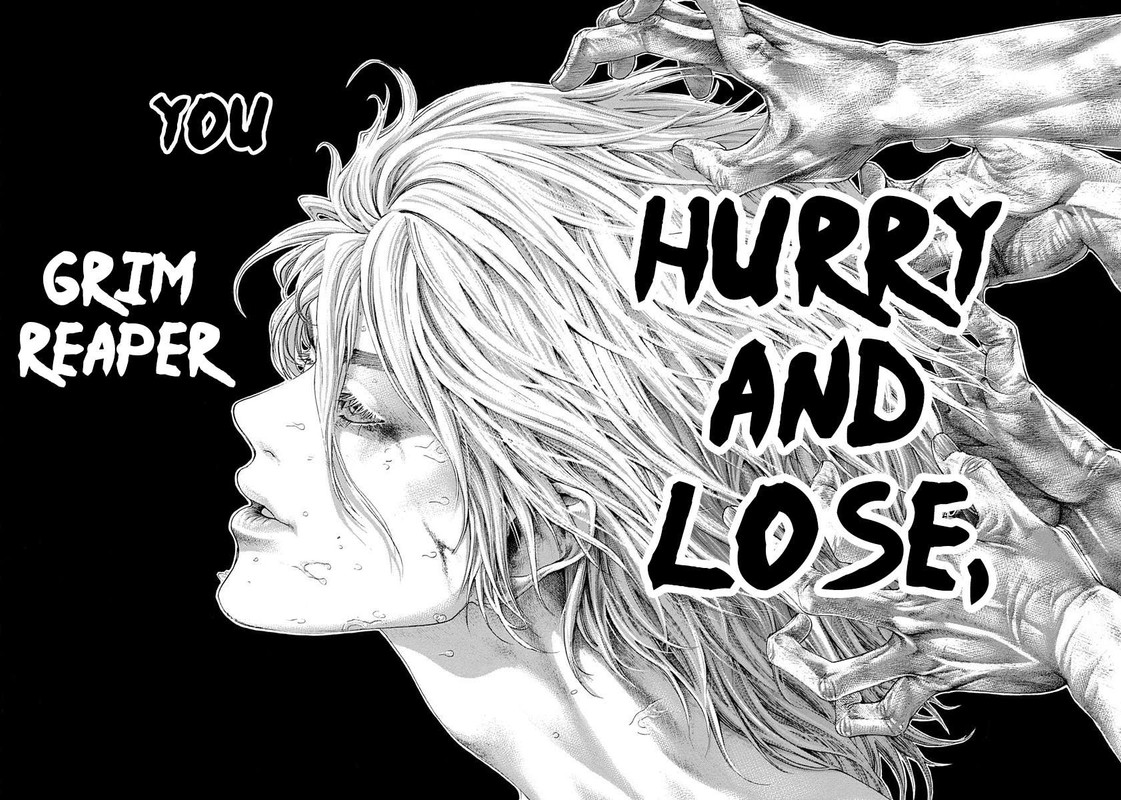
Our predicaments, a story, death. Unavoidable all the same. No one and nothing can defeat death. It is our destiny. So is destiny there? Can we be sure then, after all of this, that fate is the ultimate puppeteer lurking in the dark that we are bound to fall victim to? It doesn't matter. It never did.
"The story doesn't matter too much, but since that is all there is to it, we are alive."
The role Baku plays in this manga is to prove that despite fate, despite conditions, we can be certain that we can act and be responsible for our own lives. As a psychology student, I feel inclined to heed caution as this idea is capable of becoming distorted to the point where it undermines the unforgiving injustice of modern society, creating not a cure, but an overarching debilitation of us as people. Regardless, that does not mean that the idea Usogui is trying to present is any less valid. In this sense, an unending pursuit of what we strive to impose on our life and destiny. At the same time, it is important to become individuals capable of resisting our own, as Buddhism might argue, fears and ego, and learn to care for what we need, not what we want. This is present in both Baku and Souichi who weren't able to realize this in time. In this case, love. Twisted for them all the same. The unending search for what they wanted blinded them from what they needed to find in each other. They were staring at it all along. At the end of the day, Baku symbolizes the struggle found in the acceptance of death and fate not as foes, but as part of a symbiotic nurture that carries life no matter what. Thus fate.
Baku is in love with life, and love is as important as it is illogical. Souichi struggles with this as he wants to become perfect. But accepting love is accepting flaws within oneself. Souichi can become perfect. But this only happens when Baku is part of the equation, which is his acceptance of love. So what is perfection anyway? Whether romantic or not, love is most important. Letting ourselves be engulfed by the illogical is just as important as our understanding of the lineal and logical order of the universe. Love is to create and to create is to give form to that without it. Love is what pushed Eko into the position she did for getting killed and believing in Souichi. Fittingly, Souichi means "to create". And just like that, stand up to death and the inevitable. This is what Souichi must understand. And although Baku seems to have a better grasp of this, he still is blinded by his desires. Creation is to give.
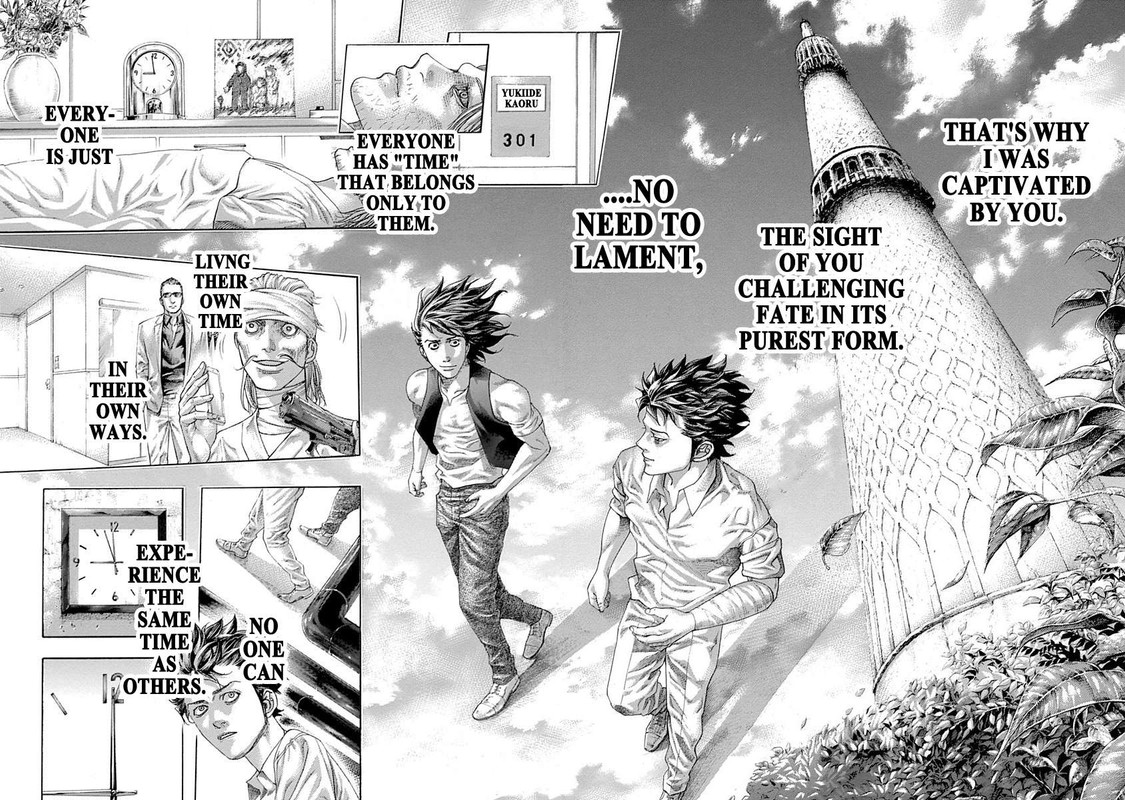
Time is one of the most integral parts of STL as "drop the handkerchief" is based upon it to condemn one of the players to the penalty of death. This is so important because life is all the same. Time is finite. Time is the only guide to the certainty of death. Time is a constant. However, I would beg to differ. Time is different for everyone. Masking your own life according to your own actions and beliefs helps us understand that no one can experience the same time. This is why Souichi loses. He fails to grasp the concept of time as an abstract representation of free will which he lacks. He fails to understand the human condition. In STL, time, an otherwise abstract and formless thing is given a proper shape, just like the constellations of the sky above. Just like the stars we use to ease ourselves from our cosmic inconsequence and triviality. It is in giving form to time that we can understand that every ticking second is part of our cohesive life story that we are responsible for directing. These are not characters that merely appear because the plot says so. They are here because even when we might not be responsible for the ultimate destiny we are bestowed we still are those who choose what to do when to do it or why to do it. Action is not separate from character and the fact that time is made manifest of our differences as we are to build our future fighting against fate just further instills the idea of a cohesive narrative made to represent the story of the universe. And thus our will to fight.
The modern individual is no longer assigned to an origin or a sector; his roots lie solely in personal experience. His referents are those he chooses. By his own choice, he establishes links that satisfy his sense of self and discards those in which he recognizes himself the least. It is up to him to institute himself alone, under the influence of others, of course, but with a margin of maneuver that it is up to him to build. His freedom is not a choice but an obligation, since any tutelage disappears and the first architect of his existence is himself. He becomes a subject who seeks to assemble an identity form that is his alone, and no longer an agent animated by a class habitus that would make him culturally dependent on the past. In general, existence becomes a permanent identity dilemma to be resolved.
The peaceful and predictable vision of the future nowadays gives way to a multitude of episodic projects of short duration while waiting for something else. The lived time becomes sequential. Always revocable under the aegis of the deterioration of the social bond that it implies. The future is no longer what it was. The world becomes fluid, prey to a dazzling collapse, to a generalized urgency.
Souichi in his absence of individuality is made to show not only that the fragmentation of existence makes it difficult to establish a solid and coherent sense of identity, capable of being inscribed in time (thus his failure to recognize the trap Baku set up for him in STL which was made because Baku could grasp the idea of time and time as inherently distinct); but that the individual must be able to produce for himself and others the coherence of a story about himself.
For better or for worse, Baku must assume his freedom. The symbolic contract agreed between the relational self and society has changed, it is no longer a society that provides the individual with the assurance that his place among others is guaranteed, it is up to him to find his status in a society that satisfies to a minimum the former roles of containment and support. It is he who is responsible, in a very relative sense, for his existence.
And as such we come to another conundrum in which the idea of a relational self and the importance of agency come to a standstill. The key concept of "social saturation" describes the state produced by the new social connections and interactions that weaken the individuality of modern society and open the way to the construction of the postmodern self. But regardless, some sort of agency is needed. Living in a world saturated with new ideas, words, stereotypes, and ways of relating leads to experiencing the chameleonic personality that adapts depending on the context and situations, thus slowly substituting the authentic self for a relational self, since the individual needs new ways of relating and developing different roles in each relationship. But as we see in the resolution of STL and the story as a whole, the concept surrounding the self must not be lost in a world that more and more seems to be not about choices, but about an epidemic of reliance and dependence on fate. An overall distrust in humanity. This is why Baku has to prove above all else his will to power as life is at all times at the mercy of ourselves. If he can. So can humanity. And in turn, Souichi. I want to insist on the idea that even though this attempt to grasp life and direct it by our own standards is powerful and important, we must not fall under the idea of a meritocracy in a world where social shortcomings are most prevalent. Poverty is not a condition maintained by the lack of willpower of the poor. It is sustained by higher functioning powers that represent our failures. The exception does not make the rule. However, being aware of your own influence and potential is just as important to be cognizant of.
And that's why I think Usogui works so well. Because in the face of modernity and the economic facet of neoliberalism, there has been a cultural implementation of a need for efficiency and an illusion in which, we are bound to emotional immediacy. In understanding time as a personal constant, and where society and culture exist within and outside people all the same, is that we can begin to understand ourselves. Work with and not against that which pains us as individuals. Usogui understands perfectly how to fight against fate, as well as presents us with a deep and overarching lesson in society and culture as interdependent with people, as not to diminish their impact, where an internalization of our issues becomes problematic.
Sako Toshio tries to express a lesson of that found within the acceptance of a middle ground in which we can abide for that which we lack or possess. As both Baku and Souichi demonstrate to have in some way or another distorted philosophies that hinder their own persona, Usogui excels in bringing forth a discourse where the combination of one's attain of destiny, and life's ordain of emotions permeated by relationships actually arrives at a desired conclusion. One ought to strive for the grasp of their life, but to be dictated purely by a notion of progress and productivity disregarding emotion and one's inner self is a fight long lost. That's why in their dynamic, a realization of this condition is so special and portrayed so beautifully.
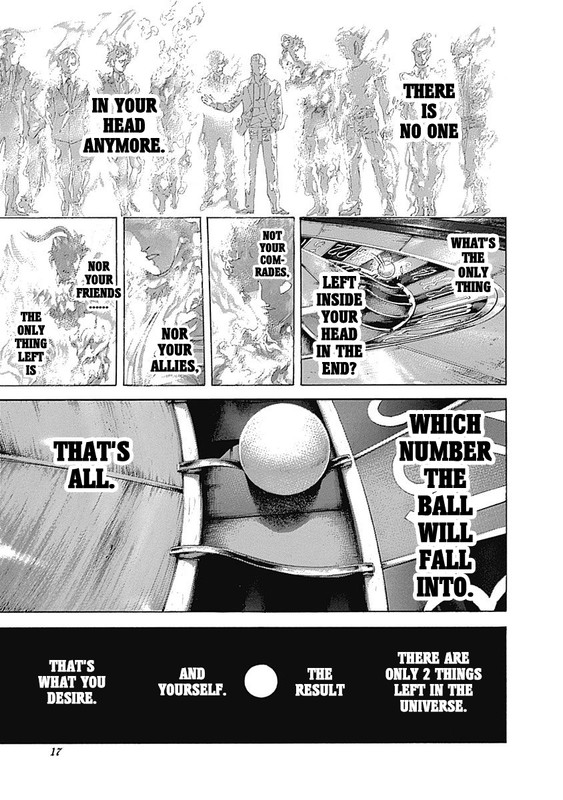
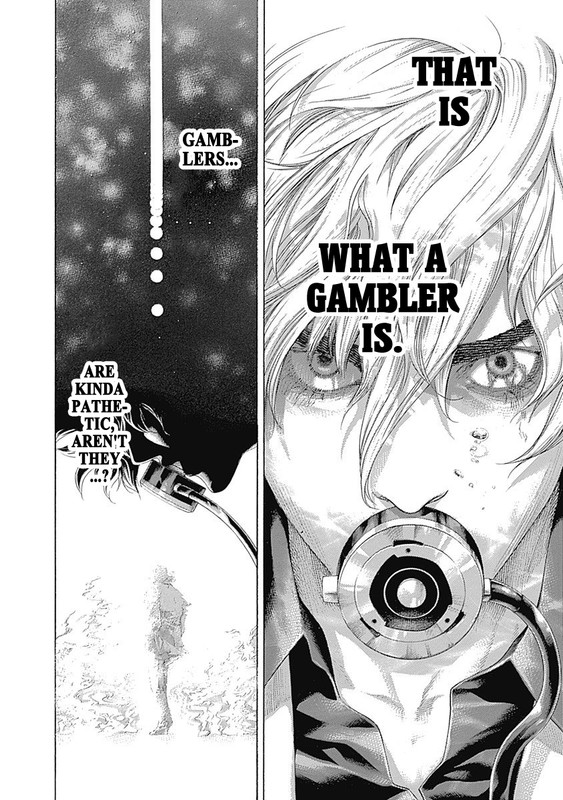
Gamblers are pathetic in the sense that, as Baku is portrayed, they dismiss entirely everything other than themselves and the gamble itself. This panel shows us... well, who? In the first panel, all of the figures we are shown are blurry, that is except for the one in the middle of the top panel; of course, that being Baku Himself. Everyone else goes away. They matter not. Just like the panel in and of itself, he is at the top, and in the middle. Not Souichi, not Kaji, no one except himself. That's what a gambler is, he portrays with devotion. But just in the next panel, he starts to fade away as he falls into what he calls pathetic. That's who we see, Baku, realizing, even if for a fleeting moment his need for relationships. Just as I've discussed all along, this disappearance of the self in a relational world. He has already grasped the will to power to battle against fate, however, he must still conquer the idea of being surrounded by people who care about him and who he cares about, whether he knows it or not.
Nevertheless, Baku, as he loves life must begin to understand that without love for people, he is only evading death for himself. This is what he learns through his journey and his friends. People like Kaji, Kyara, Yakou, Marco, and everyone he meets. This is why he must learn to care. And he does. He does outstandingly. Fate will always be there. And the joy he seeks only exists within it. He must accept the inevitable, but he must also accept the illogical which are so closely related. The illogical found even in gambling. Everything and everyone up until now, is it fate? Well, only living can you find out. But if you fight against fate and accept the illogical, now you'll know that everything that happens, you made possible. Be proud.
I hope the discussion about Usogui does not end here. There is a lot to talk about and I covered only a portion of it. I mainly went over the last 100 pages or so and even then I did not go into full detail as my main focus was STL. I hope for this review to be a sort of stepping stone towards further analysis on not only my behalf but the whole community as well. Usogui is so rich in content that it would be a shame to let it sit there unreviewed. Not only that but I do not pretend in any way shape or form to be some sort of an erudite that has come to open everyone's eyes as I may be wrong in a lot of places. Be free to disagree with me. It's the beauty of this series. Everyone is living their own time.
/manga/30002/berserk
/manga/39726/kubikiri-cycle-aoiro-savant-to-zaregotozukai
/manga/33749/umineko-no-naku-koro-ni-episode-1-legend-of-the-golden-witch

45 out of 46 users liked this review
