CW: Sexual Assault
Preface:
Over a year ago, I embarked on a journey into the dark and twisted world of Berserk. I delved deep into its pages, immersing myself in its violent and cruel narrative. But along the way, I was annoyed, and the weight of my dissatisfaction caused me to abandon it for reasons I will cover later in this review. I closed myself off from it, refusing to entertain the thought of ever visiting it again.
However, recently my partner, not having seen or read it before, proposed that we watch the anime adaptation together. Despite my reservations, I agreed, willing to give it another chance. And so, as we journeyed through the series, a sense of worry loomed over me, because I knew the familiar moments that had previously soured my experience would resurface once more.
And resurface they did. My partner and I found ourselves echoing the same criticisms, our discontent palpable as we experienced these specific events. Yet this time, my perspective changed. I refused to allow my grievances to overshadow the delicate moments of vulnerability and humanity that permeate the world of Berserk. For it is a tale that encapsulates the essence of survival amidst life's trials, finding solace in the smallest glimmers of light.
Perhaps, in some strange twist of fate, my journey with Berserk mirrors the very essence of its message. I despise how certain aspects of the story are handled, but in equal measure, I adore how it unearths those fragile moments amidst the horrors it portrays. My emotions and thoughts regarding Berserk are chaotic, and there will probably be a lot of contradiction and aimlessness in this review. But then again, that is life itself—a messy and convoluted journey.
We strive for purpose and meaning, craving a sense of direction, but often find ourselves lost in the tumultuous sea of existence. In these moments, we must grasp the reins of life and steer it forward, even if the path is uncertain. For even the act of crawling, of inching towards a distant horizon, is far superior to remaining stagnant in the shadows. That’s enough for now because I hope to cover as many of my thoughts as possible in this review.
Production:
Right from the start, it's evident that Berserk may not have had the largest budget. However, this doesn't mean that the series looks bad. On the contrary, I believe it looks fantastic. But when compared to other high-profile productions of its time, such as Cowboy Bebop and Turn A Gundam, it becomes very apparent that Berserk operated within certain budgetary limitations. Despite these constraints, the series manages to captivate through the artistic vision of art director Kobayashi Shichirou (Utena, Angel's Egg, and Ie Naki Ko) and the beautifully haunting musical compositions by Hirasawa Susumu (Paprika, Paranoia Agent, and Millennium Actress (Satoshi Kon was a genius)).
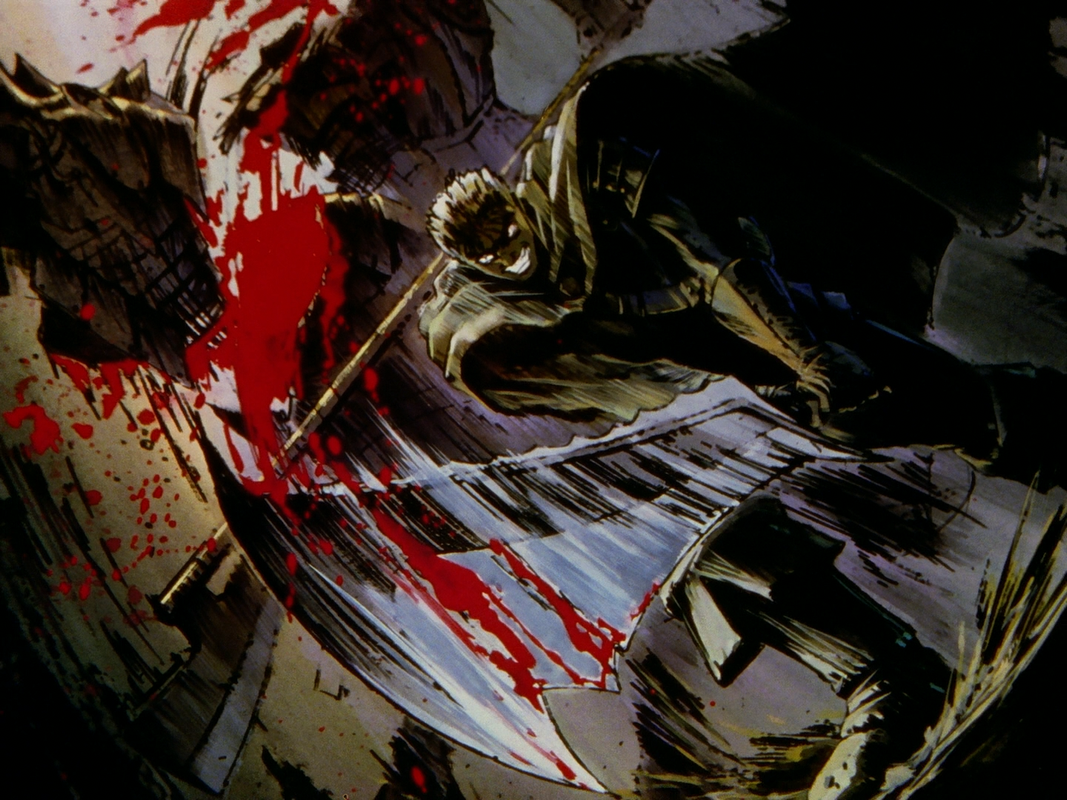
The art in Berserk 1997 exemplifies the principle of quality over quantity. The attention to detail in the background art is consistently stunning, immersing viewers in a richly crafted world. The character animation, too, shines in moments of dynamic action. One aspect that particularly impressed me was the depiction of swordplay. Given Guts’ enormous sword, there was a risk of the animation appearing awkward. However, the animators skillfully conveyed the weight and momentum of his swings, emphasizing the sheer massiveness of the blade. As it cleaves through enemies, the animation effectively conveys the power behind Guts’ strikes, accentuated by the broad blood splatters that emphasize his destructive prowess. Conversely, when showcasing fighters like Griffith or Casca, the animation adapts to their agile blades and fluid movements, capturing their speed and precision. While there are often clear budget-saving strategies taken in terms of animation, the creators know precisely when to leverage their strengths to create impactful and memorable scenes.
Accompanying this production is Hirasawa Susumu's incredible music. Listening to his compositions is an unparalleled experience in the world of anime, and perhaps even beyond. His sound defies easy categorization, yet it is undeniably exceptional. What sets him apart is his ability to masterfully serve the essence of a movie or show through his expert sense of mood. With his distinct sound, he effortlessly captures the tone of each scene, whether it be a majestic parade through a city, a deeply introspective moment of grief, or a brutal battle during a castle siege.
There is a reason why Guts’ theme is so iconic. It perfectly encapsulates the raw emotions of Berserk, flawlessly adapting the essence of the story into musical form. The haunting, reverb-soaked piano and the poignant wails evoke feelings of pain, sorrow, and a glimmer of hope. Much like the many themes explored in Berserk, this song exhibits a duality—a journey into the depths of despair, yet somehow offering a ray of hope.
When it comes to bringing a story like Berserk to the medium of anime, there was simply no better choice than the eclectic genius of Hirasawa Susumu to provide the music. His compositions elevate the narrative, enriching the overall experience and immersing the audience in the harrowing world of Berserk.
My Chaotic Experience with Berserk:
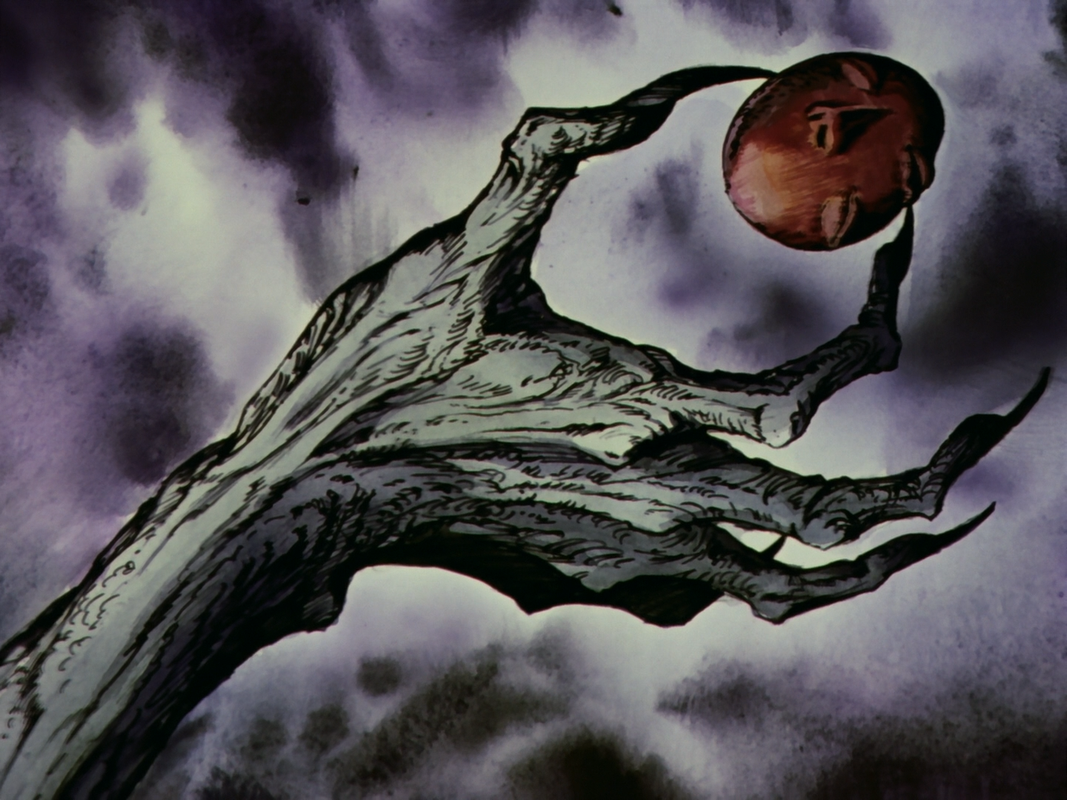 > “In this world, is the destiny of mankind controlled by some transcendental entity or law? Is it like the hand of God hovering above? At least it is true that man has no control, even over his own will.” - Narrator
These haunting words echo at the onset of each of the 25 episodes of Berserk, etching themselves deeply into the viewer’s mind. As the Golden Age arc unfolds, this recurring monologue encapsulates one of its central themes: the eternal debate of human agency versus divine predestination. It is a question that resurfaces time and time again within this narrative tapestry, and one that I intend to explore in detail when its relevance fully unfolds.
Note: Having read the first 200 chapters of Berserk before, I possess an understanding of the narrative changes that have been done. However, in my analysis, I will try to minimize comparisons to the source material. While my intention is to focus primarily on the current adaptation, I acknowledge that certain alterations hold significance and warrant discussion within the context of my analysis.
The initial significant alteration becomes readily apparent in the very first episode. The Black Swordsman arc is condensed to fit within the limited time frame of a single episode, aiming to provide the essential elements necessary to achieve a sense of narrative completion by the end of the series. In a brief glimpse, we witness the forging of the Dragon Slayer, swiftly followed by the opening scene where Guts intervenes to rescue a young girl from a group of depraved older men (a recurring aspect that I will be exploring much more later). This introductory episode also offers glimpses of Guts' diverse arsenal of ranged weapons and showcases the graphic displays of violence that will become characteristic of the series. Within the episode's remaining duration, we are introduced to the enigmatic Behelit, the nightmarish world infested with monsters, Guts' internal turmoil stemming from the Brand of Sacrifice, and his unbridled fury upon encountering the mysterious figure known as Femto. While experiencing the entire Black Swordsman arc would undoubtedly provide a more comprehensive understanding of the world and raise numerous valuable questions, given the time constraint of 23 minutes, this episode delivers the essential core elements we need to witness well enough.
There are two other significant omissions that I find worth noting, particularly regarding Guts' past. The first, although relatively minor, is the absence of the scene where Gambino brings ointment to Guts after he scarred his nose in a fit of anger. While this may seem like a small moment, its significance lies in how it contributes to the traumatic experience Guts had as a child. When combined with Gambino's later attempt to kill Guts, it intensifies the emotional impact of Guts having to take his life. The omission of this moment of solace somewhat diminishes the depth of Guts' hedgehog's dilemma and slightly hampers his character development in the later stages of the series. However, the removal of the second moment is far more detrimental to the anime. The complete absence of Guts' history of sexual abuse as a child gives rise to numerous issues for me, particularly concerning Guts' subsequent character development, and it significantly amplifies my criticisms of Berserk regarding its treatment of women within the narrative. These aspects will both be explored in greater detail later in this review.
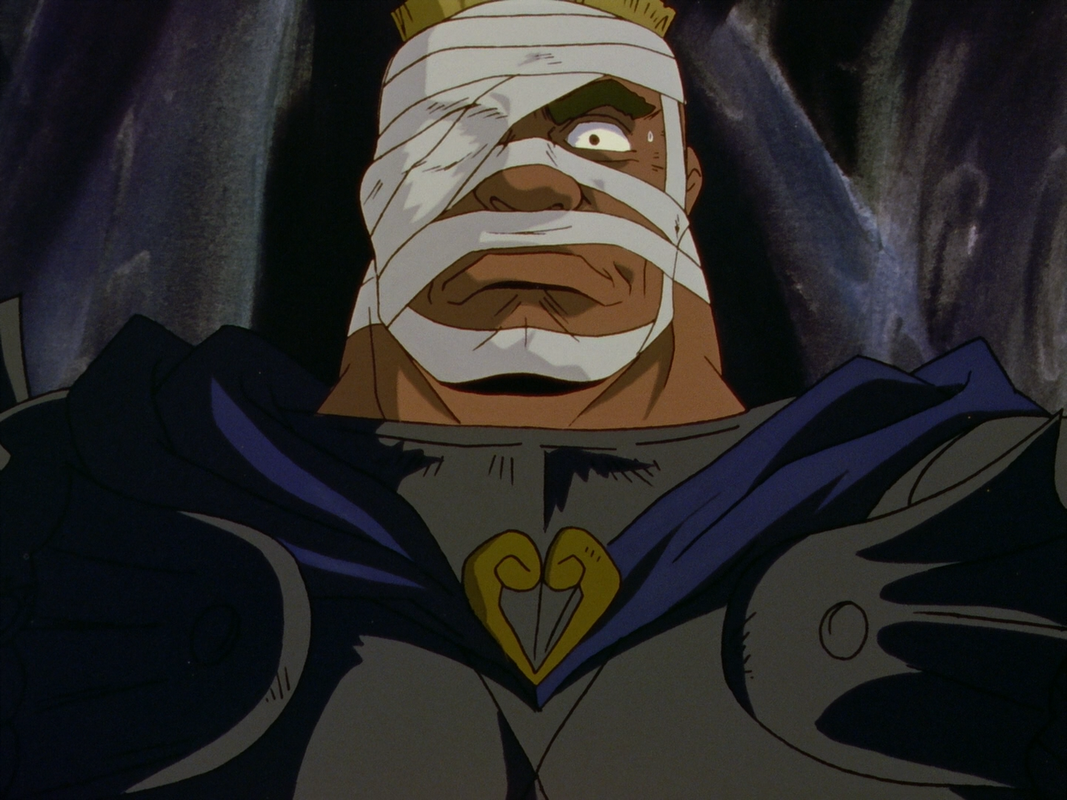
One of my most significant grievances with the rest of this show revolves around the character Coborlwitz Adon. As the general of a group of enemy knights, he plays a significant role in many of the earlier episodes of Berserk. Unfortunately, his portrayal in the anime presents several issues that greatly detract from the overall experience. Adon is depicted as a recurring enemy and functions as an irritating gag character. Whenever he appears on screen, the show adopts a goofy atmosphere that feels out of place within the dark and gritty setting of Berserk. While the intention may have been to highlight his incompetence through comedic elements, I consistently found that he disrupted the tonality of crucial sequences and introduced an exaggerated and over-the-top feeling that clashed with the generally grounded atmosphere maintained throughout most of the Golden Age arc. His eventual demise, after a few encounters, removes what I perceived to be the only obstacle to fully immersing oneself in the incredible atmosphere created by this adaptation of Berserk.
Characters:
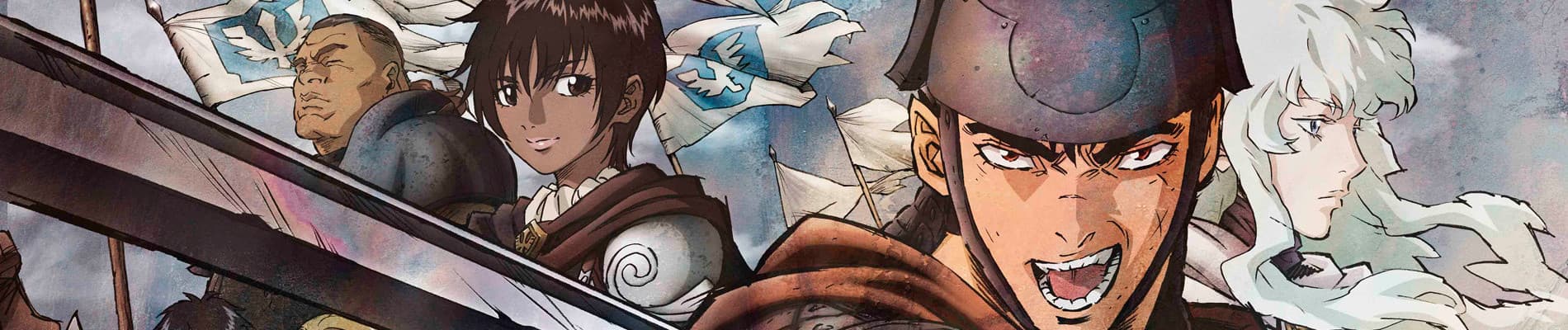
With those aside, when thinking about Berserk, one might be drawn to the manga's breathtaking artwork, reminiscent of the works of M.C. Escher and H.R. Giger. Others may be captivated by the brutal world teeming with bloodlust and fear. However, for me, and probably for most people, the true essence of Berserk lies in its remarkable cast of characters.
Griffith:
Griffith, the leader of the Band of the Hawk, undergoes a crucial and intricate character arc that explores themes of ambition, sacrifice, and the consequences of the unchecked pursuit of one's dreams. His journey reveals the complexities of human nature and poses profound questions about the nature of destiny and free will.
Griffith firmly believes that everyone must have a dream and that mere existence on Earth is insufficient. He possesses an unwavering self-destructive drive to reach his dream, even if it means sacrificing those he loves or resorting to extreme measures. This relentless pursuit sets him apart from others and becomes a defining characteristic of his personality.
The existence of the Behelit, a mysterious artifact that plays a crucial role in the story, raises significant questions about the influence of higher powers and individual agency. Throughout the narrative, viewers are prompted to contemplate whether Griffith's success is a result of his own hardened will or if he is chosen by a higher power. This ambiguity adds depth to Griffith's character and fuels speculation about the forces that shape his destiny.
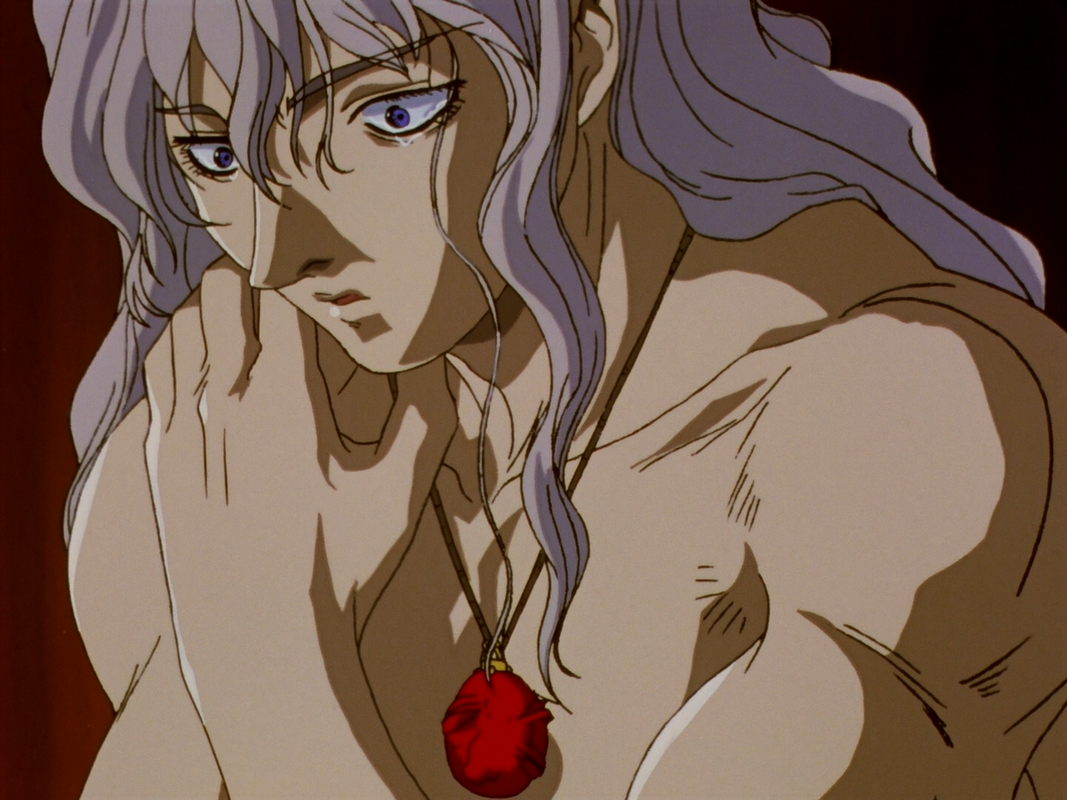
Griffith's longing for a kingdom of his own is driven by self-indulgence rather than a sincere desire to improve the world. The duality between his seemingly childish ambition and his cunning and sinister plotting adds depth and intrigue to his character. It becomes evident in his actions, such as his willingness to consume a spiked drink despite the grave risks involved, all in pursuit of advancing his plans. Griffith's Machiavellian nature is further shown through his calculated actions, such as resorting to kidnapping a child as ransom and manipulating Guts to eliminate anyone who could potentially hinder his ambitions, including former allies who had once aided him in realizing his dream.
Amidst his monstrous deeds, Griffith occasionally reveals glimpses of humility and introspection. His sudden question to Guts, “Do you think I’m a vile human being?” exposes a fleeting vulnerability that pierces through his otherwise stoic façade, something that only Guts can pull out of him. While Guts evades offering a direct answer, the mere act of posing such a question suggests that even Griffith, the mastermind behind his own ambitions, grapples with the moral implications of his actions. It signifies a moment of self-doubt and contemplation within the buried depths of his character. Even if Guts had boldly affirmed his belief, it is likely that Griffith would have responded with apathy, yet the fact that he dares to ask reveals a glimpse of something deeper, however subtle.
Since their initial encounter, Griffith has regarded Guts not as a genuine comrade, but as the ultimate instrument to propel himself to the pinnacle of success. However, when Guts reveals his intention to leave the Band of the Hawk, Griffith's carefully constructed façade begins to crumble. The realization that he will lose his most formidable asset on the battlefield, and the person he considers closest to being an actual friend, awakens a deep sense of unease within him. In a desperate bid to maintain control, Griffith asserts his possessive nature and plunges into the depths of his character. He challenges Guts to a fateful duel, a poignant echo of their first meeting, laying down the terms: if Griffith emerges victorious, Guts shall remain by his side, but if he fails, Guts is free to part ways. Already shaken by Guts' decision, Griffith experiences a crushing defeat in the duel, leaving him abandoned by his greatest source of hope.
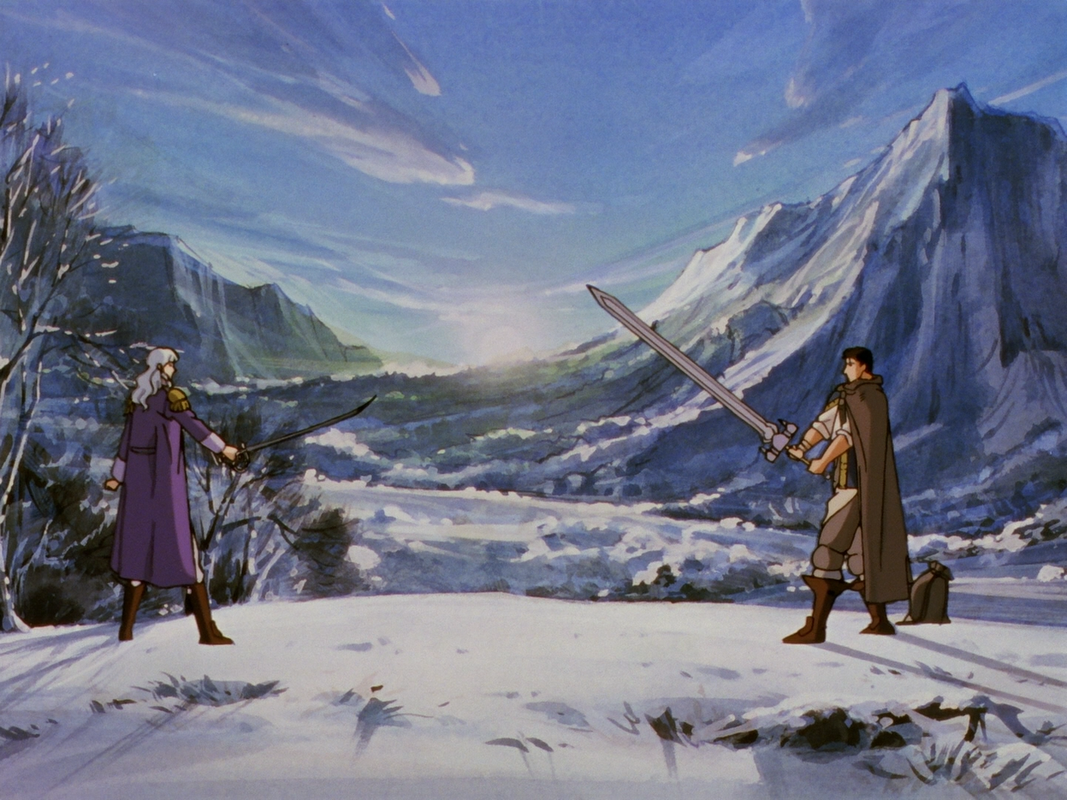
In the aftermath of Guts' departure, Griffith plummets to his most despicable state, resorting to forcibly engaging with the princess in a manipulative attempt to reclaim the path he has lost. This vile act serves as a stark manifestation of his desperation and marks a significant step in his descent into darkness. However, his actions do not go unnoticed, as he is swiftly apprehended by the palace guard, accused of treason, and subsequently condemned to a life of imprisonment in the harrowing depths of the darkened chambers. Within the confines of his cell, Griffith finds himself trapped both physically and emotionally, his once lofty ambitions shattered, and his very essence consumed by the darkness that surrounds him.
The excruciating torment that Griffith endures over the course of a year renders him utterly vulnerable, his spirit consumed by the all-encompassing darkness. In this abyss, he loses all semblance of control over the principles and values that once defined him. However, a glimmer of hope emerges as the fateful day arrives—the Band of the Hawk, against all odds, discovers the very depths in which he is held captive, their footsteps echoing through the oppressive silence. As their approach reverberates in his ears, Griffith's mind conjures a vision of Guts, his heart burdened by the realization that his salvation may come at the hands of the very man he holds responsible for his wretched state. In this vulnerable and debilitated condition, Griffith finds himself bereft of agency, unable even to command his own body. The prospect of being rescued by Guts plunges him into an even deeper abyss of despair, an extreme recognition of his powerlessness and dependence on his greatest adversary. They ultimately save him and bring him back to camp in order to rest.
In his feeble state, Griffith's mind conjures an alternate reality, one devoid of Guts, where he envisions a life alongside Casca and their newborn child. This revelatory vision unveils Griffith's true perspective on Guts—not as a genuine friend, but as a mere instrument and, potentially, his most formidable threat. Snapped back to the harsh reality of his current state, Griffith, consumed by despair, contemplates ending his own life. Yet, even in this darkest of moments, he fails in his desperate attempt. This failure serves as a stark testament to his complete loss of control over his own destiny, setting the stage for the return of the Behelit—the mystical artifact that heralds the summoning of a higher power. Overwhelmed with terror at the prospect of relying on someone else, especially his perceived adversary Guts, Griffith willingly surrenders himself to the Behelit, forsaking his personal pursuit of the dream and yielding to the whims of a superior force. The eclipse has begun.
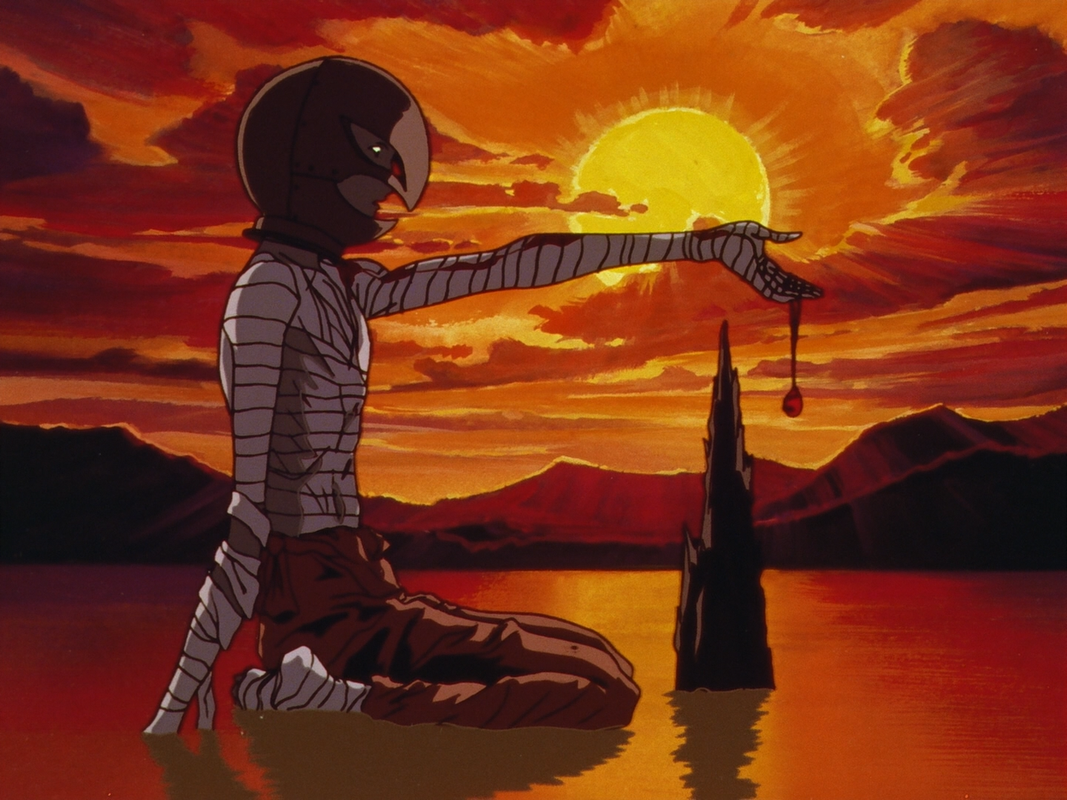
As the eclipse unfurls its blood-soaked tapestry, Griffith's gaze falls upon the landscape of lifeless bodies strewn in his wake. It is within this harrowing sight that he reaches a significant realization—an irreversible juncture where retreat and redemption seem inconceivable. Gripped by unfathomable cruelty, he proceeds to offer up the entirety of the Band of the Hawk as sacrificial pawns, their lifeless forms transformed into grotesque stepping stones along his ascension to the pinnacle of his castle's grandeur. With this merciless act, Griffith binds himself to an inescapable fate, intertwining his own demise with the shattering demise of the dream that consumed him. It is within the crucible of this decision that a transformation of unparalleled magnitude takes place: Griffith sheds his mortal form, relinquishing his identity and humanity, emerging as the malevolent entity known as Femto. This metamorphosis is the embodiment of the sacrificial dissolution of Griffith's very essence, heralding the birth of a new entity driven by an eternal and insatiable dream. As the show of Berserk ends, so does the tale of Griffith as we know him.
Griffith's character development in Berserk is a nuanced exploration of ambition, sacrifice, and the consequences of one's actions. His transformation and subsequent actions reveal the complexity of human nature and invite contemplation about the balance between individual will and external forces in shaping destiny.
Quotes:
"The stronger a light shines, the darker the shadow grows" - Random Soldier
This encapsulates the theme of duality in Griffith's character. It emphasizes how his pursuit of greatness casts a dark shadow over his actions and the consequences he faces.
"On the battlefield, one does not die royalty, a nobleman, or a commoner. You die a loser of the battle" - Griffith
Highlights Griffith's pragmatic worldview. It underscores his understanding of the harsh realities of their world and the sacrifices required to attain greatness.
"When to go into battle, when to die... That is all up to me," - Griffith
Reflects his sense of control and agency. It portrays his belief in his ability to determine his own fate, even in the face of challenging circumstances.
Guts:
Guts, a man intimately acquainted with the brutality of life, has forged an unbreakable bond with his sword. It has become an extension of his very being, an emblem of his reliance on violence and combat. The blade, eternally present at his side, is a steadfast companion amidst the tumultuous ebb and flow of human relationships. For in Guts' tumultuous existence, one characterized by repeated abandonment and the harrowing trauma of being abused and cast out from his own group in his formative years, he has been thrust into a chilling cycle of isolation and fear. The scars of his past, both physical and emotional, have left an indelible mark on Guts' soul. The sting of betrayal, the anguish of being forsaken by those he once trusted, has seeped deep into the core of his being.
Guts' existence is anchored in a relentless cycle of murder and self-preservation. His life lacks the grandeur of dreams or aspirations, as he navigates the world with a singular focus on the present moment. With unwavering determination, he forges ahead, his sword a steadfast companion, ready to defend his own life at any cost. Unlike others, particularly Griffith, Guts is not driven by a long-term vision or a personal flame that ignites his purpose. He stands apart, a solitary figure marching his own path, guided solely by the necessity to survive the immediate challenges that confront him.
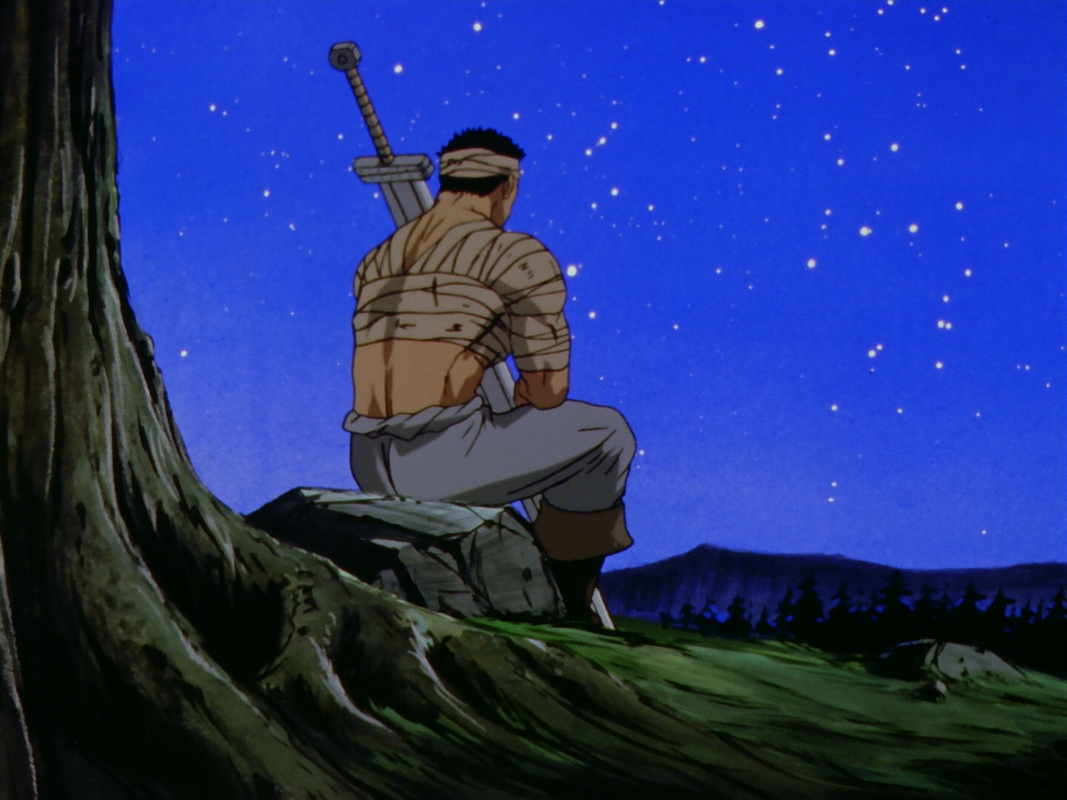
Griffith, the magnetic and charismatic leader of the Band of the Hawk, embodies an insatiable ambition fueled by an intense dream. His vision unites individuals under the brilliance of the strongest flame, forging a collective "bonfire of dreams." In stark contrast, Guts stands apart, devoid of such a personal flame. Instead, he resembles a weary traveler seeking solace and warmth at the radiant bonfire without possessing his own intrinsic passion or purpose. This inherent disparity between Guts and Griffith accentuates their divergent outlooks on life, exemplifying the distinct paths they tread.
Guts grapples with the isolating implications of the hedgehog's dilemma, a psychological concept capturing his aversion to forming intimate bonds with others. This deeply ingrained fear stems from a haunting history of being hurt and abandoned, leaving him guarded and wary. In the face of adversity, Guts chooses the path of violence and self-defense, displaying a relentless determination to confront and overcome any threat head-on. Rather than fleeing from a confrontation, he would sooner eliminate all opposition, illustrating his preference for a brutal resolution over evading conflict. This defensive mindset acts as a protective shield, shielding Guts from the vulnerability of forging deep connections, as he anticipates and prepares for the potential pain and heartbreak that may accompany them.
In times of tranquility, individuals like Guts, whose existence revolves around the skill of wielding swords, are forced to discover alternate means of survival within the sheltered confines of a castle. This fact serves as a powerful reminder of the stark divergence between Guts and Griffith. Guts, having been nurtured amidst the relentless chaos of the battlefield, finds his identity inextricably entwined with warfare. His life lacks the presence of a captivating dream or an aspirational impetus beyond the realm of personal combat. In contrast, Griffith perceives battles as mere stepping stones towards the realization of his lofty ambitions, readily discarding them once their utility wanes. Guts, bereft of an all-encompassing dream, experiences a sense of desolation and aimlessness in the absence of active conflict, leaving him adrift in a void of purpose.
An extreme and uncharacteristic sorrow engulfs Guts as he reunites with the Band of the Hawk and valiantly saves Griffith from his tormented imprisonment. Witnessing his once indomitable comrade reduced to a state of unimaginable suffering elicits an emotional response that brings tears to Guts' eyes. The depth of Guts' connection to Griffith is undeniably strong, yet as we, the observers, delve deeper into the intricacies of their bond, a chilling realization begins to take hold. Behind the charismatic facade, Griffith perceives those around him, including Guts, as mere pawns in his relentless pursuit of ambition. Guts' unwavering devotion and loyalty are skillfully manipulated by Griffith, amplifying the complexity and underlying darkness that permeate their relationship.
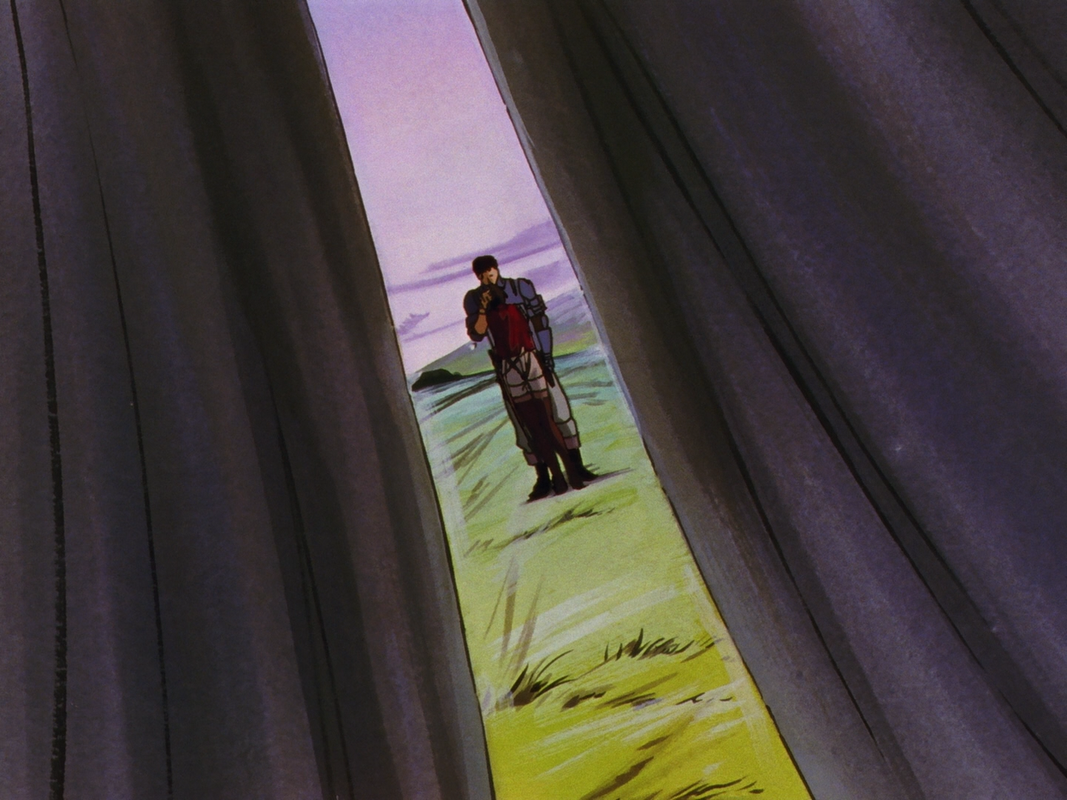
Even after Guts rescues Griffith and reunites with the Band of the Hawk, an undercurrent of loneliness persists within him. However, when his comrades implore him to remain by their side, expressing their desire to accompany him, a glimmer of truth pierces through the fog of isolation. Guts begins to catch a glimpse of the reality that there are individuals who genuinely care for him, yearning for closeness and camaraderie. Yet, this realization clashes with the scars of betrayal and abandonment etched deep within Guts' being, creating a formidable barrier that impedes his ability to fully embrace these connections. The weight of past experiences haunts him, making it arduous to lower his defenses and allow others into the fortress of his heart. His question, "Why do I never realize what I have until it is lost?" encapsulates the struggle to perceive and cherish the bonds he possesses until they teeter on the precipice of fracture and loss.
Quotes:
"I can no longer live this life buried in his dream," - Guts
Shows his growing discontent with being a part of Griffith's dream. He yearns to achieve a goal of his own, to stand as Griffith's equal rather than always looking up to him. This desire for autonomy and a sense of personal accomplishment pushes Guts to seek his own path, separate from Griffith's influence.
"Sparks: The light born in the clash when two swords meet. They serve me well. Throughout my life...the moments, and people who have defined me...they have all been illuminated...by sparks." - Godot
Godot is a character who plays a slight mentor-like role in Guts' journey, and this quote acknowledges the state of Guts' existence. He sees Guts as a man who is blind to his own destiny, implying that Guts is unable to see beyond his life consumed by violence and warfare. Guts' obsession with battle has overshadowed his own personal growth and potential for a different future.
Godot emerges as a person burdened with a predetermined role that has shaped the entirety of his existence from a tender age. The weighty responsibility of steel, an emblem of his craft, was entrusted to his hands even before he could take his initial steps. This lifelong commitment has left him in a state of indifference, questioning whether he genuinely derives enjoyment from his craft. Yet, amidst this apathy, Godot manages to unearth fleeting moments of joy, encapsulated in the mesmerizing sparks that dance and ignite when he hammers the molten steel. These ephemeral sparks serve as poignant reflections of the miniature flames of dreams that flicker within the hearts of individuals. Once again, the timeless question of destiny versus agency resurfaces, prompting contemplation on whether, even within a predetermined path, one can uncover moments of personal fulfillment. This introspection stirs something profound within Guts, compelling him to delve into his own insatiable thirst for battle. He discerns a parallel between the sparks that erupt when weapons collide and the intoxicating rush of vitality he experiences amidst the chaos of combat. However, Guts also recognizes the inherent self-destructiveness of a life entrenched in warfare—an unrelenting obsession that inevitably plunges its pursuers into the darkest depths of despair.
In summary, Guts is a character deeply affected by his traumatic past and the fear of abandonment. He struggles to form connections with others due to the hedgehog's dilemma, preferring violence and isolation over potential hurt. Guts lacks a personal flame or a grand dream, living his life in the moment with his sword as his constant companion. His complex relationship with Griffith highlights the exploitative nature of their bond, while Guts yearns for independence and a sense of purpose. Through encounters with supportive individuals like Godot and the Band of the Hawk, Guts begins to recognize the possibility of meaningful connections, challenging his deep-rooted beliefs and encouraging personal growth.
Casca:
Casca is the character in Berserk that I have the most complicated feelings toward. This stems primarily from the fact that she stands as the sole prominent woman in the narrative until after the conclusion of the anime (something that Miura made clear he wanted to change). Through Casca's portrayal, Miura skillfully crafts poignant and multifaceted moments that delve into her relationship with femininity. However, these exceptional instances of character development only serve to intensify the frustrating aspects, leaving me grappling with unresolved feelings. As I continue to write this review, I hope to gain more clarity and come to terms with these conflicting feelings.
Casca's character development intricately weaves through her relationships and interactions, offering a distinct perspective compared to other main characters. While their growth often emerges from internal introspection and choices, Casca's journey unfolds through her conversations and connections with those around her. At the core of her character lies an unwavering allegiance to Griffith, born from a desire to repay him for rescuing her during her childhood. This blend encompasses extreme gratitude for his life-saving act, interwoven with a complex tapestry of ambiguous and intricate emotions toward him.
Upon joining the group, Casca immediately harbors resentment towards Guts, perceiving him as a disruptor of the delicate dynamic between her and Griffith. This resentment stems from her deep desire to remain close to Griffith and continue repaying him for saving her, highlighting the complex dynamics at play. However, despite her initial animosity, Casca unexpectedly forms a genuine and profound connection with Guts. Through shared experiences and vulnerable moments, they forge a unique bond that transcends their individual traumas and sorrows. Both Casca and Guts have endured immense pain, making it challenging for them to establish meaningful connections with others. Yet, in each other, they find solace, understanding, and the ability to overcome the barriers that once divided them.
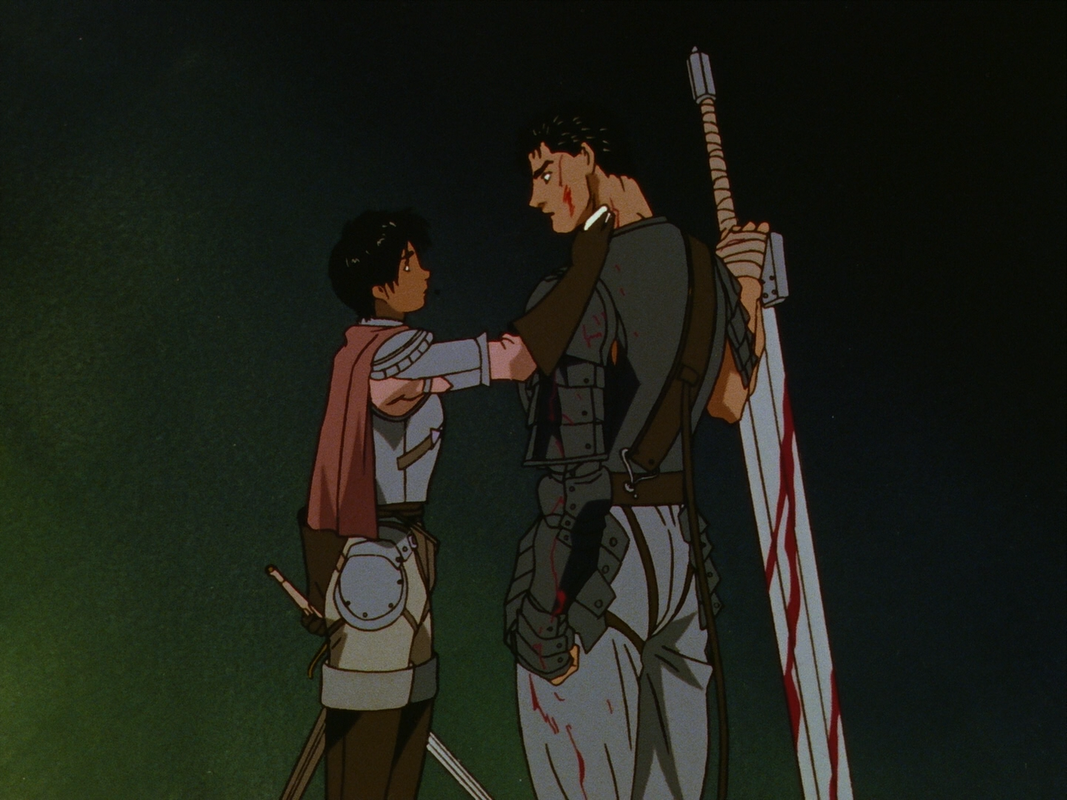
Casca's perception of Griffith is elevated to the point of regarding him as a superior being, which influences her relationship with Guts, despite their deep bond. As Guts contemplates leaving the Band of the Hawk and confronts Griffith in battle, Casca is torn between conflicting emotions. It is clear that she desires Griffith's victory to ensure Guts' return and maintain the status quo within the group. However, this internal struggle exposes a betrayal of her own beliefs. By prioritizing Guts' return, she inadvertently challenges the pedestal upon which she had placed Griffith. It becomes evident to Casca that her admiration and supposed love for Griffith had overshadowed the unique connection she had with Guts all along, prompting her to reassess her perspective on the years since she joined the Band of the Hawk.
Casca's character journey presents a poignant exploration of individual perspective, intricate emotions, and the multifaceted nature of human relationships. Her growth encompasses a process of unraveling the layers of her own emotions and perceptions, leading her to discover the profound bond she shares with Guts. This transformative journey challenges the preconceived notions of her connections, urging her to question the dynamics of power and agency within her relationships. Through her experiences and interactions, Casca evolves from a character driven solely by an unwavering devotion to Griffith, to one who embraces the authenticity of her truest connections and confronts the complexities of her own desires and loyalties.
Episode 11 Saga: This is the messiest part of the review. It began as an analysis of how Casca is portrayed as a character throughout the story, but it organically transformed into a tapestry of character connections, encompassing the main trio of characters. It is basically a stream of consciousness tracing Casca's growth and drawing parallels between her narrative arc and those of Guts and Griffith. Ultimately, it led me to grapple with my perception of Casca as a character. Throughout the story, my opinion of Casca's treatment evolved, resulting in inevitable contradictions by the end. However, upon reading this section, I believe I arrived at a solid conclusion regarding how I feel about her role in Berserk and the themes she brings to the story.
Right before the commencement of a crucial battle, an event occurs: Casca begins to experience period pains. It is handled with surprising sensitivity and realism, portraying it as a normal occurrence without any peculiarities or ridicule from other characters. This depiction deserves commendation as it embraces the realities of womanhood, never stooping as low as to make a joke out of it (something I have seen many anime do before).
However, as the scene progresses, an unfortunate turn of events unfolds. Casca finds herself pitted against commander Adon, a figure who has consistently been used as a source of jest, frequently fleeing from the Band of the Hawk due to his incompetence. With this background in mind, their encounter commences. The commander does nothing but belittle Casca for her gender, insinuating that her position was only attained through a sexual relationship with Griffith. Initially, this dialogue holds potential, as it sets the stage for a remarkable moment wherein Casca, the formidable warrior she is, can rebut these comments. Throughout the story, she has proven herself as a formidable combatant, with only Guts and Griffith ranking alongside her in battle prowess. However, just as their confrontation reaches its climax, Casca's period pains weaken her, and Guts is forced to intervene, shielding her from the enemy commander's attack. This diversionary action leads to Guts being struck by an arrow, causing both him and Casca to stumble back and tumble off a cliff. Casca falls unconscious and finds herself in a debilitated state, reminiscent of an earlier instance in the series where she tended to Guts and provided warmth during his battle-inflicted injuries in his confrontation with Griffith.
The manner in which events unfolded leading up to this juncture left me disappointed, particularly due to the context surrounding this mirrored situation. When Guts faced a similar circumstance, the focus was on his weaknesses as a warrior and his inferiority in comparison to Griffith in that specific scenario. Conversely, the context surrounding Casca's situation centers on her perceived "weakness as a woman" and how her menstrual cycle purportedly caused her defeat in battle. Berserk, as a narrative, delves into the theme of vulnerability and how we navigate it, yet in this particular context, I find it disheartening that the potential for a powerful moment involving Casca was overshadowed by her being derided for her gender and subsequently leading to harm inflicted upon herself and Guts due to her period.
Addendum: Over time, my perspective on this matter has undergone a bit of a change, and while I do hold some same thoughts on some downsides of this scene, I also see the purpose of it in relation to the rest of the narrative. While I will never personally experience the physical pain of menstruation (so I am not exactly sure about the realism of this scene), I now recognize the significance that this moment holds to Casca's character arc in the Golden Age. At this moment in the series, Casca was grappling with inner struggles in relation to her perception of femininity. Her feelings toward femininity and how it related to her own identity were constantly in flux. This specific situation serves as a tangible embodiment of her internal battle, and as her narrative progresses, she gradually grows more self-assured and comfortable in defining herself as an individual. In retrospect, this moment resonates with greater clarity and contributes to the complexity of Casca's journey. (Moving forward, I will refrain from appending addendums to each paragraph and instead allow my thoughts to flow organically. As I reflect on the overall narrative, I will present an ultimate summary at the very end of this section.)
After the intense battle, Guts finds himself in a moment of solace with Casca, providing her comfort and support. It is during this intimate moment that he notices her situation and remarks, “So that’s what’s going on. It’s pretty tough, ain’t it? To be a woman.” This acknowledgment reinforces the initial respect shown towards Casca and her experience. Even if I do have some skepticism about how the scene leading up to this was handled, this moment of solace and compassion was quite beautiful.
A similar contrast emerges in the subsequent episode, where we are offered a glimpse into Casca's past. Hailing from a poor farming village, she was tragically sold off by her own parents to a wealthy man, who had no virtuous intentions and sought to subject her to sexual abuse. While being transported to the man's residence, he attempts to take advantage of her, violently pinning her down and tearing her clothes. At this moment, Griffith stumbles upon the scene and intervenes by tossing a sword to Casca, urging her to fight for herself. In an act of self-defense, Casca ultimately kills her abuser. This event serves as yet another parallel to Guts, whose own history of sexual abuse during childhood was conspicuously omitted from the show (an omission made by the showrunners rather than Miura). When faced with an attack, Guts, despite his fear, took unwavering agency and fought back, ultimately slaying Gambino. However, in Casca's case, once again, a man assumes control, making decisions on her behalf. Instances like these contribute to the complex nature of my relationship with Berserk. If we were to strip away the gender dynamics at play, the writing here would undoubtedly be deemed brilliant, constructing intricate character parallels and exploring how shared experiences can shape divergent mindsets. Nevertheless, when we consider the context surrounding these situations and the recurring patterns they embody, I find myself disheartened by their frequency and the imbalances they perpetuate.
Later in the same episode, it is revealed that Griffith has been engaging in transactions with an elderly man, exchanging his body for money and supplies to bolster his army. This, once again, draws a parallel to the experiences of both Guts and Casca (although, once more, the abuse suffered by Guts and Griffith remains unseen, whereas Casca's is constantly depicted). However, Griffith is portrayed as a character driven by agency and purpose in his actions (though he is still unequivocally being abused here). On the other hand, Casca is consistently compelled to act according to the will of the men around her, rarely afforded moments where she can assert herself in such situations.
Furthermore, in the following episode, Guts and Casca find themselves separated. Guts decides to stay and confront the soldiers who discovered them, while Casca opts to retreat and locate the rest of their group for assistance. As Casca runs back, exhaustion takes its toll, causing her to stumble. In this vulnerable state, she is ambushed by a small group of soldiers. Despite her valiant efforts, she becomes overwhelmed by their numbers and her own fatigue. Once again, these soldiers degrade and insult her based on her gender, accompanied by the act of tearing her clothes off. This scene perpetuates the ongoing dichotomy in the story's handling of sexual assault between men and women, wherein the opportunity to expose a woman's body is seldom missed. The next episode begins with Casca fighting back, managing to pierce one of her attackers in the eye with a stick before retreating to recover her sword. However, she is disarmed and faces the imminent threat of being struck by an axe. At the critical moment, she is saved by a throwing knife from Judeau, accompanied by his group of men, who coincidentally stumble upon the scene and come to her aid. Judeau then utters the line, "You better lay off now, because she's the only woman in our troop. It'll cost you." I’m not sure if that second sentence perpetuates what I think it does, god I hope it doesn’t, but either way, this sequence feels distasteful overall. Once again, this highlights a recurring issue of Casca falling victim to men and ultimately relying on "good men" to save her. After being saved by the group, they proceed with Casca to save Guts. But as they stumble upon where he was, a group of hundreds of dead enemy soldiers lie, with Guts reveling in the bloodbath, injured but victorious. He did not need help.
After an episode of setup for the next conflict, we are once again thrown into battle. After infiltrating a castle, Casca is yet again matched up against Adon (there is quite a rivalry here huh), and as previous encounters have shown, he has the high ground. She immediately overpowers him and throws him down, putting them on even ground. But Adon doesn’t continue with the fight, instead, he begs her for forgiveness, catching her off guard. Casca being stunned by the performance, gets caught off guard when Adon pulls out a crossbow and shoots her with a poisoned arrow, and he once again continues to berate her for being a woman, saying that if she gave up here and surrendered her body to him, he would spare her. After refusing, she outmaneuvers his attacks and finally takes him down. Finally, we get an unassisted win for Casca. This moment was honestly cathartic, she was finally allowed to show her skill as a fighter and did it without any external assistance. She won all by herself, through entirely her own agency. This moment leaves me conflicted, as Berserk always does. I do not think that this victory completely “forgives” the series of what it did previously in conflicts with Casca, because I think it reached conclusions in some odd fashions before, but it is definitely a step in the right direction for Casca and potentially her character arc.
This episode also delves into the situations of Guts and Griffith, further establishing the multitude of parallels between these three main characters. Firstly, Guts faces off against General Boscogne, a formidable opponent who can truly challenge him in battle, rivaling both Griffith and Zodd. During the intense fight, Boscogne manages to snap Guts' sword, leaving him at a significant disadvantage. The scene then shifts to Zodd observing the battlefield, reminiscent of when Griffith came along Casca as she found herself defenseless against the man who purchased her. Similarly, Zodd hurls his weapon next to Guts, providing him with the pivotal moment he needed to secure victory. This establishes an intriguing relationship between Guts and Zodd, as they seem to be neither enemies nor allies (but we don’t get to see any more of this relationship in the anime), and it marks one of the first times where Guts actually needed the help of another in battle.
Following Guts’ victory, we witness a confrontation between Griffith and Gennon, who was Griffith's abuser in the past. Nowhere near an even fight, Griffith holds all the advantage, and Gennon is left begging and reminiscing about the "good times" they shared (excuse me while I throw up after typing that). Griffith asserts that Gennon was merely a pebble he used to advance his dream and proceeds to slay him. This completes the trio of parallels between Guts, Griffith, and Casca—they were all victims of abuse during their childhood and have each taken the life of their abusers. However, Guts and Casca acted immediately, while Griffith strategically eliminated Gennon only when he had exhausted his usefulness.
Nevertheless, this aspect leaves me somewhat skeptical. Once again, Griffith and Guts were able to overcome their abusers through their own will, without the need for external assistance. On the other hand, Casca remains the sole character who required someone to save her from her torment. Furthermore, unlike the other two characters, Casca continues to be similarly exploited throughout the series, with her suffering and its depiction only intensifying from this point onward.
In the subsequent episodes, the narrative shifts away from direct conflict, allowing for poignant character moments that shine a light on Casca's development. One notable instance occurs during a celebratory gathering following a previous battle, where Casca shares a significant moment with Guts. They engage in a conversation about their perspectives on life and the paths they wish to pursue. It becomes evident that a deep bond is forming between them, intensifying the emotional impact when Guts nonchalantly reveals his intention to leave the Band of the Hawk. This revelation deeply affects Casca, as she grapples with the pain of losing someone she has grown increasingly connected to.
The following battle between Guts and Griffith serves as a pivotal moment for the two in battle, as for Casca, her devastation reaches its peak when Guts emerges victorious, allowing him to leave the Band of the Hawk. In her anguish, she desperately calls out to him, pleading for him to stay. It is during this intense conflict that Casca realizes the depth of her feelings for Guts, despite the challenges they have faced together along their tumultuous journey. Her mental state further deteriorates when Griffith is captured after his encounter with the princess, leaving her bereft of her two most significant connections and unexpectedly thrusting her into a leadership role within the Band of the Hawk.
A time skip reveals that Griffith has been imprisoned and subjected to torture, and the once-pervasive screams from his cell suddenly cease. Casca is devastated by the possibility that he may have perished, adding to her already immense sorrow. In the midst of this melancholy, her camp is suddenly attacked by enemy soldiers. Knocked down and with an assailant poised to strike a fatal blow, Casca finds herself saved by the timely intervention of an ally—Guts. While the trope of a savior may be at play once again, it resonates within this particular context, providing a glimmer of hope amidst the darkness that surrounds Casca. Though I do think an encounter outside of battle could have possibly supplied a more emotionally powerful moment between the two.
However, their reunion is not immediately met with joy and relief. Casca is overwhelmed by a storm of emotions, causing her to lash out at Guts. Simultaneously angry at him for leaving and relieved by his return, she tries to start a fight with Guts. Somewhat unsurprisingly, Guts refuses to retaliate, allowing her to stab him. Witnessing the consequences of her actions, Casca undergoes a reflection on her life since the moment Griffith stumbled upon her and bestowed upon her that sword. She has long felt indebted to him, and this indebtedness led her to mistakenly believe she had stronger feelings for him, becoming infatuated with the sense of purpose he provided rather than experiencing a genuine emotional connection. Without Griffith's presence, Casca feels adrift, as if the years spent trying to repay him for saving her have been in vain. This sequence effectively captures the complex emotions intertwining with the unraveling of Casca's character, culminating in a powerful moment. However, it is at this peak of emotional turmoil that Casca declares she can no longer bear it and attempts to throw herself off the cliff. I think this choice by Miura is questionable, as it feels like a manipulative cop-out that detracts from the emotional breakdown of the moment. Throughout the scene, Casca's emotional collapse intensifies, and I feel it would have been more fitting to witness her plain and utterly defeated collapse onto the ground, emphasizing the climactic impact. Ultimately, Guts catches her in her downfall, leading to the same conclusion, yet this alternate decision feels a bit more suitable to me. Regardless, the subsequent scene serves as a fantastic emotional climax. In each other's embrace, they both finally realize their feelings for each other and share a kiss, which evolves into spending the night together and having sex. This marks a significant milestone for both characters. For Guts, it signifies his ability to truly connect with someone, a feat he has avoided since enduring betrayal as a child. However, in the anime adaptation, this moment feels somewhat weaker for him due to the removal of the ultimate source of his childhood trauma. Nevertheless, Guts allowing himself to be vulnerable and willingly surrendering his body to another person is an immense breakthrough. Similarly, for Casca, this moment carries immense significance. Ever since being saved by Griffith, she has struggled to fully come to terms with her identity as a woman. While it does seem that she identifies as a woman, there has always been an uncertainty, a wavering on the brink of acknowledging it. She occasionally remarks that she does not necessarily prefer wearing her armor but recognizes that it provides ease of movement, and she comes off as annoyed by her body when her period pains intensified during battle. There has always been a fluctuation in how she defines her womanhood. However, when she internalizes her feelings for Guts and engages in a sexual encounter with him, she finally embraces herself and seemingly comes to terms with her identity as a woman (it is worth noting that this scene opens up discussions about gender roles, identity, and heteronormativity, but delving into that would extend this already extensive review). This serves as a prime example of how sex can be employed as a powerful and multifaceted tool for character development. Powerful and nuanced moments like these only intensify my disappointment with how a scene later in the series is handled, although I am uncertain if that moment will be featured in this anime adaptation (Edit: it was).
After successfully rescuing Griffith and finding a temporary respite, Casca engages in a significant conversation with Guts about goals and the means to achieve them. Guts, having endured a solitary and tumultuous life, adheres to the belief that one must settle their battles alone when they are of their own choosing. This perspective encapsulates his character and resonates with his past experiences. He refuses to entertain any notion of weakness within himself and insists on personally resolving the conflicts he initiates. His distrust of others stems from the hardships he has faced along his journey. However, Casca astutely perceives the flaw in Guts' reasoning. She counters his stance by asserting, "...for us, even if we start something, we can't always finish it. Can you truly meet Griffith's gaze and say that? We are all vulnerable. We seek solace in others and in our dreams." Believing ourselves to be infallible gods is a fallacy. As evidenced by Griffith's own vulnerability, even those we perceive as the strongest individuals are susceptible to downfall. If we shut ourselves off from the support of others and stubbornly attempt to tackle every challenge alone, we are bound to stumble at some point. Our reliance on others is rooted in our nature as social beings. We forge connections, nurture bonds, and extend help to one another in times of need. It is easy to perceive oneself as invincible, but this sense of power is limited to our personal experiences. If we have never truly suffered, it becomes difficult to fathom the depths of our own vulnerability. And when we inevitably encounter failure, our descent will be far more agonizing if we lack the support of those who can uplift us.
The final episodes of this series revolve around the Eclipse, an event that has already been extensively discussed in relation to other characters. However, when it comes to Casca, I must express my disappointment in how everything surrounding her was handled during this time. The graphic and exploitative nature, which I found appalling in the manga, was somewhat toned down in the adaptation, but the directorial choices still felt extremely tasteless to me. I have always had reservations about how this particular moment was utilized as a significant plot device to fuel Guts' hatred and revisiting it in this show has done little to change my perspective. The Eclipse perpetuates the trope of using violence against women as a means to propel a male character's narrative, which is both frustrating and disheartening. The impact of this event on Casca's character is overshadowed, and her agency is undermined in the process. I have not read enough of the manga to see how the rest of her character plays out following this moment, but this situation and the story immediately after it has always left me disappointed.
Overall Reflection:
My perception of Casca as a character has undergone significant evolution since my initial attempt to read Berserk. While many of my criticisms regarding certain events involving her remain, I have also come to appreciate the aspects of her development that truly shine. The exploration of her personal identity and the way her story intertwines with that of the other two main characters exemplify exceptional writing.
Casca's internal struggle and her journey to define herself resonates deeply. The portrayal of her battle with personal identity is nuanced and skillfully executed, allowing her character to flourish in unexpected ways. Furthermore, the parallelism between Casca's narrative and those of the other protagonists adds a layer of depth and richness to the storytelling. The interconnectedness of their experiences underscores the intricate web of relationships within the narrative.
A significant aspect of my grappling with Berserk lies in its treatment of the themes surrounding the power of sex. On one hand, it can serve as a profound moment of human connection, where consenting characters intimately express their emotions for one another. On the other hand, sex can be wielded as the ultimate form of violence, stripping away an individual's agency and leaving them deeply scarred. This duality aligns with Berserk's overarching exploration of life's complexities, where situations can embody both beauty and relentless horror. At times, I admire how Berserk navigates this dichotomy, but occasionally I am repulsed by its handling of these themes. It is possible to portray these horrific moments in a manner that does not feel exploitative on the part of the author, and I believe Miura achieves this balance on multiple occasions. However, there are instances where it seems that the story delves into exploitation merely for the sake of it.
Despite recognizing the flaws in Berserk's narrative depiction, I find solace in the remarkable writing that brings forth the growth and complexities of its characters. This ongoing evolution in my understanding of the characters has ignited a newfound sense of admiration and appreciation for the narrative craft showcased in Berserk.
Conclusion/Summary:
As I conclude my (way too long) reflections on Berserk, I am pleasantly surprised to find myself appreciating it more than I initially expected. While as an adaptation it has its shortcomings, such as omitting crucial character foundations and including tonally conflicting moments, it is likely the best adaptation Berserk will ever receive. Considering these factors, I still believe it to be a rather good adaptation overall.
During the Golden Age arc, Berserk takes a seemingly straightforward narrative and weaves intricate character arcs that resonate deeply with my own life experiences. It prompts us to question our control over our lives, explores the complexities of personal identity, and portrays the lasting impact of trauma while emphasizing that happiness is still attainable despite it. Berserk exposes the vulnerabilities inherent in our human condition and reminds us of the significance of those intimate moments that hold great value.
As the story progresses beyond this arc, life's cruelties persist, and even worsen. However, Miura aims to convey that this is the nature of life itself. If we remain stagnant, we will only experience unending pain. Yet, if we continue to forge ahead, we will eventually stumble upon opportunities that possess immense worth even amidst the darkest times.
When it comes to the story of Berserk, my biggest criticism remains true on a rewatch. In a narrative that portrays both men and women as victims of sexual abuse, it becomes evident that the creators have no hesitation in depicting the tearing apart of a girl's clothes while consistently sidestepping any depiction of abuse suffered by boys. It is crucial to clarify that advocating for the explicit portrayal of exploitation is not my intention here. Rather, it is important to shed light on a pattern rooted in misogynistic tendencies. To me, the need to visually depict such events should not be a prerequisite for effectively conveying the occurrence of exploitation and its impact on characters, regardless of their gender. Berserk approaches the portrayal of sexual assault and the subsequent trauma with a commendable sensitivity in certain instances. However, there are occasions where it seems to indulge in gratuitous depravity without contributing any meaningful substance to the discourse. This duality presents an ongoing situation that I must grapple with should I decide to continue engaging with Berserk. Nonetheless, I believe I can now recognize and appreciate the numerous merits that Berserk has to offer.
Wow, I wrote way too much here. Ideally, I could go back and trim it down for conciseness. Nevertheless, I believe that the process of expressing my thoughts on this series allowed me to come to terms with them, and that has its own inherent value. If anyone has taken the time to read through this entire thing – I am sorry lol.
15 out of 18 users liked this review
