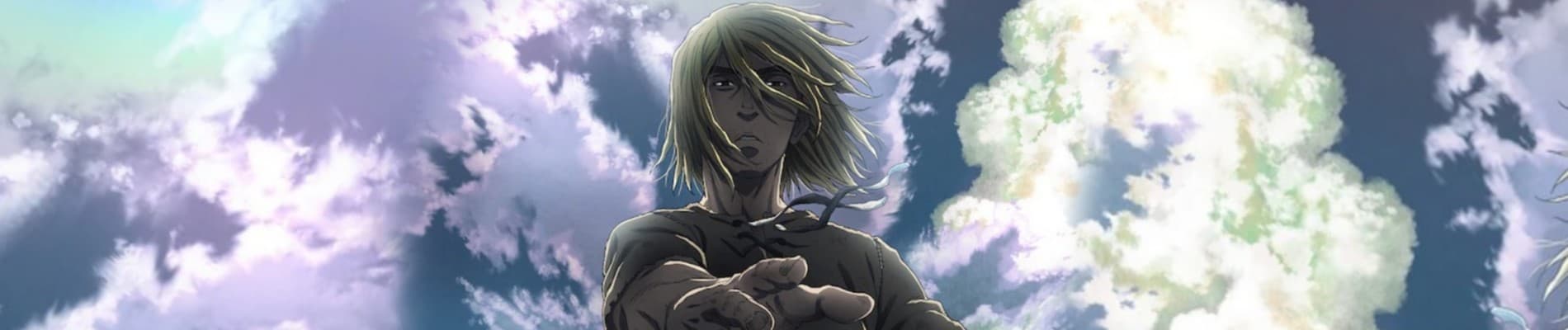
A sequel can do a lot of interesting things to the story it’s a part of. A great sequel can catapult an already good story into greatness. A bad sequel can squander whatever potential the first part was building up, or be so inconsequential that you can just pretend it doesn’t exist. But the hardest sequels to talk about are the ones that do an excellent job following up on what’s come before... yet still feel like a downgrade in ways so subtle you’re not quite sure if nostalgia is playing tricks on you or not. Did this series always have these flaws, you wonder, and you were just blind to them before? Or is something genuinely missing from this otherwise fantastic continuation that makes it feel less special than that initial entry? It’s a question I asked myself last year with the final season of Mob Psycho 100, a show that by any other metric would be a knockout success but couldn’t help but feel overshadowed by the seasons that came before. And now that same quandary presents itself to me with Vinland Saga, back after four years for another round of bloody historical viking combat and deep ruminations on the dangers of violence and hatred.
To make my position clear from the outset: I fucking love the first season of VInland Saga. It’s one of the best written, most achingly mature works of storytelling in anime, a beautiful exploration of the humanity behind violence, the people who perpetuate it and suffer it alike, and the complexities of people in a world far too willing to sort everyone into ally or enemy. It was potent, it was sincere, and it was achingly beautiful (at least when the production wasn’t driving itself into a ditch). It also had Askellad, one of my single favorite anime characters of all time for how beautifully he blurs the line between monster and hero. So perhaps that’s the reason why I don’t like season 2 as much; Askellad dies at the end of season 1 and only shows up here for a couple brief visions. My sweet baby gone too soon from this sinful world, we shall never see his like again.
I kid, I kid. Obviously, Askellad’s story ended exactly where it needed to, and any continuation to Vinland Saga- much like Thorfinn- would have to find a way forward without him. And that listless limbo of living between worlds is where we first meet Thorfinn as season 2 kicks off. Far from the ravenous warrior he was in season 1, Askellad’s death and the thwarting of his revenge has left him a shell of a man, barely able to function day by day. He’s ended up a slave on the farm of a seemingly kindly slavemaster named Ketil, his life reduced to following orders like an automaton as he wonders what the point of living even is now that his purpose has been taken away, leaving nothing but the memories of the countless lives he ripped apart in pursuit of it. But that begins to chance with the arrival of a new slave named Einar, a man who lost his home and family to Vikings much like the ones Thorfinn used to serve. As the two strike up an unlikely friendship, the shattered boy slowly begins to piece himself back together from nothing, facing the trauma he inflicted on others and himself and searching for new purpose unshackled from the bloodshed than once ruled his life. But it’s only a matter of time before bloodshed once again comes knocking at Thorfinn’s door, forcing him to come to terms with what kind of person he wants to be... and whether or not it’s possible to truly escape a world that seems to worship violence as the only true way.
It’s a radically different direction for the story to take, but it’s really the only way it could have gone. From the first episode, Vinland Saga has always been an interrogation of violence and its effect on people, a cry for peace in a world where that might as well be a foreign concept. And is season 1 was a full dive into the heart of that violence itself, season 2 is all about the escape from it, what it takes for a person who’s lived their whole life bathed in blood to seek a better way forward. Appropriately, most of what’s been dubbed “Farmland Saga” is spent on conversations and quiet moments, characters working out their issues and finding peace beyond the reach of a sword or ax. And whenever violence does show up, it’s always in short, brutal spurts of death where no one comes out happy, a far cry from the bombastic battles we used to have. And while that change no doubt rubs some fans the wrong way, it’s the only honest way Vinland Saga could continue to explore its themes. You can’t exactly tell a story of a man leaving violence behind and embracing peace if you’ve got limbs and heads flying at the same rate as season 1. Thorfinn’s growth from an emotionally stunted boy into a fully realized man, and the ways the rest of the inhabitants of Ketil’s farm react to the role of violence in their world, is Vinland Saga, and it’s still the same damn powerful story it was telling back when blood ran thicker and death same swifter.
So no, the relative absence of violence is not the reason that season 2 feels somewhat lacking in comparison to season 1. But then... what IS the reason?
The obvious culprit to point at would be the change in studio. And yes, I’m as sick to death of the endless Wit vs Mappa debates as you are. So many stupid takes on every side, all ignoring the fundamental issue that both of these studios are infamous for treating their workers like shit and sacrificing healthy production times for the sake of pumping out more content for their shareholders to make money off of. Seriously, all your animation issues with shows from both of these studios come from the same source of corporate greed favorite quick profits over artistry, bond over that and fight your mutual enemy instead of turning it into a fandom dick measuring contest. That said, it’s not every day that you get to see two different studios put their own touches on multiple different anime in such clear terms. And between Attack on Titan and Vinland Saga, I definitely think there’s a conversation to be had on how Wit and Mappa’s approaches to anime differ... and what effect that has on the finished product.
To vastly, vastly oversimplify what I’ve observed, I’d say that Mappa tends to focus more on detailed animation, while Wit prioritizes cinematic direction. Whenever Mappa flexes its “budget” (yes I know that’s not really what it is I’m oversimplifying for time bear with me), it tends to be with intricate shots of richly detailed characters, every crease and line in their skin shaded and expressive. A single image or quick action cut, when given the time it needs, can feel so weighty and expressive, like you can actually reach out and touch it. Wit, meanwhile, tends to put its best foot forward with the way its camera brings its stories to life, sweeping CG-assisted tracking shots or gorgeous tableaus spilling out across the screen. They may sacrifice the finer details sometimes (and let’s be clear, there are moments where Vinland’s first season looks like aaaaaaass), but the visual imagination behind how they frame and present their anime captures that elusive feeling of cinema that few TV anime manage to achieve. Wit embraces anime not just as an animated medium, but a truly visual medium, one where every choice is make to sweep you up in the beauty this art form is capable of. And that’s a level of imagination, sadly, that Mappa doesn’t always measure up to.
In regards to Vinland specifically, the part of season 1 I always come back to is episode 14, which is framed almost entirely in claustrophobic, horrifying close-ups as we witness the slow-burn destruction our protagonists bring upon an innocent family. Everything is so close to your face, almost blotting out the frame, shoving your face in the horrors the story’s main characters are capable of committing and refusing to let you turn your gaze away. It’s one of the most gut-wrenching episodes of anime I’ve ever experienced, and it’s all thanks to how thoroughly Wit embraced the tools of this medium to drive home that horror. Moments like that are what made Vinland’s first season such a cinematic marvel, even when the production was clearly suffering from poor time management. By contrast, most of the big experimental moments from season 2- dreams, nightmares, near-death experiences, visions- are shot and framed rather conventionally. In fact, pretty much every scene in season 2 has the most basic “camerawork” imaginable. Mid shots and long shots and close-ups and detailed action cuts, all in their proper places, yes, but there are no moments like episode 14, no moments where the visual language rises to that same level of brilliance. It’s all individual moments of beautiful animation (and some rough patches as well because again, Mappa and Wit have the same problems with overwork affecting the final product) with nothing that truly takes flight and shows off the true power of the medium as an artistic form. Still achingly effective thanks to the strength of the writing, performances and soundtrack, but if anyone at Mappa has the same sense of cinematic joy and creativity as the folks at Wit, well, they were probably working on Chainsaw Man while Vinland season 2 was in production.
But technical differences can only explain so much. Attack on Titan also had a rough start switching to Mappa, and it still managed to be pretty much as electrifying and incredible as always. Which means we need to dig a little deeper in the writing of season 2 and figure out what isn’t clicking quite as well this time around. And thankfully, the answer is actually pretty obvious, so I’m gonna come right out with it: the dialogue in season 2 kinda sucks.
See, telling a slow-burn story that’s mostly conversation is a totally fine way to explore your themes, even if the actual plot remains fairly still for the sake of intricate character work. But there is an art to writing a slow burn without making audiences long for something faster-paced, and it is NOT an art that season 2 pulls off well. Almost every conversation boils down to characters talking explicitly about the show’s themes for minutes on end, repeated and re-repeating themselves as they endlessly ruminate on violence, peace, the nature of war, the nature of hatred, trauma, forgiveness, moving forward and choosing the hard way over the easy way until they all start bleeding together into the same indistinguishable soup. These conversations don’t feel like people engaging with heady ideas, they feel like the author was terrified of even a single audience member not getting the point. There are some really powerful themes season 2 is working with, but they start to feel less special when every episode is full to bursting with characters doing nothing but talking about those themes for the hundredth time.
And just to make sure, I re-watched an episode of season 1, and it didn’t have this problem! The dialogue in season 1 flows so much more naturally, characters seamlessly weaving between plot-relevant exposition and interpersonal relationship-building and interesting, quirky asides and heavy, climactic confrontations. Perhaps it helps that season 1 also has a lot more moving pieces, so it has countless ideas it can juggle throughout a single episode without getting bogged down in a single mode for too long. The occasional thematically explicit speech or monologue becomes a lot more powerful when used sparingly, interspersed with other story beats that advance the story and its themes through less direct methods. “Show, don’t tell” is a common piece of writing advice for a reason; most of us find stories’ ideas far more engaging when they’re revealed through characters actions rather than (or at least in addition to) their words. But with so few actions to “show” throughout season 2, pretty much all of its thematic weight relies on characters “telling” us what we should think about the experiences they’re going through. Thorfinn tells Einar about his trauma, Einar tells Thorfinn about his perspective on life, Canute tells his weird ghost dad head (which, I’m sorry, this thing just looks goofy) about his increasing moral rot and the weight of the king’s crown, and all of it really starts to drag when there’s nothing else to change things up. No wonder some fans grew tired and started to beg for a return to the bloody action.
Which I seriously want to drive home: Vinland Saga season 2 not being violent is not its problem. This show has always been a plea for peace, so exploring the aftereffects of escaping a violent life in a mostly peaceful environment for Thorfinn to find himself again is exactly the direction it should have gone in. And in the moments where stuff actually happens in season 2? Where the endless slow-burning conversations give way to action, violent or otherwise, on part of its characters? It’s just as heartbreaking and awe-inspiring as anything in season 1. The only reason I’ve gone so hard on critiquing this season is because I know just how fucking fantastic this show can be at its best, and when season 2 is at its best, it absolutely lives up to that high bar and more. Going peaceful isn’t the problem; the problem is that it just isn’t as good at being a peaceful story as it is a violent war story. Not bad at it, just not as good. Vinland Saga’s first season explored its themes so well by balancing so many different factors and making them all sing in harmony, delivering a propulsive tale of blood and swords that drove its ideas into you like knives while still being an entertaining story capable of effectively delivering those themes in the first place. Season 2, meanwhile, puts almost all of its eggs in a single basket, and suddenly it finds itself running into problems it can’t fix without betraying the core of its narrative. It’s like trying to build the same house twice but the second time you only have 10% of your toolbelt available; the fact it even ended up as great as it did is something of a minor miracle.
And make no mistake: Vinland Saga season 2 is still great. For as much as I’ve complained about it, it’s every bit the change in direction this story needed to carry forward. And while the execution wasn’t perfect, it was still able to lay me out on the floor like few shows even come close to. Vinland Saga is a colossus. Vinland Saga matters. It’s so rare we get stories this mature, this thoughtful, and this widely beloved in this crazy medium we call home. And if Mappa’s planning to stick with this one until the end like Attack on Titan, I hope, much like that show, future installments are able to find their footing and push it back to the top of the heap where it belongs.
42 out of 55 users liked this review