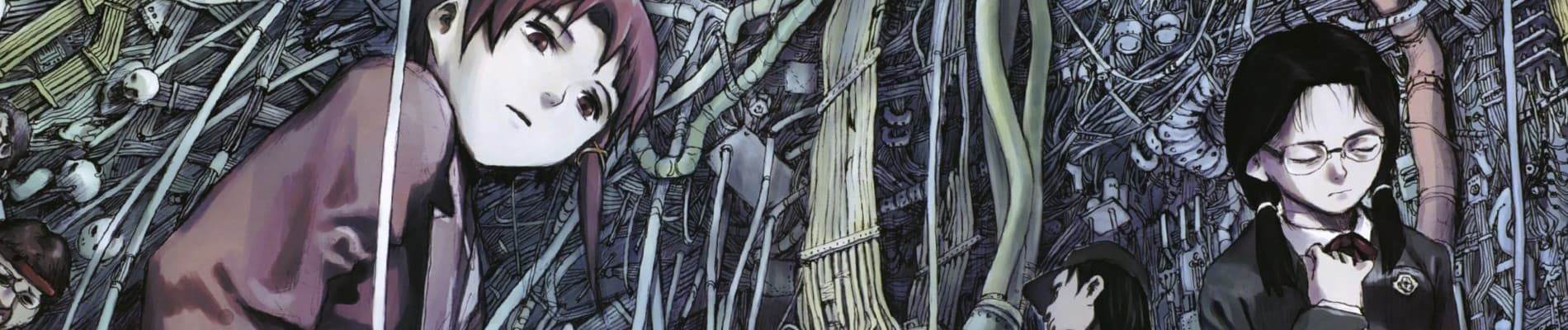

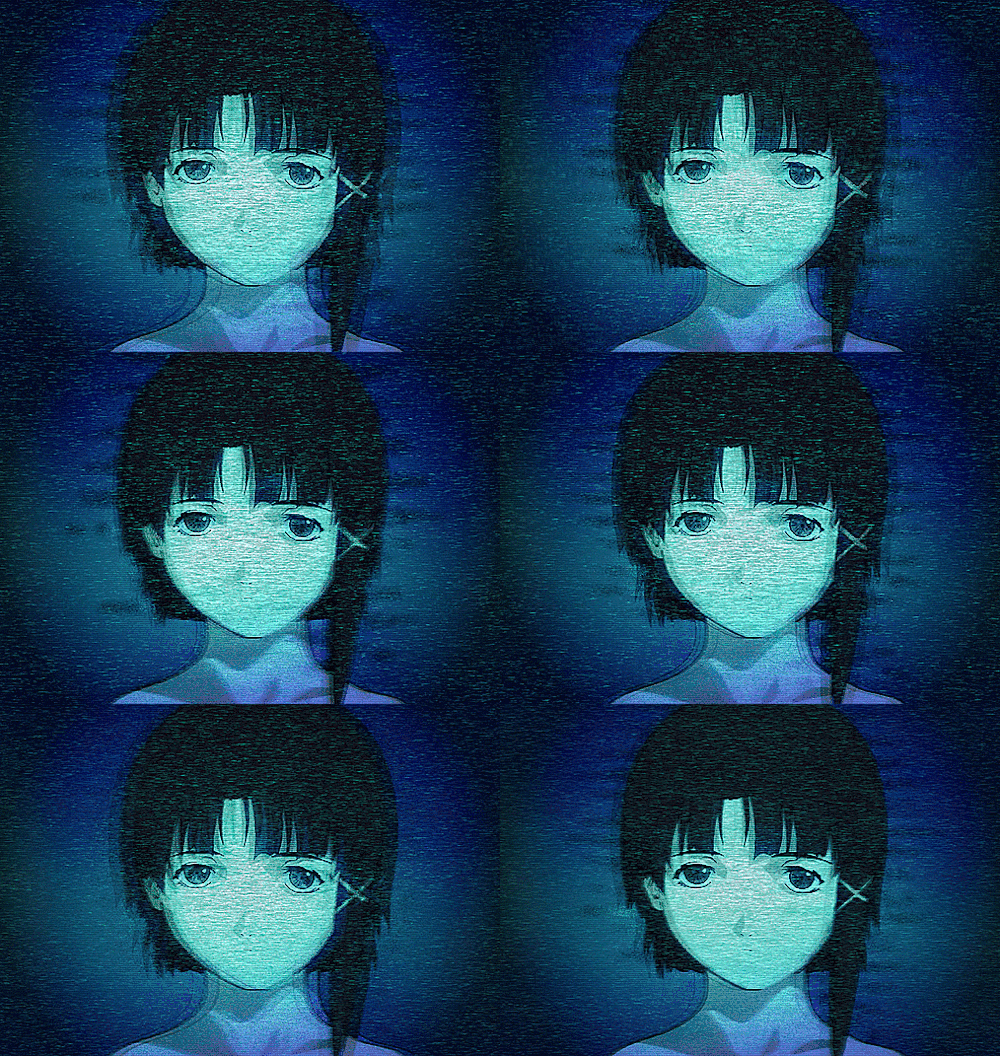
Serial Experiments Lain tells the tale of a 14 year old girl, Lain, trying to find out what her role in both reality and the internet is. That is obviously a very vague synopsis, and my reason behind this is that the story is truly something that must be experienced firsthand. I feel obligated to mention how weird (but by no means bad) the pacing is. The actual story doesn't even really begin until halfway through, but that doesn't make the first half, which is focused more about Lain discovering both herself and "the Wired" (SEL's version of the internet) any less gripping. Serial Experiments Lain does not spoonfeed its story and purposefully leaves you in the dark at times, which only heightens the engagement level and makes the payoff that much more rewarding when you actually do figure out why all these strange events surrounding Lain are happening. Later on in the series there are a few "exposition dumps," but luckily they are executed perfectly. Even one mistake in this aspect would result in a plethora of plotholes considering how intricate the story is, but the way the exposition is handled allows Lain's masterful plot to truly shine.
"hey what kind of anime you wanna watch?"
"just fuck me up fam."

This is not a story for those in search of action and borderline naked girls, and to a further extent not a story for those looking for any sort of casual watching experience. I consider this the opposite of a “turn off your brain” type of anime - through each episode of Lain I found myself questioning what I was seeing, constantly looking to connect the abstract imagery and symbolism presented, and generally just figure out what the hell was going on. Rather than the more direct exposition of most anime, Lain tells its story through a combination of sparse, but philosophically dense, dialogue alongside a ton of symbolic, and often trippy visuals. Much of the allure of the show is in how much intertext and hidden meaning there is, and this is something immediately apparent from episode 1 with the first 7.5 minutes having a total of 10 lines of dialogue, opting instead to set the tone with a depiction of a young girl committing suicide.


It can be very information dense and very easy to lose yourself the first time watching, but by the end you will have your mind blown even if you didn’t fully understand everything (you likely won’t). And it isn’t only the story that’s given in an experimental manner, the ways Lain conveys its message is equally unorthodox. It is often hard to distinguish between when the show is depicting reality and when it’s depicting the Wired, but this emphasizes a central question it asks – what is the difference between reality and the internet? What does reality even mean? Everything you see is shown through Lain’s perspective, which is very distorted. This blur between real and virtual gives SEL a sense of unreliability to the viewer, akin to Satoshi Kon’s works at times, but this only serves to strengthen the message it presents.
#Iwakura Lain
If I had to find one shortcoming of Serial Experiments Lain in my mind it would be the small cast of relevant contributing characters. Despite the complexity of the story, because so much of it is told through visuals and the protagonist’s self-questioning there isn’t a need for a lot of characters like you see in many other psychological anime. However, what SEL lacks in quantity it makes up for in quality, especially with the simultaneously endearing and mysterious MC. This show entirely focuses on one character, Lain, and yet I still wanted to see more of her by the end. This is partly due to how much Lain evolves throughout the series, her personality can change so much that it sometimes seems like a different character entirely.

I could count the characters that actually affect the plot on one hand, and even then their contributions aren’t all that significant, apart from Lain obviously. In saying that, the supporting cast did lead to some particularly poignant moments. In addition, very few of the side characters are given any backstory whatsoever, but the way they are presented more than makes up for this. I never felt like I needed to see anything relating to a character’s background because I already knew everything I needed to know from their dialogue and expressions. After all, this is a story about Lain, not the people around her.
#Sights, Sounds, and Feels
Though individual animations can be clumsy at times, SEL’s approach to its visuals is nothing short of spectacular. A rather dreary color pallet is used which contrasts nicely with the neon blues and greens of the Wired. One of the first things that stuck out to me when watching Lain was the use of light. Lighting in the show is very harsh and distinctive, typically using a blinding pure white light that interplays beautifully with the frequent use of inky and dismal shadowing, further lending to the mysterious and at times almost nightmarish atmosphere.


But that's not to say the animation isn’t without some faults - the characters are drawn in a fairly realistic fashion compared to the standard of the medium, which to me is preferable for an anime such as this; however, it isn’t always executed perfectly and occasionally leads to some awkward looking character expressions.
As far as sound goes, Lain takes an extremely minimalistic approach. Sometimes there are minutes, or even entire episodes, with little to nothing as far as a typical soundtrack would go. However where the OST is prevalent it is utilized wonderfully, often using eerie synths and sparse percussion to set the mood.
 Rather than traditional songs, Lain’s audio is filled with sounds such as the bustle of pedestrian traffic, noises of trains passing, the hum of electrical currents through telephone cables, the clicking of a computer keyboard. Sometimes even these are absent, leaving the viewer with extensive silence.
The unique artstyle and complementing approach to audio masterfully succeed in creating one of the most enigmatic and memorable atmospheres I’ve encountered.
#Let’s all love Lain!
Serial Experiments Lain is one of the most thought provoking shows you’ll see, with themes such as identity, modern isolation, and humanity’s reliance and combination with technology prevalent, yet still hidden under a blanket of unconventional exposition. Lain doesn’t look to prescribe advice or answer questions – in fact it raises far more than it answers. If anything, it’s trying bring a series of ideas to attention by offering a layered (heh) postmodern commentary on them. SEL covers some philosophical topics that are very grounded in reality and have only increased in relevance since its release alongside the increasing connectedness of the information age we live in. Subsequently, Lain is an anime that will likely change the way you think about the internet, and possibly even the way you think about humanity and what it means to be alive. A must watch for any fans of the medium.