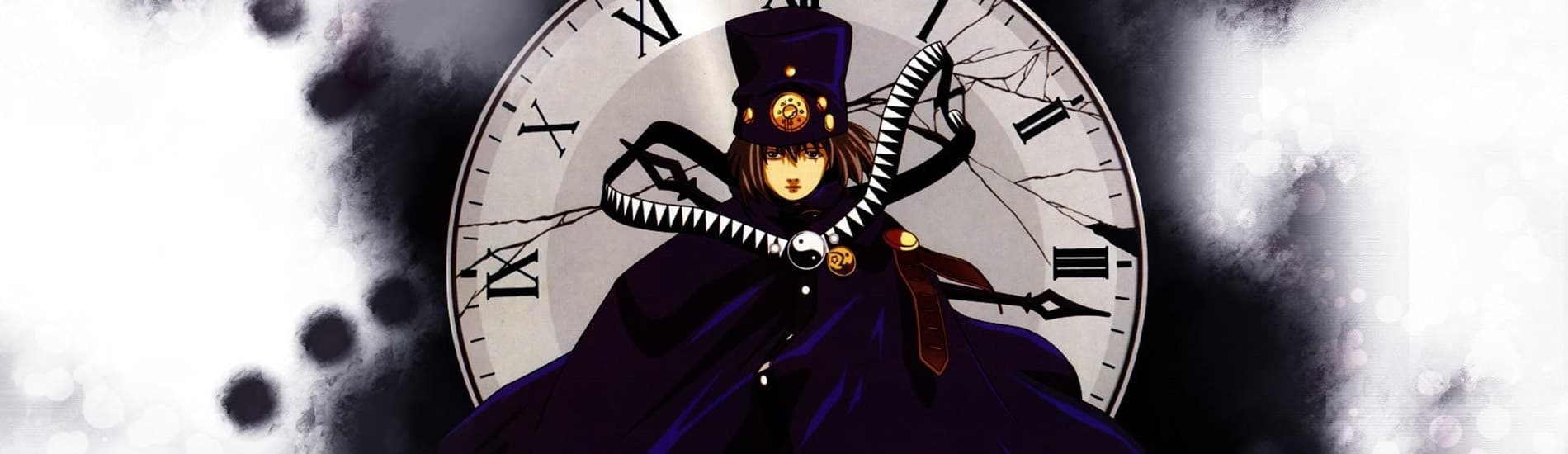
Note: As of writing, I have read a small portion of the first light novel, of which Boogiepop Phantom is majorly based on. I was able to enjoy it regardless, but if that concerns you, do that first or watch the 2019 anime, which condenses the first 6 vols into an 18-episode package albeit with differences in tone and art.
Something that'll immediately stick out with Boogiepop Phantom is its soundscape. Hardcore dub, some breakbeats, synths and harsh noises reverberate throughout the runtime either from a slew of guest artists or - more commonly - its own anime staff, the latter of which contain Youta Tsuruoka and Kouji Kasamatsu at the helms for sound director and designer respectively, and both of whom had previously worked on Lain. Each ping of notes, growls of electric power lines, and macabres of physical or mental snaps the characters unleash makes for powerful and unnerving atmosphere, some of the best the medium's ever used at that. If nothing else, this is worth watching just for that alone, but luckily everything else about this is fantastic as well.
Just the way the prose is formatted and speaks is enough to sell the illusion of a wispy yet industrialist-dominant city, the idea that trouble's brewing within it and if not careful, could blow over and set all of the denizens into peril. Some of the reviews here mention it pertaining to the thought bubble of the Y2K scare, which I agree with. I'm not certain I would classify the whole anime as horror, but there's certain bits such as Episode 4, 6, and 10 that are haunting to such a degree I'm kind of surprised it was utilized way back when. It also helps the devices in which each scene is laid out, be it by blocking, scenery, or even how it uses the sepia-distilled color palette to its advantage makes every scene stand out in such evocative manner, no matter how little or how much is going on.
I mentioned Lain, but there's also works by Satoshi Kon - relevant to the themes here, Paranoia Agent and Perfect Blue - to draw from due to sharing writers Sadayuki Murai and Seishi Minakami. In this case, BP takes a more anthological approach, highlighting several different people with a few connecting dots to indulge unto the topic of escapism, regret, and frictioned relationships be it from acquaintances or parental. Number of characters here don't get their happy endings, yet even as it goes on it doesn't divulge into cynical spats, etching more and more chances of reconciliation and rehabilitation for the normal populace as those that fork away into special abilities engage in diatribes and philosophical musing. The past will always be the past, but how will that affect the now? Would there be chances to live with the regret, or will those find superficial means to ignore it without a care in the world? Is there anyway we could grow past its inclination and become our own being? BP leaves some of it in the air, but considering the ending's of an uplifting mood, I'd say that it encourages us to embrace the idiosyncrasies that make us who we are, and reflect that which we lay bear so that we don't succumb to foul misgivings.
It's slow on occasion and not all of it lands, but there's something special and stand out about the Phantom 23 years after its run. Can't wait to dive into more of the mythos.
32 out of 32 users liked this review