

Synopsis
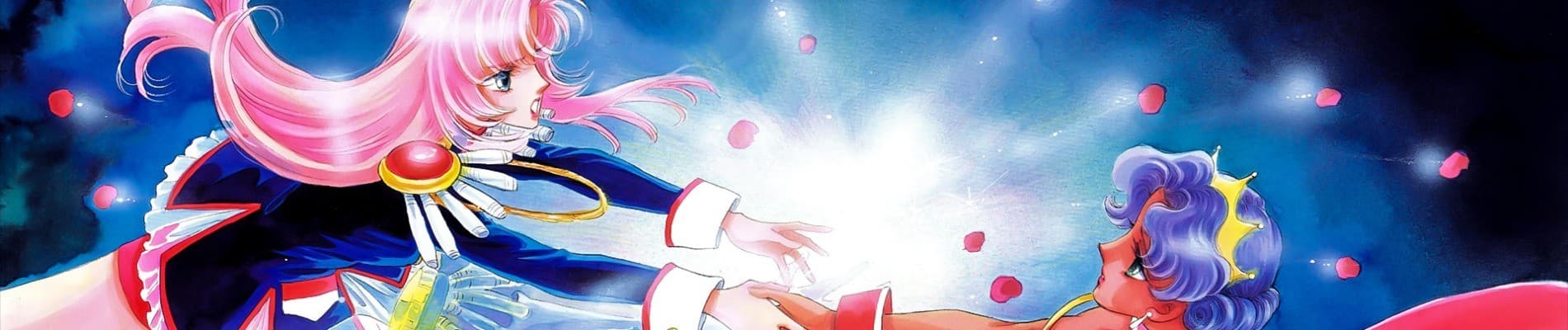
Tenjou Utena goes to Ohtori Academy in search of the prince who had given her a rose crested ring as a child. While there, she gets caught up in these duels for the "rose bride" who is Himemiya Anthy. In going through these duels and getting closer to Anthy, Utena learns more about the duels, about her prince and also her past.
Story and characters
The story of Revolutionary Girl Utena feels timeless, progressive, and has aged perfectly. Despite the director being unable to go all out as he wanted (at least in the TV series) due to censorship restrictions, the show still manages to delve deeply into dark, mature, and sensitive topics better than any modern anime I've seen attempt. There is also a good mix of comedic, sentimental, and heartfelt moments that provide some relief when things become too intense.
The three main characters — Utena, Anthy, and Akio — are the primary driving force of this anime. They have very strong and distinct personalities that play off each other really well. As you learn more about them, you become more attached to them, giving weight to whatever happens to them. The story also appropriately changes its overall tone to match their growth, initially being more playful and carefree before becoming more serious and frantic as every decision and action begins to have more significant consequences to their relationship.
Starting with Utena, she is outgoing, bright and popular. She's heroic, not being able to ignore a situation when she sees that someone's in trouble. And she tends to focus in on the good in people but also with that, is somewhat naive, not being guarded enough nor experienced enough to prevent being manipulated.
Anthy on the other hand is the polar opposite. She is more reticent than Utena, preferring a calmer, more personal and passive way of living, tending to her flowers. While with Utena we get what we see, it's less so with Anthy. The voice actor for Anthy, Yuriko Fuchizaki, herself described Anthy in an interview as a "mysterious figure" and that she "has the power to drag everyone around her into her sphere." This particular air about her makes for the moments when she genuinely opens up hit harder and feel more meaningful.
Finally, we have Akio. Unlike Utena and Anthy, Akio is an adult. He is also the chairman of Ohtori Academy and brother of Anthy. In the show, he is not just powerful, he is power. As both a character and a concept he exerts himself on the other characters, either directly or indirectly. Even if you don't see him in frame, he's always there. He's an incredibly well-written character and probably one of the best anti-villains I've ever seen in an anime.

Art, animation, music
The music is excellent with the theme for when Utena goes up to the dueling arena being this really interesting song called Zettai Unmei Mokushiroku which is this blend of rock and this operatic, dramatic sort of singing. There's also the Sunlit Garden which is played by one of the characters in the show on the piano and has a really pleasing melody. And the character themes are also excellent and feel very fitting for the characters. A sign of a good soundtrack is if the tracks are easily recognizable outside of the anime and you can tell what type of scene it'll be from the music alone which you can definitely tell with the RGU soundtrack.
The art is solid with distinct character and background designs. You have an orange haired girl with a Marie Antoinette-esque sort of hairdo that does fencing, blue haired twins, an Indian brother and sister with purple hair, an athletic tomboy pink haired girl, a guy that does kendo with green curls, one guy with long straight red hair, a bovine gal, and two literal shadow girls. In terms of other art, there is no lack of interesting designs - a spiral dueling location, upside down glowing castles, big red cars, beautifully drawn flowers, a planetarium that projects stars, and much more.
Animation is very good, a common misconception being that if it's old it'll have bad animation which isn't at all the case. Contrary to what some people might think, every anime before the year 2000 isn't just a slide show presentation. I'd even say at times the animation is a lot smoother and more interesting than some modern shows' animation. Utena pulling the sword out from Anthy for example is extremely cool the first time you see it and the choreography of the fights are really fun and have decent variety with there even being cars that show up in some of the later duels. They do re-use animation a lot for things like going up to the dueling location but the repetition never really felt over done.
▶ VideoRGU references in other shows
The most common way of paying homage to something is to replicate the style in it's art, animation, writing, storytelling, framing or cinematography - some common examples in anime include the Ashita no Joe pose, Yamacha pose, the Akira bike, magical girl transformations, and various things from Death Note like the overly dramatic inner monologues and the actual notebook. For RGU, I immediately noticed it watching just one episode of Revue Starlight where the transformation scene is a direct reference to the car transformation in the RGU movie. Aside from that there are even references in western shows like Steven Universe. There's also influence in things like the way an anime is structured, it's core stuff, where shoujo shows like Revue Starlight, Madoka Magica, Wonder Egg Priority and Black Rock Shooter seem to take some cues from RGU in the way they setup their battles.


Main theme of the show, and comparison to the movie
Blackbird singing in the dead of night,
Take these broken wings and learn to fly.
All your life,
You were only waiting for this moment to be free.
- The Beatles, "Blackbird"
If I had to choose one general theme that's representative of RGU, I would say it's freedom. Freedom can be achieved in many different ways, and what it means to be free varies depending on the individual. There is freedom on a macro scale, such as liberation from oppressive institutions or environments. There is also freedom on a micro scale, such as overcoming internal roadblocks that prevent us from being our best selves. And of course it's not as if those two things are mutually exclusive. It's hard to focus in on internal roadblocks if there's constant external pressure you have to deal with. Likewise, it takes a certain amount of resolve to challenge the massive and seemingly unbreakable structures that keep us down.
I think it makes sense to talk about the movie when it comes to this idea. The movie is usually considered something like an alternate universe with different versions of the characters that has little connection to the main story. However, I see it as the same story but just choosing to show the things implicitly understood in the original and giving them shape for us to see.
As an example, Anthy at some point has a short conversation with someone and makes a simple and very mundane decision. Within that event there is something more that's understood by the viewer implicitly, having watched the story prior to it. The movie basically takes that implicit thing and makes thirty minutes worth of action representing it visually for us to actually see. The idea with this being that there are mundane things that happen in life like a conversation or someone making a single step across a threshold and because of the plainness of the action we don't always see the actual difficulty or importance in it. To that person, that threshold might be like crossing an incredible barrier to a separate unimaginable world. It's like they're throwing a stone at a massive structure but it's invisible to you and only really visible to them because only they can feel the influence that that structure has on their life. The movie then is kind of saying this is what that influence feels like and looks like, and this is what defeating it and, by extension, what freedom looks like as well to that person.
Here are some pictures showing some of the paralleling scenes between the movie and show:


Some personal interpretations and ways of looking at RGU
How you think of RGU depends on what's interesting or relevant to you. I've read RGU analysis talking about gender, patriarchy, education, adultification, bullying, witches, architecture, creativity, myths/fairy tales, queer, race, philosophy, and much more (some that would probably spoil parts of the story so I didn't mention). The viewership has really taken The Death of the Author to the next level and decided to collectively curb-stomp Ikuhara with their own personal experiences and opinions. It's very entertaining. And educational (I'd never even heard of the word "adultification" before reading an article on RGU relating it to Anthy).
Below are just two abbreviated and kind of rough ways of looking at RGU that I personally find interesting based on my interest in music :
Blooming flowers, friendship/love, and sunlight
Ohtori is often shown in shadow, with the light shining onto it. This is a visual representation of the artificial versus natural dichotomy that is prevalent throughout the series. The projectors that project fake stuff into the sky and the greenhouses which create an artificial environment to regulate growth are further examples of this. The coffins, then, can be seen as seeds, representing the potential for growth that is being stifled at Ohtori Academy.
Utena's name means "sepal," the part of a flower that supports the petals when in bloom. Anthy's name means "flower" in Greek. Putting these two names together, we can see that Utena is essentially helping Anthy to bloom, or to emerge from her coffin/underground seed phase. She is helping Anthy to see the real light, both literally and figuratively.
In a sort of cheesy way, Revolutionary Girl Utena could be seen as a story about the ways in which we can support each other, through friendship or love, in getting out of a rough place. This place being either a mental space or an actual physical place.
The elevators of the mind, heaven/hell, and Hotel California
Revolutionary Girl Utena uses going up and down to represent different states of mind. The dueling arena, which is located high up in the school, is a representation of the ideal self, the place where one can find glory and self-actualization. Conversely, the elevators, which lead down to the darkest parts of the school, represent the dark side of the human psyche, the place where jealousy, hate, violence, and other horrible thoughts reside.
The song "Hotel California" by the Eagles is a song about the excesses of Hollywood, which in the song is portrayed as a place where people are trapped in a cycle of pleasure and pain. The lyrics "We're all just prisoners of our own device" and "You can check out any time you like but you can never leave" can be seen as metaphors for the way that the characters in Revolutionary Girl Utena are trapped in a cycle of going up and down, between the ideal and the dark side of themselves. To put it in another way, Hotel California and Ohtori Academy are stand-ins for hell. The ultimate goal for the characters, then, is to get out of this cycle, get out of hell and come back to the earthly world. To do that, they first need to recognize that they are in hell and then they need to find the "passage to where [they were] before" with each door/passage being different based on the specific hell they reside in.
Conclusion
I highly recommend Revolutionary Girl Utena to everyone. You don't need to be a fan of the shoujo genre to enjoy this anime. It's dense with meaning and has been subject to tons of analysis since its inception. However, an anime doesn't have such a strong fanbase willing to bat for it for so long just because of symbolism.
What makes Revolutionary Girl Utena so enduring and relevant is the characters and the way the anime makes you care about them. Their specific struggles and situations may not always be directly relatable to you, but seeing them fight desperately to find what is right in spite of all the things bringing them down is deeply uplifting.
